
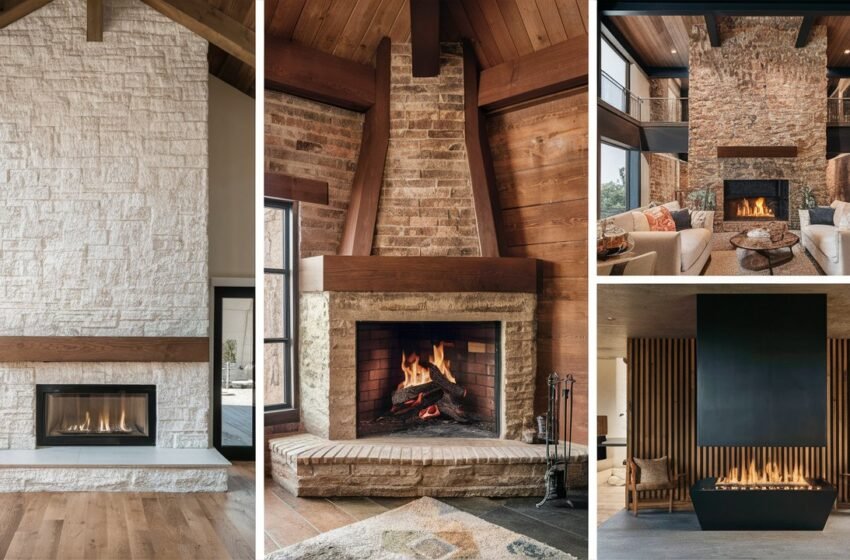
There’s a particular kind of magic that only a fireplace can create. You know the feeling — the moment the flames catch, the room changes. The conversation slows down, shoulders drop, and everyone gravitates toward the warmth. A modern rustic fireplace captures all of that magic while looking genuinely beautiful rather than dated.
The ‘modern rustic’ style is one of the most searched and admired interior design directions right now, and for understandable reasons. It manages to feel both warm and sophisticated, both lived-in and intentional. It draws on natural materials — reclaimed wood, rough stone, aged iron, raw concrete — but pairs them with cleaner forms and a more contemporary sensibility. The result is a fireplace that feels timeless rather than trendy.
Whether you’re designing a fireplace from scratch, renovating a dated one, or simply looking for fresh inspiration, these 23 modern rustic fireplace ideas cover every style, space, and budget. Let’s get into it.
1. Reclaimed Wood Mantel — Character You Can’t Buy New
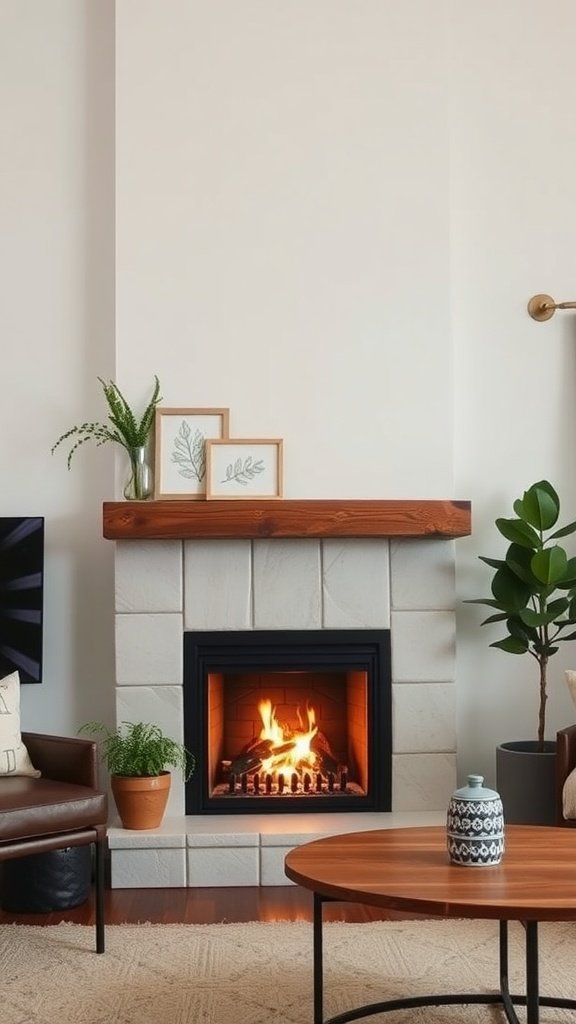
Nothing introduces rustic character into a room quite like a reclaimed wood mantel. The knots, the saw marks, the weathered grain — these aren’t imperfections. They’re the whole point. Each piece of reclaimed wood carries decades of history, and that history is precisely what gives it the warmth that new timber simply cannot replicate.
A reclaimed wood mantel works especially well as a counterpoint to a more contemporary fireplace surround — a rough, organic beam above a smooth, modern firebox creates a tension that is genuinely beautiful. The contrast between old and new is the visual heart of the modern rustic aesthetic.
How to Source and Style a Reclaimed Mantel
✦ Architectural salvage yards are the best source for character pieces — look for old barn beams, bridge timbers, and industrial joinery
✦ A single beam mantel with minimal or no brackets is the most contemporary approach
✦ Leave the wood raw or finish with a matte hardwax oil to protect without making it look polished
✦ The mantel works best when it’s slightly too large for the space — generous proportions read as confident rather than timid
✦ Style with a handful of carefully chosen objects: a ceramic pot, a small oil painting, a simple candle — resist the urge to fill every inch
2. Stacked Stone Surround — The Quintessential Rustic Statement
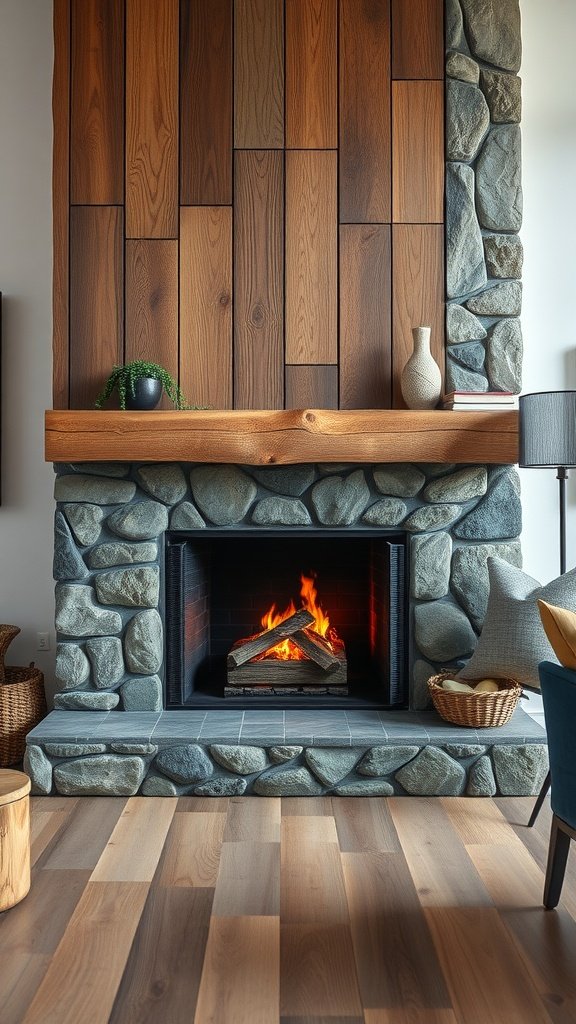
If there’s one material that is permanently associated with rustic fireplaces, it’s stone. Specifically, stacked or fieldstone — rough, irregular pieces mortared together in a way that looks both ancient and solid. A stacked stone surround anchors a room with an organic weight that no other material can quite match.
What makes stacked stone feel modern rather than merely traditional is how you handle everything around it. Keep the mantel minimal. Use a clean, simple firebox insert. Choose furniture with lighter, less ornate lines. Let the stone be the strong, textural element while everything else is quieter and more refined.
Stone Types That Work Best for Modern Rustic Fireplaces
1. Dry-stacked ledge stone: The most contemporary look — thin, horizontal pieces with tight joints and no visible mortar
2. River rock: Round, smooth stones in natural tones create a softer, more organic effect
3. Fieldstone: Irregular shapes with visible mortar — classic farmhouse or cabin aesthetic
4. Quartzite or slate: Flatter, more refined, bridges the gap between rustic and contemporary beautifully
5. Limestone: Warm, creamy, and sophisticated — works in more refined versions of the rustic style
3. Raw Concrete Fireplace — Industrial Rustic at Its Best
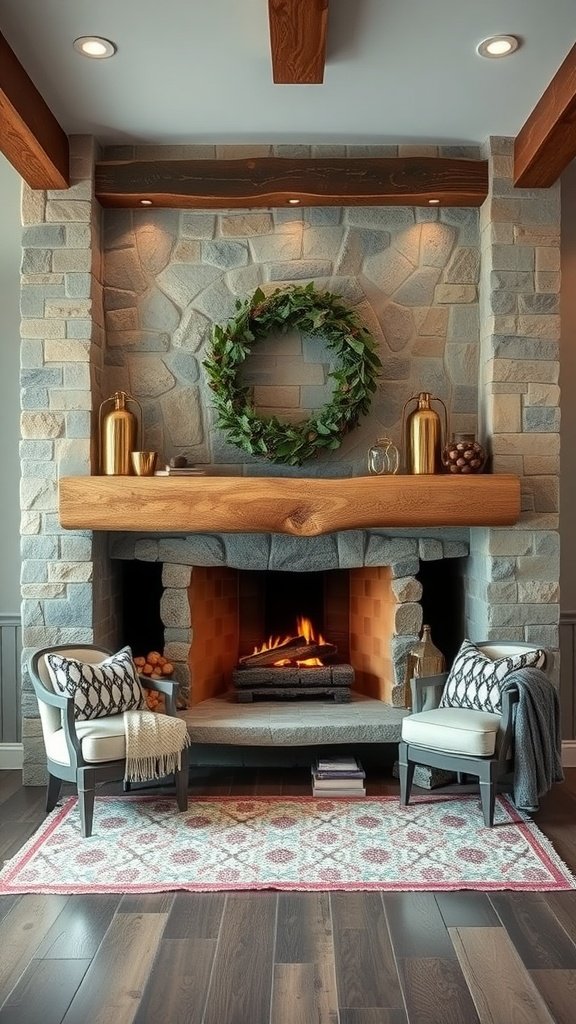
Concrete doesn’t sound warm. But in practice, a raw or board-formed concrete fireplace surround can be one of the most beautiful and quietly compelling versions of the modern rustic fireplace. It’s the industrial thread in the rustic tapestry — raw and unfinished, but in a deliberate way.
Board-formed concrete — where the formwork planks leave their impression in the surface of the concrete — is particularly striking. The wood grain texture embedded in the concrete creates an inherent connection to natural materials even as the material itself is entirely man-made. It’s a beautiful paradox, and it works wonderfully in homes that lean toward the contemporary end of the modern rustic spectrum.
Pairing Concrete With Warmer Elements
✦ Combine concrete with a thick reclaimed wood mantel to anchor it in warmth
✦ A concrete surround works brilliantly with a wall-mounted firebox — the material’s weight contrasts with the floating quality of the insert
✦ Use warm lighting nearby — Edison bulbs, soft pendants — to counteract concrete’s cooler undertones
✦ Bring in natural fiber rugs and wool throws to balance the hardness of the material
4. Brick Fireplace — Timeless Charm, Freshly Interpreted
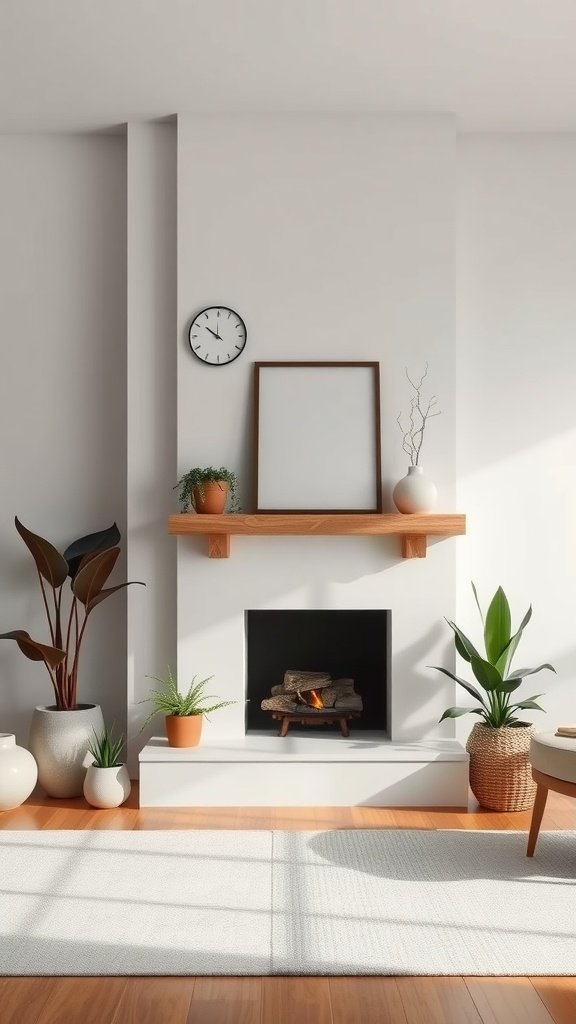
Brick is one of those materials that has been present in residential fireplaces for so long it’s easy to dismiss it as generic. But there’s a reason brick endures: it has genuine warmth, beautiful texture, and a kind of handmade quality that resonates in ways manufactured materials don’t.
The key to making brick feel modern rustic rather than just dated is how you treat it. Original exposed brick, left exactly as it is with no paint or whitewash, can look extraordinary — especially if it’s older brick with genuine patina. Or you can whitewash or limewash it for a softer, more relaxed version of the same material. What you want to avoid is painting it a flat opaque color, which kills the texture that makes brick interesting in the first place.
Modern Approaches to Brick Fireplaces
✦ Leave it raw if the brick is attractive and in good condition — authenticity always wins
✦ Limewash or German smear techniques add age and softness without hiding the texture
✦ Thin brick veneer is a practical option for new construction that wants the look without the structural weight
✦ Pair raw brick with a simple steel or iron surround for a striking industrial-rustic combination
✦ Update a dated brick fireplace by replacing the insert and mantel while leaving the brick unchanged
5. Whitewashed or Limewashed Stone — Soft Rustic Elegance
Not everyone wants a fireplace that feels heavy and dark. For those who love the texture of natural stone but prefer a lighter, airier atmosphere, whitewashed or limewashed stone offers the best of both worlds. The texture remains — the irregularity, the depth, the organic quality — but the tonal value is lifted into something much softer and more expansive.
A limewashed stone fireplace works particularly well in rooms with good natural light. The light plays differently across the irregular surface throughout the day, giving the fireplace a constantly changing quality that a smooth, uniform surface could never achieve.
Limewash vs. Paint — What’s the Difference
✦ Limewash is a traditional mineral-based coating that penetrates the stone rather than sitting on top of it
✦ The result looks aged and authentic rather than painted — you see through to the stone beneath
✦ Unlike paint, limewash is breathable and develops character over time rather than peeling
✦ Available in a range of tones beyond white — warm cream, soft gray, blush — each produces a different atmosphere
6. Floor-to-Ceiling Fieldstone — A Mountain House Classic
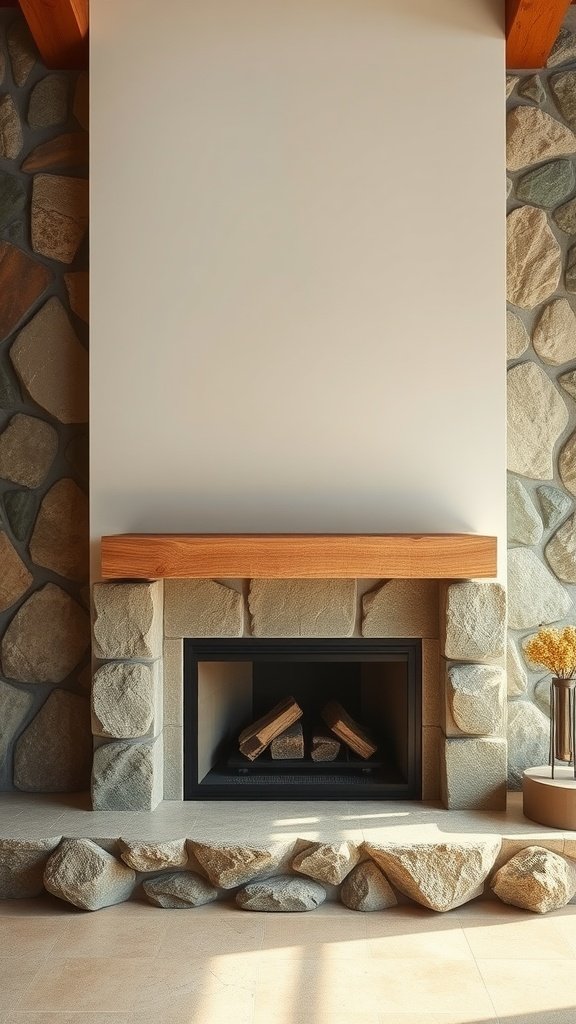
If you’ve ever stayed in a well-designed mountain lodge or ski chalet, you know the particular power of a floor-to-ceiling fieldstone fireplace. It’s genuinely monumental — the kind of architectural gesture that makes a room. The fireplace becomes the room, in a sense. Everything else orients around it.
This is not a subtle choice, and it shouldn’t be. A floor-to-ceiling fieldstone fireplace demands a room with sufficient ceiling height to carry it — ideally twelve feet or more — and enough square footage that the fireplace doesn’t overwhelm the space. In the right context, though, it is extraordinary.
Making a Floor-to-Ceiling Stone Fireplace Work
✦ The stone selection matters enormously — choose pieces that vary in size, color, and texture for a natural, found quality
✦ A simple wood mantel at standard height anchors the human scale of the feature
✦ Keep furniture simple and low — the fireplace is doing all the heavy lifting visually
✦ Deep, comfortable sofas and chairs positioned close to the fire create the gathering quality that a feature this size deserves
✦ Avoid decorating the upper section of the stone — leave it raw and powerful
7. Steel and Wood Combination — Where Industrial Meets Organic
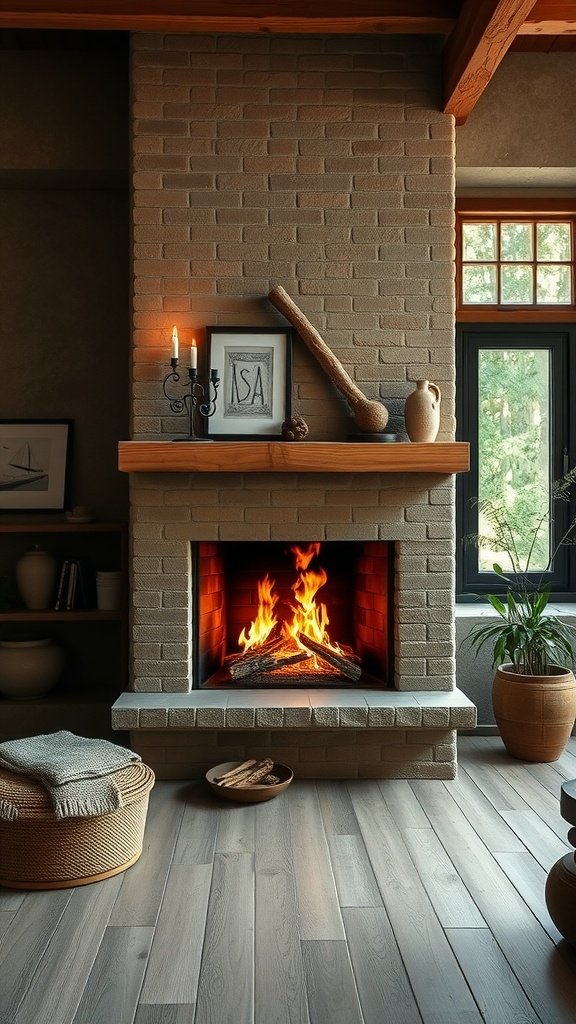
Steel and wood together is one of the defining material combinations of the modern rustic aesthetic. The contrast is simple and deeply satisfying: one material is hard, precise, and man-made; the other is soft, organic, and ancient. Together, they create something that feels both contemporary and grounded.
In fireplace design, this combination typically shows up as a steel firebox surround or hood paired with a solid wood mantel. The steel might be raw, brushed, or blackened — each finish creates a slightly different character. The wood might be smooth and sanded or left with more texture and grain. The proportions of each are what you adjust to dial in the balance between industrial and organic.
Ways to Use Steel in a Rustic Fireplace
1. Steel hood or canopy: A cone or flat hood in raw or blackened steel above the firebox is a strong, graphic element
2. Steel surround: A simple rectangular frame around the firebox in dark steel keeps the design clean and modern
3. Steel shelving: Floating steel shelves flanking the fireplace add storage and function
4. Steel mantel: A thick steel plate as the mantel is an unusual but striking choice
5. Riveted steel panels: Industrial-style panels around the firebox add texture and authentic character
8. Shiplap Fireplace Wall — Relaxed, Coastal Rustic
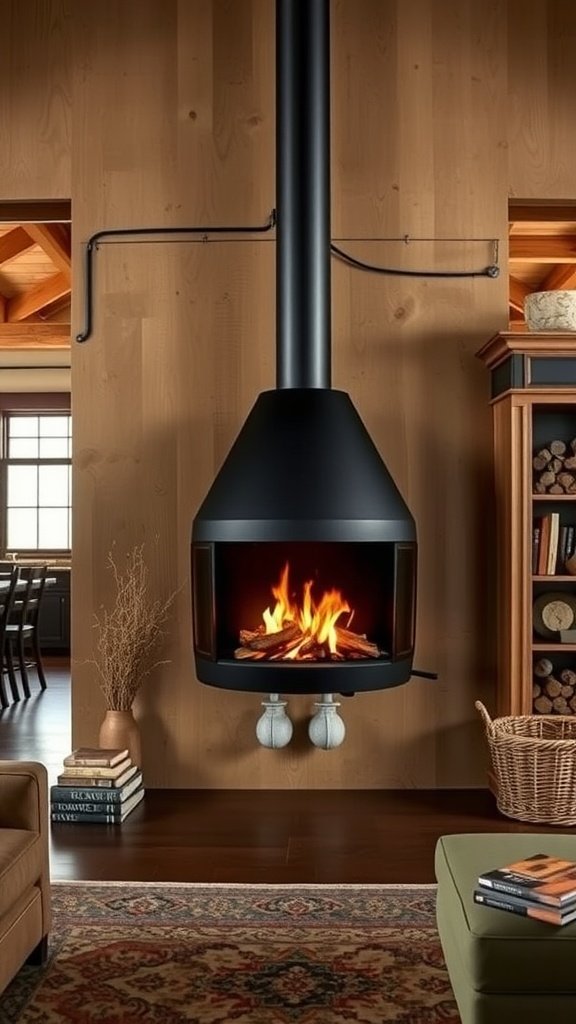
Shiplap has had a remarkable cultural moment over the past decade, and it shows no signs of retreating. There’s a reason for its enduring popularity: horizontal wood paneling is inherently calming, it adds warmth and texture to any surface, and it works in an enormous range of design contexts.
A shiplap fireplace wall — where the paneling extends beyond just the immediate surround and runs across the entire wall, or a significant portion of it — creates a cohesive, enveloping backdrop for the fire. It works especially well in beach houses, farmhouses, and any space with a relaxed, informal energy.
Shiplap Finish Options and Their Character
✦ Natural unstained shiplap: warm and casual, great in rooms with plenty of light
✦ White-painted shiplap: the classic farmhouse look, clean and airy
✦ Gray-washed shiplap: coastal and contemporary, pairs beautifully with navy or soft blue accents
✦ Dark-stained shiplap: dramatic and moody, particularly good in rooms with high ceilings
✦ Mix shiplap with board-and-batten for a more architectural, layered result
9. Wood-Burning Insert in a Stone Surround — The Authentic Article
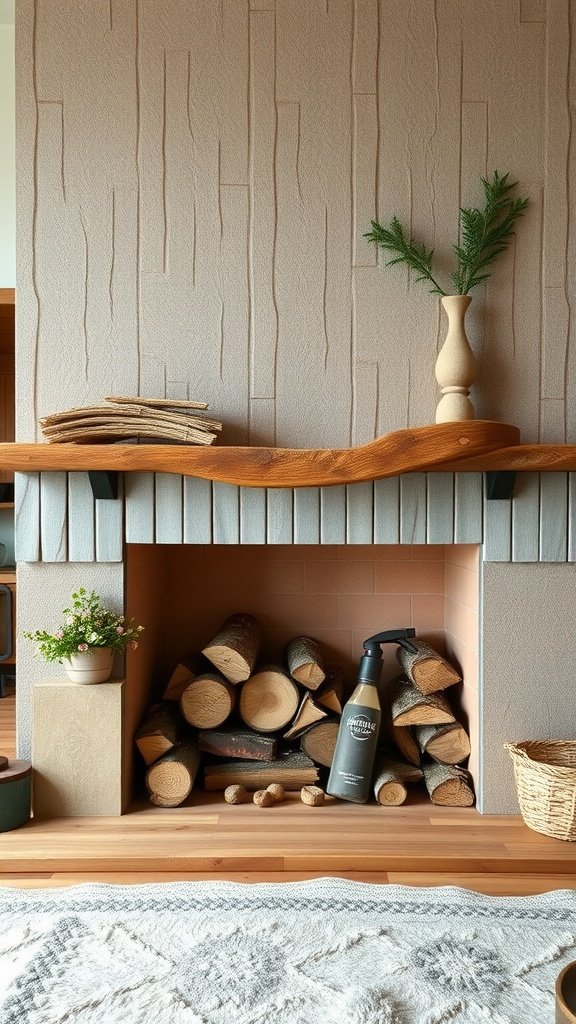
In an era of gas and electric fireplaces, there’s something genuinely special about a real wood-burning fire. The crackle of the wood. The smell of smoke. The slight unpredictability of real flames. A wood-burning insert set into a stone surround is the most elemental, authentic version of the modern rustic fireplace.
The practical case for a wood-burning insert (rather than an open hearth) is strong: inserts are dramatically more efficient than open fireplaces, they keep sparks contained, and they heat a room much more effectively. Contemporary wood-burning inserts also meet far more stringent emissions standards than old open fireplaces, making them a responsible choice.
Choosing the Right Wood-Burning Insert
✦ Look for EPA-certified models — they burn cleaner and more efficiently than older designs
✦ Cast iron inserts have the best heat retention and the most traditional aesthetic
✦ Glass-fronted inserts let you see the fire clearly while keeping sparks contained
✦ Size the insert carefully — too small for the firebox opening will look lost; match it to the opening dimensions
✦ Pair with a quality seasoned hardwood fuel supply — oak, ash, and beech are excellent choices
10. Exposed Timber Beam Mantel — The Farmhouse Classic
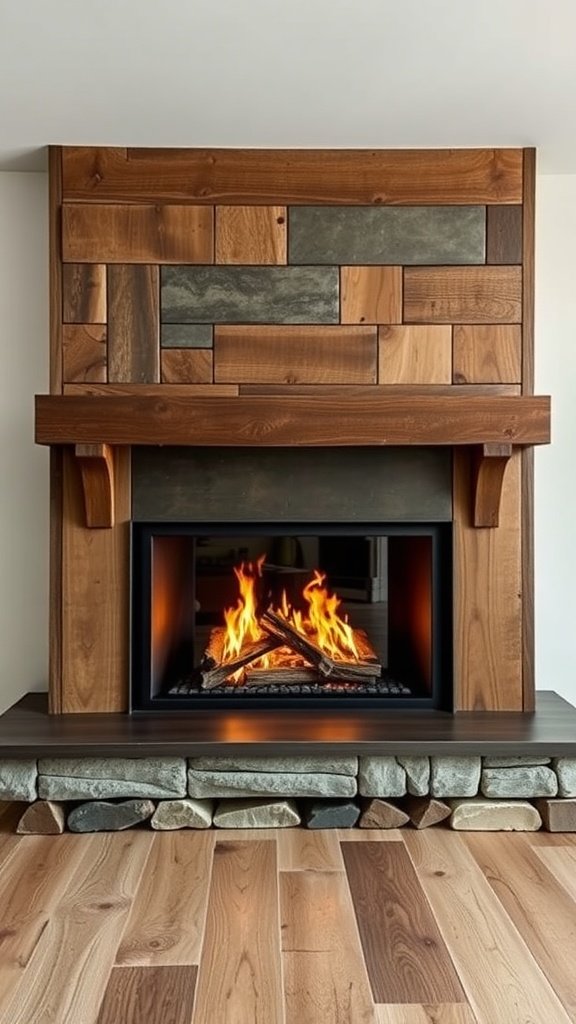
There is a certain type of mantel that appears so frequently in farmhouse and country house design that it’s become something of a signature: the thick, rough-hewn timber beam, left largely unfinished, sitting directly on the wall above the firebox. It is one of the simplest and most effective things you can do to a fireplace.
The appeal is easy to understand. A substantial beam has genuine presence without being complicated. It requires almost no styling — its own texture and form are the styling. And because it reads so clearly as a natural material, it brings an immediate sense of warmth even before the fire is lit.
Getting the Proportions Right
✦ Depth matters as much as length — a mantel that’s at least 8 to 10 inches deep has real presence
✦ The beam should ideally be 6 to 8 inches above the firebox opening to meet fire safety requirements
✦ For a rustic look, leave the end grain visible rather than cutting it flush with the wall
✦ Corbel brackets in matching wood or black iron add support and visual interest
✦ The rougher and more textured the surface, the better — don’t sand away the character
11. Copper and Brass Accents — Warm Metal Tones That Age Beautifully
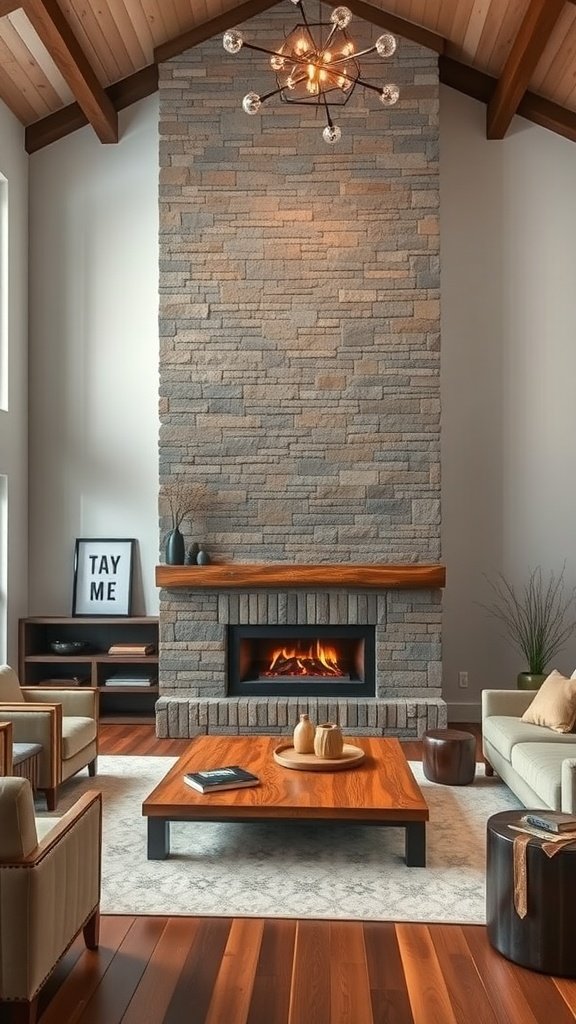
In the rustic material palette, copper and brass occupy a very particular and appealing niche. They’re warm metals that develop character over time — patina, darkening, subtle variations in tone — which makes them perfect partners for natural materials that also develop and age. A fireplace that incorporates copper or brass elements will look better in five years than it does today, which is a rare quality in any home feature.
These metals show up most naturally as fireplace tools, screens, hood accents, or trim details. They don’t need to be the dominant material — even small touches of copper or aged brass can shift the warmth of a fireplace significantly.
Where to Incorporate Copper and Brass
1. Fireplace tool set: A matching set in aged brass or copper is both functional and beautiful
2. Firebox surround trim: A thin brass or copper border around the firebox opening adds a refined detail
3. Hood accents: Copper rivets or trim on a steel hood creates a striking material combination
4. Log holders and buckets: Beside the fireplace, these functional items can be chosen for their material beauty
5. Mirror frame above the mantel: An aged brass or copper mirror is a natural focal point above a rustic mantel
12. The Inglenook — Ancient Coziness, Modern Execution
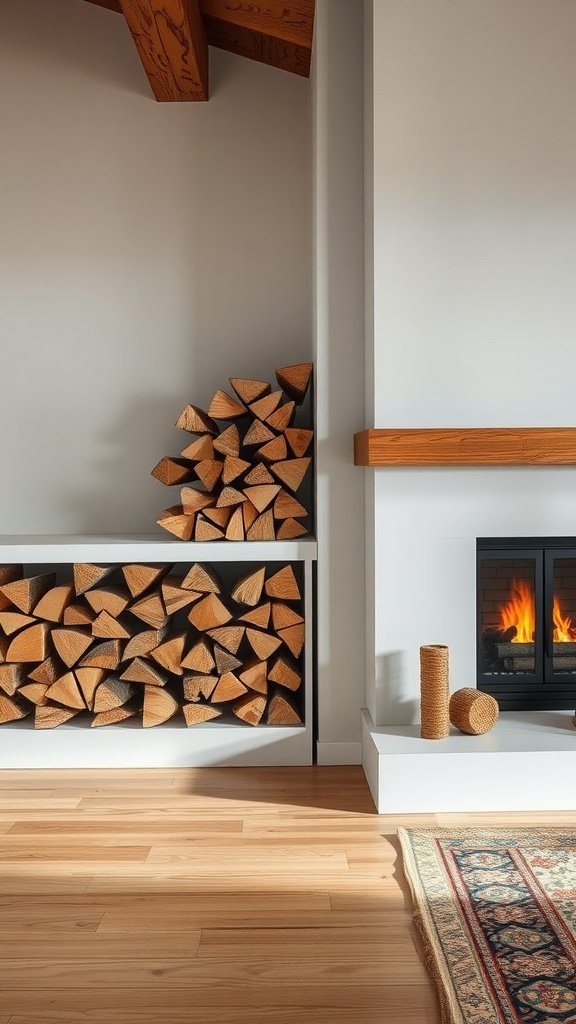
The inglenook is one of the oldest fireplace configurations in domestic architecture — a recessed alcove built around the hearth, typically with built-in seating on either side, creating a room within a room. It’s a design that’s been with us for hundreds of years, and it endures because it solves a simple human problem with elegant architecture: how do you create a truly cocooning, intimate space around a fire?
A modern rustic inglenook takes this ancient concept and executes it with contemporary materials and restraint. Stone or rough plaster walls inside the nook, simple wooden benches with cushions, a clean firebox — the result is warm, intimate, and completely compelling.
Elements of a Modern Rustic Inglenook
✦ The nook walls in a contrasting material from the main room — stone or rough plaster where the room is smooth
✦ Built-in wooden benches at sitting height with thin cushions in natural linen or wool
✦ A slightly lowered ceiling within the nook reinforces the sense of enclosure
✦ Simple integrated lighting — a small pendant or recessed lights above the bench
✦ Keep the firebox simple and clean — the architecture of the nook is doing the heavy lifting
13. Mixed Material Fireplace Surround — Texture in Every Direction
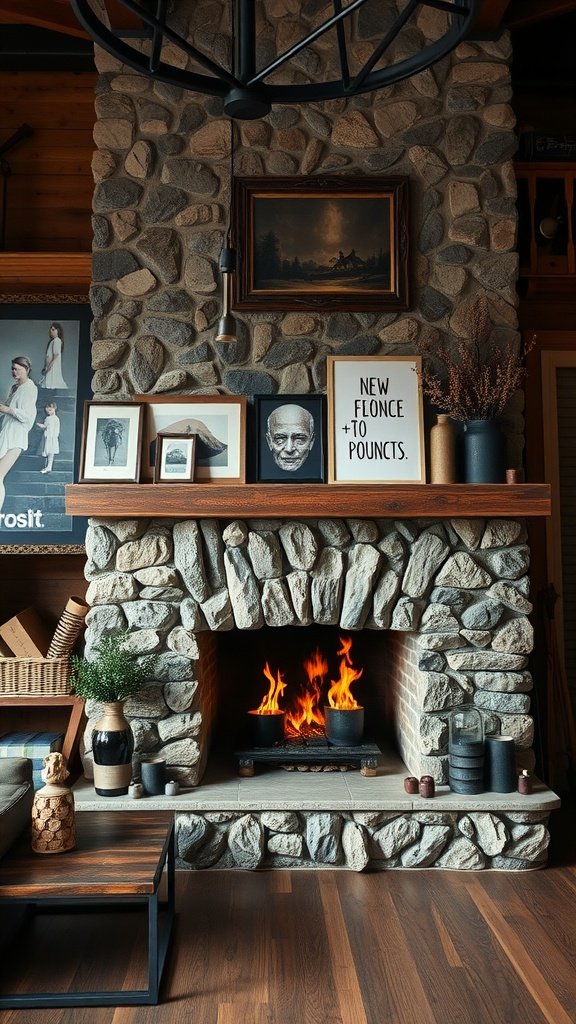
One of the hallmarks of sophisticated modern rustic design is the deliberate combination of multiple materials in a single feature. A fireplace surround that uses stone at the base, wood at the mantel, and perhaps steel or concrete as a transition element has a layered quality that a single-material approach rarely achieves.
The key to making mixed materials work is establishing a clear visual logic. You’re not just throwing different things together — you’re creating a composition where each material has a defined role. Stone at the base feels grounded and heavy, as stone should be. Wood at the mantel is warm and human-scaled. Steel in between is precise and structural. Everything has its place.
Successful Mixed Material Combinations
✦ Stone base + reclaimed wood mantel + raw steel firebox surround: the definitive modern rustic combination
✦ Concrete surround + warm oak shelf + blackened steel fireplace tools: industrial rustic with warmth
✦ Brick surround + weathered walnut mantel + antique brass accents: rich and layered
✦ Rough plaster + timber mantel + slate hearth: textural but cohesive
✦ The rule: no more than three materials in close proximity, and make sure they share at least one tonal quality
14. Fireplace With Log Storage — Functional Beauty
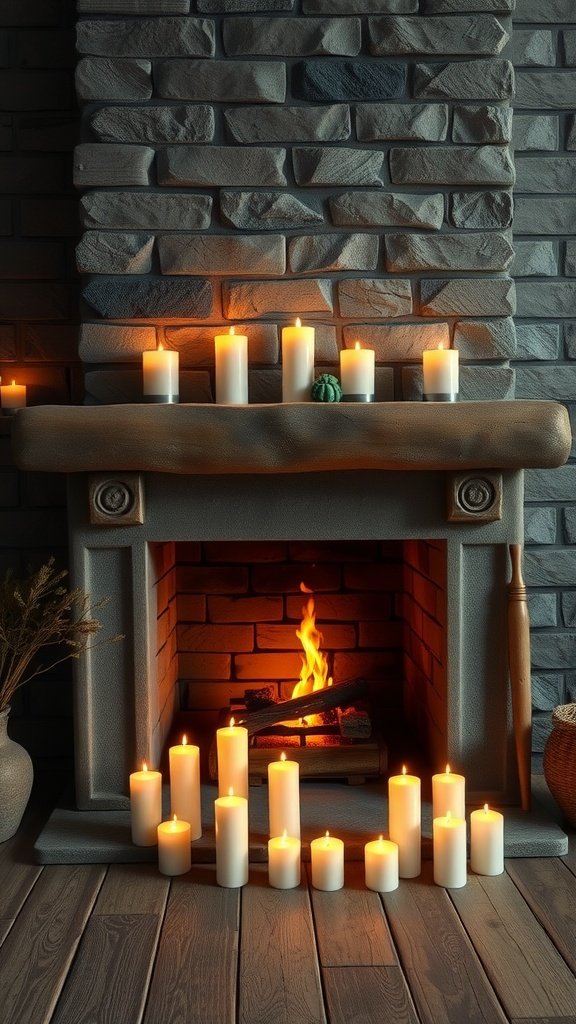
Built-in log storage beside or beneath a fireplace is one of those design elements that manages to be both entirely practical and genuinely beautiful. A stack of split firewood, neatly organized, has a sculptural quality that no purely decorative object could match. And it signals, clearly and warmly, that this fireplace is actually used — which is exactly the message you want a rustic fireplace to send.
Even in homes with gas fireplaces where the wood is purely decorative, a log store beside the fireplace adds the right visual warmth. A curated stack of birch logs or neatly split oak is one of the most cost-effective styling elements you can add to any fireplace.
Log Storage Ideas for Modern Rustic Fireplaces
1. Built-in alcoves: Recessed log storage niches in the fireplace wall are the most architectural option
2. Steel log holders: Simple, clean, and contemporary — blackened steel is the best finish for a rustic context
3. Wooden log boxes: A simple crate or box in matching timber beside the fireplace
4. Beneath the hearth: A raised hearth with open storage below is a very efficient use of space
5. Integrated shelving: Alternating log storage with books and objects on flanking shelves
15. Fireplace Seating Nook — Creating a Gathering Destination
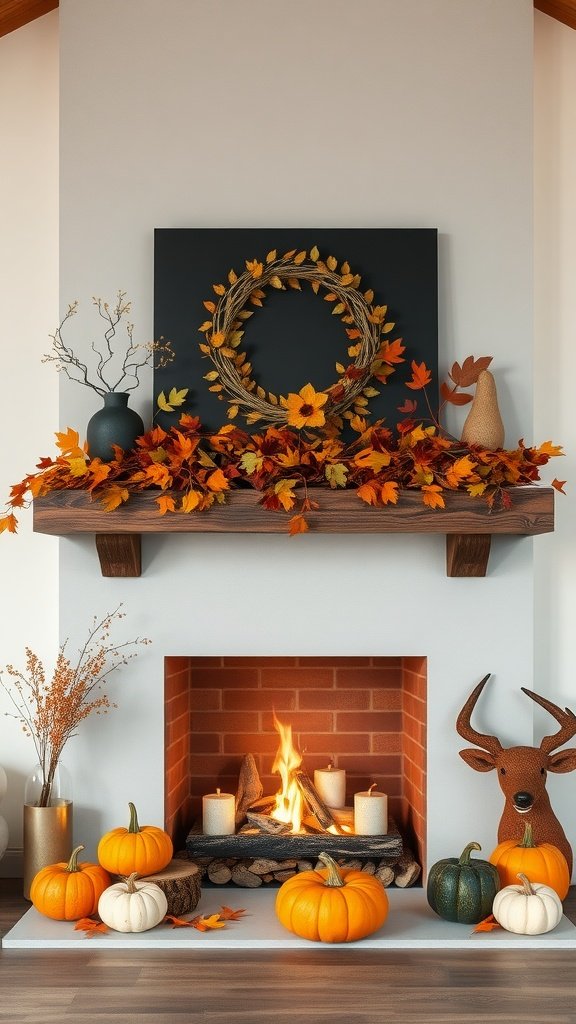
A fireplace without comfortable seating around it is a wasted opportunity. But a fireplace with truly thoughtful seating — seating that’s positioned, proportioned, and arranged specifically in relationship to the fire — becomes something genuinely special. It becomes a destination in your home. The place people naturally gravitate toward.
For a modern rustic fireplace, the seating should feel substantial and unpretentious. Deep sofas, oversized armchairs, worn leather — pieces that look better with use rather than worse. A mix of seating types (two or three different chairs, perhaps a small sofa) feels more gathered and organic than matched sets.
Building the Perfect Fireplace Seating Arrangement
✦ Position the seating closer to the fireplace than feels instinctively right — most people sit too far away
✦ An L-shaped or U-shaped arrangement draws people in and promotes conversation
✦ A low coffee table in the center keeps the arrangement anchored without blocking the fire view
✦ Soft textures — wool throws, sheepskin on chairs, cushions in natural linen — add the final layer of warmth
✦ A small side table between chairs means no one has to reach for their drink
16. Outdoor Rustic Fireplace — Bringing the Warmth Outside
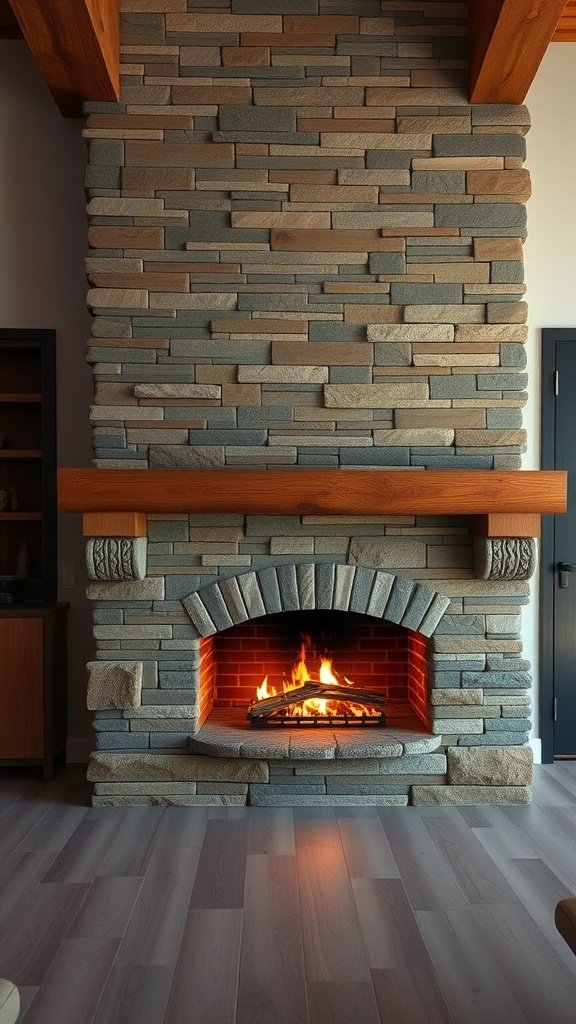
An outdoor fireplace is one of the most transformative additions you can make to a garden, patio, or deck. It’s the element that turns outdoor space from a fair-weather amenity into a year-round destination. And in a rustic material palette — stone, brick, raw timber — an outdoor fireplace can feel like it belongs to the landscape rather than sitting on top of it.
The best outdoor rustic fireplaces feel like they’ve been there for generations. They’re built from materials that weather beautifully — natural stone, aged brick, iron — and they’re surrounded by comfortable, durable outdoor furniture arranged to take full advantage of the warmth and light.
Design Principles for Outdoor Rustic Fireplaces
✦ Natural stone is the most durable and beautiful outdoor fireplace material — it handles freeze-thaw cycles far better than brick
✦ A simple stone chimney with a wide opening creates the most dramatic visual impact
✦ Position the fireplace so it’s sheltered from prevailing winds — a walled corner is ideal
✦ Outdoor-rated cast iron or steel fire grates are essential for longevity
✦ Surround the fireplace with gravel or flagstone rather than decking — much safer and more durable
✦ Lighting above and around the fireplace area extends the usability after dark
17. Herringbone Firebox Brick Pattern — Quiet Craftsmanship
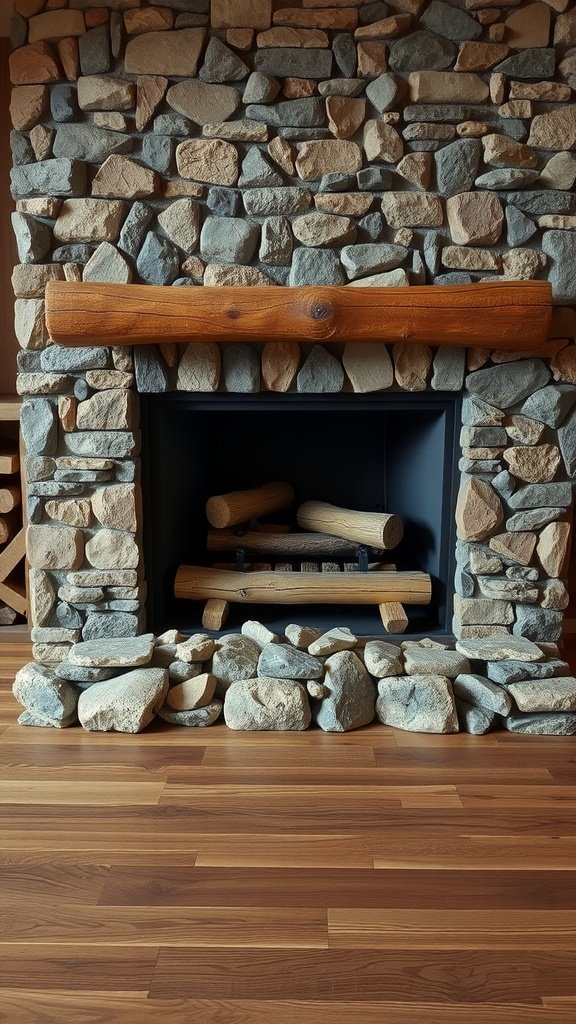
Most people focus so much on the surround and mantel that they forget about the inside of the firebox itself. But the firebox is what you look directly into when the fire is lit, and what you see when it’s not. A herringbone brick pattern inside the firebox is one of the most beautiful and historically authentic finishing details you can add to any fireplace.
The herringbone pattern — diagonal bricks laid in alternating directions to create a V or arrow pattern — has been used in high-quality fireplaces for centuries. It’s functional as well as beautiful: the angled surface reflects heat more efficiently back into the room. And it signals a level of craftsmanship and attention to detail that elevates the entire fireplace.
Firebox Details Worth Considering
✦ Traditional red herringbone brick: warm, historic, works with any surround style
✦ Firebrick in a lighter cream tone: brighter, more contemporary, makes the flames appear more vivid
✦ Soapstone firebox lining: extraordinary heat retention and a beautiful charcoal gray color
✦ Cast iron fireback: a decorative panel at the back of the firebox that reflects heat and protects the brickwork
18. Dark and Dramatic Fireplace Walls — Moody and Powerful
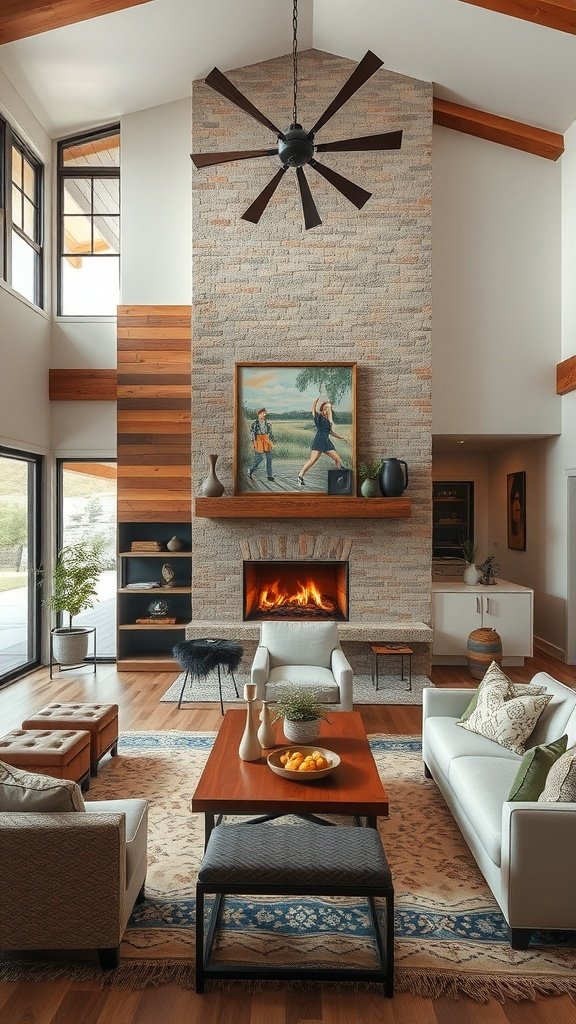
Modern rustic doesn’t have to mean light and airy. One of the most striking directions in the style is the deep, dramatic approach — dark stone, dark wood, dark paint on the surrounding walls, creating a fireplace that feels genuinely moody and powerful. When the fire is lit in this context, the contrast between the warm flames and the dark surroundings is extraordinary.
This approach works particularly well in rooms with high ceilings and good lighting elsewhere in the space. The fireplace wall becomes a dramatic, enveloping focal point rather than just one element among many.
Creating a Dark, Dramatic Fireplace
✦ Deep charcoal or forest green paint on the fireplace wall and chimney breast
✦ Dark, rough-textured stone — slate, dark granite, or charcoal-toned ledge stone
✦ A deep walnut or ebonized oak mantel to match the tonal direction
✦ Warm brass or copper accents that glow against the dark background
✦ Warm, low lighting on the fireplace wall itself — the firelight does the rest
Bringing It All Together: Your Modern Rustic Fireplace
The modern rustic fireplace sits at a genuinely perfect intersection. It’s warm enough to feel traditional and comforting, clean enough to feel contemporary and fresh. It uses materials that are honest and beautiful — stone, wood, iron, brick — without any pretense or artificiality. And it does what a great fireplace has always done: it makes a room feel complete.
The 23 ideas in this guide cover an enormous range of styles, budgets, and spaces. Some will immediately feel right for your home. Others might spark a direction you hadn’t considered. The best modern rustic fireplaces tend to combine two or three of these ideas in a way that reflects the specific character of the home they’re in — and the people who live there.
Whatever direction you choose, build it with quality materials, take your time with the design, and don’t be afraid of simplicity. The most enduring fireplaces are usually the ones that don’t try too hard. Natural materials, honest craftsmanship, and a well-lit fire will do the rest.