
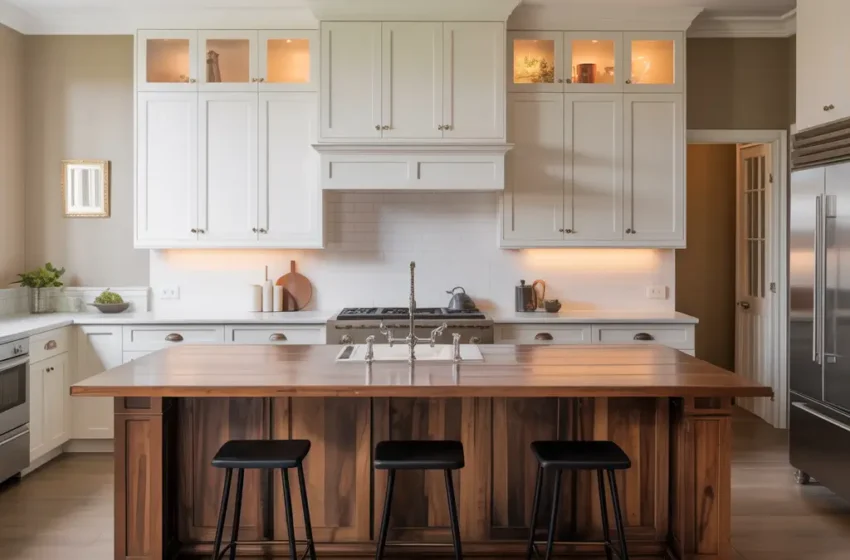
Some design trends burn bright for a season and then disappear without a trace. White and wood kitchens are not one of them. This pairing has been loved by homeowners for decades, and it keeps finding new life with every generation of designers because it solves a problem that almost every kitchen faces: how do you make a space feel clean and bright without it feeling cold and sterile?
The answer is wood. White cabinets give you that fresh, open, airy foundation. Wood — whether it shows up in the countertops, the open shelving, the island base, or the flooring — brings in the warmth, the texture, and the sense of life that pure white interiors can lack. Together, they create a kitchen that looks designed without feeling overdone.
This guide covers 15 of the best white and wood kitchen ideas — organized by design approach, with real guidance on wood species, cabinet styles, budget considerations, and the small decisions that make a big difference. Whether you are doing a full renovation or a targeted refresh, there is something in here that will work for your space.
1. Minimalist White Cabinets with Natural Oak Accents
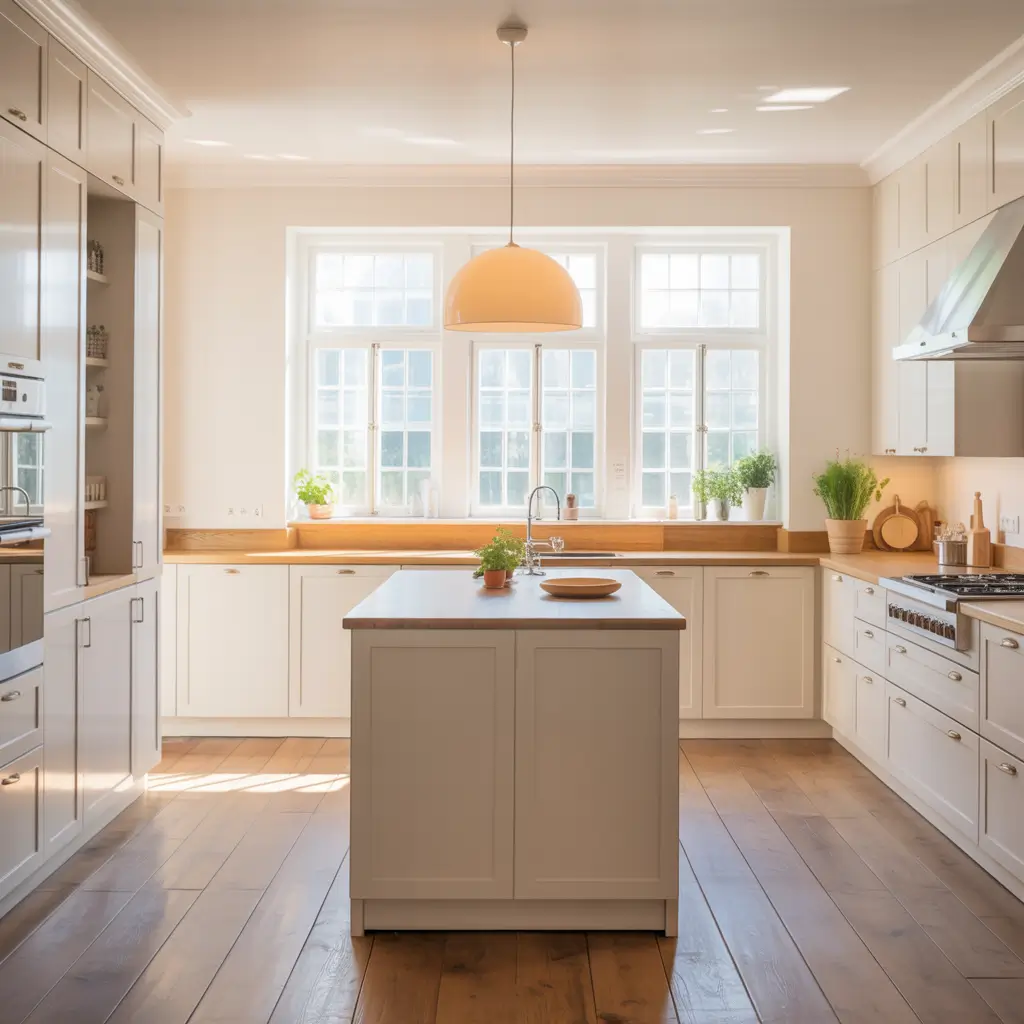
This is the combination that started a thousand Pinterest boards, and for good reason. Flat-panel white cabinets paired with light oak accents hit a very specific note — modern enough to feel current, warm enough to feel livable. The restraint is the point.
The key to making this look work is placement of the oak, not quantity. You do not need oak everywhere. A run of open oak shelves on one wall, or an oak-topped island contrasting with white perimeter cabinets, gives the eye something interesting to land on without overwhelming the cleanness of the white.
Design Details That Make It Work
- Handleless white cabinets with push-to-open or recessed grips
- Light oak floating shelves at one end of the kitchen
- White quartz countertops with subtle veining on the perimeter
- Oak butcher block or solid oak on the island only
- Hardware in brushed brass, matte black, or warm chrome
Pro Tip: Choose oak in a natural or lightly oiled finish rather than a high-gloss lacquer — it keeps the look organic and ages far more gracefully.
2. White Shaker Cabinets with Butcher Block Countertops
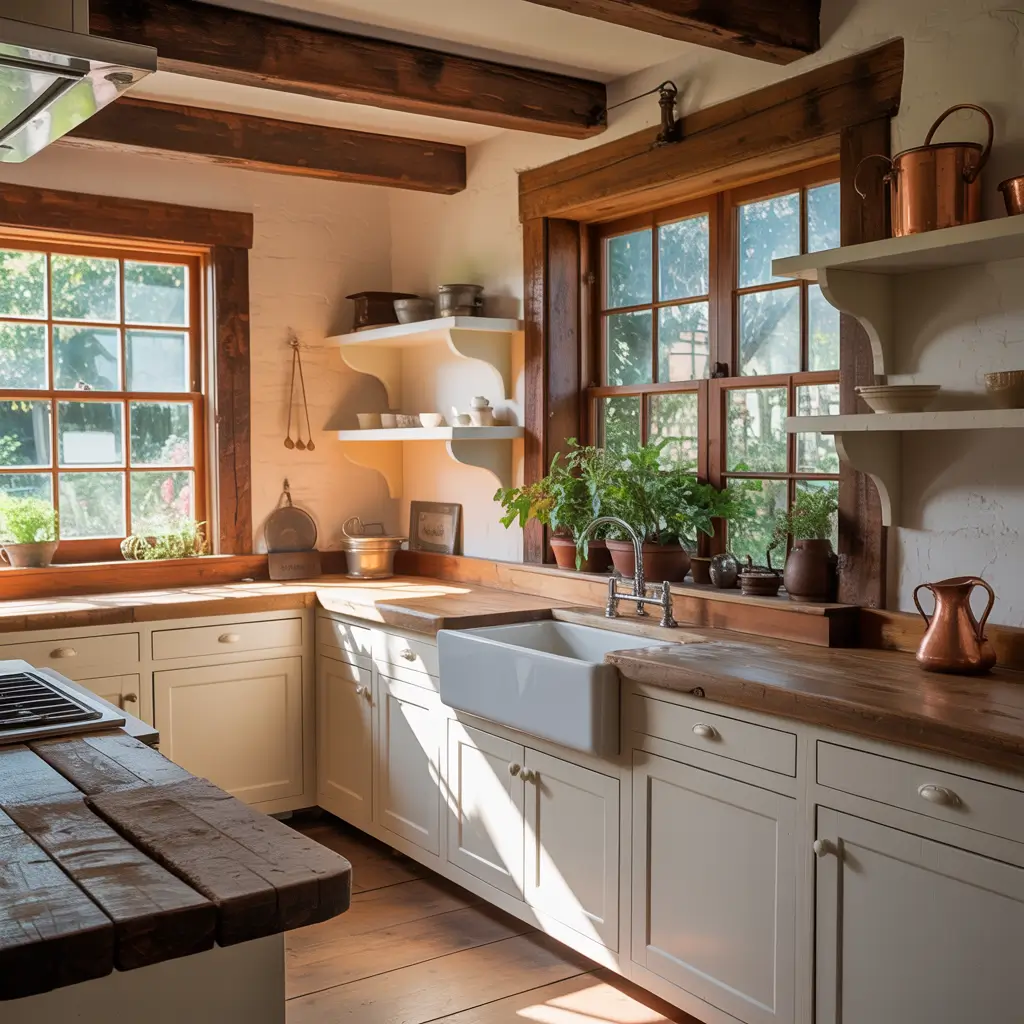
Shaker cabinets are one of those styles that has genuinely earned its staying power. The simple recessed panel, the clean lines, the practical door construction — there is nothing fussy about it. When you pair white shakers with a butcher block countertop, you get a kitchen that feels effortlessly approachable and genuinely warm.
Butcher block countertops get unfairly dismissed sometimes as a maintenance headache. In reality, a well-oiled butcher block countertop is durable, forgiving of small scratches — which you can sand out — and brings a tactile warmth that no stone surface can match.
Butcher Block Maintenance Reality Check
- Oil with food-grade mineral oil every 3 to 6 months — takes about 10 minutes
- Sand and re-oil any deep scratches — this is a feature, not a flaw
- Keep it away from the sink area or use a teak oil treatment for moisture resistance
- Avoid leaving wet cloths sitting on the surface for extended periods
Design Tip: If full butcher block countertops feel like too much commitment, use them only on the island. Keep perimeter counters in white quartz for a balanced mix of practical and beautiful.
3. Scandinavian White and Birch Kitchen
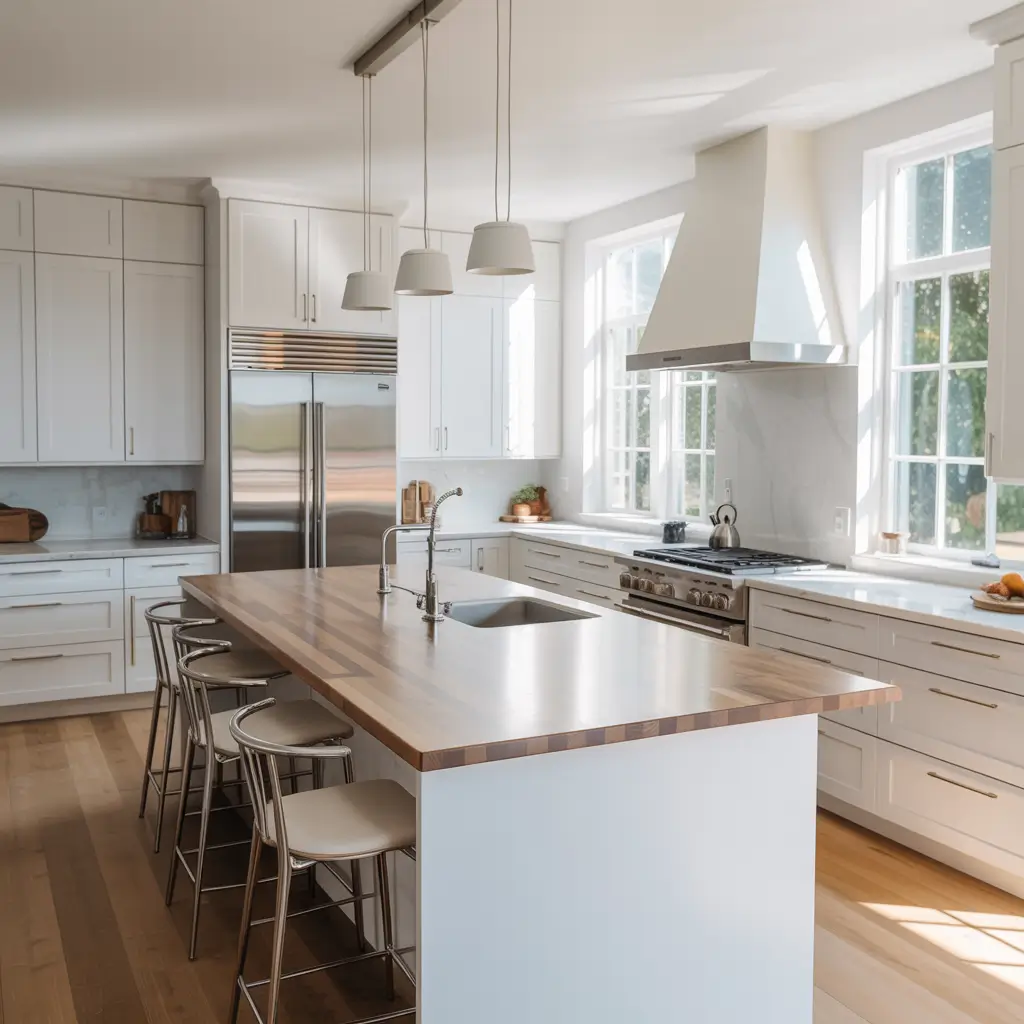
The Scandinavian approach to kitchen design is deceptively simple: strip everything back to what is genuinely useful, then make every remaining element beautiful. In a white and birch kitchen, this philosophy produces spaces that feel spacious, calm, and quietly joyful to spend time in.
Birch is the wood of Scandinavian kitchens for a reason. Its pale, almost blonde tone sits perfectly alongside white without competing for attention. It has a fine, even grain that reads as clean and modern rather than rustic or heavy. Paired with white painted or lacquered cabinets, birch creates a palette that feels genuinely Nordic — cool without being cold.
Essential Elements of the Scandinavian Kitchen
- White walls and cabinets with no ornamental detail
- Pale birch plywood for open shelving or interior cabinet panels
- Natural textiles — linen, cotton, or jute — for any soft furnishings
- Simple pendant lights in ceramic or matte metal
- Plenty of plants, especially in simple white or terracotta pots
- Minimal accessories on display — curated, not cluttered
Color Tip: Introduce one soft muted accent color — dusty sage, pale clay, or warm grey — through textiles or ceramics to keep the palette from feeling too stark.
4. White Cabinets with a Dark Walnut Island
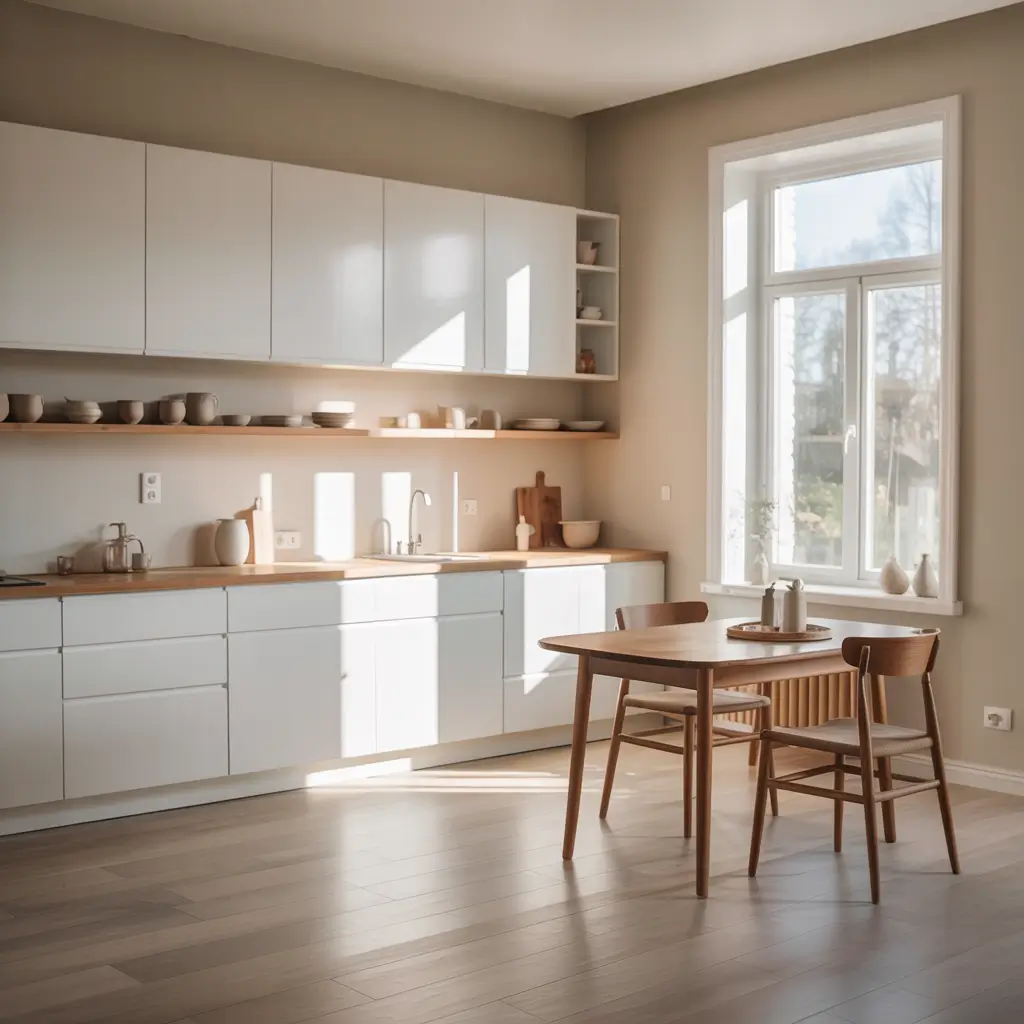
If you want one design move that immediately elevates a white kitchen from pleasant to genuinely impressive, this is it. A white kitchen with an island in dark walnut creates contrast, drama, and definition — all without a single bold paint color or statement tile.
The visual logic is straightforward: the white perimeter cabinets keep the room bright and open, while the darker walnut island anchors the space and gives the eye a focal point. It also practically defines the cooking and prep zone from the surrounding kitchen, which works particularly well in open-plan spaces.
Making the Two-Tone Island Work
- Choose a walnut stain or natural walnut that complements your flooring tone
- Match the island countertop to the perimeter counters for cohesion, or go walnut all the way
- Barstools in warm leather or natural rattan complete the look
- Pendant lights above the island in matte black or unlacquered brass
- Avoid matching the island hardware to the perimeter — use the island as a chance to contrast
Scale Tip: This approach works best when the island is at least 36 inches wide and 60 inches long — the contrast needs space to breathe and register as intentional rather than mismatched.
5. Farmhouse White and Reclaimed Wood Kitchen
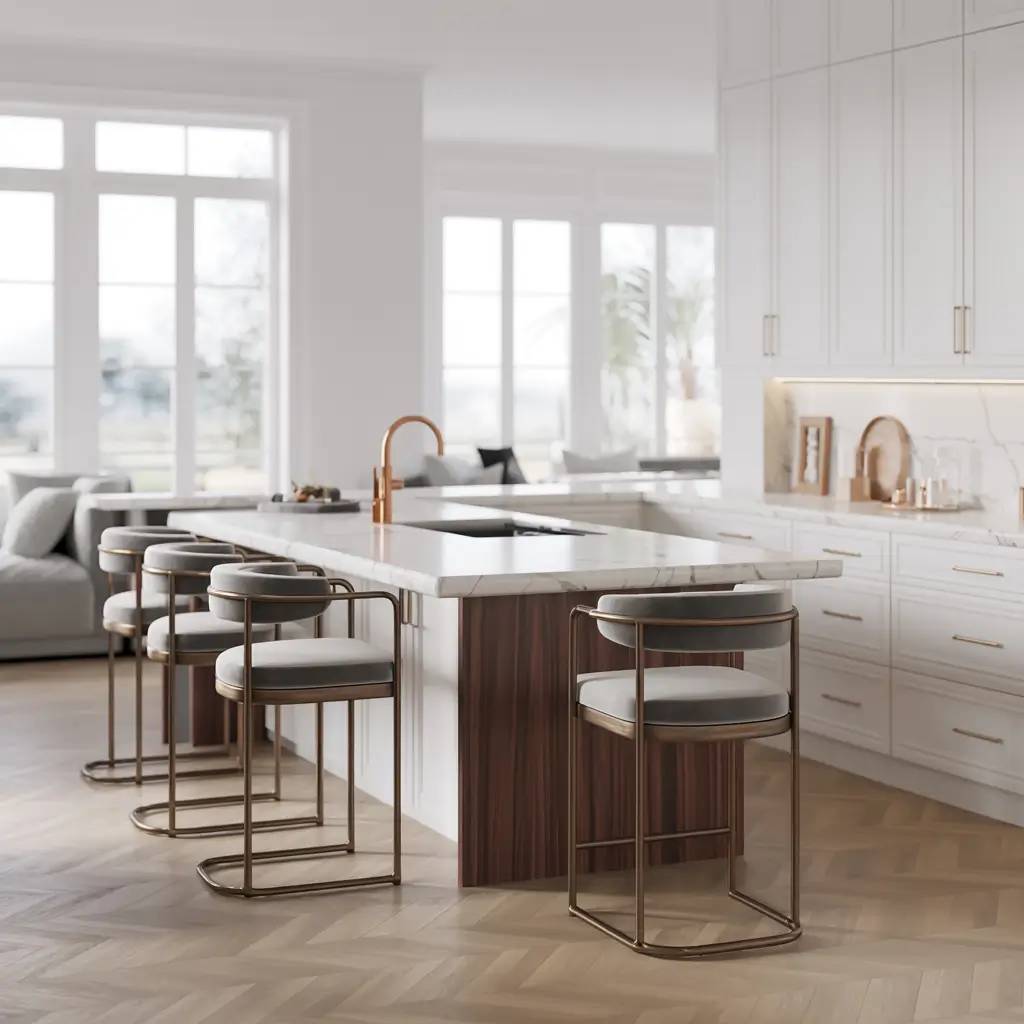
Farmhouse kitchens have a warmth that is genuinely hard to replicate with any other aesthetic. And when you root that farmhouse feel in white and reclaimed wood, you get a kitchen that looks like it has a story — like it evolved over time rather than being designed all at once.
Reclaimed wood brings character that new timber simply cannot reproduce. The weathering, the variations in grain and tone, the occasional nail hole or rough edge — these are the things that make a kitchen feel authentic. Against white painted shaker cabinets, reclaimed wood glows.
Where to Use Reclaimed Wood in the Kitchen
- Open floating shelves — the most impactful and budget-friendly spot
- A kitchen island top or base
- A reclaimed wood range hood surround
- Ceiling beams if your kitchen has the ceiling height
- A feature wall behind open shelving
Sourcing Tip: Architectural salvage yards, online marketplaces like Facebook Marketplace or Craigslist, and specialist reclaimed timber suppliers are all great sources. Verify that reclaimed wood is properly treated before indoor use.
6. White and Pale Pine for a Light Coastal Feel
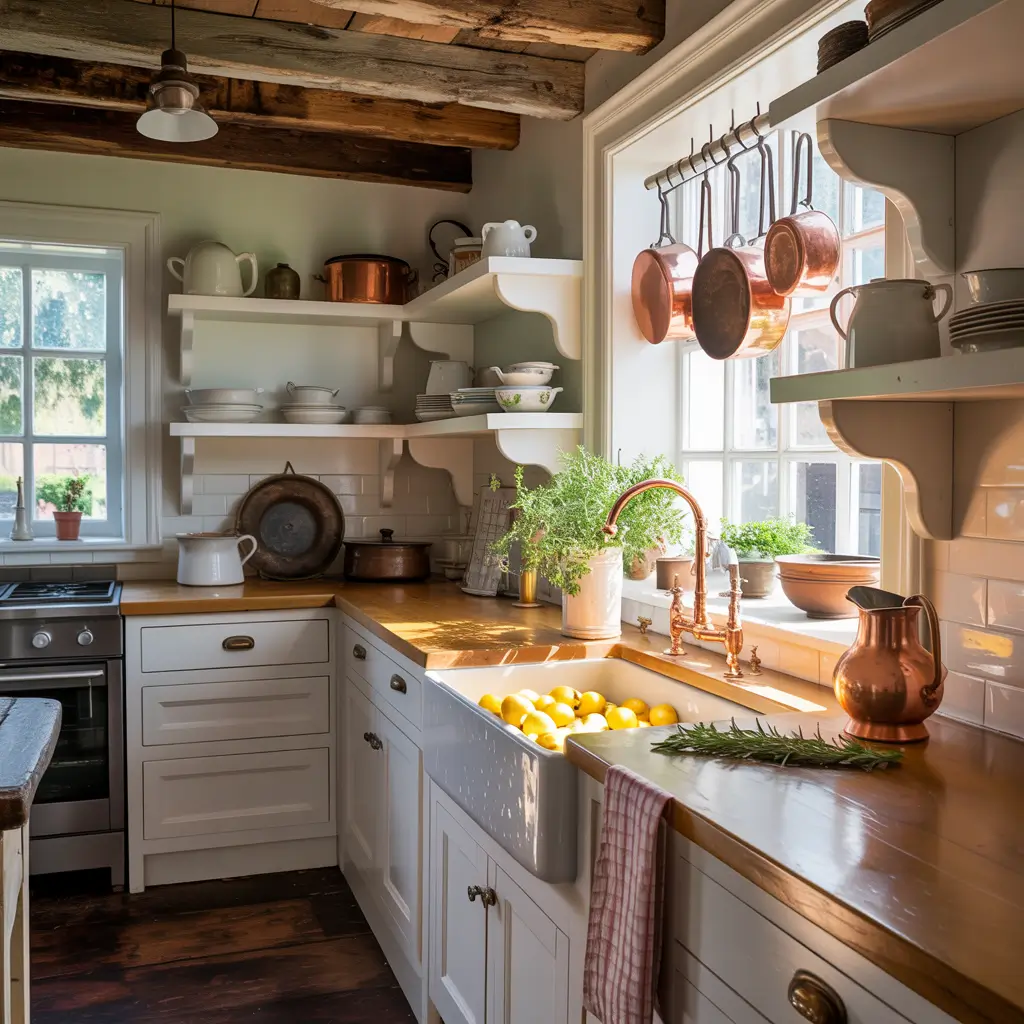
Pine gets underestimated in kitchen design. When used in a pale, lightly knotted form — rather than the heavy golden pine of the 1990s — it brings a fresh, almost beachy quality to a white kitchen that feels current and really livable.
The key is choosing pine that has been lightly oiled or whitewashed rather than heavily lacquered. This keeps the grain visible and the texture present while cooling the natural warmth of the wood. The result feels coastal and relaxed without resorting to nautical clichés.
Coastal White and Pine Styling
- White tongue-and-groove cabinet doors with simple bar pulls
- Pale pine open shelves styled with natural ceramics and woven baskets
- White subway tile or plain rendered backsplash
- Stone or concrete benchtops to ground the lighter wood
- Rattan or seagrass bar stools at a pale pine breakfast bar
7. White Upper Cabinets, Wood Lower Cabinets
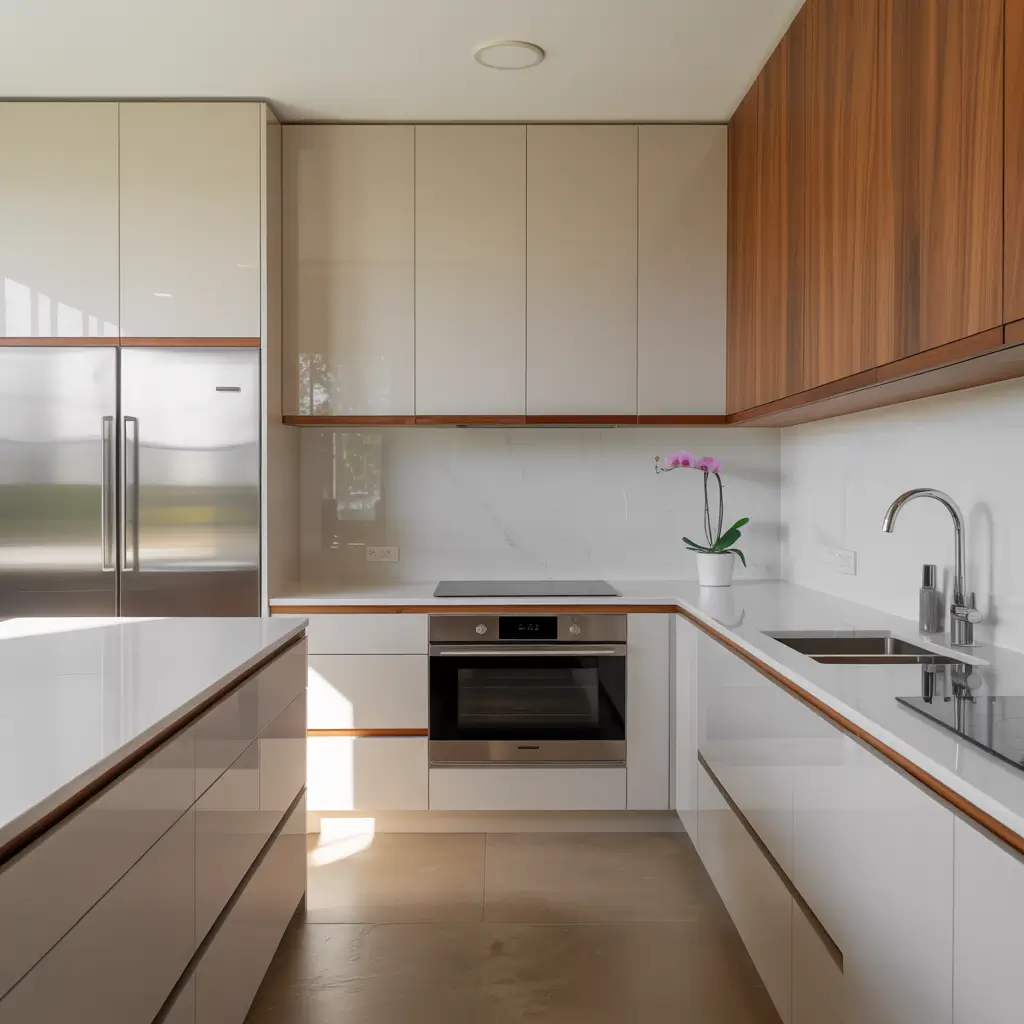
Two-tone kitchens have genuinely earned their place in modern kitchen design. The combination of white upper cabinets with wood-toned lower cabinets — or specifically wood-look lower cabinets in a warm oak or walnut finish — is one of the most balanced approaches to the white and wood combination.
Visually, it works because the white above keeps the room light and open at eye level, while the warmer wood tones below ground the space and prevent it from feeling too stark. It also has a very natural logic to it — lighter above, heavier below — that mirrors how we instinctively experience rooms.
Two-Tone Cabinet Combinations That Work
- Bright white uppers with light oak lowers — fresh and Scandinavian
- Soft white uppers with warm walnut lowers — rich and sophisticated
- Off-white or linen uppers with pale ash lowers — subtle and warm
- White glass-front uppers with solid wood lowers — traditional with a modern edge
Balance Tip: Keep the countertop and backsplash relatively neutral when going two-tone — the cabinet combination is doing the design work, so let it lead without competition.
8. White Kitchen with Wood-Look Porcelain Floor
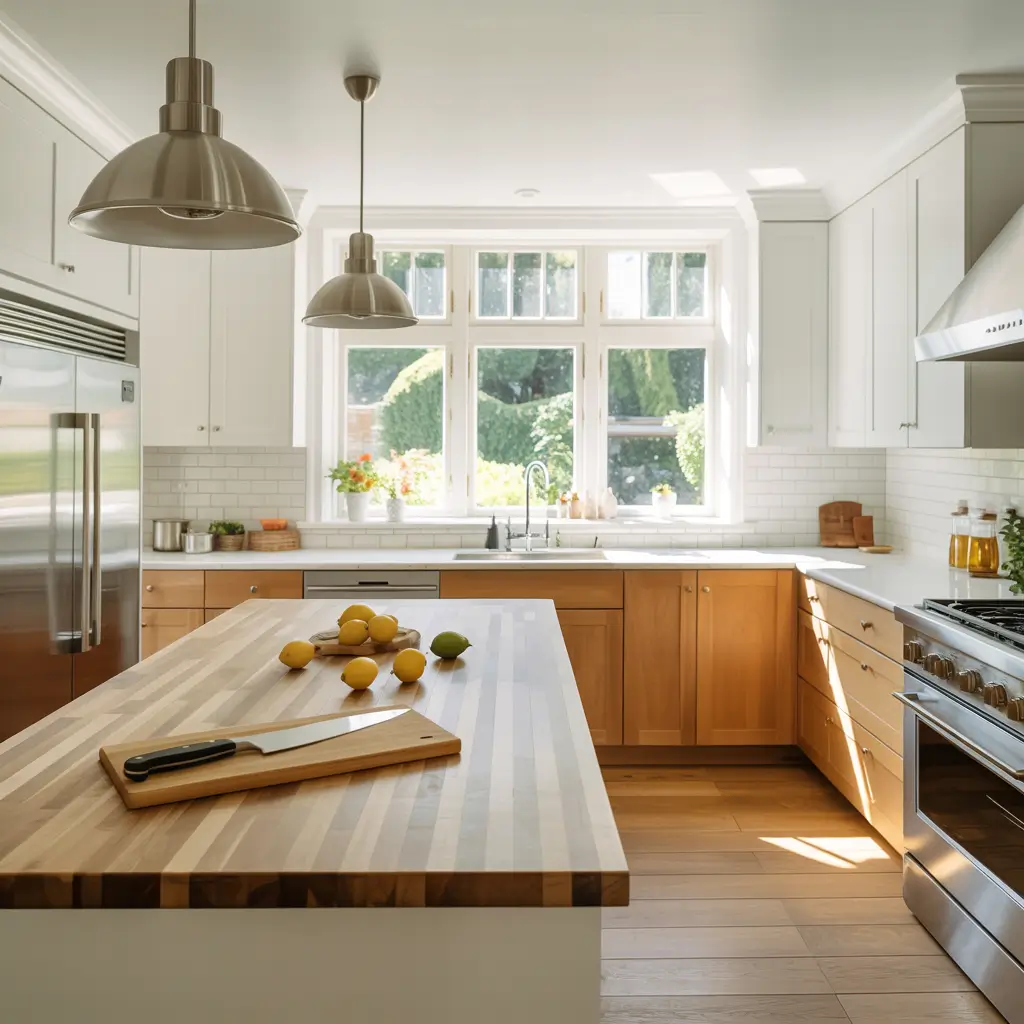
Not everyone can work with real hardwood in a kitchen — water, heavy traffic, and the occasional dropped pot all take their toll. But wood-look porcelain tile has become genuinely convincing, and in a white kitchen it provides the warmth of wood with the durability and easy maintenance of tile.
Modern porcelain plank tiles replicate wood grain with remarkable accuracy. Longer formats — 12×48 or 24×48 — look particularly convincing and make small kitchens appear significantly longer. In a white kitchen with white or light cabinet finishes, a warm wood-look floor is often the single design element that stops the space from feeling clinical.
Choosing the Right Wood-Look Tile
- Warm honey or medium oak tones work with most white cabinet shades
- Grey-toned wood looks pair best with cool white or bright white cabinets
- Wider planks (8 to 12 inch) feel more contemporary; narrower feels more traditional
- Matte finish is more forgiving and realistic than high gloss
9. Open Shelving in White and Natural Wood
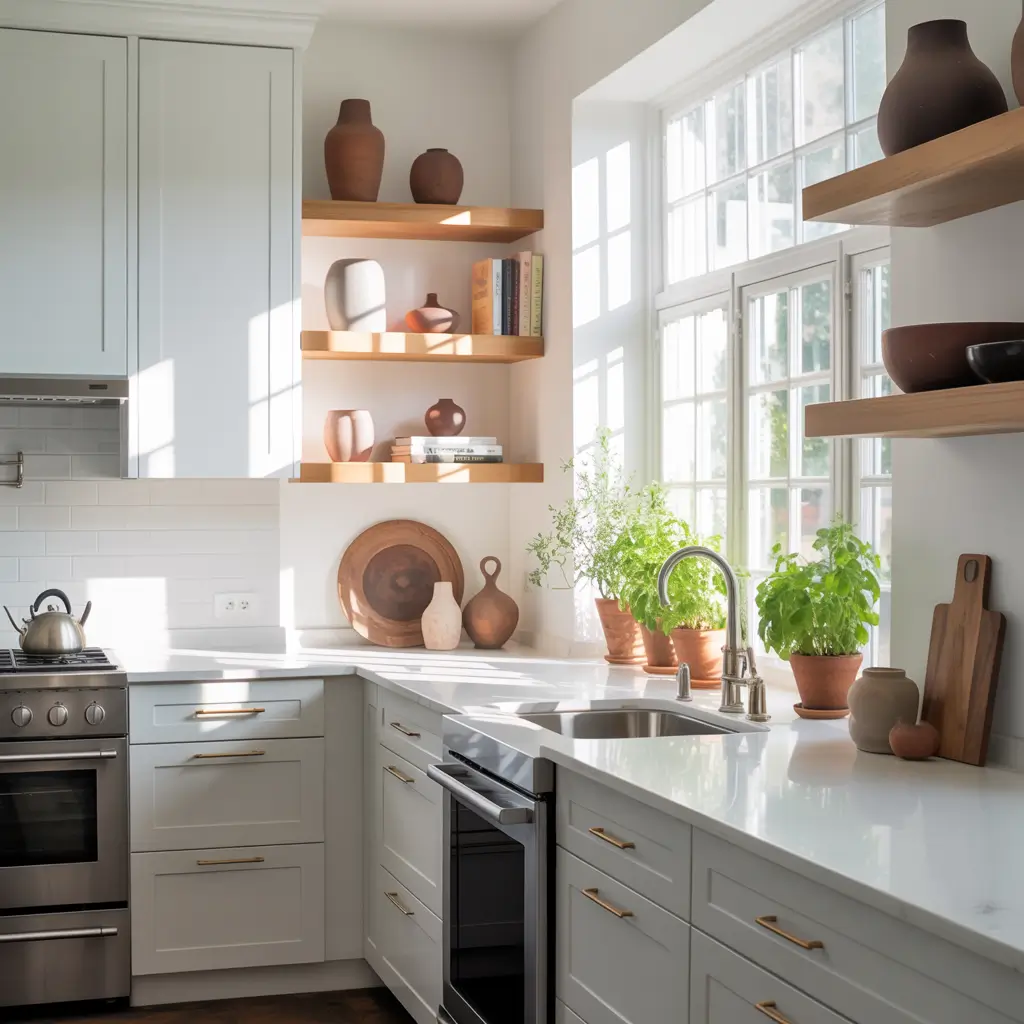
Open shelving is one of those design choices that divides people sharply. Some love the airy, accessible feel. Others hate the visible clutter. The reality is that open shelving works brilliantly in white and wood kitchens — as long as you edit what lives on the shelves.
Natural wood floating shelves against white walls are one of the most affordable ways to introduce the white and wood combination into a kitchen. A single run of oak or walnut shelves above a white-tiled backsplash can transform the whole personality of a kitchen wall.
What to Put on Open Kitchen Shelves (and What to Hide)
- Display: everyday ceramics in neutral tones, a few cookbooks, plants, glass jars
- Display: matching sets look more intentional than mixed odd pieces
- Hide: cleaning products, spare appliances, anything with busy labelling
- Hide: plastic containers, mismatched mugs, anything you would not happily photograph
Styling Tip: Leave some empty space on open shelves deliberately — a crowded shelf looks chaotic, but a considered one with breathing room looks designed.
10. White Kitchen with a Live-Edge Wood Feature
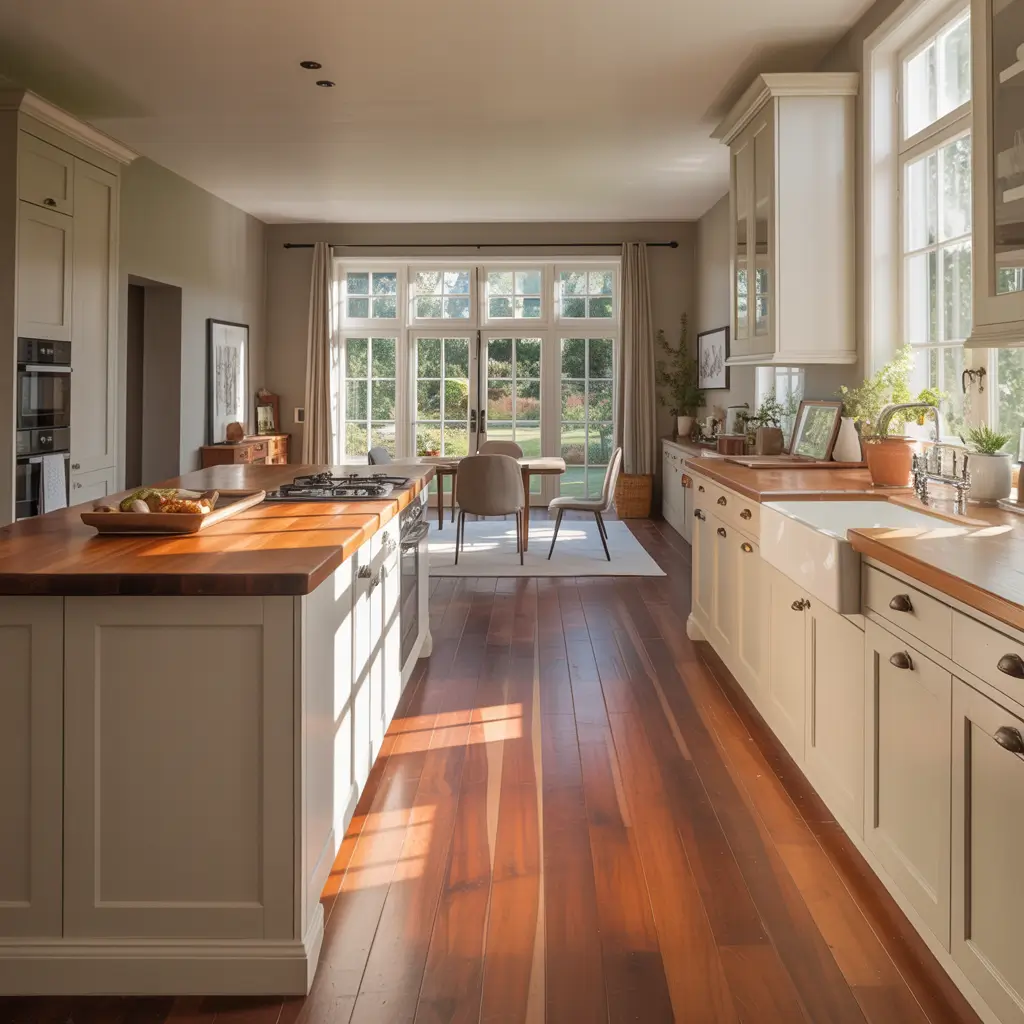
A live-edge wood element in a white kitchen is the definition of a statement piece. The raw, organic edge of a live-edge slab — with its natural curves, occasional bark inclusions, and unique grain — sits in fascinating contrast to the clean, precise lines of white cabinetry.
The most popular application is a live-edge wood island countertop or a single live-edge shelf above a range. Both create an immediate focal point that people comment on and that photographs beautifully. This is not a budget option, but it is a genuinely transformative one.
Live-Edge Applications in the White Kitchen
- Island countertop in a single slab — spectacular, expensive, worth it
- Floating shelf above the range hood — impactful, more affordable
- Breakfast bar overhang on the island
- Wall-mounted shelf at the end of the kitchen
11. White Cabinets with a Wood-Panelled Range Hood
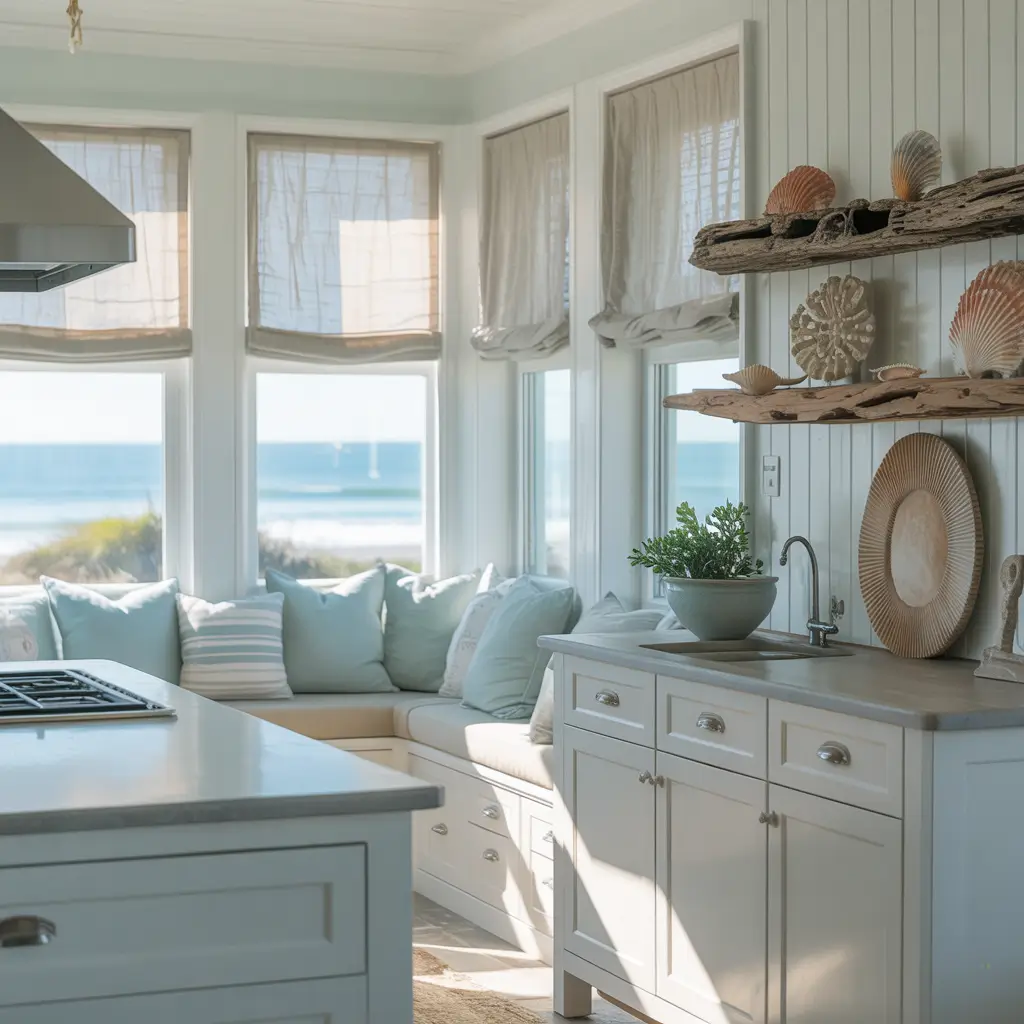
The range hood is one of the most underutilized design opportunities in a kitchen. In a white kitchen, a wood-panelled hood surround immediately becomes the focal point of the whole space — a natural, organic element rising above the cooktop that gives the room a genuine center of gravity.
This works in both farmhouse and contemporary kitchens. In a farmhouse setting, the hood can be a more traditional barrel or tapered shape in natural or whitewashed wood. In a modern kitchen, a simple flat-panelled box hood in a warm oak veneer against white cabinetry reads as clean and architectural.
Budget Tip: A plywood or MDF hood box clad in solid wood or veneer panels gives you the full custom look at a fraction of the price of a solid timber hood. Many skilled DIYers tackle this as a weekend project.
12. White and Wood in a Small Kitchen — Making Every Inch Count
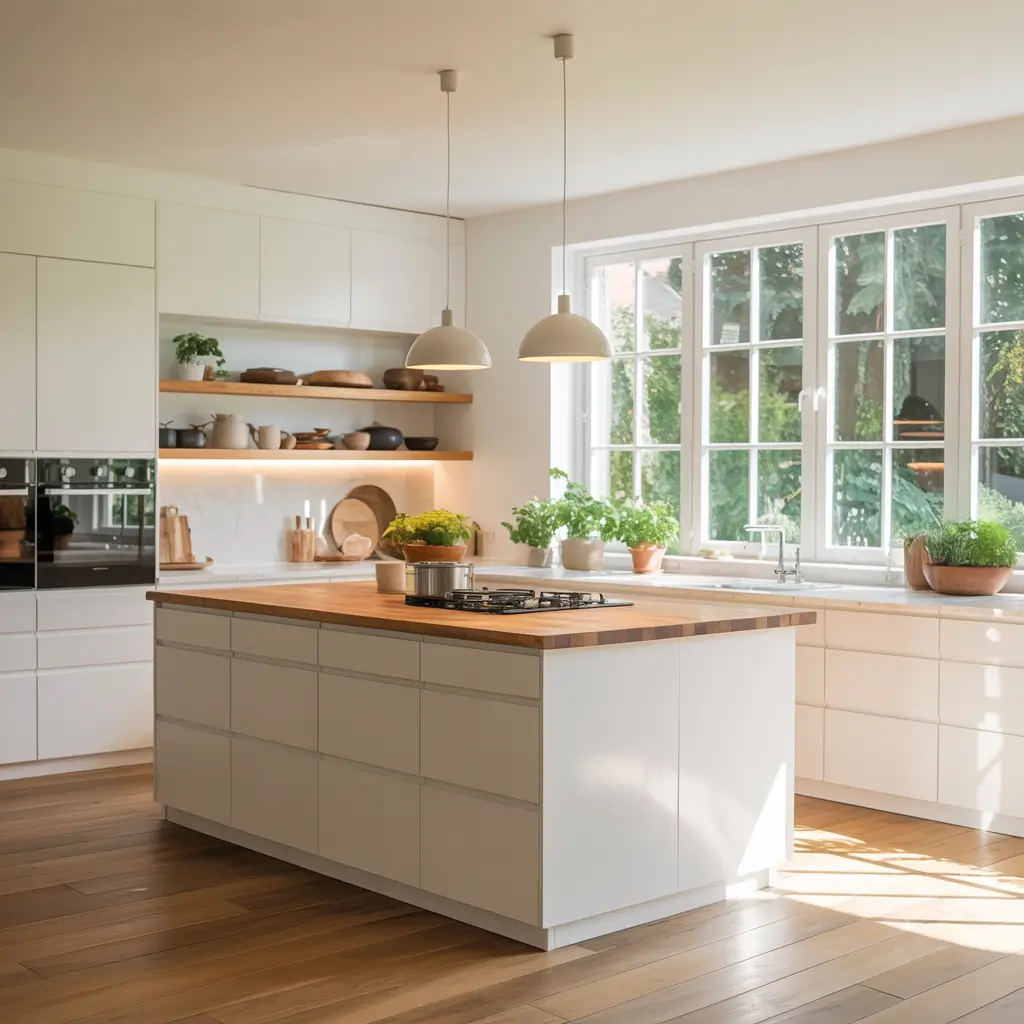
Small kitchens benefit enormously from the white and wood combination, but the approach needs to be more deliberate. White does the heavy lifting — keeping walls, cabinets, and upper surfaces bright and recessive so the space feels larger. Wood provides just enough warmth to stop it feeling like a clinical storage room.
Small Kitchen White and Wood Strategies
- Keep upper cabinets white with glass fronts to maintain openness at eye level.
- Use wood only on the floor or a single shelf to avoid the warmth becoming heavy.
- Choose a light wood tone — blonde oak, ash, birch — over dark walnut or mahogany.
- Integrated appliances behind white panels maintain the unbroken white run.
- A wood breakfast bar extending from the counter adds seating without a freestanding table.
- Mirrors or mirrored splashbacks double the light and apparent depth of the space.
13. Japandi White and Wood Kitchen
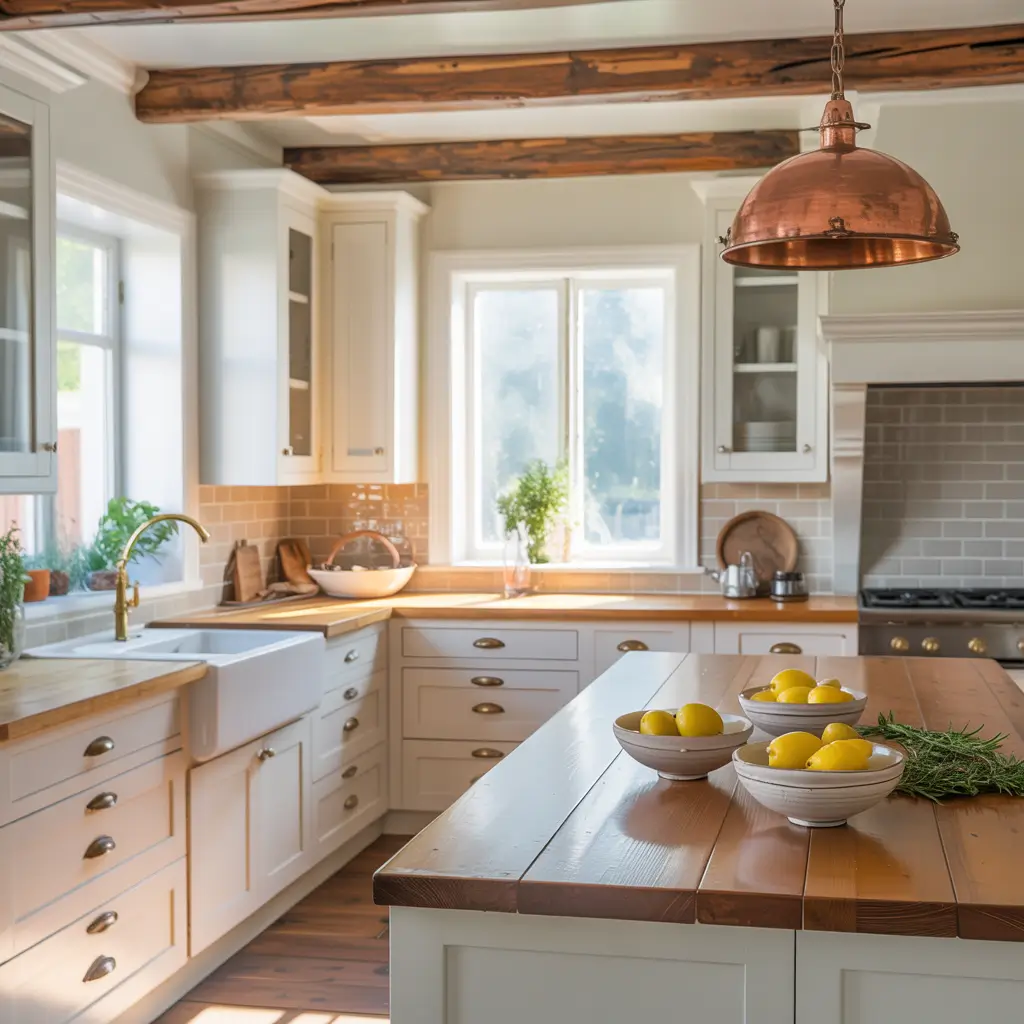
Japandi — the hybrid of Japanese minimalism and Scandinavian design principles — has become one of the most influential kitchen aesthetics of the last five years, and it thrives in a white and wood palette. The philosophy prioritizes calm, functional spaces where every object earns its place.
In a Japandi kitchen, white is quiet and matte rather than bright and glossy. Wood is in dark-to-medium tones — walnut, dark oak, smoked ash — and appears in deliberate, spare applications. The effect is deeply considered and genuinely serene.
Japandi Kitchen Characteristics
- Matte white or off-white cabinets with absolutely no ornamentation
- Medium to dark wood tones — walnut and smoked oak are particularly fitting
- Wabi-sabi ceramics — handmade, imperfect, beautiful
- Concealed appliances and zero visible clutter
- Natural fiber textiles — linen, jute, cotton — in muted tones
- One or two carefully chosen plants, not a full indoor garden
Color Palette: Restrict the palette to white, the wood tone, and one soft neutral — warm grey, pale clay, or sand. Japandi spaces are intentionally low-contrast and visually quiet.
14. White Kitchen with Wood Ceiling Beams
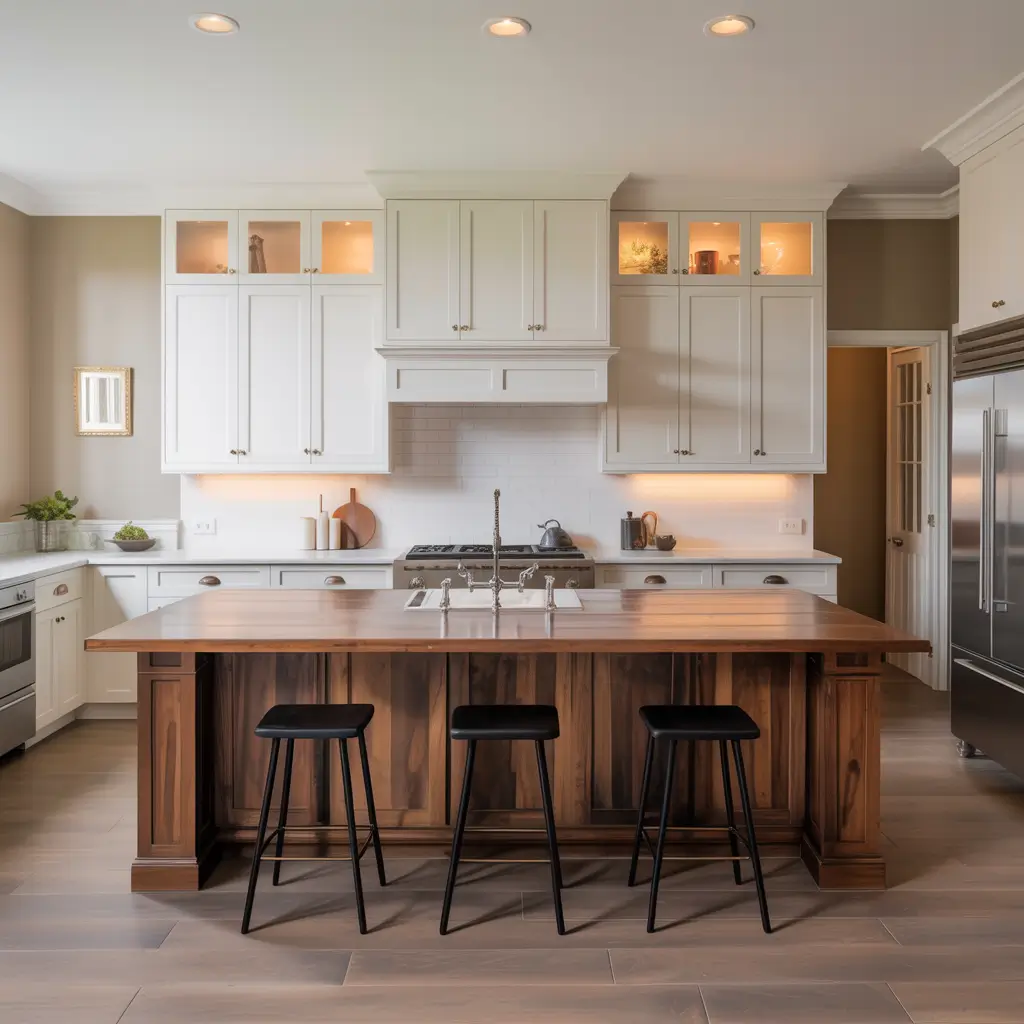
If your kitchen has the ceiling height for it, wood ceiling beams in a white kitchen are one of the most dramatic and satisfying design moves available to you. They add architectural interest, draw the eye upward, and give the space a sense of history and substance that is hard to achieve with any other single element.
In a white kitchen, beams work in two ways. Dark, heavy reclaimed beams give a contrast that grounds the whiteness and adds warmth from above. Lighter natural or whitewashed beams blend more gently and add texture without strong contrast — a softer, more airy effect.
Real vs. Faux Beams
- Real timber beams: heavy, structural or applied, genuine, expensive, often require professional installation
- Faux hollow beams: lightweight, DIY-friendly, highly convincing from below, a fraction of the cost
- Both options accept stain and finish — you choose the wood tone
- Faux beams are particularly good for plasterboard ceilings with no existing structure
15. White and Wood with Black Accents — The Designer Trick
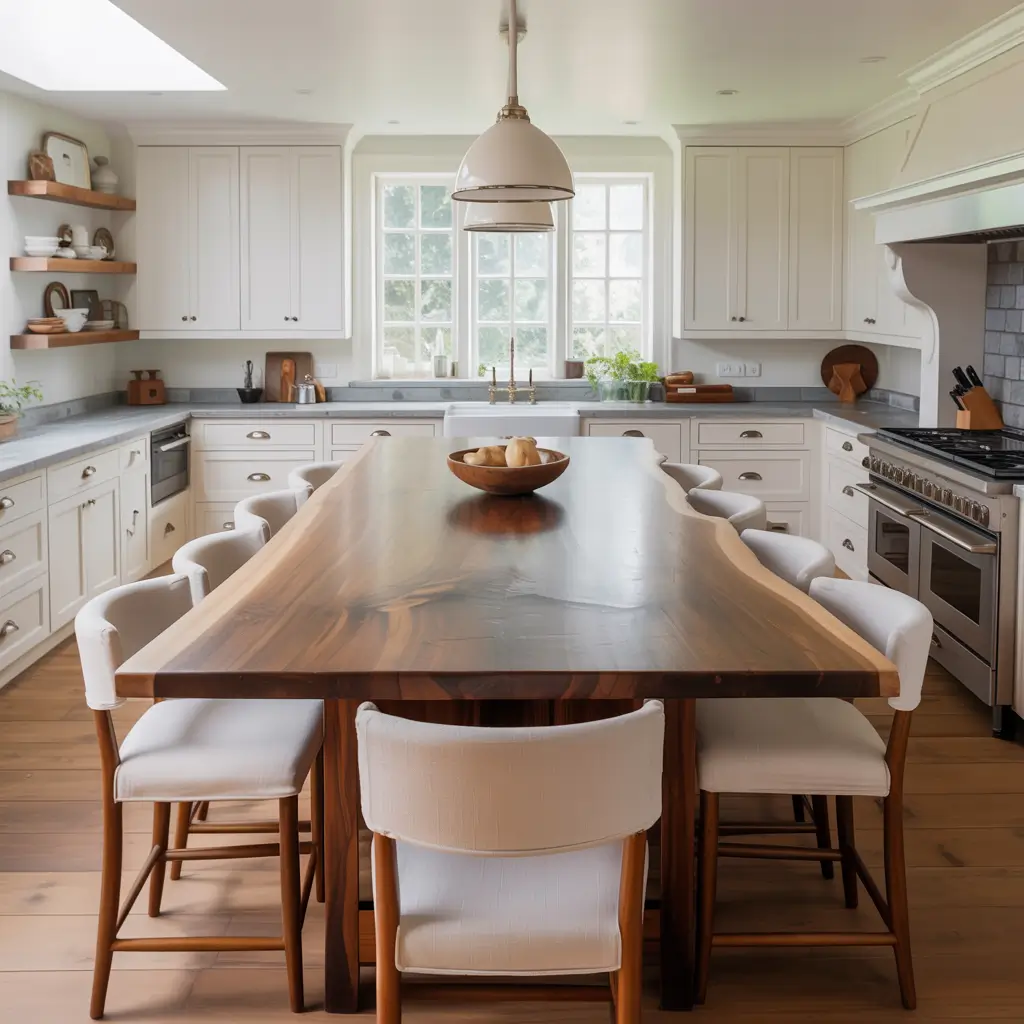
A white and wood kitchen is already a beautiful combination. Add black hardware, black pendant lights, or black-framed windows and skylights, and suddenly it looks like someone spent real money on an interior designer.
Black is the punctuation of kitchen design — it adds definition, grounds a palette, and makes white look crisper and wood look richer. The key is using it in small, deliberate doses rather than letting it dominate.
Where Black Accents Work Best
- Cabinet hardware — handles and knobs are the easiest and cheapest upgrade
- Pendant lights above the island — matte black is universally flattering
- Tap and sink fittings — a black mixer tap is a genuinely impactful detail
- Window frames if you have input into them — black frames make views look like artwork
- Bar stools with black legs and natural seats
Restraint Note: Three or four black accent points are enough. More than that and the kitchen starts to look themed rather than designed.
Choosing Your Wood — A Quick Species Guide
Not all wood tones work equally well with white. Here is a guide to the most popular kitchen wood species and what they bring to the combination.
Oak — The All-Rounder
Open grain, warm golden to medium brown tone, ages beautifully to a deeper honey. Works with almost any shade of white. Available in wide boards. Light oak reads Scandinavian; darker or more golden oak reads farmhouse. Excellent durability for countertops and floors.
Walnut — The Sophisticated Choice
Rich chocolate brown with a gorgeous straight or slightly figured grain. Creates strong contrast with white that reads as luxurious and considered. Works best with warm whites and off-whites rather than bright cool whites. Genuinely beautiful but more expensive than oak.
Birch — The Scandinavian Default
Pale blonde tone, very fine and even grain, light and clean in appearance. The most Nordic of the kitchen woods. Pairs naturally with bright white and cool off-whites. More affordable than oak. Best used for shelving, cabinet panels, or flooring rather than heavy-use countertops.
Ash — The Underrated Option
Similar tone to oak but with a more dramatic grain pattern. Can be smoked to produce a deep grey-brown that is very fashionable in Japandi-influenced kitchens. Light ash is contemporary and fresh; smoked ash is moody and sophisticated.
Pine — The Budget-Friendly Warm Wood
Pale warm tone with visible knots that give character. More affordable than oak or walnut. Works best in farmhouse and coastal kitchens. Requires proper sealing for kitchen use. Has a softness that makes it susceptible to dents, so best used for shelves and non-prep surfaces.
Hardware and Finishing Choices That Tie It Together
Hardware is where many people make a decision at the last minute and then regret it. In a white and wood kitchen, the right hardware choice quietly ties the whole design together.
Hardware by Finish
- Brushed brass — warm, pairs beautifully with oak and walnut, adds a sense of quality
- Matte black — modern, graphic, makes white look crisper, works with all wood tones
- Brushed nickel — cool, clean, suits contemporary kitchens with lighter wood tones
- Unlacquered brass — develops a patina over time, suits farmhouse and eclectic kitchens
- Leather pulls — unique, warm, tactile, particularly beautiful with walnut cabinetry
Frequently Asked Questions
Q1. Do white and wood kitchens date quickly?
No — this is one of the most enduring combinations in kitchen design. Specific interpretations of it reflect their time (the golden oak kitchens of the 1990s, for example), but the underlying principle of white plus natural wood has been consistently appealing across decades. The current trend toward lighter, more Scandinavian-influenced wood tones is a refinement of the combination, not a departure from it.
Q2. What shade of white works best with wood?
It depends on the wood tone. Warm woods like oak and walnut pair best with warm whites — whites with a slight yellow, cream, or pink undertone rather than a blue or grey base. Pale cool woods like birch work well with brighter, cooler whites. If in doubt, an off-white or linen white is genuinely versatile and flatters almost every wood tone.
Q3. Is wood in the kitchen practical?
Very much so, when chosen and maintained appropriately. Wood countertops need more care than quartz, but they are repairable in a way that stone is not. Wood floors with a proper lacquer or hardwax oil finish are extremely durable in kitchens. Open wood shelves are easy to clean. The practicality largely comes down to the finish used — sealed wood is tough; unsealed wood is vulnerable.
Q4. How do I add wood to my existing white kitchen without a full renovation?
Open shelving is the quickest win — remove an upper cabinet or two and replace with wood floating shelves. A wood chopping block or freestanding butcher block island adds instant warmth. New hardware does not involve wood directly but sets the tone for the whole combination. A wood fruit bowl, cutting board, or serving board on the counter contributes to the palette in a low-commitment way.
Q5. What countertop works best in a white and wood kitchen?
White quartz or marble-look porcelain on the perimeter keeps things light and easy to maintain. A wood countertop on the island adds warmth and creates a focal point. Alternatively, a warm light grey quartz bridges white and wood tones without committing to either extreme.
Putting It All Together — Your White and Wood Kitchen
The best thing about the white and wood combination is that it is not a single look. It is a design principle that you can interpret in a dozen different ways — from the spare calm of a Japandi kitchen to the generous warmth of a farmhouse shaker kitchen, from a budget refresh using a single run of oak shelves to a full renovation with a live-edge island and wood ceiling beams.
The decisions that matter most are not the obvious ones. They are the undertone of your white, the tone and species of your wood, the grout in your tile, the finish on your hardware, and the way natural light moves through your specific kitchen at different times of day. These are the details that take a kitchen from a collection of nice elements to a space that genuinely feels like yours.
If you are starting from scratch, begin with your wood. Choose the species and tone first, then find your white to complement it. If you are refreshing an existing kitchen, start with the smallest possible intervention — often one good wood element is enough to transform the whole room.
A white and wood kitchen done well is not just beautiful. It is a space that makes the ordinary act of cooking feel good — and there is really no better measure of a successful kitchen than that.
1 thought on “15 Stunning White and Wood Kitchen Ideas”