
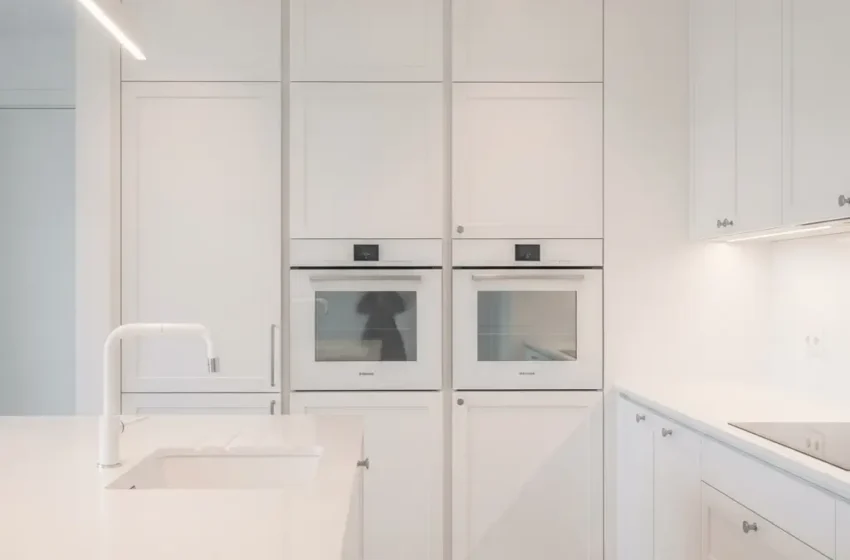
Trends come and go in kitchen design faster than you might think. The glossy high-shine cabinets of the 2000s, the dark espresso kitchens of the 2010s, the greige everything phase — they all had their moment, and most of them look dated now. White shaker cabinets are the rare exception. They have been a fixture of kitchen design for well over a century, and they show absolutely no signs of fading.
The reason is not complicated. Shaker cabinetry, with its distinctive five-piece door — a flat recessed panel set into a simple frame — was designed around the principle that things made well and made honestly never need to be decorated. The Shakers, the 19th-century religious community from whom the style takes its name, believed that beautiful design and practical function were the same thing. That philosophy turns out to be a very good foundation for kitchen cabinetry.
In white, shaker cabinets become genuinely universal. They adapt to almost any design language — farmhouse, Scandinavian, coastal, traditional, contemporary, even Japandi — without losing their core identity. They make small kitchens feel bigger. They pair with every countertop material. They suit both ornate hardware and minimal bar pulls. They look right in a terraced house and in a country estate.
This guide covers 20 of the best white shaker kitchen ideas, with real guidance on styling, hardware, countertops, colour, and the practical decisions that separate a great shaker kitchen from a forgettable one. If you are planning a renovation or just looking for direction, this is a good place to start.
1. Classic White Shaker Kitchen with Grey Grout Subway Tile
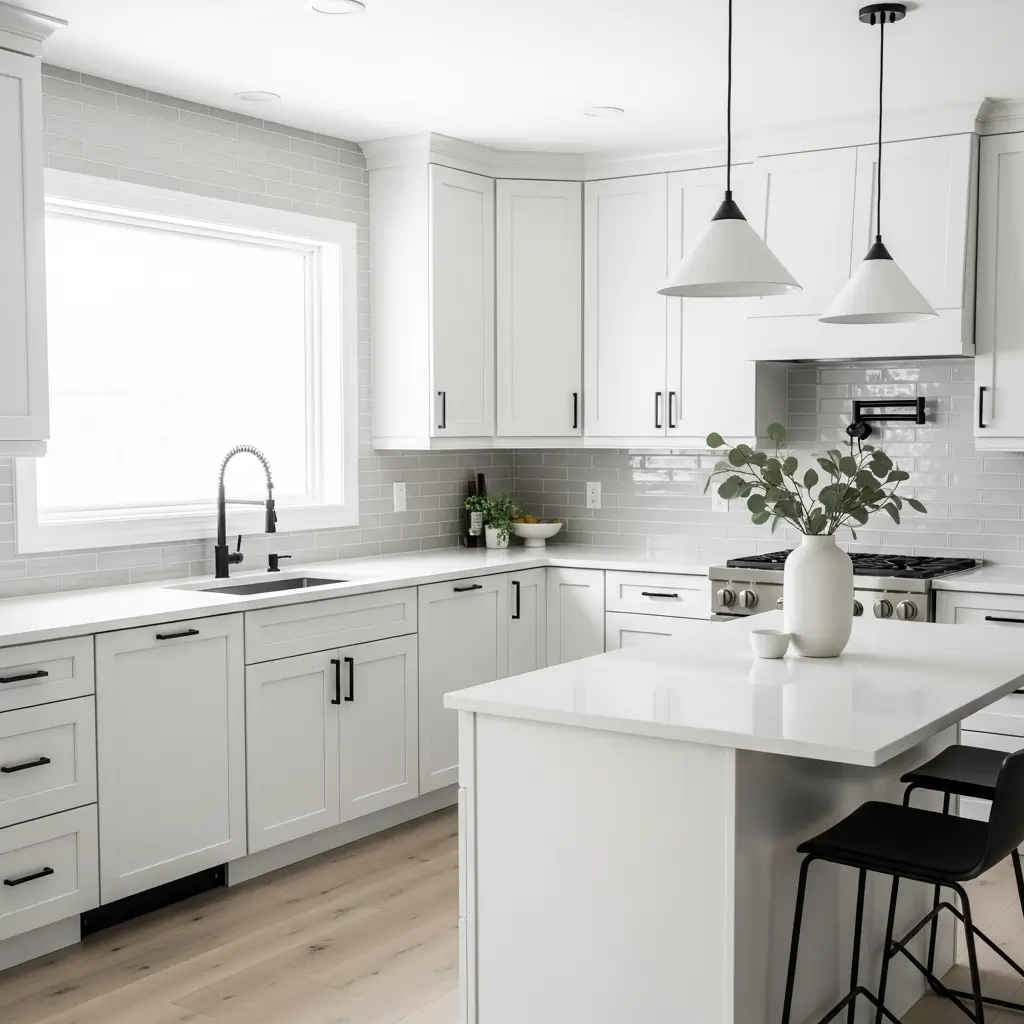
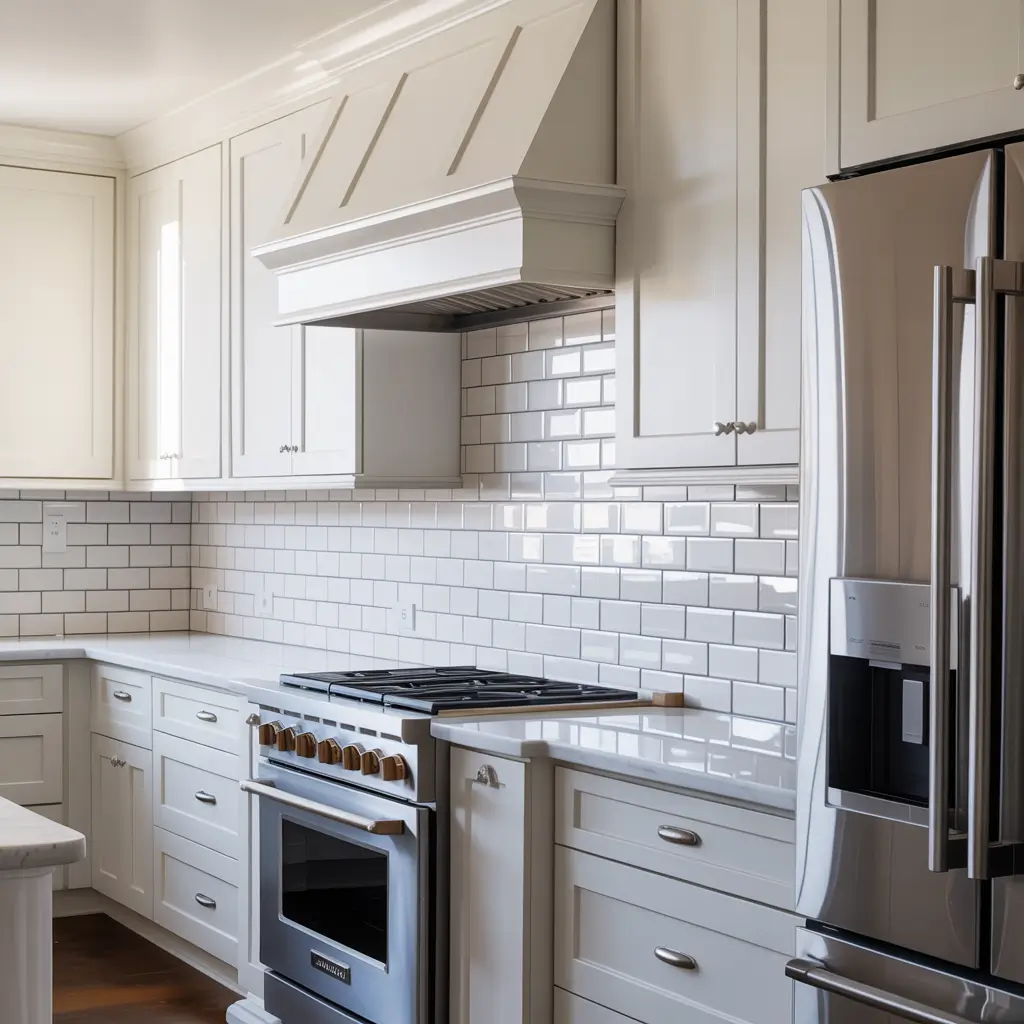
If there is a single combination that defines the reliable, enduringly popular white kitchen, this is it. White shaker cabinets paired with a classic 3×6 subway tile backsplash in a horizontal brick-lay pattern — and crucially, with grey rather than white grout — is a combination that works in virtually every home. The grey grout provides definition, prevents the backsplash from disappearing into the cabinets, and gives the whole kitchen a grid-like graphic quality that photographs beautifully.
This is also one of the most budget-friendly combinations available. Standard subway tile runs between three and eight dollars per square foot. White shaker cabinets are available across every price point from flat-pack to fully custom. If you are trying to get the most impact for your renovation budget, this starting point is hard to beat.
Getting the Details Right
- Choose a soft or warm white for the cabinets rather than a bright optical white — it is more flattering under most kitchen lighting
- Medium grey grout, not dark charcoal, is the sweet spot — enough definition without drama
- Standard 3×6 subway tile looks classic; try 4×8 or 4×12 for a more contemporary twist
- White quartz countertops with subtle grey veining tie the whole palette together
Pro Tip: Brick-lay is classic, but a vertical stacked pattern with the same subway tile gives a white shaker kitchen a noticeably more modern feel with zero extra cost.
2. Modern Farmhouse White Shaker Kitchen
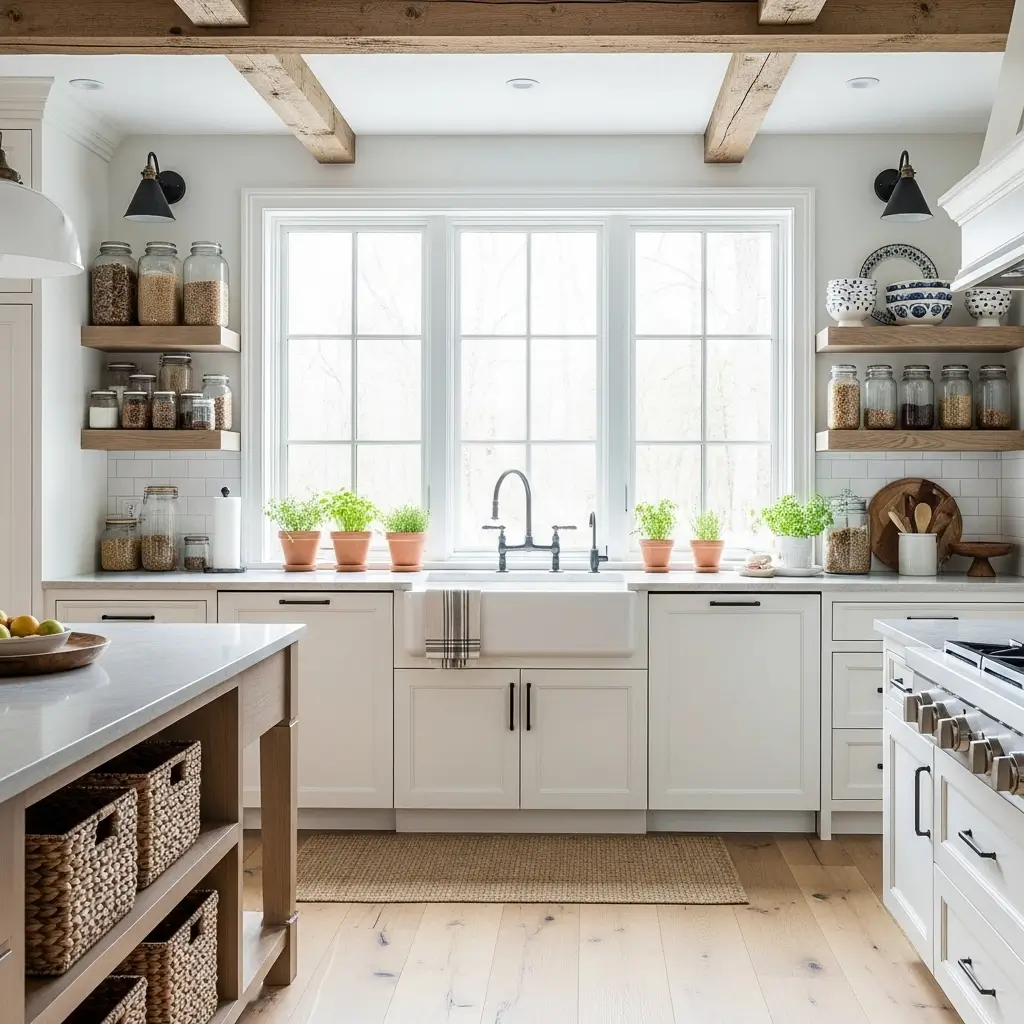
The modern farmhouse kitchen is arguably the most popular kitchen style of the past decade, and white shaker cabinets are almost always at its centre. The combination works because shaker doors have their own roots in simple, honest American craft traditions — and farmhouse design celebrates exactly that same sensibility.
The ‘modern’ qualifier matters here. Modern farmhouse is not a country kitchen filled with decorative roosters and gingham curtains. It is a kitchen that takes the warmth, the natural materials, and the sense of lived-in comfort from the farmhouse tradition and strips away anything fussy or themey. White shaker cabinets do that stripping automatically — they are inherently clean and simple while still feeling grounded.
Key Elements of the Modern Farmhouse Shaker Kitchen
- An apron-front or undermount farmhouse sink — ideally deep and generously sized
- Open floating shelves in natural wood on at least one wall
- A butcher block island countertop alongside white quartz on the perimeter
- Simple industrial-style pendant lights above the island
- Mixed metals — matte black iron with brushed brass, for example — in hardware and fixtures
- Exposed wood somewhere — beams, floor, open shelving — to balance the white
Styling Note: Resist the urge to over-theme. One or two farmhouse anchors — the apron sink, the open shelves — are enough. The shaker cabinets carry the style; they do not need help from every corner of the room.
3. White Shaker Cabinets with Matte Black Hardware
Nothing updates a white shaker kitchen faster or more affordably than the right hardware. And right now — and for the foreseeable future — matte black is the hardware choice that consistently makes white shaker cabinets look polished, current, and considered.
The contrast is the point. White cabinets with white or silver hardware can feel a little underdressed. Matte black hardware introduces a note of definition and quiet drama that immediately elevates the whole kitchen. It makes the cabinet doors look crisper, the frame more architectural, and the space more intentional.
Hardware Styles That Work Best
- Slim bar pulls in matte black — clean, contemporary, suits both modern and transitional kitchens
- Cup pulls in matte black — slightly softer, works beautifully in farmhouse and traditional settings
- Round knobs in matte black — classic, timeless, suits smaller cabinets and drawers
- Mixed bar pulls on doors and knobs on drawers — the most common professional approach
Carrying the Black Through the Rest of the Kitchen
Once you choose matte black hardware, it pays to repeat it in two or three other places to create cohesion. Good candidates include the kitchen tap and mixer, pendant lights above the island, the range hood if it is painted or finished rather than stainless steel, and window hardware if visible. You are not aiming for a black kitchen — you are using black as punctuation.
Budget Tip: Replacing hardware is one of the highest return-on-investment updates you can make to a kitchen. A full set of matte black pulls for an average kitchen typically costs between £80 and £250 depending on style and quantity — a fraction of any other renovation cost.
4. White Shaker Kitchen with Marble or Marble-Look Countertops
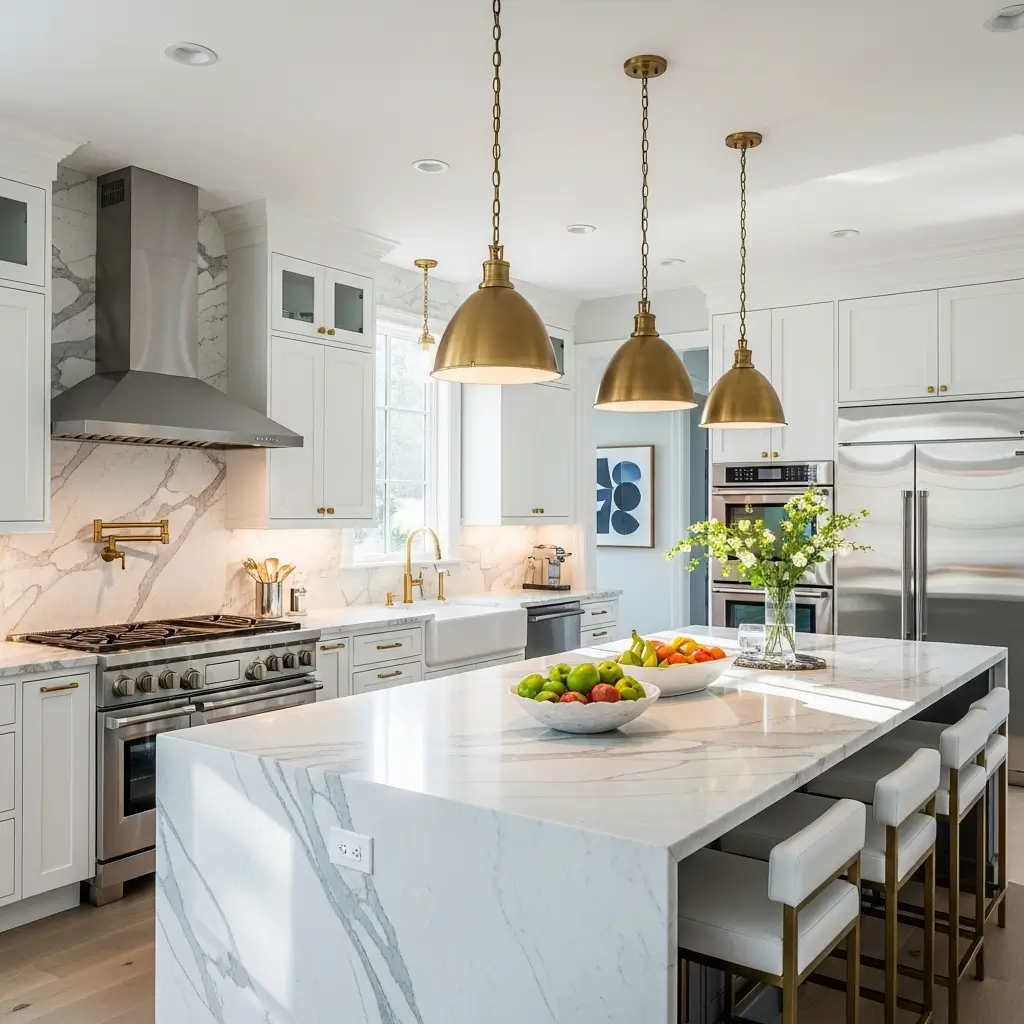
White shaker cabinets and marble countertops have been a pairing in high-end kitchen design for a long time, and it is easy to see why. The clean geometry of the shaker door sits in elegant contrast with the organic, flowing veining of marble. One is precise and structured; the other is unpredictable and natural. Together, they create a kitchen that feels both designed and alive.
Real Carrara marble is stunning, and if budget allows, it is worth the investment. But the practical reality is that marble is porous, prone to staining from acidic foods and drinks, and requires regular sealing. For a busy kitchen where cooking actually happens, marble-look quartz or porcelain is a more honest recommendation.
Marble and Marble-Look Options at a Glance
- Carrara marble — classic soft grey veining, warm undertone, requires sealing, genuine depth and beauty
- Calacatta marble — bolder veining, more dramatic, higher price point, even more maintenance-intensive
- Marble-look quartz — zero maintenance, highly convincing, available in dozens of vein patterns, consistent colour
- Large-format marble-look porcelain — thin slabs, very current, excellent for waterfall islands
Practical Advice: If you love marble but cook daily, use real marble on a low-traffic surface like a butler’s pantry or a small section of the island, and use quartz everywhere else. You get the genuine material where it matters visually, with easy maintenance everywhere else.
5. Two-Tone Shaker Kitchen — White Uppers, Colour Below
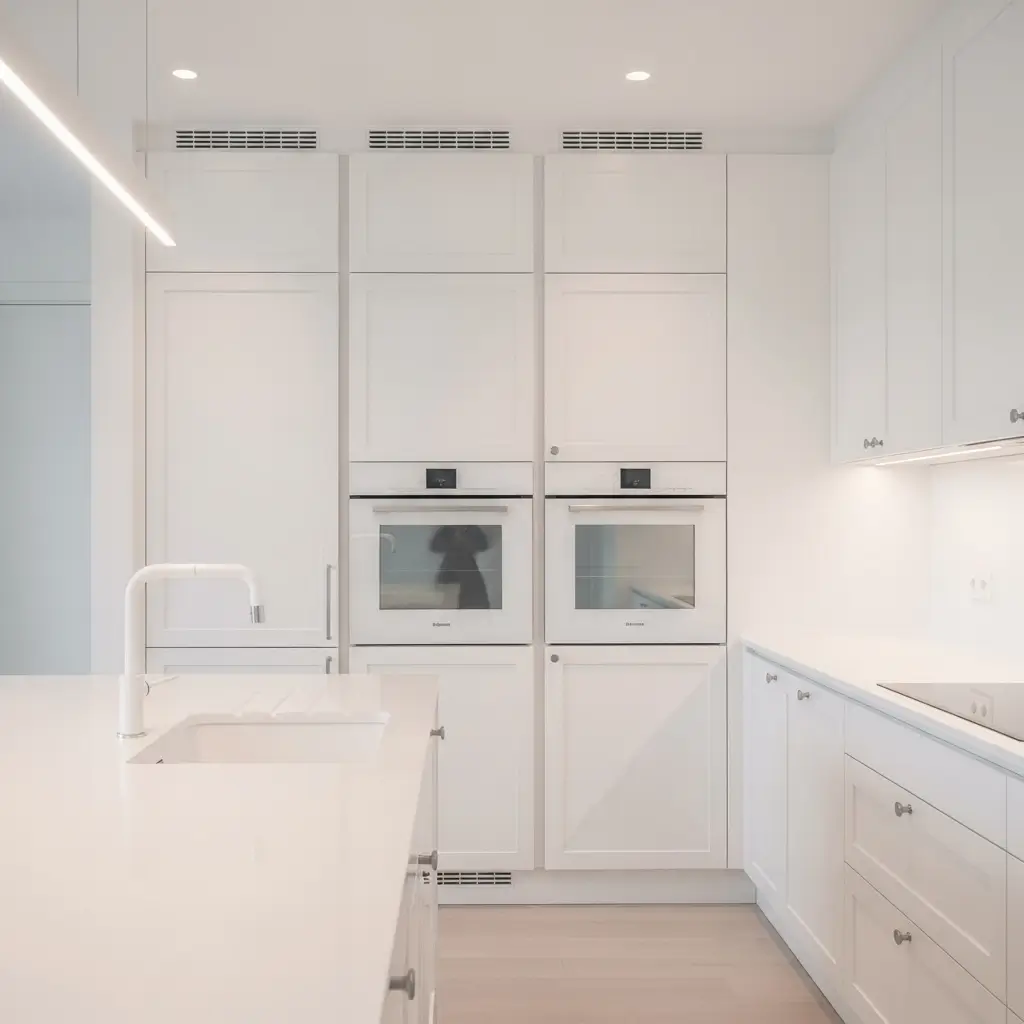
A two-tone kitchen is one of the best decisions you can make with white shaker cabinets. The approach is simple: white shaker doors on the upper cabinets, a contrasting colour on the lower cabinets and island. The result is a kitchen that has depth, personality, and visual interest without sacrificing the brightness that white cabinets provide.
The visual logic works because lighter colours naturally sit above and heavier colours sit below — it mirrors how we instinctively read a room, with the wall colour at the top and the grounding elements at the bottom. White upper cabinets keep the space feeling open and airy at eye level while the coloured lower cabinets give the kitchen a foundation and character.
Colour Combinations That Work Well
- White uppers with navy lower cabinets — classic, timeless, very British in the best sense
- White uppers with sage green lowers — warm, botanical, feels artisan and hand-painted
- White uppers with forest green lowers — richer and darker, suits bigger kitchens with natural light
- White uppers with charcoal grey lowers — sophisticated, contemporary, nearly as timeless as all-white
- White uppers with soft clay or terracotta lowers — warm, earthy, feels genuinely current in 2025
- White uppers with dusky pink or blush lowers — unexpectedly elegant, suits Scandi and eclectic kitchens
Design Rule: Keep the island in the lower cabinet colour, not white — it anchors the island as a distinct feature rather than letting it blend into the perimeter cabinetry.
6. All-White Shaker Kitchen — Minimal and Calm
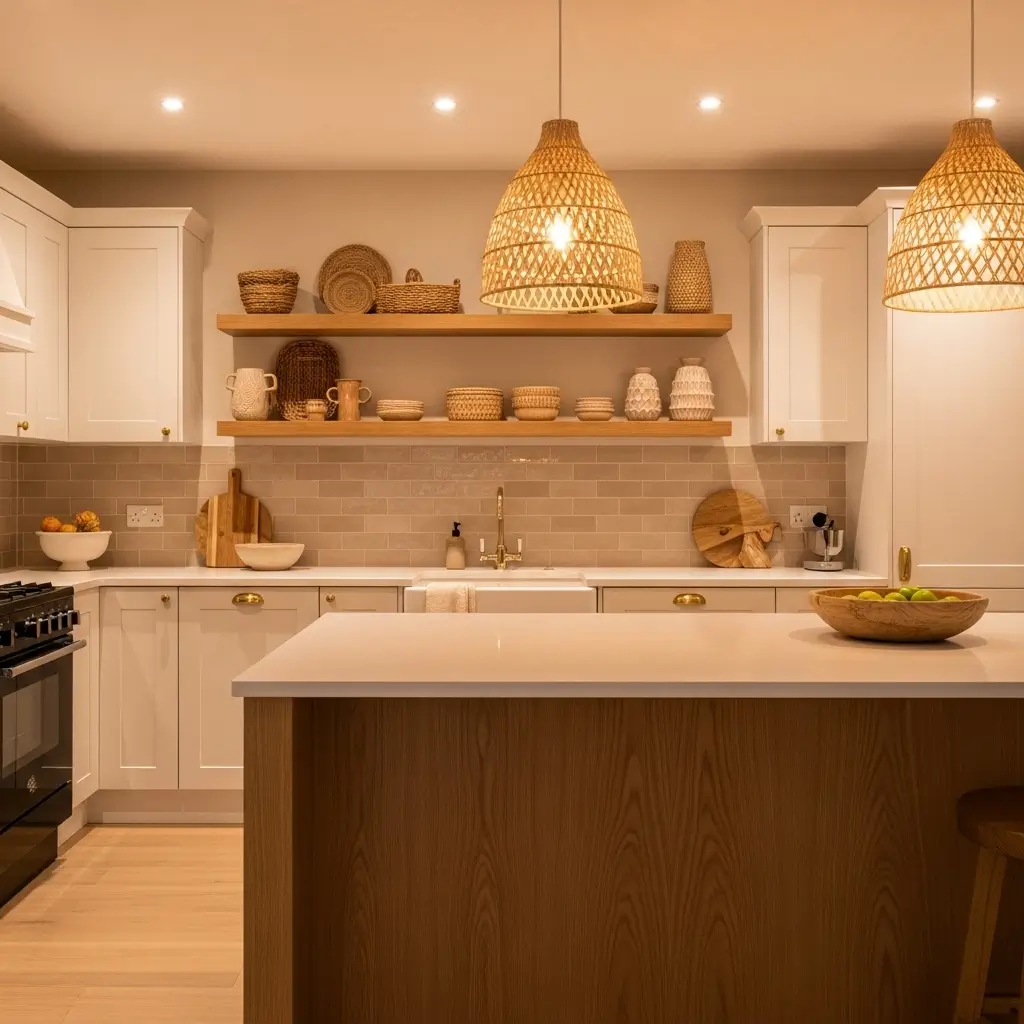
An all-white shaker kitchen is a braver choice than it might initially sound. The instinct when designing a room is to introduce contrast and variety. Going all-white — white cabinets, white countertops, white backsplash, white walls — requires confidence in restraint. When it works, it works spectacularly.
The key is texture. An all-white kitchen that uses the same finish on every surface will feel flat and clinical. An all-white kitchen that layers matte cabinets against a glossy tile, a honed marble countertop against a painted ceiling, and a wood detail against white walls — that kitchen feels serene, sophisticated, and genuinely luxurious.
Preventing the Clinical White Kitchen
- Mix finishes: matte cabinet doors, satin or gloss paint on walls, glossy or honed countertops
- Introduce one natural warm element — a butcher block chopping board, a wooden fruit bowl, a single open shelf in oak
- Use warm-toned LED lighting rather than cool white — it transforms the feel of an all-white room
- Keep plants visible from the main kitchen sightline — green against white is one of the most effortlessly beautiful combinations
- Choose a backsplash with some texture — a 3D tile, a handmade ceramic, or a stone effect — to add depth
7. Coastal White Shaker Kitchen
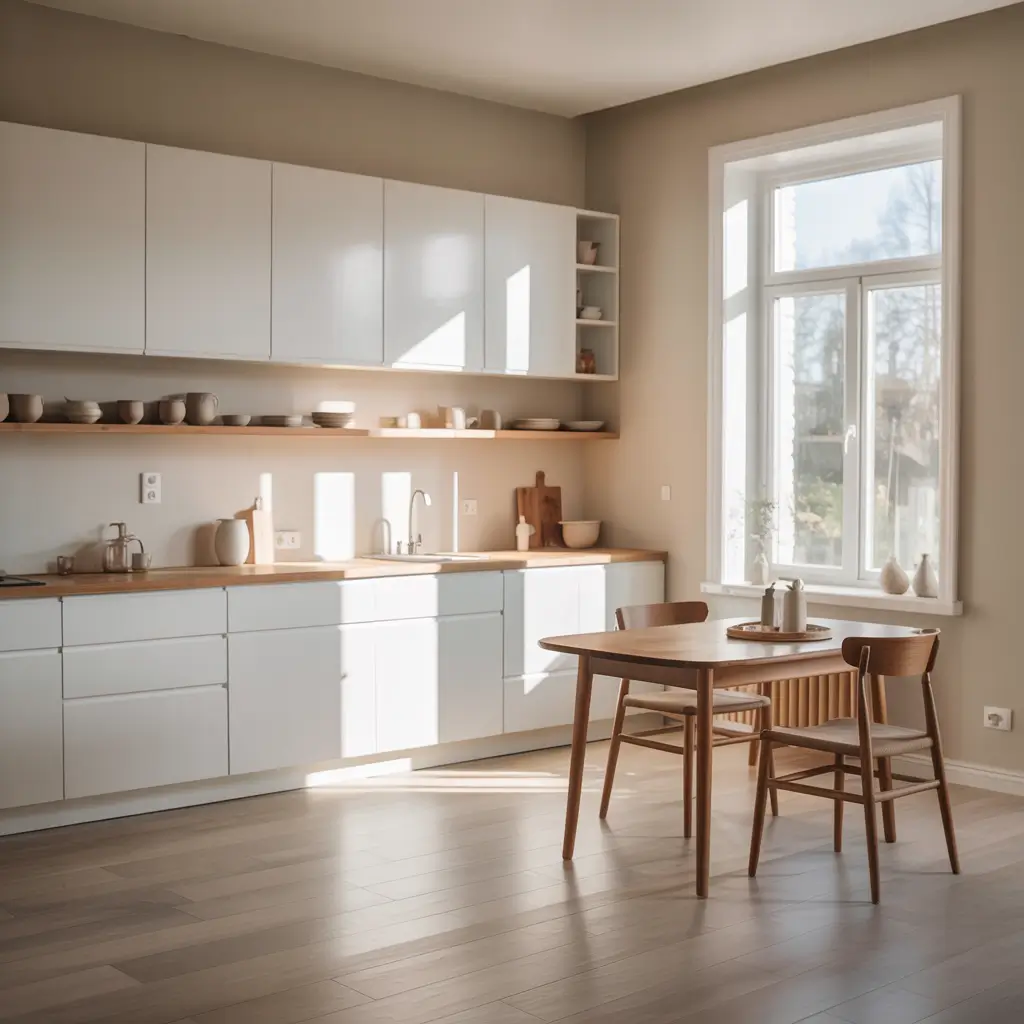
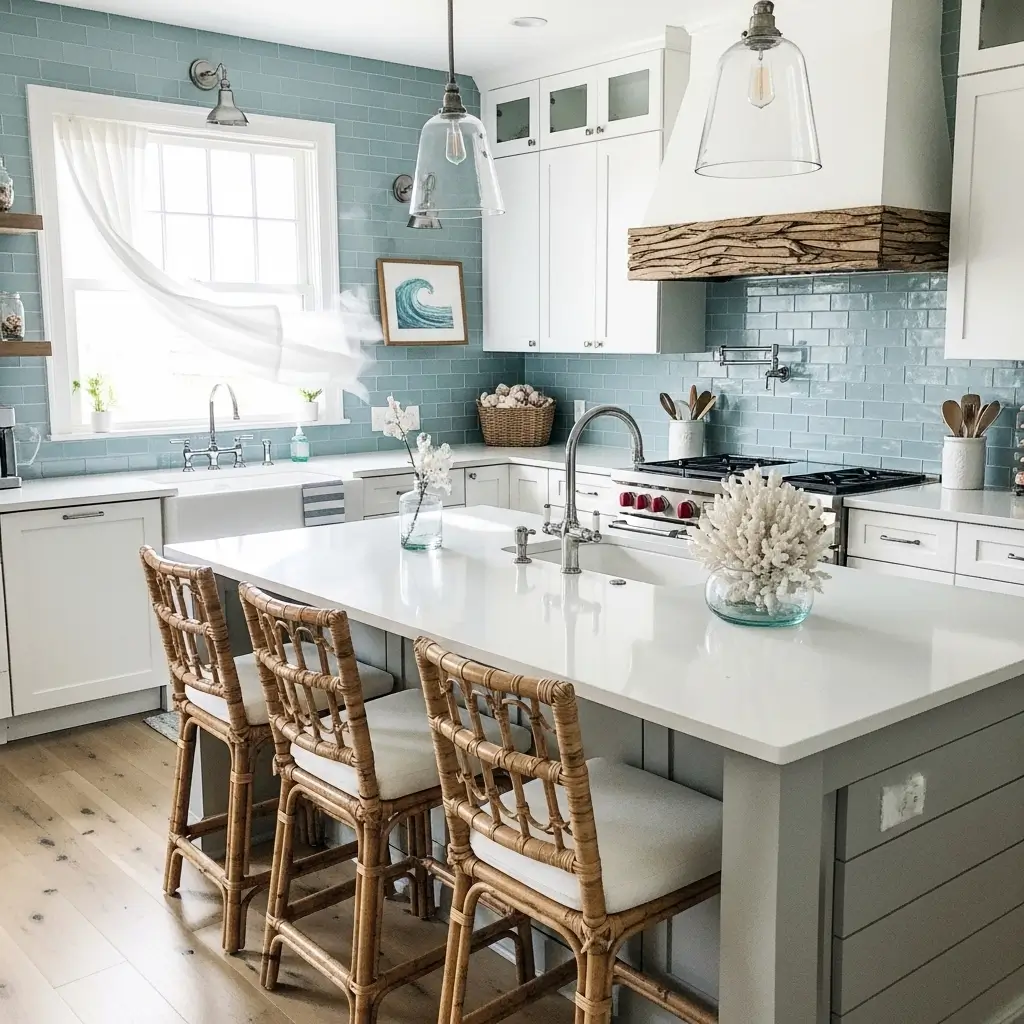
Coastal kitchen design gets misunderstood. The amateur version involves anchors on the walls, driftwood accessories, and a colour palette that looks like it was assembled from a seaside gift shop. The considered version — which white shaker cabinets enable beautifully — is about light, texture, and a relaxed quality that makes you feel like you are somewhere unhurried.
White shaker cabinets are the ideal foundation for a coastal kitchen because they carry that sense of freshness and brightness that good coastal design depends on. From there, the choices are about softening and layering rather than theming.
Coastal White Shaker Kitchen Elements
- Soft blue or seafoam green as an accent — in a kitchen runner, a set of ceramics, or painted lower cabinet doors
- Natural textures — rattan bar stools, a woven pendant light, a linen blind
- Glass-front upper cabinet doors to display simple white or blue ceramics
- Wood elements in pale, driftwood-adjacent tones — bleached oak, whitewashed pine
- A white apron sink or ceramic farmhouse sink
- Open shelving displaying simple, beautiful everyday items rather than a curated collection of shells
Restraint Note: The goal is a kitchen that evokes the feeling of the coast — light, easy, unhurried — not one that announces a nautical theme. One or two maritime references are charming; five starts to feel like a restaurant.
8. White Shaker Kitchen with Brass Hardware and Warm Tones
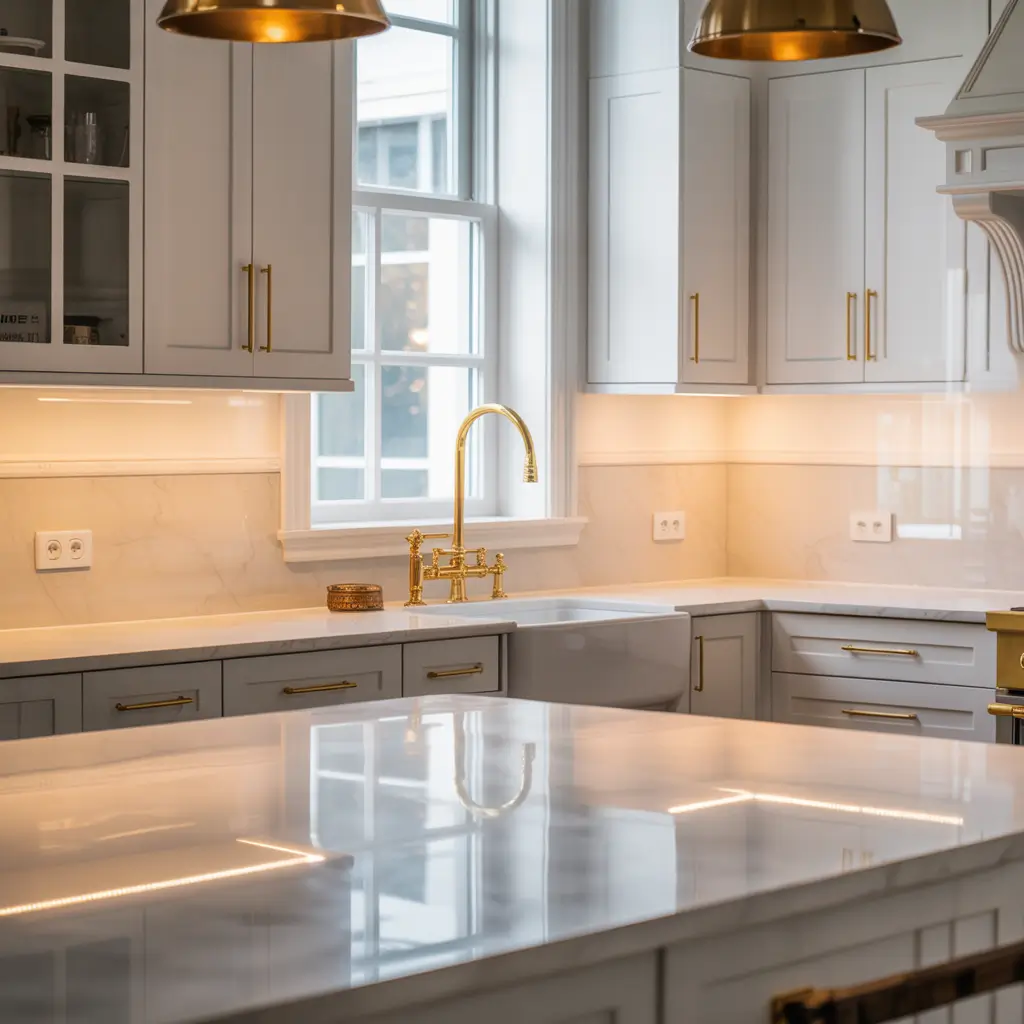
Brushed brass has had a significant return to kitchen design over the past several years, and it pairs with white shaker cabinets in a way that feels genuinely warm and luxurious. Where matte black hardware adds drama and definition, brushed brass adds richness and a sense of quality that feels less stark.
Brass works particularly well when the rest of the kitchen leans warm — warm white cabinet paint, a butcher block or honey-toned quartz countertop, a wood floor or wood-look tile. In that context, brass hardware acts as a warm metallic thread running through the space that feels cohesive and considered.
Brass Hardware Styles to Consider
- Brushed brass bar pulls — the most popular choice, suits both contemporary and traditional kitchens
- Unlacquered brass — develops a natural patina over time, suits eclectic and artisan kitchens
- Antique or aged brass — softer and more rustic, suits farmhouse and country kitchens
- Polished brass — brighter and more formal, suits traditional and Georgian-style homes
Pairing Advice: Avoid mixing brass with chrome or silver-toned metals in the same kitchen — it looks unresolved. Choose either warm metals (brass, copper, bronze) or cool metals (chrome, nickel, stainless) and stay in that family throughout.
9. Scandinavian White Shaker Kitchen
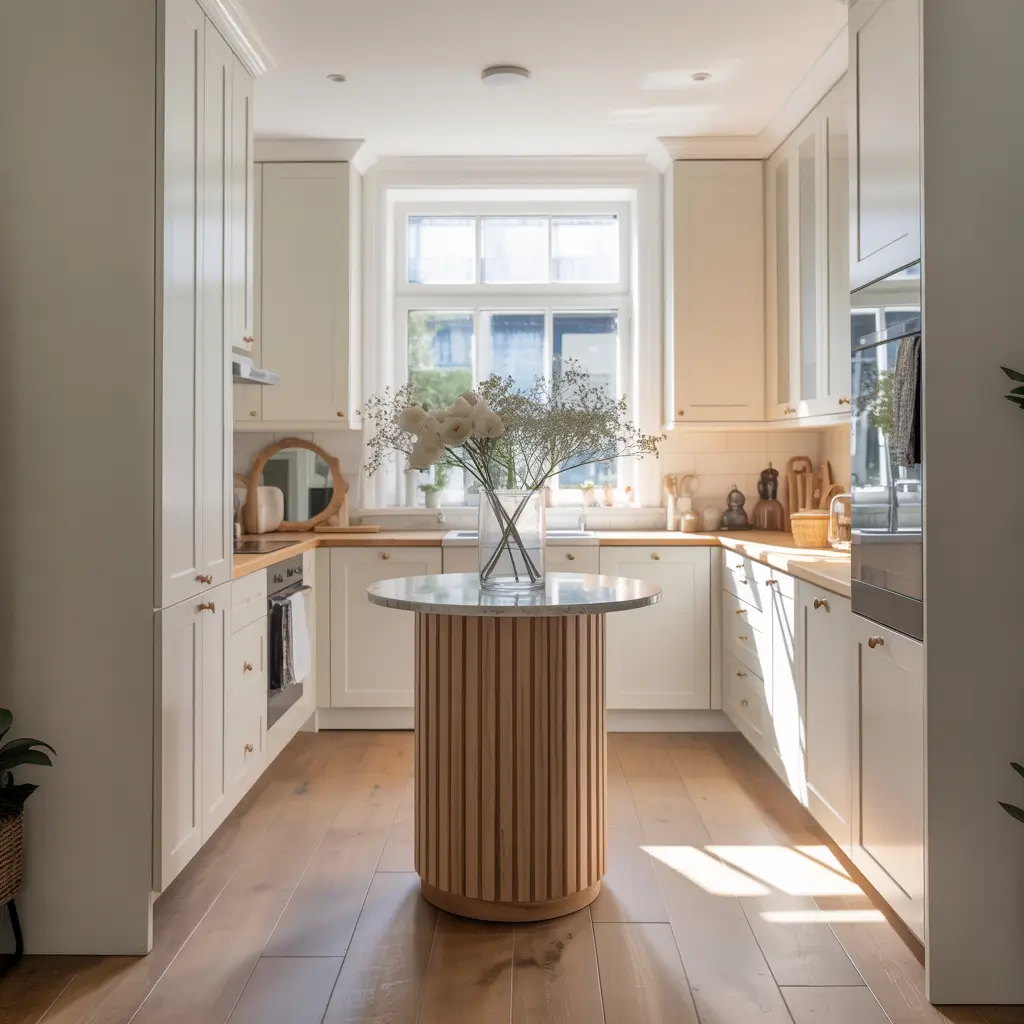
Scandinavian kitchen design and shaker cabinetry share a deep design philosophy: make things well, keep them simple, and trust that honest function creates its own beauty. In a white Scandi shaker kitchen, the two traditions reinforce each other to produce spaces that feel spacious, calm, and genuinely good to spend time in.
The Scandinavian interpretation of the white shaker kitchen tends to be lighter and more minimal than the farmhouse or traditional versions. Cabinets run to ceiling height. Storage is generous and concealed. Open shelving is limited and carefully edited. Lighting is warm and layered. And there is always at least one plant.
Scandi White Shaker Kitchen Principles
- Ceiling-height cabinetry to eliminate the dust-trap shelf above upper cabinets and create a clean vertical line
- Integrated appliances behind matching white shaker panels — fridge, dishwasher, even oven where possible
- Pale wood accents in birch, ash, or light oak — floating shelf, breakfast bar, or floor
- Minimal hardware — slim bar pulls or push-to-open mechanisms
- Layered lighting: overhead ambient, under-cabinet task lighting, and at least one pendant
- A single run of open shelving styled with a few ceramics, a cookbook or two, and one plant
10. White Shaker Kitchen with Quartz Waterfall Island
The quartz waterfall island is one of the most impactful single design moves in contemporary kitchen design. A thick slab of quartz — usually in white with subtle veining — wraps over the island countertop and down the sides to the floor, creating a continuous flowing surface that looks architectural and expensive.
Against white shaker cabinets, a waterfall island in white or light grey quartz creates a kitchen that looks genuinely designed — where the island is clearly the hero element and the shaker cabinets provide a clean, consistent backdrop. The contrast between the traditional character of the shaker door and the ultra-contemporary waterfall detail is a tension that works.
Getting the Waterfall Island Right
- Match the island countertop to the perimeter counters, or choose a different tone for intentional contrast
- Waterfall sides work best when the slab is at least 20mm thick — thicker reads more luxurious
- Book-matched slabs, where the veining mirrors across the join, look spectacular but cost more
- Keep the island base simple — white shaker doors or a single-colour painted base — so the stone does the talking
- Pendant lights above the island in a finish that complements your hardware choice
11. White Shaker Kitchen with Open Shelving
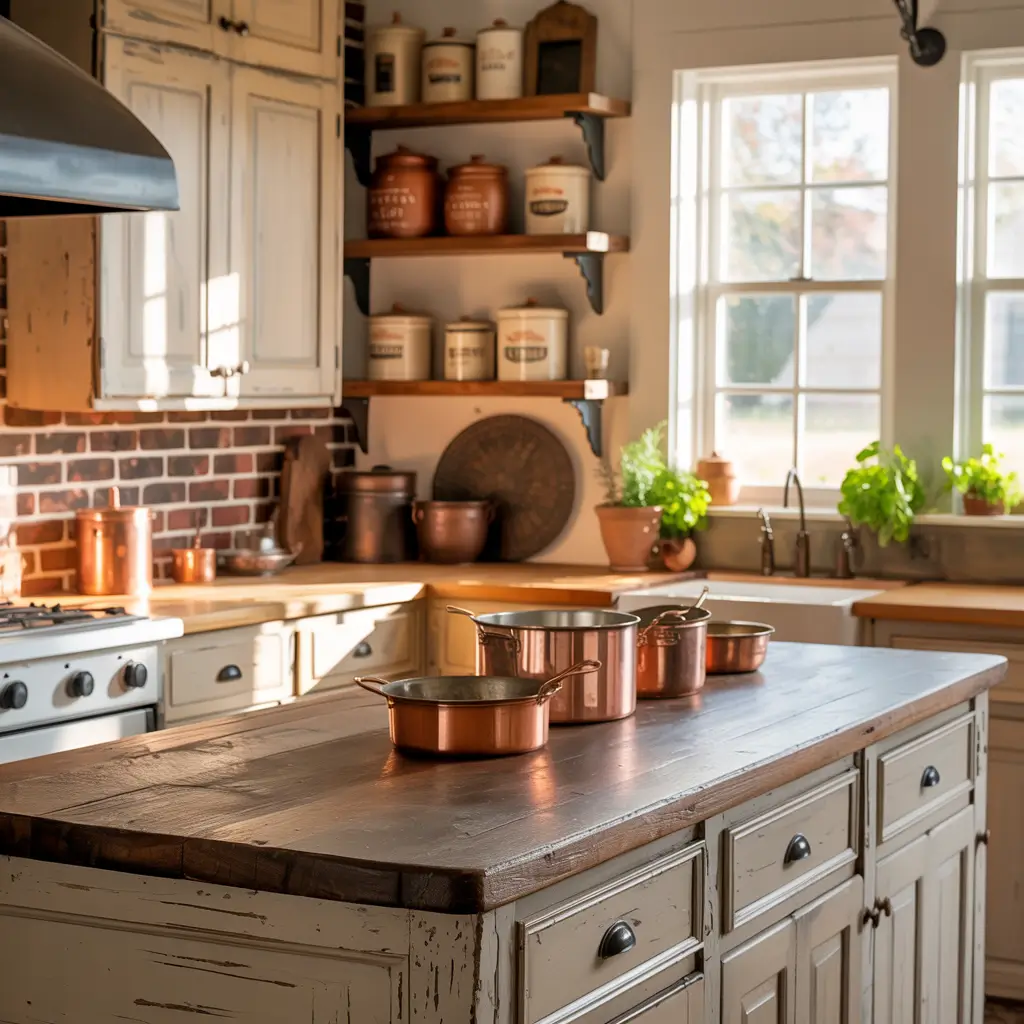
Replacing some upper shaker cabinets with open shelving is one of the most effective ways to lighten a white kitchen visually and give it a less closed, more airy feel. The combination works particularly well on one wall or one run of the kitchen — a full commitment to open shelving across every wall demands a level of organisation that most households find challenging to maintain.
Natural wood floating shelves against white shaker cabinets and a white or light tile backsplash is one of those simple combinations that consistently looks better in person than it sounds on paper. The wood adds warmth without weight. The open shelving creates depth and visual interest. And the white shaker cabinets anchor the whole composition.
What Lives on Open Kitchen Shelves
- Everyday ceramics in neutral or complementary tones — the ones you actually use
- A few genuinely beautiful cookbooks, spines facing out
- Small plants or herb pots — basil and rosemary are both practical and beautiful
- Glass jars or ceramic canisters for dry goods if they are handsome enough
- One or two deliberately chosen objects — a nice oil bottle, a small piece of pottery
Editing Rule: Remove one third of what you initially place on open shelves. The negative space is part of the design. A crowded shelf looks accidental; a considered shelf with breathing room looks intentional.
12. White Shaker Kitchen in a Small or Galley Layout
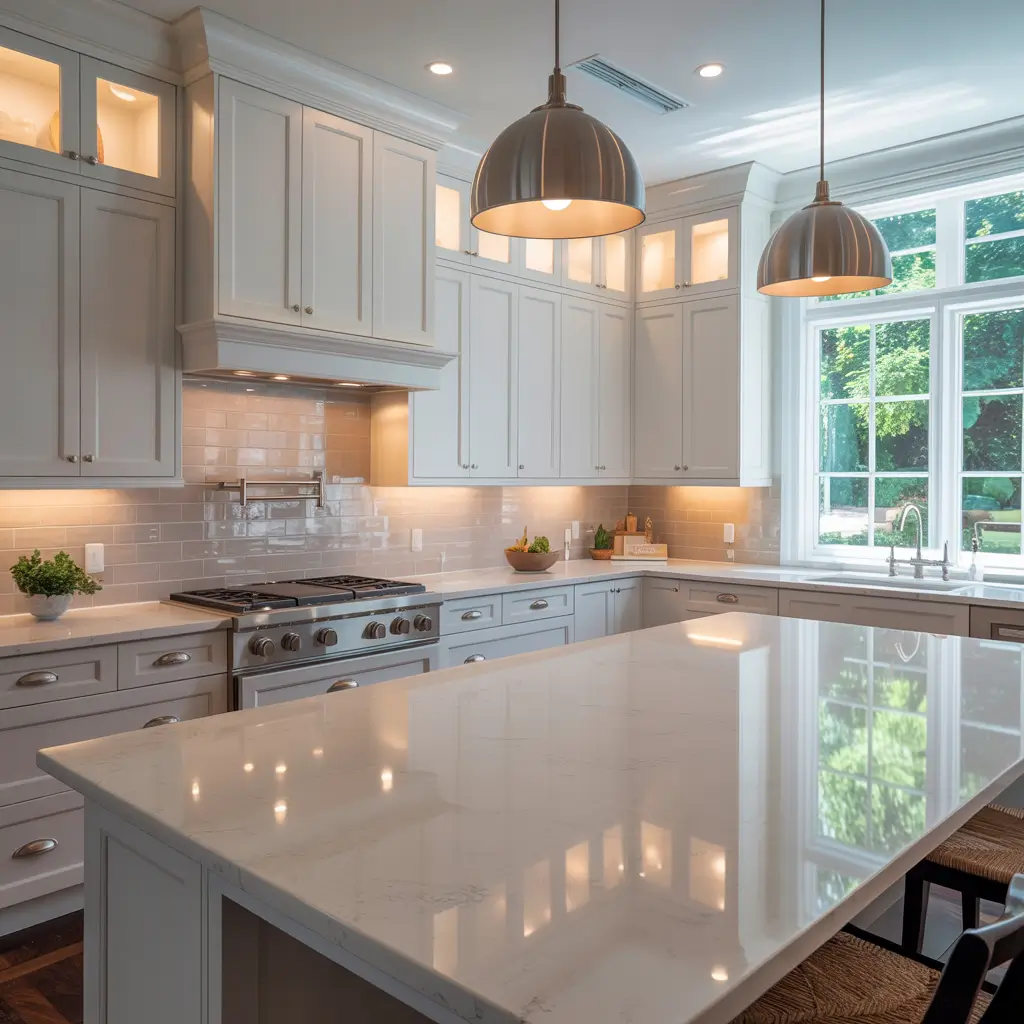
Small kitchens and galley kitchens are where white shaker cabinets genuinely earn their reputation as a universal solution. White keeps a small kitchen from closing in on itself. The shaker detail adds interest without adding visual weight. And the simplicity of the shaker style works with the stripped-back approach that small kitchens demand.
In a galley kitchen especially, the goal is to make the space feel as long and open as possible. White cabinets on both sides of the run, a light countertop, a pale backsplash, and good lighting can make a genuinely narrow galley feel functional and pleasant rather than cramped and compromised.
Small Kitchen White Shaker Strategies
- Run cabinets to ceiling height to maximise storage and create an unbroken vertical line.
- Use glass-front doors on some upper cabinets to create the illusion of depth.
- Choose integrated appliances behind matching shaker panels wherever possible.
- A pull-out island or breakfast bar on wheels gives you prep space without permanently narrowing the room.
- Under-cabinet LED lighting makes countertops feel more generous and the room brighter.
- A single large-format tile or large-format wood-look tile on the floor makes the room appear longer.
- Avoid hanging pendant lights in a narrow galley — they interrupt the visual flow; use recessed or under-cabinet lighting instead.
Colour Tip: If you want to introduce a second colour in a small kitchen, use it only on the island or on the lower cabinets at the far end — not throughout. Too much colour in a small space reduces the brightening effect of the white.
13. Traditional White Shaker Kitchen with Ornate Details
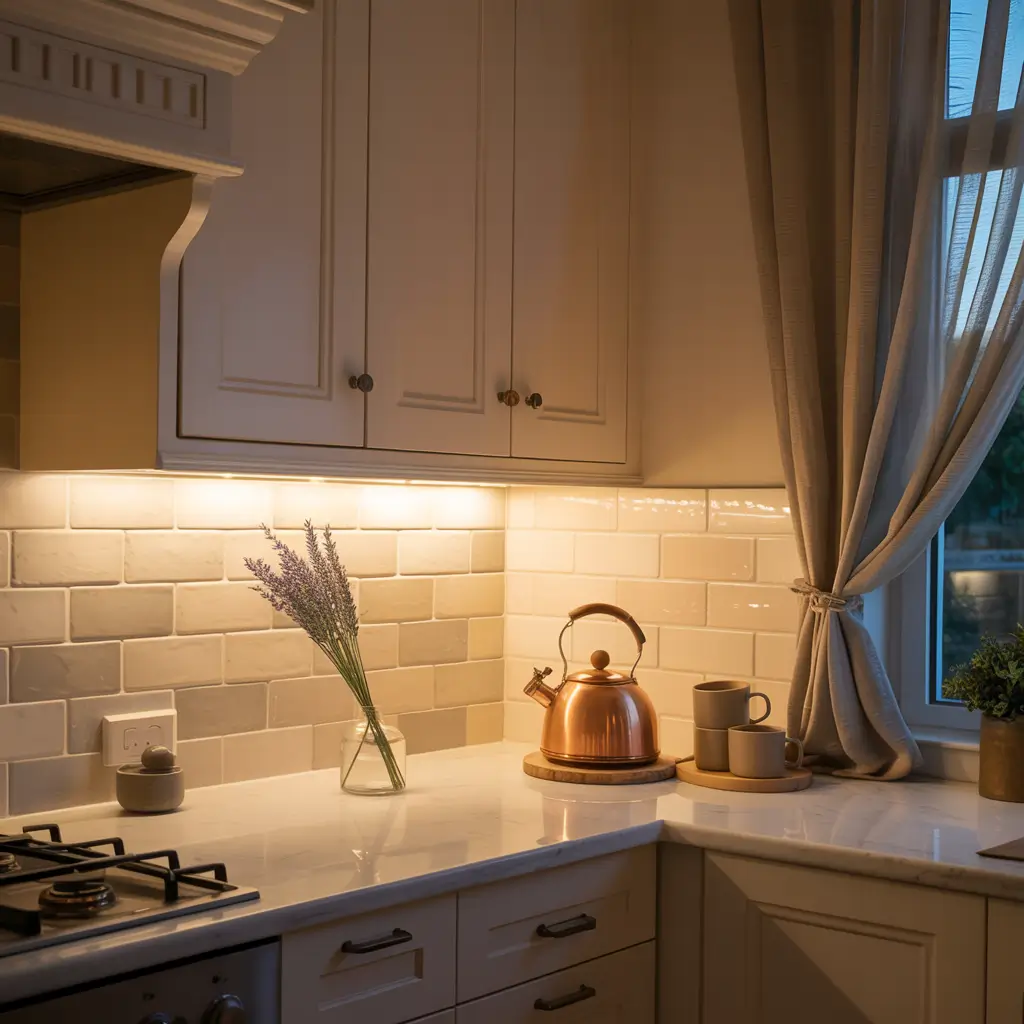
The original shaker kitchen was deliberately simple. But over time, the shaker door became the starting point for a more traditional British and American kitchen style that layers in cornicing, pilasters, plate racks, column details, and decorative feet. The shaker door remains at the heart of it, but the overall effect is richer, more layered, and more formal.
This approach suits period homes particularly well — Victorian and Edwardian terraces, Georgian townhouses, and country houses where a minimal flat-panel kitchen would look incongruous. White painted in this context usually means a traditional heritage shade: Farrow and Ball’s All White, James White, or Strong White rather than a bright modern white.
Traditional Shaker Kitchen Features
- Cornice and pelmet moulding at the top of wall cabinets
- Decorative feet on base cabinets — painted to match the doors
- Open plate rack between two wall cabinets
- A range cooker rather than a built-under oven — an AGA, Rangemaster, or similar
- Belfast or butler’s sink in white ceramic
- Painted walls in a heritage shade rather than pure white — warmer and more period-appropriate
- Period-style tap in chrome or nickel with cross-head handles
14. Japandi White Shaker Kitchen
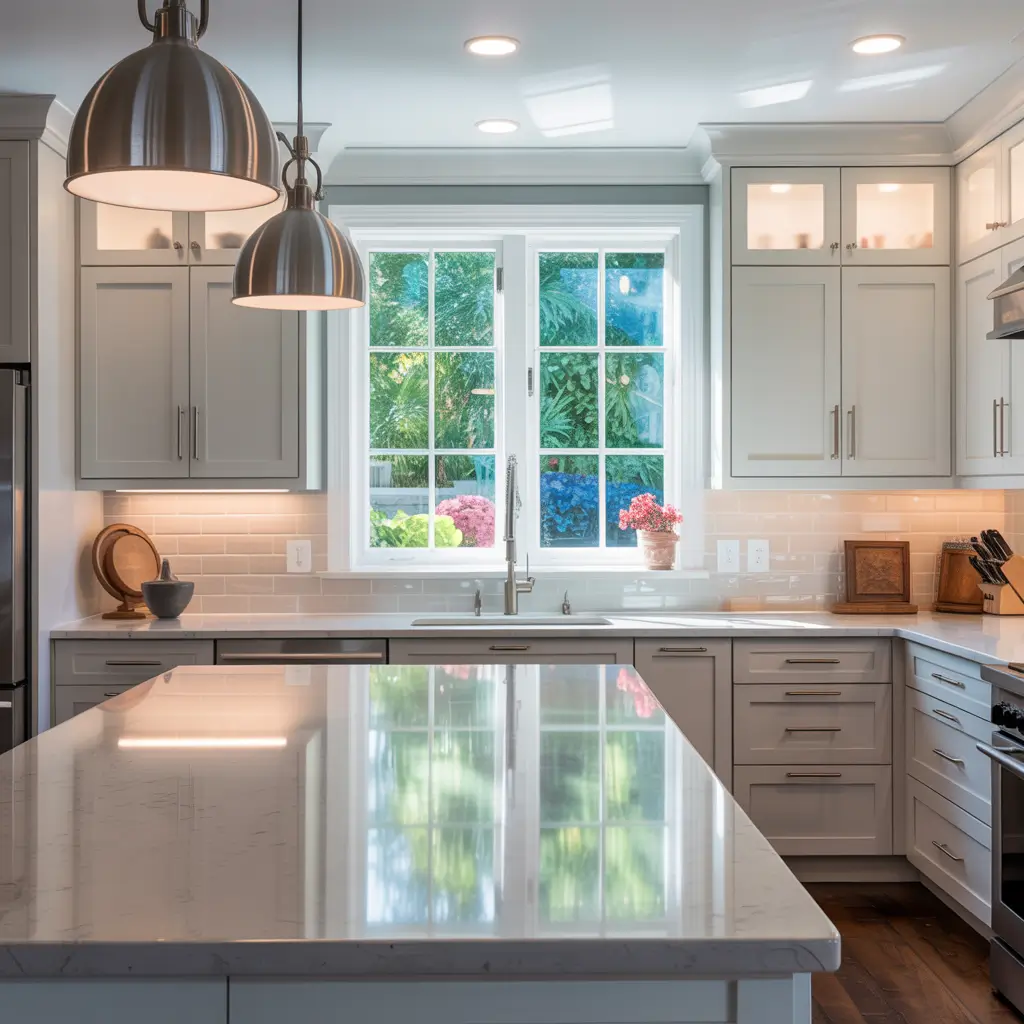
Japandi — the fusion of Japanese minimalism with Scandinavian function — has become one of the most influential design directions of the 2020s, and it translates into kitchen design with particular elegance. The Japandi white shaker kitchen is arguably one of the purest expressions of the style: a cooking space reduced to its essential, beautiful elements.
In a Japandi kitchen, white is quiet and matte, never bright or glossy. The shaker door suits this perfectly — its recessed panel creates a subtle shadow line that reads as intentional detail rather than decoration. Wood appears in dark, considered tones. Hardware is minimal or absent. Every visible object earns its place.
Japandi White Shaker Kitchen Characteristics
- Matte off-white cabinet finish — pure bright white is too harsh for the Japandi palette
- Medium to dark wood tones — smoked oak, walnut, or dark ash — in controlled, deliberate applications
- No visible hardware, or very slim minimal bar pulls in a warm dark metal
- Handmade or artisan ceramics on any open shelves — imperfect, wabi-sabi in quality
- Concealed appliances and zero visible clutter on countertops
- Layered warm lighting — pendant, under-cabinet, and ambient — never overhead fluorescent
Colour Palette: Restrict the entire kitchen palette to white, one wood tone, and one quiet neutral — warm grey, pale clay, or sand. Japandi spaces are intentionally quiet; contrast is provided by texture and tone rather than colour.
15. White Shaker Kitchen with Coloured Island
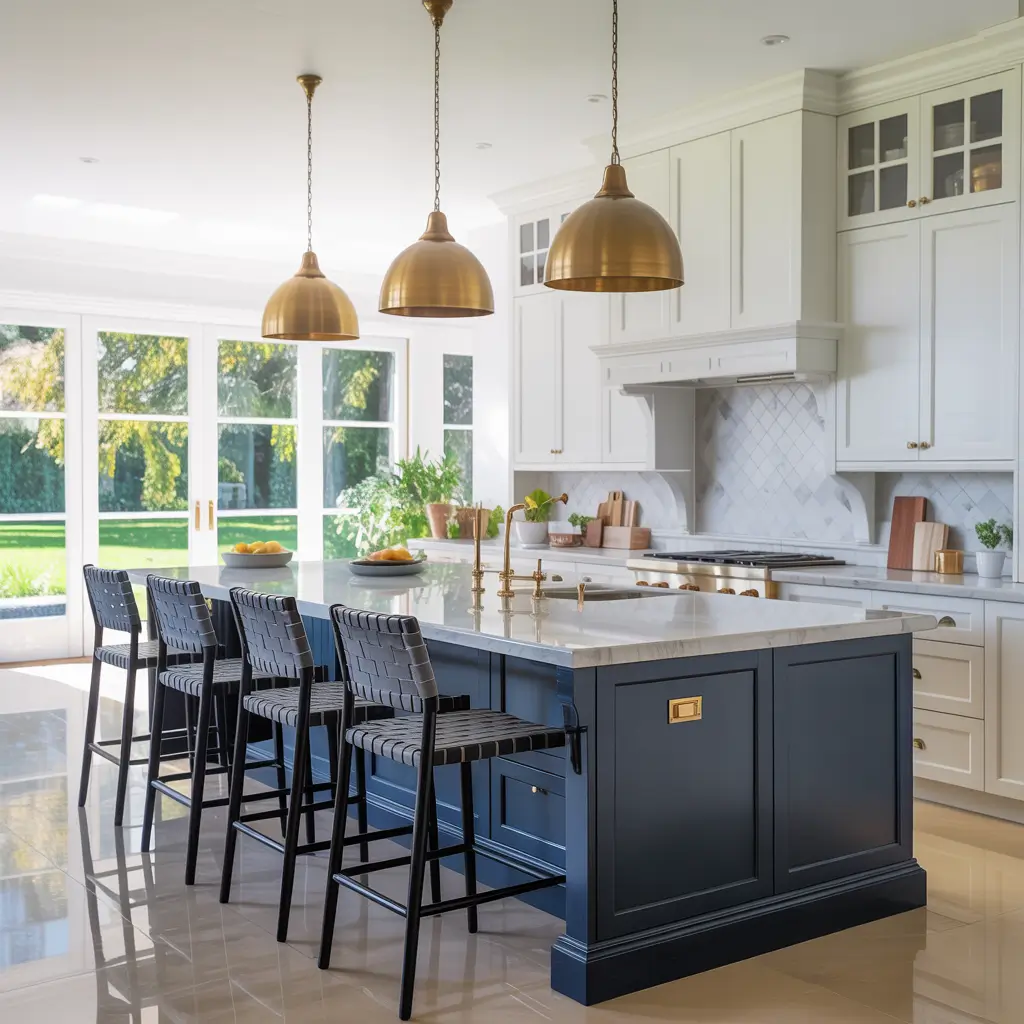
If you are drawn to the idea of a two-tone kitchen but the thought of coloured lower cabinets across the whole kitchen feels like too much commitment, the coloured island is the ideal compromise. Keep the perimeter run in white shaker cabinets, and make the island a statement in a contrasting colour.
The island is the natural candidate for a design statement — it is freestanding, it is the social heart of the kitchen, and it is the element that guests see first. A white shaker island in the same colour as the perimeter can easily disappear. A navy, green, or charcoal island becomes an anchor for the whole room.
Island Colour Options Worth Considering
- Deep navy — classic, confident, makes the island feel anchored and important
- Olive or sage green — warm, organic, very current, pairs beautifully with brass hardware
- Charcoal or slate grey — sophisticated, near-neutral, suits both modern and traditional kitchens
- Forest green — rich and botanical, best in kitchens with good natural light
- Midnight blue — darker than navy, dramatic, gorgeous with unlacquered brass
Countertop Pairings for White Shaker Kitchens — A Quick Guide
The countertop choice is one of the most impactful decisions in a white shaker kitchen. Here is a brief guide to the most popular options and what they bring to the combination.
White Quartz
The most popular pairing for white shaker cabinets. Low maintenance, durable, available with subtle veining to prevent a flat appearance. Suits every style from farmhouse to minimalist. A consistent, reliable choice.
Marble or Marble-Look
Elegant, organic, genuinely beautiful. Real marble requires care; marble-look quartz or porcelain delivers the visual at zero maintenance. The veining adds movement to the all-white palette. Best suited to kitchens where design is prioritised over heavy-duty cooking.
Butcher Block or Solid Wood
Warm, tactile, genuinely beautiful. Requires regular oiling. Most effective on the island only, with quartz or stone on the perimeter. Best suited to farmhouse, traditional, and Scandi-influenced kitchens. Scratches sand out, which is a genuinely useful property.
Honed or Leathered Granite
Natural stone with genuine character and considerable durability. Honed or leathered finishes avoid the dated glossy look of polished granite. Heavier veining in grey or gold works particularly well with white shaker cabinets.
Concrete
Industrial, tactile, genuinely unique. Poured or precast concrete countertops suit contemporary and eclectic white shaker kitchens. Requires sealing. Can develop hairline cracks over time, which many homeowners come to regard as character.
Choosing the Right White — Paint Colours Worth Knowing
Not all whites are equal, and the difference between a warm white and a cool white can change the entire feel of a shaker kitchen. Here are some of the most reliable white cabinet paint colours, along with what they work best with.
- Farrow & Ball All White (no. 2005) — a clean, cool white with a hint of grey, suits contemporary and Scandi kitchens
- Farrow & Ball Strong White (no. 2001) — slightly warmer than All White, very versatile, suits farmhouse and traditional kitchens
- Little Greene Intelligent Matt Emulsion in White Lead — warm, heritage-feeling, suits period properties
- Dulux Trade Pure Brilliant White — the bright, neutral choice, cost-effective, suits most kitchens
- Benjamin Moore White Dove — warm white with creamy undertones, suits farmhouse and coastal kitchens
- Benjamin Moore Chantilly Lace — crisp, clean, cool white, very popular for a fresh modern shaker look
Sampling Advice: Always paint A4 or larger sample patches on the actual walls and cabinet door of your kitchen before committing. Undertones that are invisible on a paint chip become obvious on a large surface under your specific kitchen lighting.
White Shaker Kitchen by Budget — What to Expect
Budget Range — Under £5,000 / $6,000
Flat-pack white shaker cabinets from IKEA, Howdens trade range, or B&Q. Basic ceramic tiles for the backsplash. Laminate countertop in a quartz or marble-look finish. New hardware to personalise. This is a genuine renovation that can transform a kitchen — the style works at this price point.
Mid Range — £8,000–£18,000 / $10,000–$22,000
Rigid-construction white shaker cabinets from a mid-range kitchen company. Quartz countertops. Porcelain or ceramic tile backsplash. Integrated appliances. Decent quality hardware. This is the range where most home renovations land and where results consistently look professional.
Premium Range — £20,000+ / $25,000+
Hand-painted bespoke or semi-bespoke shaker cabinets from a specialist kitchen company. Engineered stone or natural stone countertops. Handmade tile backsplash. Fully integrated high-end appliances. This range buys you material quality, custom sizing, and finish refinement that is genuinely visible.
Frequently Asked Questions
Q1. Are white shaker kitchens still in style in 2025?
Absolutely. White shaker cabinets are one of the few kitchen styles that genuinely transcends trend cycles. The current direction in kitchen design — toward calm, timeless spaces rather than statement or trend-driven choices — suits white shaker cabinets perfectly. They are not fashionable in the way that a specific paint colour might be fashionable; they are simply good kitchen design.
Q2. What is the difference between a shaker and a flat-panel cabinet?
A shaker cabinet door has a five-piece construction: a flat, recessed centre panel set into a surrounding frame. The frame creates a shadow line and a subtle three-dimensional quality. A flat-panel or slab door is a single, completely flat surface with no frame or recess. Shaker doors have more visual detail and warmth; flat-panel doors are more minimal and contemporary.
Q3. Do white shaker kitchens get dirty easily?
White cabinets show grease, fingerprints, and splashes more readily than darker cabinets — that is simply true. However, they are also easy to clean because marks are visible before they have had a chance to set. A wipe with a damp cloth handles most daily marks. The recessed shaker panel can accumulate dust in the frame detail over time, but this is easily managed with a quarterly wipe-down.
Q4. What grout colour works best with a white shaker kitchen backsplash?
Medium grey grout is the most consistently popular and flattering choice — it defines the tile pattern without creating heavy contrast. White grout gives a seamless, unified look but shows staining more readily. Dark charcoal or black grout creates a graphic, modern effect that works well in contemporary kitchens but can feel heavy in smaller spaces.
Q5. Can white shaker cabinets work in a small kitchen?
White shaker cabinets are actually one of the best choices for a small kitchen. The white finish reflects light and makes the room feel more spacious. The shaker detail adds visual interest without adding bulk. The style adapts easily to ceiling-height cabinetry and integrated appliances — both of which help small kitchens feel more generous. With the right lighting and a light countertop, a small white shaker kitchen can feel significantly bigger than its actual footprint.
The Last Word on White Shaker Kitchens
After going through twenty ideas, a guide to countertop options, hardware choices, paint colours, and budget ranges, the conclusion is the same one you probably sensed at the start: white shaker cabinets work. They have always worked. They will keep working. And the specific way they work is entirely up to you.
That is actually the most important thing to take away from this guide. White shaker cabinets are not a decision that limits your kitchen’s personality — they are the decision that makes room for it. The personality comes from everything else: the countertop you choose, the hardware you pick, the colour of the island, the backsplash pattern, the lighting, the open shelving, the paint on the walls, and the specific way you live in and use your kitchen.
The question is not really whether to choose white shaker cabinets. The question is which version of a white shaker kitchen is yours. And on that front, you now have twenty solid starting points to work from.
Take the ones that resonate. Discard the ones that do not. Get some paint samples on the wall, sit with them for a few days, and see which direction feels right in your actual home under your actual light. Then build from there.
A good kitchen is one you want to spend time in. A white shaker kitchen, done with some care and intention, is very reliably that.
1 thought on “15 Beautiful White Shaker Kitchen Ideas to Transform Yours”