
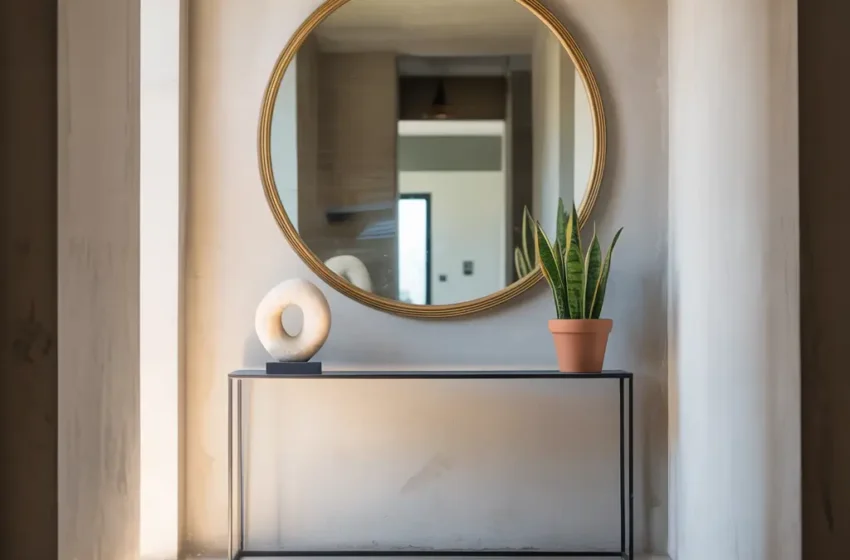
There is a particular kind of frustration that comes with a small wall. Not large enough for a statement piece of art, not tall enough for stacked shelving, not wide enough for a full gallery arrangement — and yet too prominent to leave blank. That narrow strip beside the doorway, the short wall at the end of the hallway, the awkward space above the toilet — every home has at least one of these, and most of us simply walk past them every day pretending they are invisible.
Here is the thing that professional interior designers know and most homeowners overlook: small walls are not a decorating problem. They are an opportunity. When you are working with limited space, every choice becomes deliberate and every element matters. A single well-chosen piece in a small space makes more visual impact than ten pieces scattered across a large one. The constraint is actually an advantage — it forces you to be specific, thoughtful, and creative.
This guide brings you 20 small wall decor ideas that genuinely work — ideas that have been tried in real homes, tested against real budgets, and refined through real trial and error. Whether you want something practical, something purely decorative, something handmade, or something you can put up in an afternoon without touching a single power tool, you will find it here. Some of these ideas cost almost nothing. Several can be completed before dinner. All of them will make you stop walking past that wall and start enjoying it instead.
1. Floating Wooden Shelves
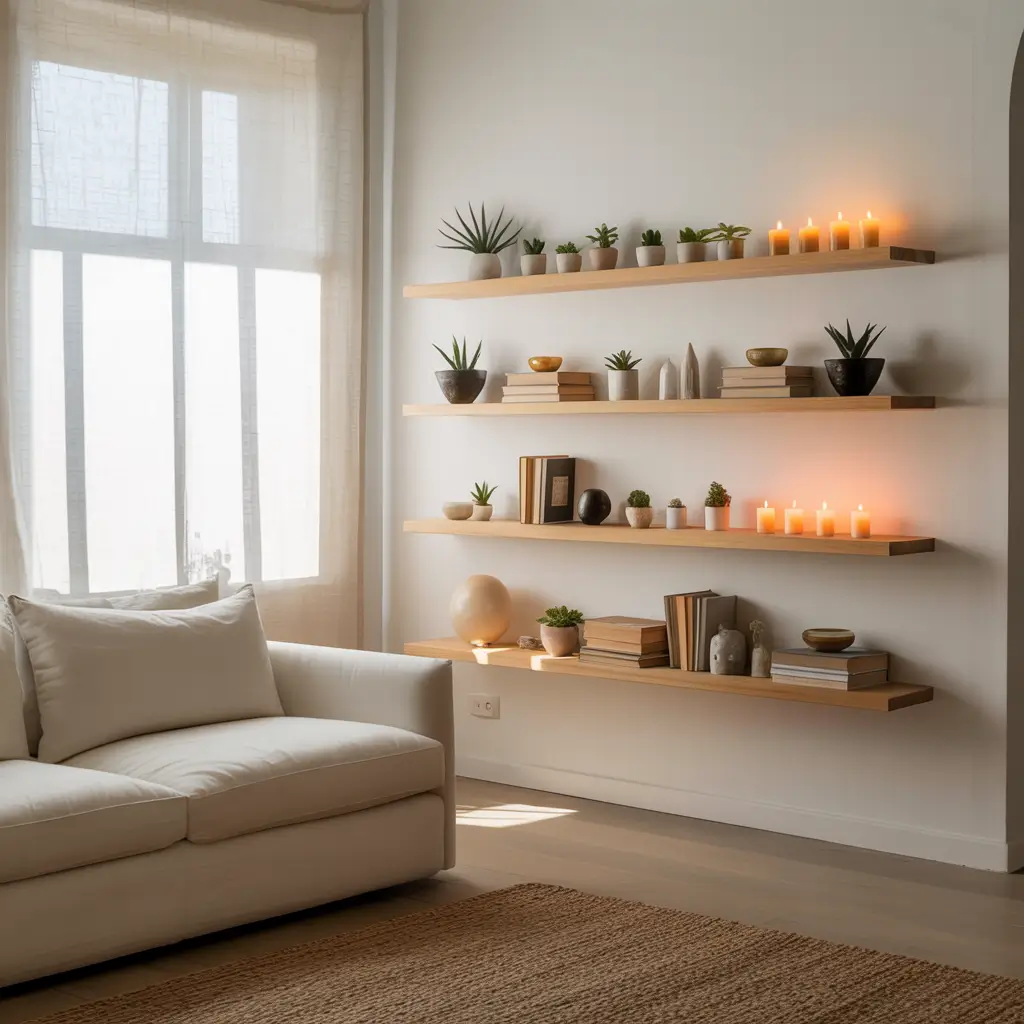
Floating shelves are the most versatile solution available for small walls, and their appeal has nothing to do with trends — they simply work. A single shelf, or a pair of shelves staggered at different heights, adds both decorative surface space and the illusion of depth to a flat wall. The objects displayed on them do the decorating work; the shelf itself acts as a clean, architectural frame.
The key to floating shelves that look considered rather than functional is the styling. Resist the urge to fill every centimetre. Instead, follow the designer principle of grouping objects in threes, varying height within the group, and leaving breathing room between collections. A small plant, a candle, and one or two books arranged with space between them will always look more intentional than a shelf packed with objects end to end.
Material Tip: Walnut and oak are the two shelf materials with the broadest compatibility — walnut adds warmth and richness in darker, more traditional spaces, while pale oak reads as light and Scandinavian in brighter, more minimal rooms.
2. Mini Gallery Wall
A gallery wall does not need to be large to be effective. In fact, a mini gallery wall — three to seven pieces arranged in a tight, cohesive cluster on a small wall — often makes a stronger visual statement than a sprawling arrangement across a large expanse. The compact scale forces careful curation and makes every piece count.
The most common mistake with gallery walls at any scale is hanging everything too high. A good rule of thumb is to center the arrangement at approximately eye height — which for most people is around 145 to 150 centimetres from the floor to the visual center of the grouping. Below a shelf, above a console table, or flanking a light switch are all excellent positions for a small gallery cluster that make it feel anchored rather than floating in space.
Foolproof Layout Method: Trace each frame onto paper, cut out the shapes, and arrange them on the wall with painter’s tape before committing a single nail. Rearrange freely until the composition feels right, then mark your nail positions directly through the paper.
3. Hanging Wall Planters
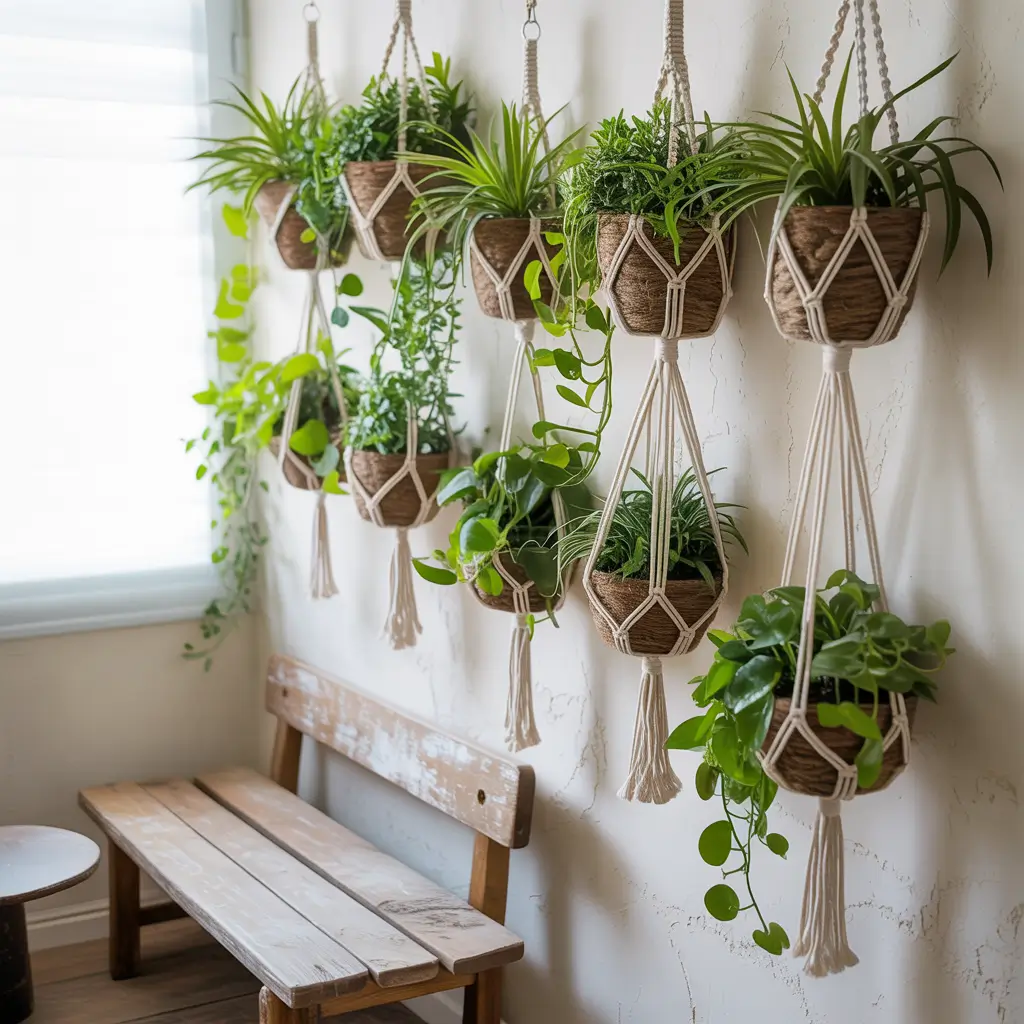
Living elements bring something to a small wall that no art print or mirror can replicate — actual life. A wall-mounted planter, a macramé plant hanger suspended from a single hook, or a set of ceramic wall pots arranged in a cluster transforms a flat surface into something organic and dynamic. Plants catch light differently throughout the day, move subtly in air currents, and change gradually over time in a way that makes even a small wall feel endlessly interesting.
The practical advantages are worth noting too. Wall-mounted plants take up zero floor space and zero surface space — ideal for small rooms where every horizontal surface is already occupied. Kitchens benefit enormously from wall-mounted herb planters near the window. Bathrooms suit moisture-loving trailing plants like pothos and spider plants that thrive in humidity without any additional care.
Plant Selection: Pothos is the single most forgiving plant for wall mounting — it trails beautifully, tolerates low light, and survives occasional neglect with minimal drama. String of hearts and philodendron are close runners-up for trailing drama with low maintenance requirements.
4. Statement Wall Mirror
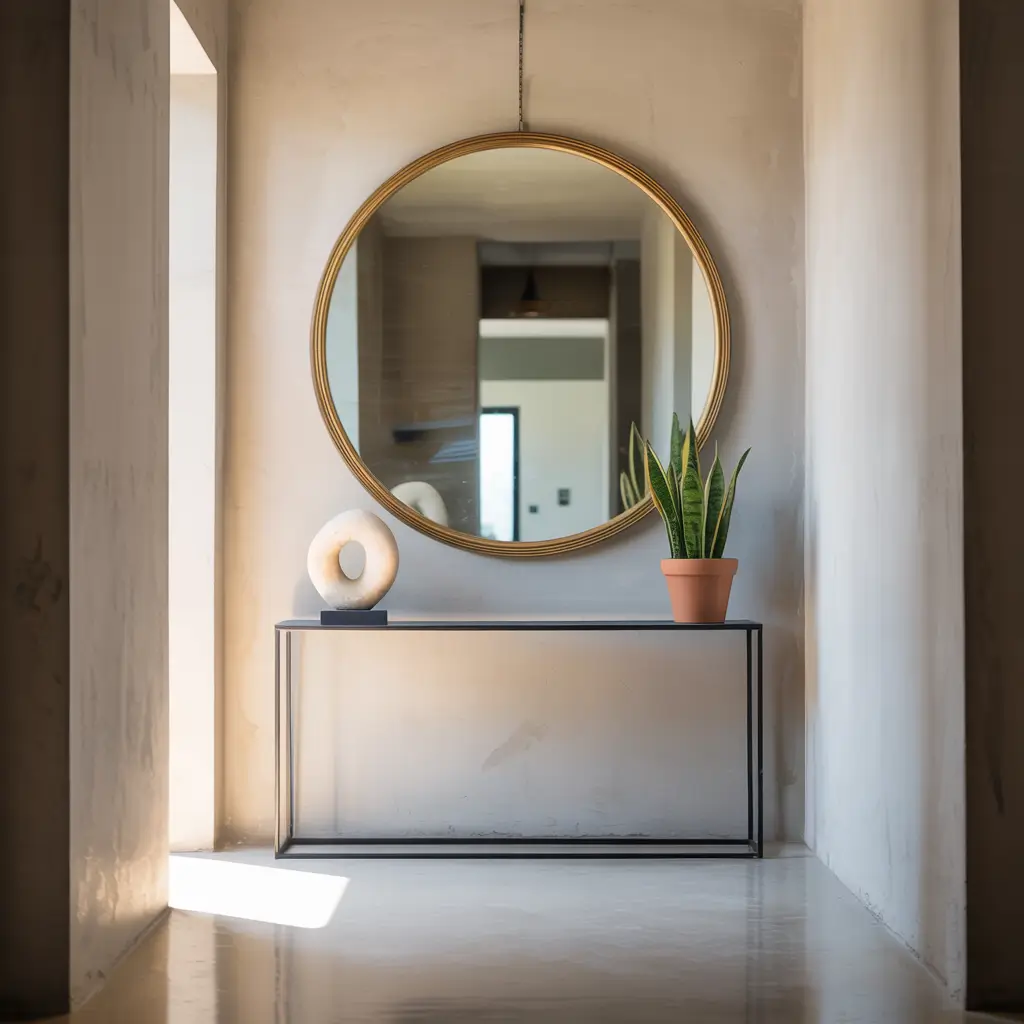
A mirror on a small wall does something no other decorative element can: it makes the wall disappear. By reflecting the room back at you, a well-placed mirror visually doubles the apparent depth of a space, bounces light into darker corners, and creates the impression of a window where there is none. For a narrow hallway or a small bathroom, a well-chosen mirror is not just decorative — it is genuinely transformative.
The shape and frame of a mirror matter as much as its size. A round mirror softens a room full of hard architectural lines and angles. An arched mirror adds height and elegance. A sunburst mirror introduces graphic energy and a sense of occasion. A simple frameless or thin-framed mirror reads as calm and modern. Choose the shape that either complements the existing character of the room or deliberately introduces the contrast you want.
Placement Principle: Before hanging, hold the mirror in position and look at what it reflects. Reflecting a window, a lamp, or an attractive view multiplies the room’s best features. Reflecting a cluttered corner or a plain door does the opposite.
5. Macramé Wall Hanging
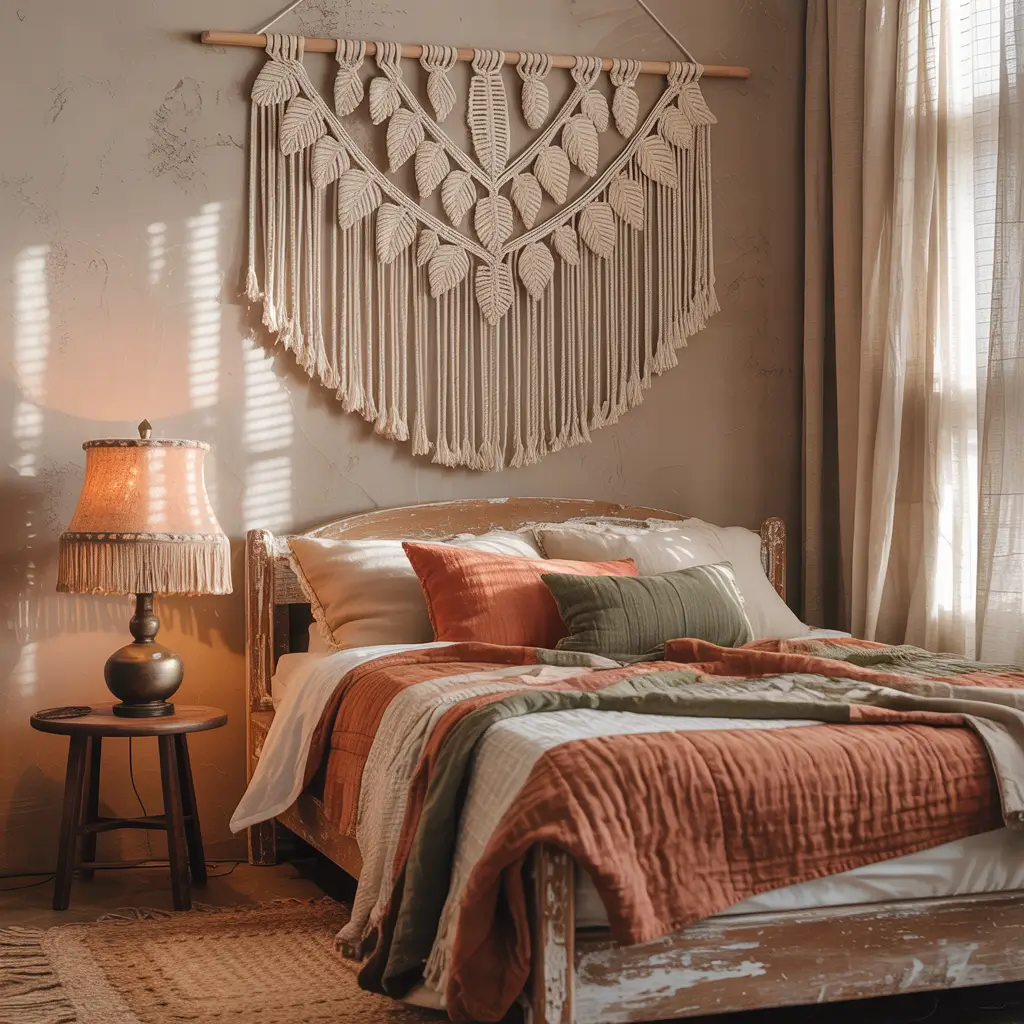
Macramé brings texture to a small wall in a way that is genuinely hard to achieve through any other means. The knotted natural fibres create depth, shadow, and movement that flat art simply cannot replicate. On a small wall — beside a bed, above a desk, in the corner of a reading nook — a single macramé piece creates a focal point that feels handmade, warm, and very much of the moment.
Scale matters considerably with macramé on small walls. A piece that is too large will dominate and overwhelm; one that is too small will look like an afterthought. For a wall under one metre wide, look for pieces between 30 and 50 centimetres across. For a narrow vertical wall beside a doorway, a long and slender hanging that emphasizes the vertical dimension works beautifully. Natural cream cotton is the most versatile choice and works across virtually every interior palette.
Sourcing Advice: Small independent makers on craft marketplaces offer macramé pieces at every price point and in a far wider range of styles than mass-market homeware shops. Buying from an individual maker also means you are likely to own something genuinely unique.
6. Decorative Wall Hooks
Hooks are one of those solutions that feel almost too obvious to mention — and yet the gap between a utilitarian hook and a decorative one is enormous in terms of what it does for a small wall. A set of beautifully made hooks in aged brass, hand-forged iron, or sculptural ceramic is simultaneously functional and genuinely attractive. Installed on a small wall by an entrance, in a kitchen, or in a bathroom, they solve a storage problem while creating a visual feature.
The arrangement of hooks matters. A single row of three or five evenly spaced hooks has a clean, ordered quality that reads as intentional. A more playful arrangement at varying heights suits a children’s room or a more eclectic space. The finish of the hooks should coordinate with other metal elements in the room — door handles, light fittings, tap fixtures — for a sense of considered coherence even in a small space.
Quick Impact Idea: A set of three vintage brass hooks on a painted wall makes an excellent small entryway solution — keys, bags, and jackets all have a home, and the hooks themselves serve as the wall decor. Zero additional art required.
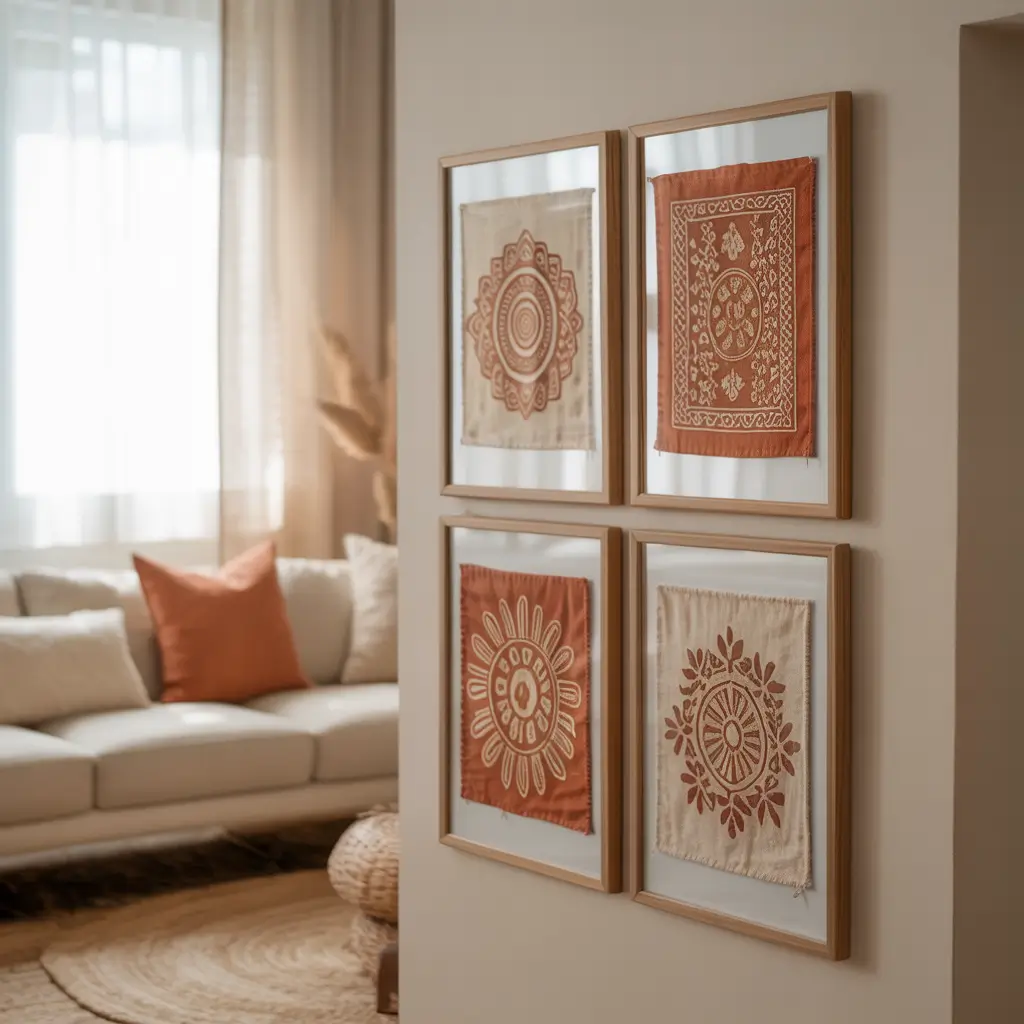
7. Framed Fabric or Textile Art
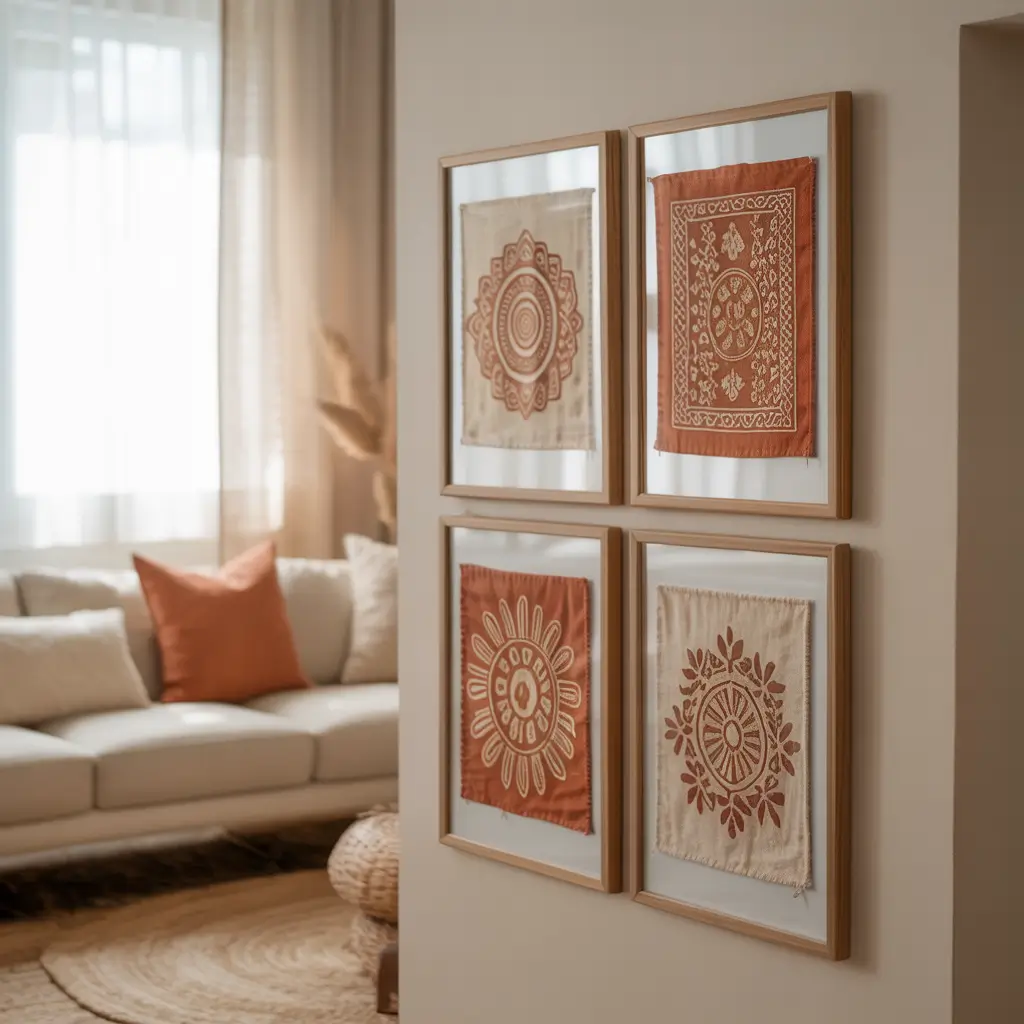
Framing fabric is one of the most underrated small wall decor tricks available. A beautiful piece of printed fabric — a William Morris pattern, a vintage scarf, a remnant of Liberty print, a fragment of vintage wallpaper — becomes genuine wall art the moment you put it in a frame. The fabric adds texture, pattern, and color simultaneously, and the framing elevates it to artwork status in a way that hanging it unframed never quite achieves.
The framing approach matters enormously. A mat board border between the fabric and the frame edge creates breathing room and professional polish. Without the mat, even beautiful fabric can look like it was crammed into a frame as an afterthought. The frame color should either pick up a tone already present in the fabric or sit in deliberate contrast to it — a dark frame around a light, delicate print, or a natural wood frame around a rich, jewel-toned textile.
Budget Find: Charity shops and estate sales regularly yield beautiful vintage scarves, embroidered textiles, and printed fabrics for very little money. A fifty-pence scarf in a ten-pound frame becomes a piece of art that looks genuinely curated.
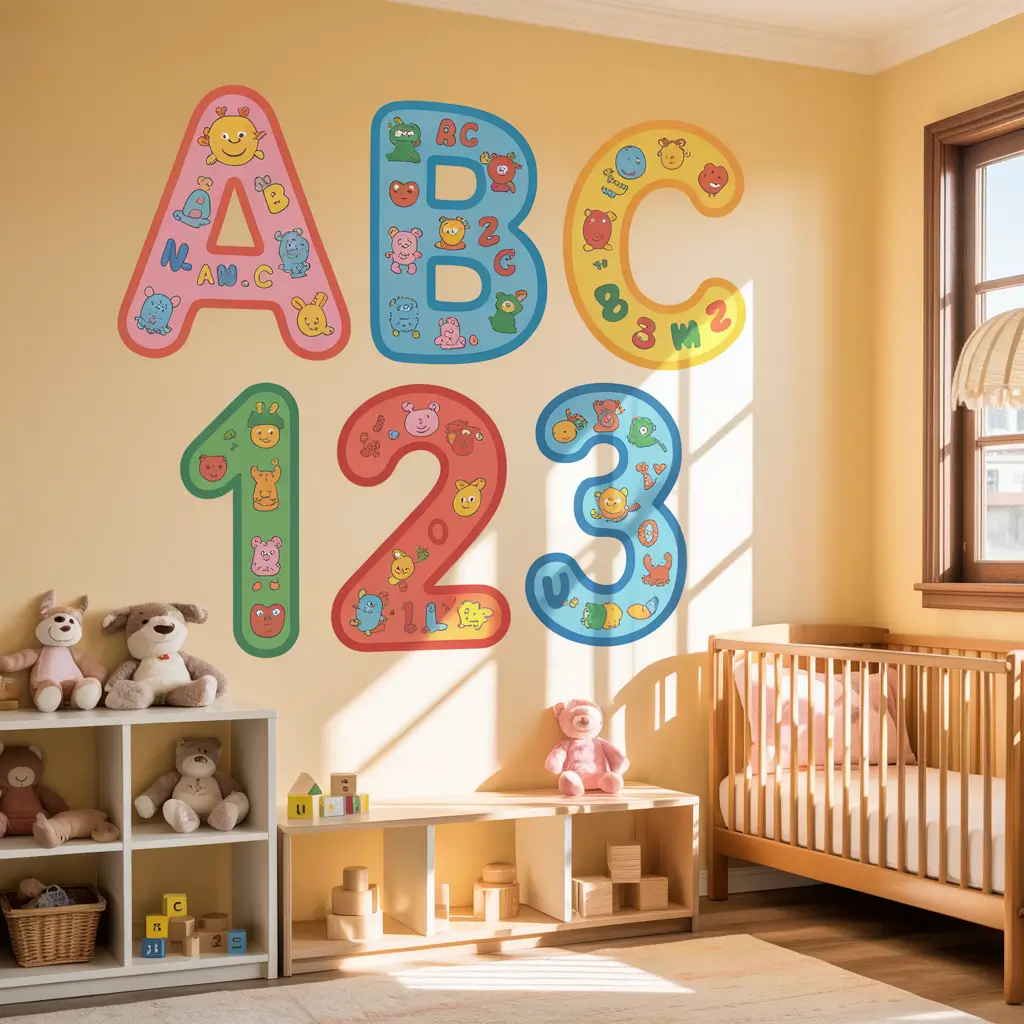
8. Geometric Wall Decals
Wall decals have evolved considerably from the motivational quotes of the early 2000s. Contemporary geometric decals — hexagons, triangles, diamonds, arcs — applied thoughtfully to a small wall can create the impression of a painted accent feature with a fraction of the commitment. They peel off cleanly, can be repositioned during application, and cost a fraction of the price of wallpaper or paint.
The most effective approach to geometric decals on a small wall is restraint. A cluster of hexagons in the top corner of a wall, fading into blank space as they descend, looks far more sophisticated than the same hexagons covering the entire wall. A scattered arrangement of triangles in a single metallic tone against a painted wall creates something that looks deliberately designed rather than applied from a pack. Less, thoughtfully placed, always outperforms more applied uniformly.
Application Technique: Use a squeegee or old credit card to smooth decals from the center outward as you apply them, working out any air bubbles gradually. Start with the largest pieces and build the arrangement around them rather than working from edge to edge.
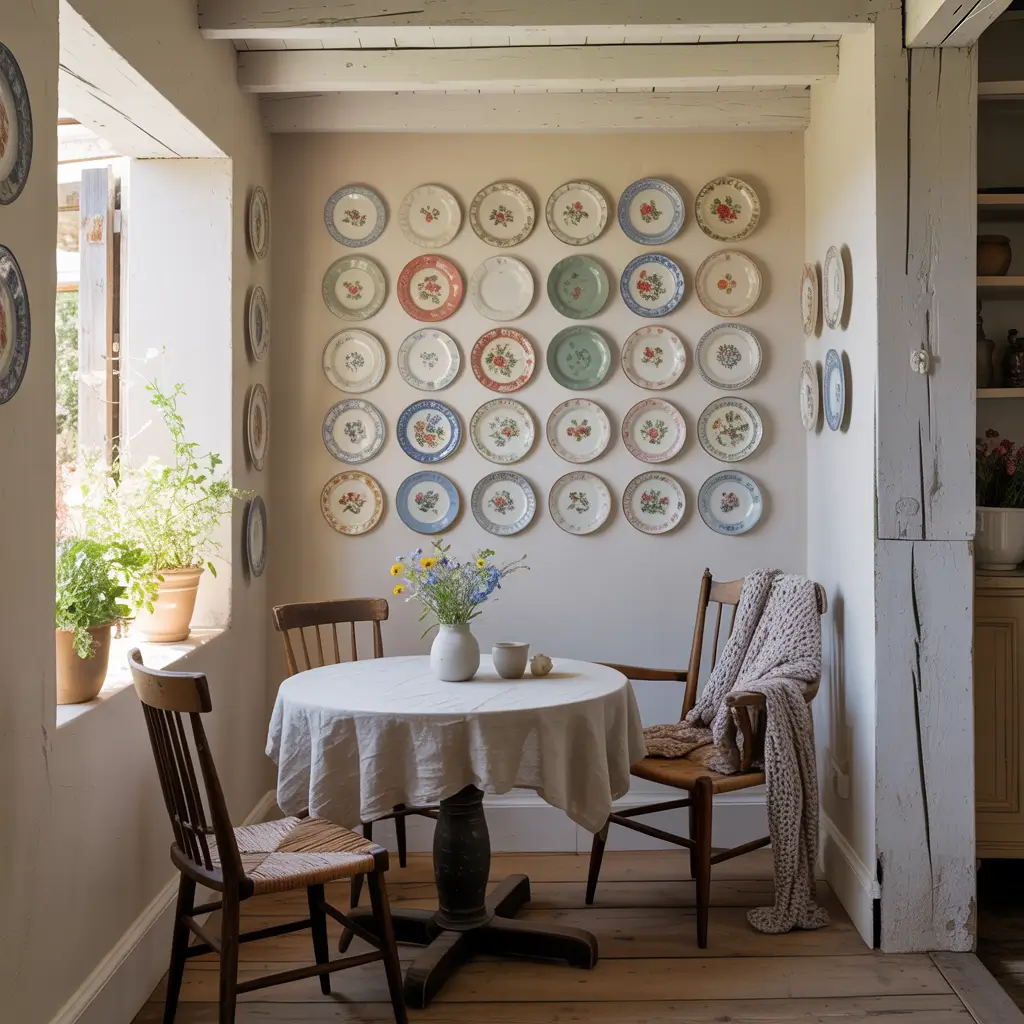
9. Vintage Plate Display
A collection of plates on a wall is one of those ideas that sounds dated until you see it done well, at which point it immediately seems like the most obvious and charming thing in the world. The key is curation — finding a visual thread that runs through the collection and holding to it consistently. All blue and white. All floral. All a single era. All geometric. The individual plates can vary enormously in size, pattern, and origin as long as that common thread holds.
Small walls suit smaller collections — three to seven plates arranged in a loose organic cluster rather than a rigid grid. The cluster arrangement allows different sizes to complement each other and creates a sense of having been collected over time rather than purchased as a set. Adhesive plate hangers are far more secure than they look and leave no marks on the plates themselves, making them ideal for display pieces you would rather not damage.
Collector’s Approach: The most characterful plate walls develop gradually. Start with two or three pieces and add as you find ones that genuinely work with the existing collection, rather than buying everything at once. The organic development shows in the result.
10. Wall Sconces and Accent Lighting
Lighting is wall decor — a truth that interior designers understand deeply and most homeowners underappreciate. A pair of wall sconces flanking a mirror or a piece of art does not just provide light; it frames the space, adds sculptural interest at eye level, and creates atmosphere that overhead lighting fundamentally cannot. Even on the smallest wall, sconces transform the character of a space after dark.
The practical barrier most people encounter is wiring — hardwired sconces require an electrician and a level of commitment that feels excessive for a small decorative project. Rechargeable battery-operated sconces have largely solved this problem. Modern versions are convincing in appearance, offer genuinely useful light output, and can be installed with adhesive wall mounts or a single small hook. They charge via USB and last for weeks on a single charge in typical use.
Styling Note: Sconces work best when they are at face height — approximately 150 to 165 centimetres from the floor to the center of the fitting. This is the level that creates flattering light and makes the most of the sculptural quality of the fitting itself.
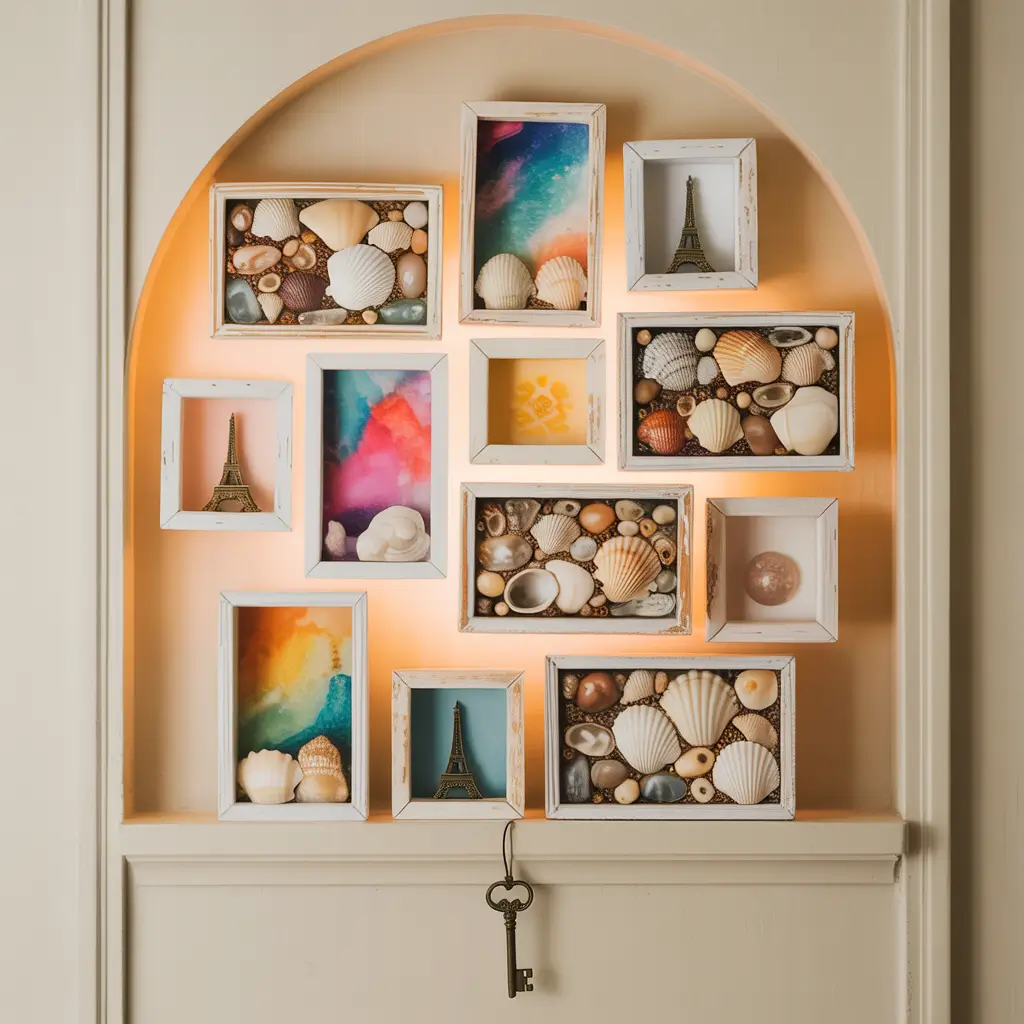
11. Shadow Box Display
A shadow box is a framed case with depth — and that depth is what makes it fundamentally different from a regular picture frame. The additional space allows three-dimensional objects to be displayed in a way that creates a genuine small installation rather than a flat image. Ticket stubs, pressed flowers, vintage coins, sea glass, small postcards layered with found objects — anything with personal significance and modest dimensions becomes displayable art in a shadow box.
Shadow box displays work particularly well on the small walls that standard art does not quite suit — the narrow strip beside a door, the small space above a bathroom shelf, the wall at the end of a short hallway. Their contained quality suits contained spaces. A shadow box of meaningful objects on a small wall tells a story in a way that a photograph or print alone cannot.
Arrangement Approach: Lay all your objects on a sheet of paper the same size as the shadow box interior before placing them inside. Photograph the arrangement once you are happy with it, then recreate it in the box. Use museum putty or small adhesive dots to secure items without permanent damage.
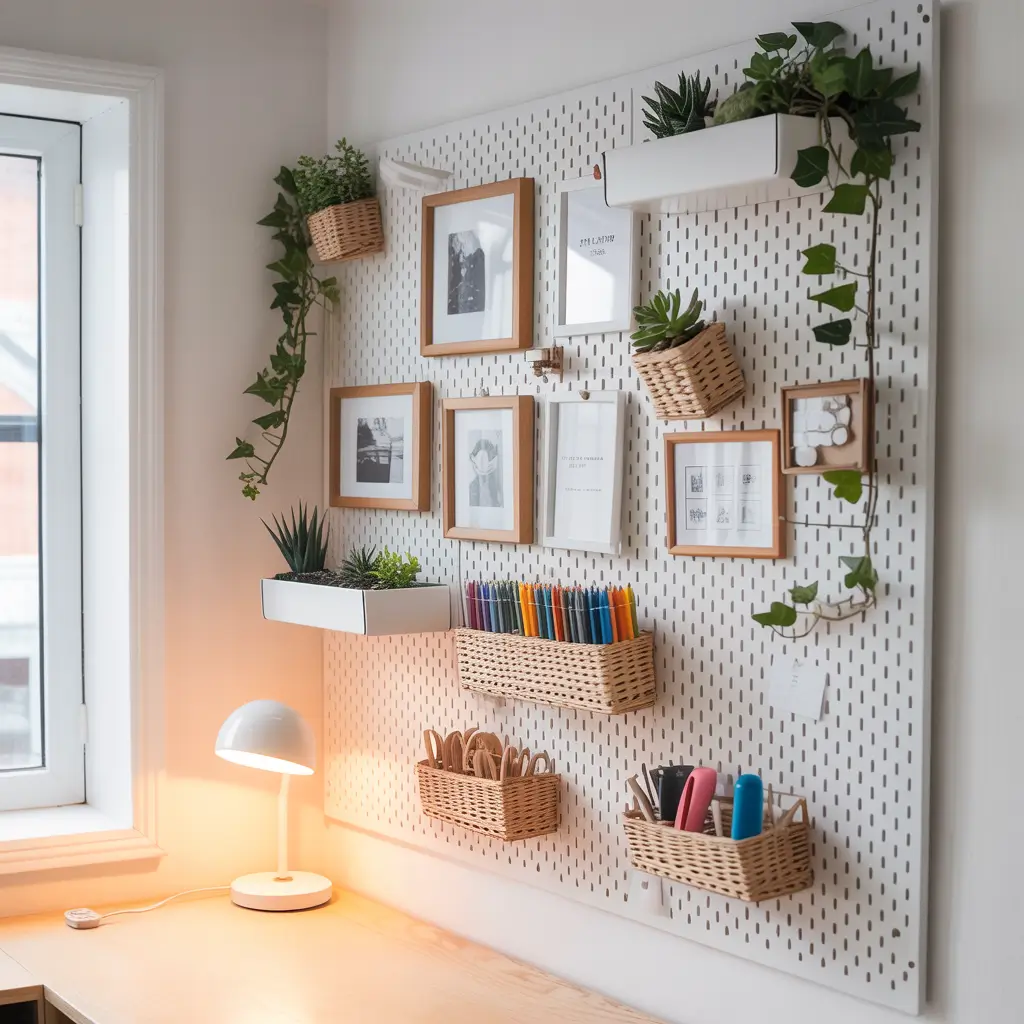
12. Pegboard Organizer Display
A painted pegboard on a small wall is one of the cleverest double-duty solutions in home decor — it is functional storage and a genuine visual feature simultaneously. In a home office, it holds supplies, notes, and tools while creating a dynamic, customizable backdrop. In a craft room or kitchen, it keeps frequently used items accessible and visible. In an entryway, it organizes the daily chaos of keys, bags, and mail while looking intentionally designed.
The styling of a pegboard determines whether it reads as workshop storage or as interior design. A pegboard painted in a deep, saturated color — forest green, navy, dusty rose, terracotta — and fitted with brass or copper hooks immediately crosses the line from utilitarian to decorative. Mixing hooks with small shelves, baskets, and decorative objects rather than exclusively functional items reinforces that this is a considered design choice rather than a practical afterthought.
Installation Essential: Mount pegboard with spacers behind it — at least 15 millimetres of clearance between the board and the wall. Without this gap, hooks cannot be inserted and the board’s functionality is lost entirely.
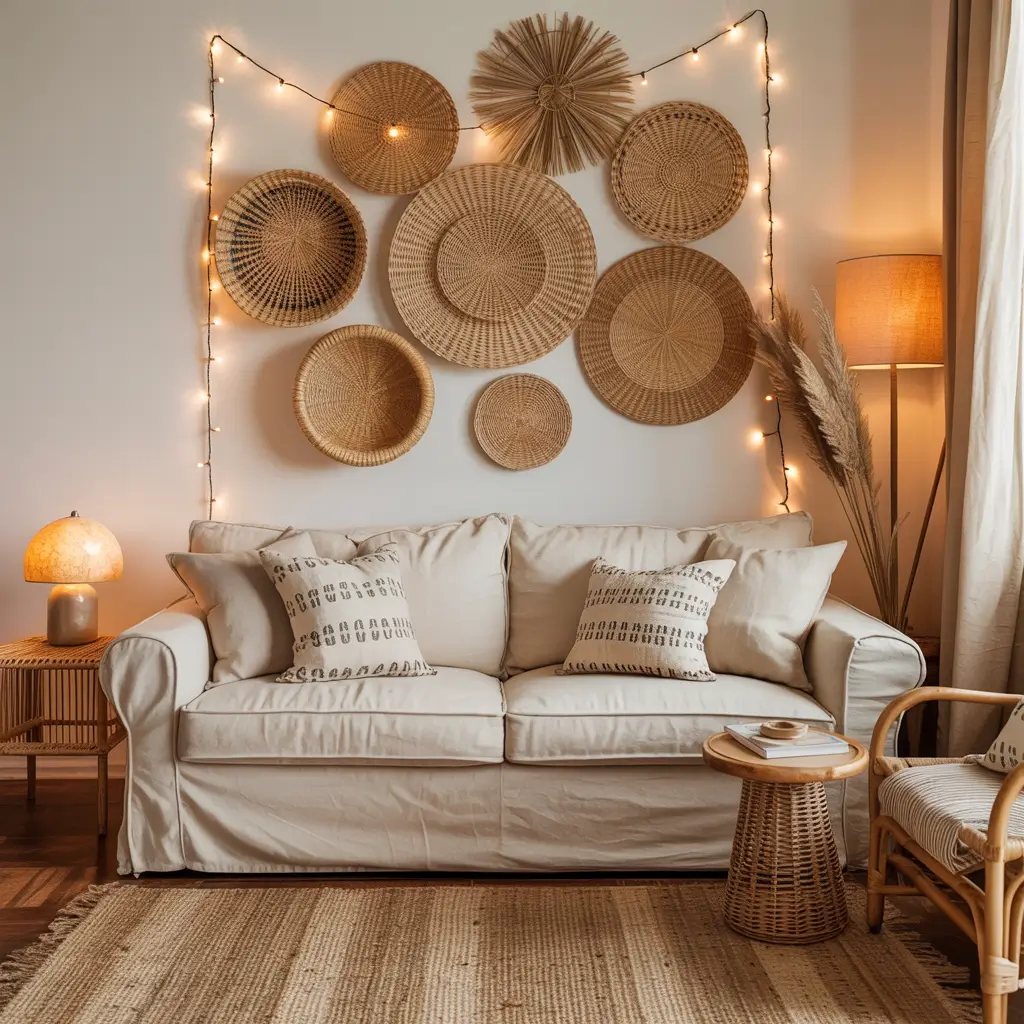
13. Woven Basket Gallery
Woven baskets mounted on a wall create a texture and warmth that is extraordinarily difficult to achieve through any other means at a comparable price point. The natural materials — rattan, seagrass, bamboo, water hyacinth — introduce an organic quality that softens rooms with hard architectural lines and makes spaces feel genuinely lived-in and grounded. A collection of three to five baskets in varying sizes and weaving patterns on a small wall creates something that looks like it belongs in a high-end interior design feature.
The installation is simpler than it looks. Most shallow-profile baskets can be hung directly on a single picture hook through the natural loops in their weaving. Baskets without obvious hanging points can have a small sawtooth hanger or loop of picture wire attached to the back. The arrangement should feel deliberately informal — a loose cluster rather than a rigid grid, with the largest basket roughly centered and smaller pieces arranged around it at varying distances.
Sourcing Strategy: Ethnic homeware shops, independent makers at craft markets, and online artisan platforms often offer genuinely beautiful hand-woven baskets at prices well below what interior design shops charge for similar pieces. The variety of patterns and sizes available through these channels is also considerably broader.
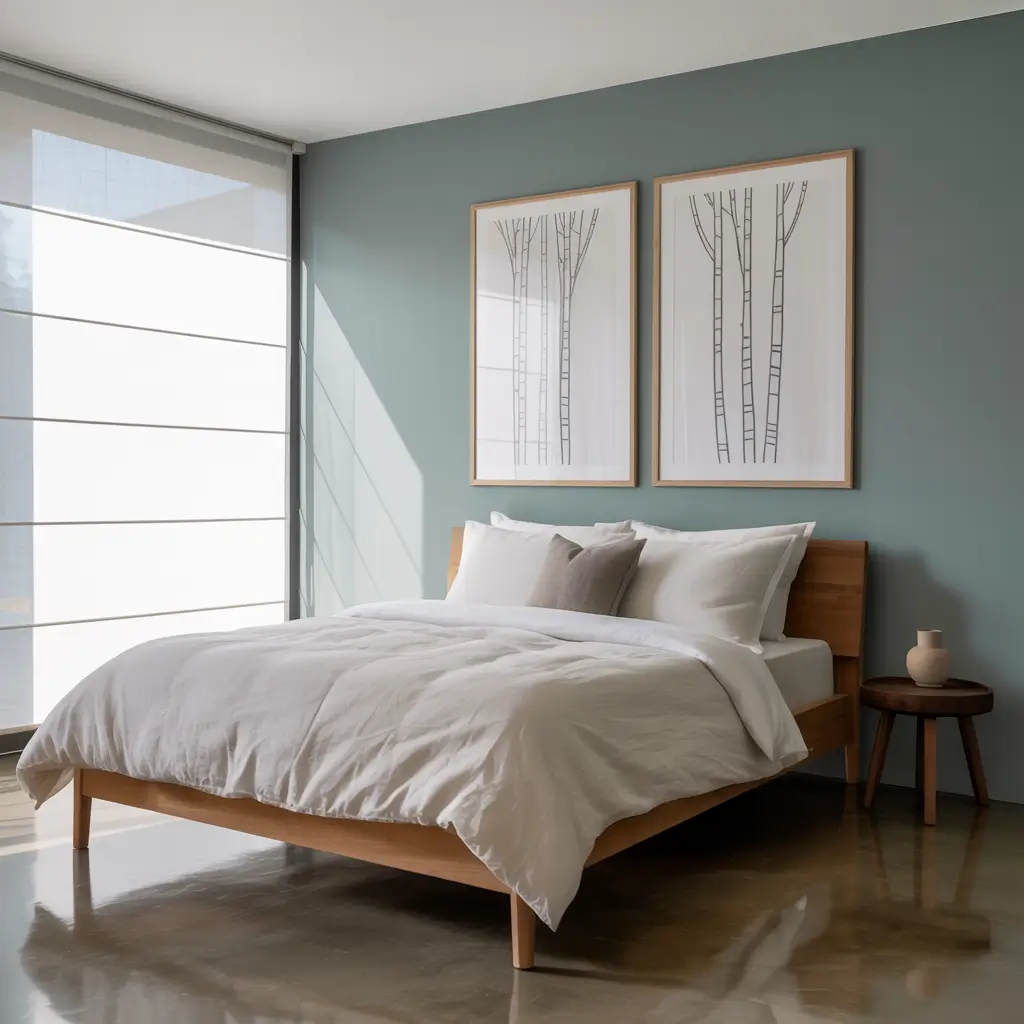
14. Minimalist Line Art Prints
Simple line drawings — a single unbroken line describing a face, a figure, an animal, a botanical form — have a graphic elegance that makes them at home in almost every interior context. They add art and personality to a small wall without visual weight or complexity. A set of three related line art prints in identical slim frames makes one of the most effortlessly sophisticated small gallery arrangements possible.
The beauty of line art for small walls is also its affordability. Many independent illustrators sell digital downloads of their work at very modest prices, allowing you to print at whatever size suits your wall and frame it yourself. The cost of a beautiful set of line art prints, printed and framed, can be under twenty pounds or dollars when sourced this way — considerably less than a single mass-produced art print from a homeware retailer.
Print Quality Tip: For the most professional result, use a local print shop rather than a home printer. The paper weight, colour accuracy, and overall quality is noticeably better and worth the modest additional cost for something that will be on your wall for years.
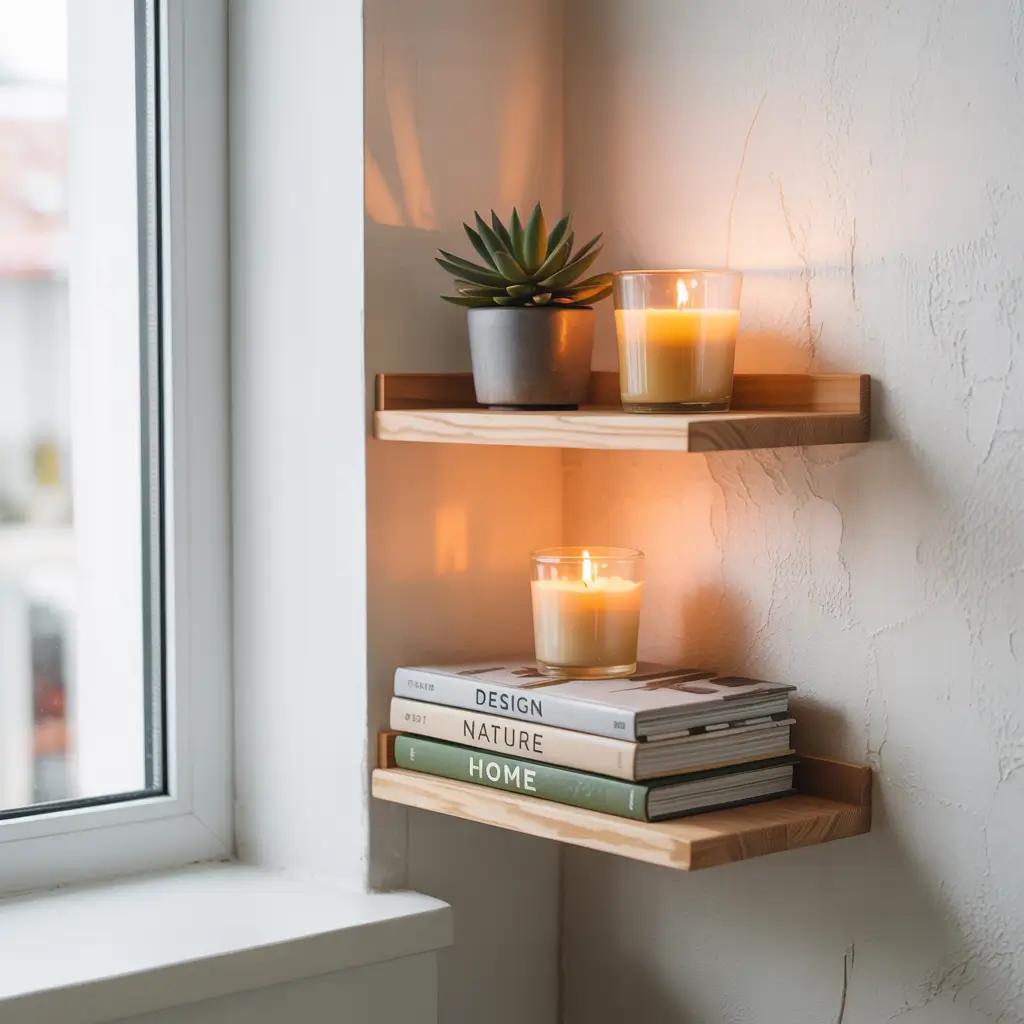
15. Floating Corner Shelves
Corner walls are among the most consistently ignored spaces in any home, and a floating corner shelf is the most elegant way to turn that neglect into opportunity. A well-made corner shelf occupies what would otherwise be dead space, adds a display surface, and creates an architectural detail that makes the room feel more considered and complete. In small rooms where every surface is at a premium, the additional space a corner shelf provides is practically valuable as well as aesthetically pleasing.
Styling a corner shelf requires a slightly different approach from a standard floating shelf. Because the shelf is viewed from multiple angles simultaneously — often from the center of the room — every side needs to look intentional. A single sculptural plant, a stack of beautiful books, and one meaningful object tends to work better than a collection of small items that only reads well from one direction.
Installation Tip: Corner shelf brackets need to find studs in two walls simultaneously, which can be more complex than standard shelf installation. If stud locations do not align with your intended shelf height, wall anchors rated for the load you plan to display are a reliable alternative.
How to Choose the Right Small Wall Decor for Your Space
With twenty ideas in front of you, narrowing down the options requires only a few clear questions. The answers will guide you toward the right choice for your specific wall and your specific home more reliably than any trend or inspiration board.
What Does the Wall Actually Need?
Some small walls need purely decorative treatment — they are blank and boring, and any of the visual ideas above will improve them. Others need to earn their keep by solving a practical problem: the hallway wall that has nowhere to put keys and bags, the kitchen wall that lacks storage for tools and notes, the desk wall that needs organization. If the wall has a practical need, start with ideas that address both the functional and the decorative — hooks, pegboards, pinboards, and shelving all bridge that gap effectively.
What Is the Room’s Existing Character?
Small wall decor that sits in harmony with a room’s existing character always looks more intentional than decor that fights against it. A minimalist room benefits from simple, graphic choices — line art prints, a single statement mirror, a clean-lined floating shelf. A maximalist, pattern-rich room can absorb a plate display, a textile gallery, or a macramé hanging without looking busy. A neutral, natural room suits organic materials — woven baskets, botanical prints, wooden shelves. Work with your room’s existing direction rather than against it.
What Is Your Appetite for Change?
Some small wall decor solutions are effectively permanent — a floating shelf requires wall fixings and is not easily moved. Others are highly flexible and easy to swap — gallery wall prints can be changed whenever you want, chalkboards change daily, decals remove cleanly. If you love refreshing your home regularly or if you are renting and need wall-safe solutions, lean toward the more flexible options. If you want something to stay in place and look great for years, invest in a solution that is built to last.
What Is Your Honest Budget?
Several of the ideas in this list cost almost nothing — framed fabric, botanical DIY prints, vintage plates from charity shops, pegboards from hardware stores. Others require a more meaningful investment — quality floating shelves, statement mirrors, handmade macramé. Be honest with yourself about budget from the start, because both ends of the price spectrum can produce beautiful results and the expensive option is not necessarily the better one for a given space.
Practical Tips for Decorating Small Walls Successfully
The Rule of Eye Height
The single most common mistake in wall decor is hanging things too high. The instinct to place art toward the ceiling is understandable — it feels like it gives the piece importance — but it actually disconnects the art from the room and makes it harder to view. For small walls, center your decor at approximately eye height: 145 to 155 centimetres from the floor to the visual center of the piece. This makes the decor feel connected to the space and to the people in it.
Renter-Friendly Approaches
Renting should not mean living with blank walls for years. Modern renter-friendly solutions have improved enormously and now include:
- Adhesive wall strips rated for specific weights — always check the rating against the actual weight of your piece, and follow the removal instructions precisely to avoid paint damage.
- Adhesive hooks for lighter pieces — excellent for small mirrors, macramé hangings, and individual frames under one kilogram.
- Peel-and-stick wall decals that remove cleanly from painted surfaces.
- Freestanding shelving and floor-leaning art that requires no wall fixings at all.
- Over-door hooks and rails for hanging items from door frames without touching the walls.
Getting Scale Right
Scale is the most common technical failure in small wall decor. A piece that is too small for the wall looks lost and accidental — it draws attention to the surrounding blankness rather than filling it. As a general guide, the art or decor on a small wall should occupy between 50 and 75 percent of the wall’s width. This leaves breathing room around the edges while giving the piece enough presence to feel intentional. When in doubt, go slightly larger rather than smaller — it is a more forgiving error.
The Power of a Single Great Piece
There is a strong temptation to fill small walls with multiple small items — several small frames, a cluster of tiny objects, a collection of miniature prints. Resist it. A single well-chosen piece, given the full attention of the wall, almost always makes a stronger statement than several competing small ones. One beautiful mirror, one excellent print, one sculptural clock — these command the space in a way that a collection of small items rarely achieves. Edit ruthlessly and let quality do the work.
Frequently Asked Questions About Small Wall Decor
How do I make a small wall look bigger?
Mirrors are the most effective tool for creating the illusion of space on a small wall — they reflect light and create apparent depth that the wall itself does not have. Beyond mirrors, keeping colors light and coherent (wall color matching or closely related to surrounding walls) reduces the sense of a wall as a barrier. Vertical elements — tall narrow prints, vertical arrangements of two stacked pieces — draw the eye upward and make a short wall feel taller. Avoiding very busy or dark patterns on small walls prevents them from feeling cramped.
What should I put on the small wall above the toilet?
The wall above the toilet is one of those genuinely awkward spaces, and it benefits from decor that is appropriate to the room — moisture-tolerant, appropriately scaled, and interesting without being overwhelming. A small framed print or a trio of three prints stacked vertically works well in the available height. A single statement mirror reflects light and makes the bathroom feel larger. A floating shelf at comfortable height holds a plant and a candle. Avoid heavy items that would be difficult to remove and reinstall if you needed access to plumbing.
How many pieces should I hang on a small wall?
There is no single correct number, but one to three pieces is usually the right range for a genuinely small wall. One strong piece has the most impact. Two pieces require careful pairing to avoid looking accidental. Three creates a gallery dynamic and allows more flexibility in arrangement. Beyond three, small walls tend to start feeling cluttered rather than curated. The exception is the mini gallery wall where five to seven small pieces are grouped tightly — the cluster reads as a single element rather than multiple competing pieces.
Can I decorate a small wall without putting holes in it?
Yes, with some limitations. Adhesive strips and hooks have improved dramatically and can now support several kilograms safely — more than enough for most wall art and lightweight shelving. The critical rule is always to check the weight rating of the adhesive product against the actual weight of what you want to hang, and to follow the removal instructions precisely to avoid paint damage. Very heavy pieces — large mirrors, heavy shelving with books — still generally require traditional fixings for safety.
What colors work best for small wall decor?
The most reliable approach is to pick up a color already present in the room — in the rug, the cushions, the curtains — and bring it to the wall through your decor choice. This creates visual coherence and makes the wall feel like part of the room rather than a separate decision. For neutral rooms that lack strong accent colors, natural tones — warm wood, natural fibers, cream and off-white — add warmth without introducing color complexity. Bold color on a small wall can be highly effective as a deliberate accent, but works best when it picks up a tone from elsewhere in the room rather than appearing as an isolated statement.
Stop Walking Past That Wall
Every home has them — the small walls that get ignored year after year while the attention goes to the bigger, more obvious spaces. The short stretch beside the front door. The narrow wall at the end of the landing. The blank space above the bathroom shelf. The tiny alcove wall that nothing seems to fit.
These walls are not problems to be tolerated. They are opportunities being wasted. A well-decorated small wall does not just look good — it changes how a space feels to be in. It makes a hallway feel like a journey rather than a corridor. It makes a bathroom feel like a considered room rather than a utility space. It makes a corner feel occupied rather than forgotten. The impact of getting a small wall right is disproportionately large relative to the effort involved.
Start with one wall and one idea — the one that genuinely excites you rather than the one that seems most sensible. Buy the print you actually love rather than the safe one. Hang the mirror in the spot it will have the most effect rather than the most obvious place. Choose the hooks that make you smile rather than the cheapest ones available. Small walls reward genuine enthusiasm and thoughtful choices far more than they reward caution.
Your walls are already there. The question is only whether they will keep being blank, or whether they will start telling your story. Pick up a hammer, grab some adhesive strips, or simply open a browser and order that print you have been thinking about for weeks. The wall is waiting, and it deserves better than another year of being walked past without a second glance.
1 thought on “15 Stunning Small Wall Decor Ideas for Stylish Homes”