
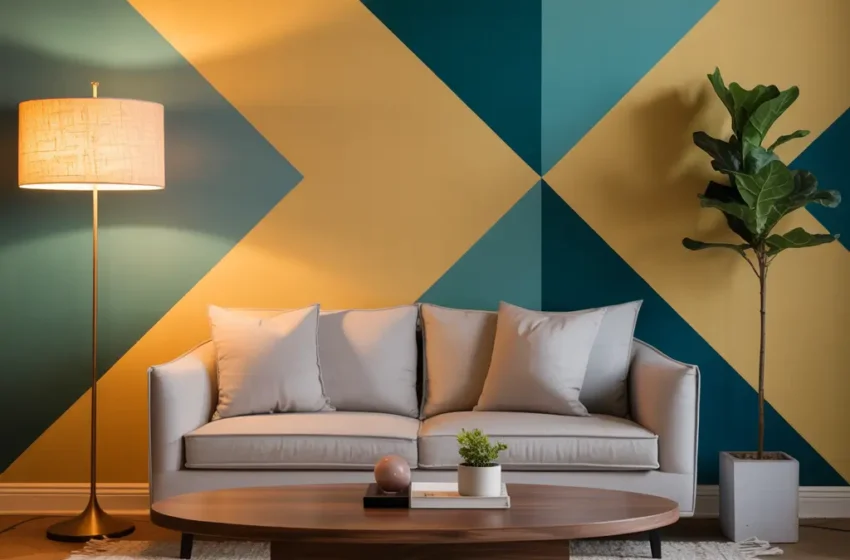
Corners are the great overlooked opportunity of interior design. Every room has at least two of them, most rooms have four, and the vast majority of homeowners treat them as storage zones for things they do not know where else to put — a floor lamp no one likes anymore, a pile of bags, a dying plant in desperate need of a better location. The corner becomes a dumping ground by default, not by choice, and then everyone quietly agrees to pretend it does not exist.
The reason corners get ignored is not laziness. It is genuine uncertainty. A flat wall is intuitive — you hang art, install a shelf, paint an accent color. A corner is more complex. It involves two walls meeting at an angle, which changes the rules around proportion, hanging methods, furniture placement, and visual balance. The same approaches that work brilliantly on a flat wall can look awkward or disconnected when applied to a corner without adjustment.
But here is what the best interior designers know and most homeowners do not: corners, handled well, make stronger impressions than any flat wall in the same room. A thoughtfully decorated corner draws the eye, creates depth, and gives a room a sense of completeness that flat-wall decor alone cannot achieve. It signals that someone has paid attention to every inch of the space, not just the obvious bits. This guide gives you 20 corner wall decor ideas — ranging from simple and affordable to more involved and transformative — that will help you finally make those corners work properly.
1. Floating Corner Shelves
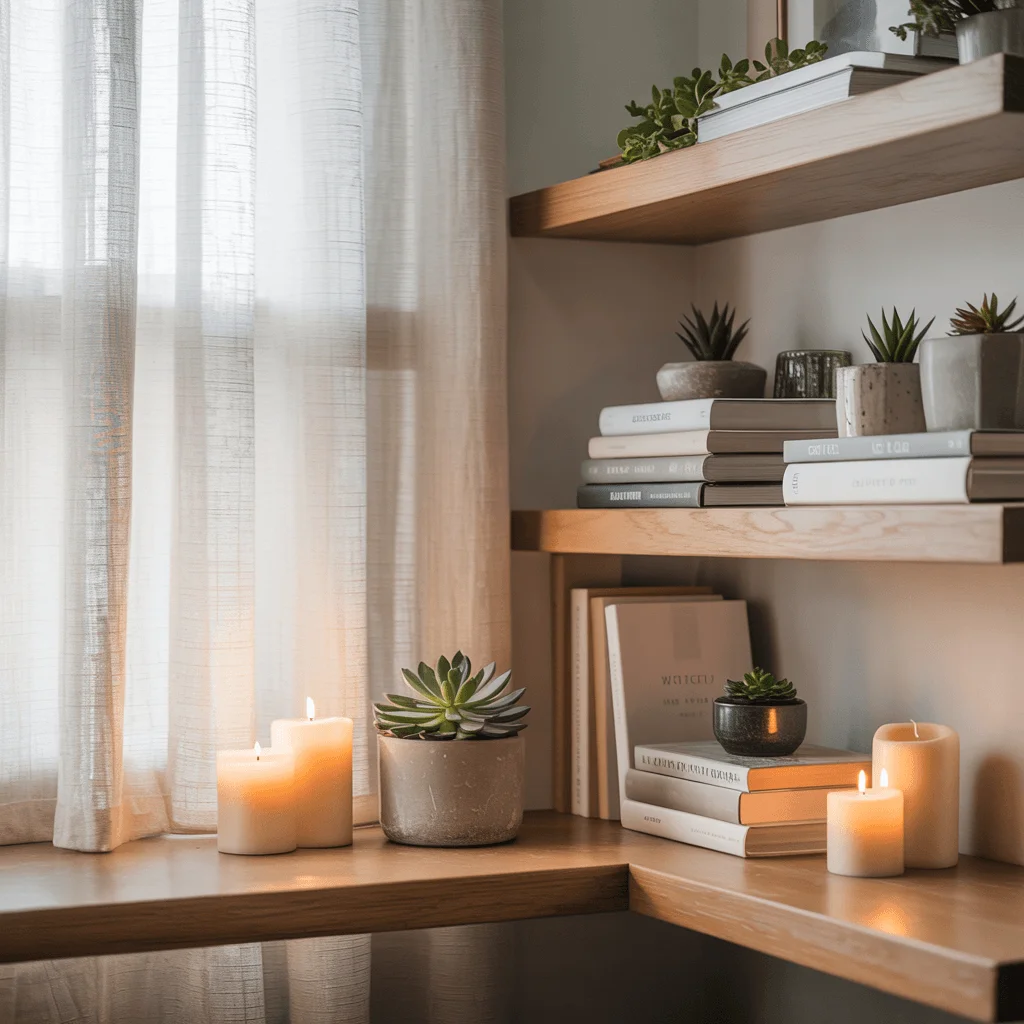
Floating corner shelves are consistently the most versatile and broadly applicable solution for corner walls, and for good reason. A well-installed set of floating corner shelves transforms a dead architectural zone into a display surface, a storage solution, and a visual feature simultaneously. The shelves themselves recede into the background while the objects on them do all the decorative work, which makes this approach adaptable to virtually every interior style.
The most effective corner shelf arrangements use staggered heights rather than uniform spacing. Three shelves at different levels — perhaps 45 centimetres apart at the bottom and 35 centimetres apart toward the top — create more visual interest than three shelves at identical intervals. The objects displayed should vary in height within each shelf: a tall vase, a medium plant, a stack of books, and one small decorative object create the right layering without crowding. Resist filling every centimetre — breathing room between objects is what separates a display that looks curated from one that looks cluttered.
Styling Principle: Group objects on corner shelves in threes and maintain at least 10 centimetres of clear shelf visible between each group. This negative space is what makes the display read as intentional rather than accumulated.
2. Corner Gallery Wall
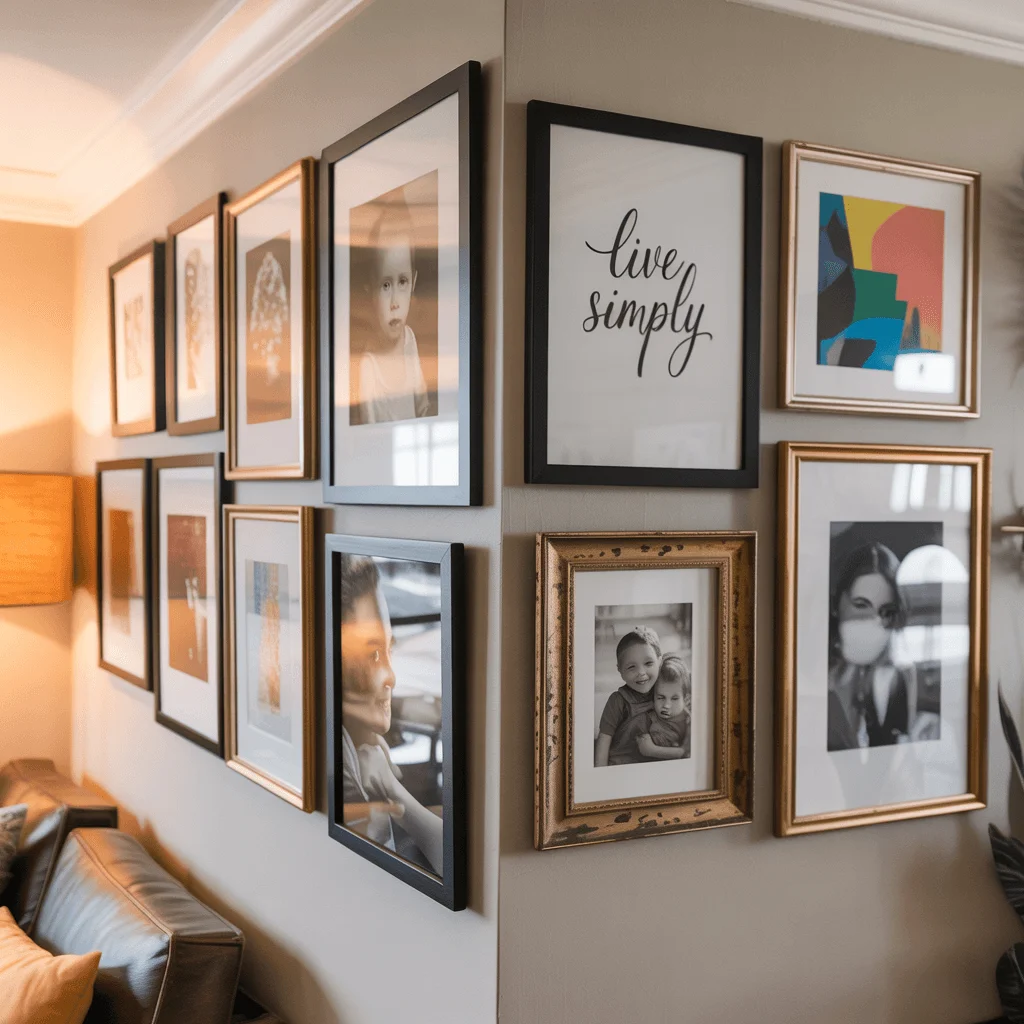
A gallery wall that wraps around a corner is one of the most ambitious and rewarding corner wall decor projects available. Done well, it feels like the room has a built-in feature — something architectural and permanent rather than decorative and added. The corner becomes the spine of the arrangement, with art flowing outward along both walls in a composition that could not exist on a single flat wall.
The key to a corner gallery wall that works is treating the two walls as a single canvas rather than as two separate hanging surfaces. This means letting pieces cross the corner conceptually — some frames near the corner on the left wall, some near the corner on the right wall, some close to the corner on both — so that the arrangement reads as one unified piece when you stand back. The corner itself should not feel like a division but like the center of the composition. Paper templates taped to the wall before any nails are driven save enormous amounts of time and frustration.
Layout Method: Lay all your frames on the floor arranged exactly as you intend them to appear on the wall. Photograph the layout from standing height before touching any walls. Use this reference image throughout the hanging process.
3. Corner Hanging Planter Display
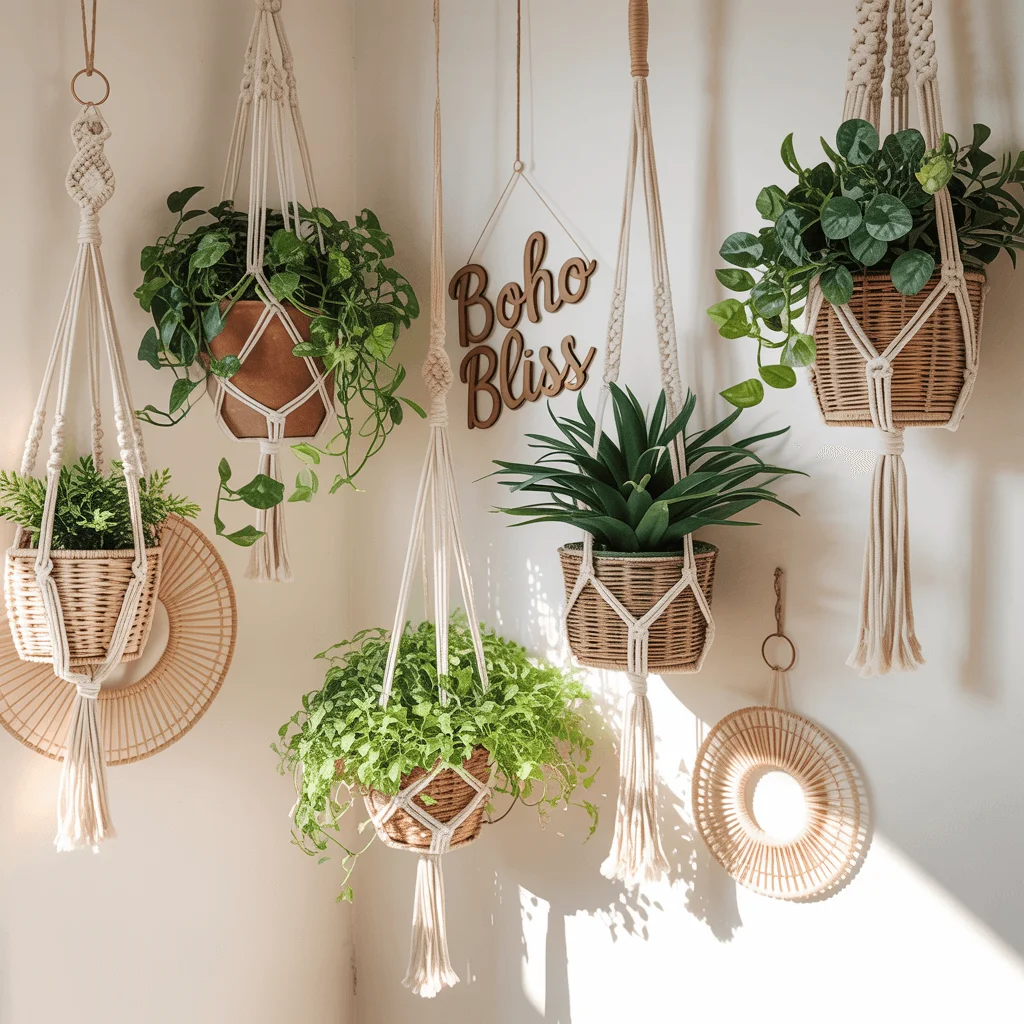
A vertical arrangement of hanging planters in a corner creates something genuinely different from any other form of corner decor — it introduces living, growing, breathing elements that change over time and respond to the light and humidity of the room. The trailing quality of the best corner plants — pothos, string of hearts, tradescantia, philodendron — means the corner becomes increasingly lush as the plants grow, adding depth and organic movement that static decor simply cannot provide.
The installation requires ceiling hooks or a ceiling-mounted rail rather than wall hooks, which is the technically most secure approach for a corner. Space the planters at different heights — perhaps 30, 60, and 90 centimetres below the ceiling — to create a cascading effect rather than a uniform row. Macramé hangers in natural cotton add a textural softness that complements the plants and suits both bohemian and more contemporary interiors. Water with care: a drip tray inside each planter is essential when the planters are above anything you value.
Plant Selection: For corners with moderate natural light, pothos, heartleaf philodendron, and spider plants are the most reliable choices. For brighter corners, string of hearts and string of pearls create spectacular trailing effects and thrive in good light.
4. Layered Corner Mirror Display
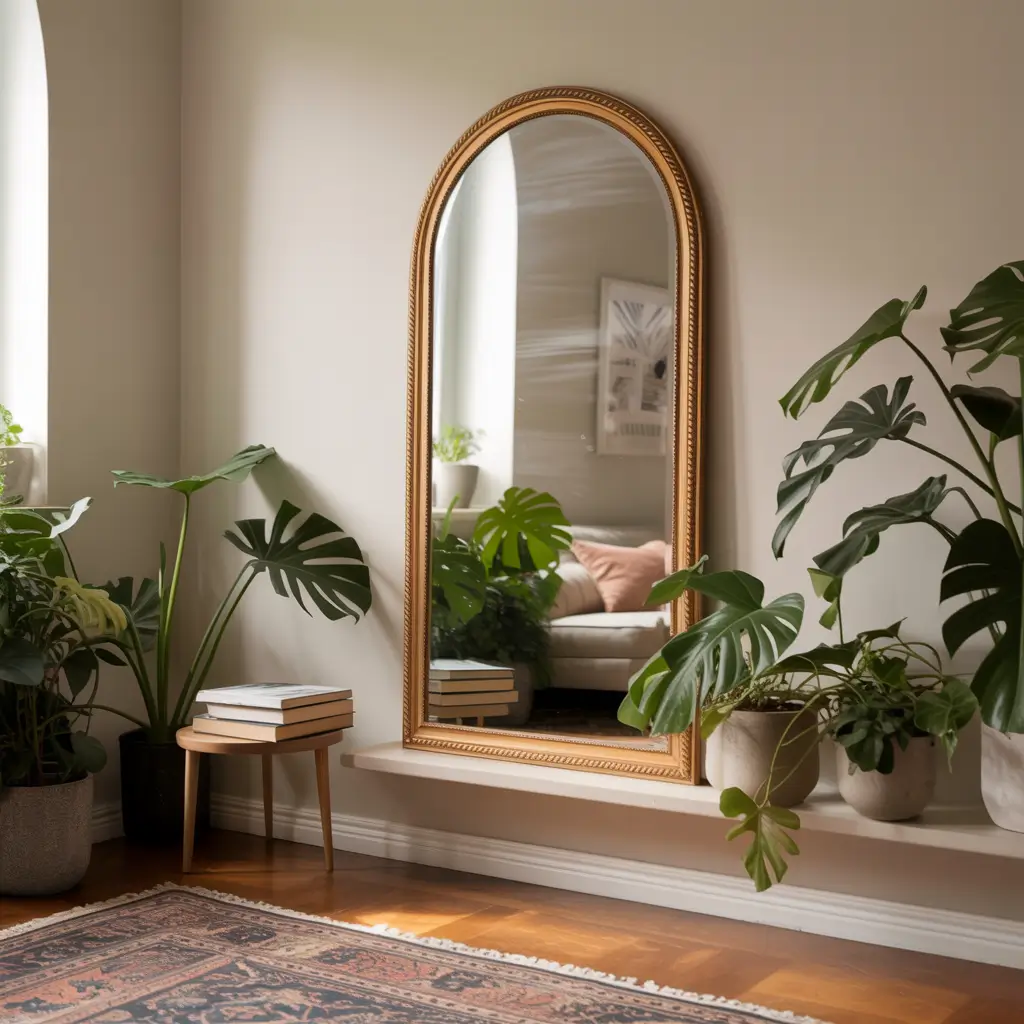
Mirrors in a corner serve a different function from mirrors on a flat wall. Rather than simply reflecting a portion of the room, a corner mirror display reflects both walls simultaneously, creating a sense of space and light that feels almost architectural in its effect. The corner becomes a zone of luminosity — especially in rooms with limited natural light — that makes the entire space feel larger and more open than it physically is.
The most effective corner mirror displays layer multiple mirrors of different sizes and shapes rather than using a single piece. A large mirror leaned or hung on one wall of the corner, with two or three smaller mirrors at different heights on the adjacent wall, creates a composition that feels collected and personal rather than formulaic. Shapes matter significantly: round mirrors soften the angular quality of the corner, while geometric or arched forms add a more contemporary edge. Avoid positioning mirrors so they directly face each other — the infinite reflection effect is more disorienting than attractive.
Light Maximizing Tip: In a north-facing room or any room that feels dark, position a corner mirror display on the wall that faces or flanks the main window. The reflected natural light brightens the corner and throws additional illumination across the room.
5. Corner Reading Nook with Wall Decor
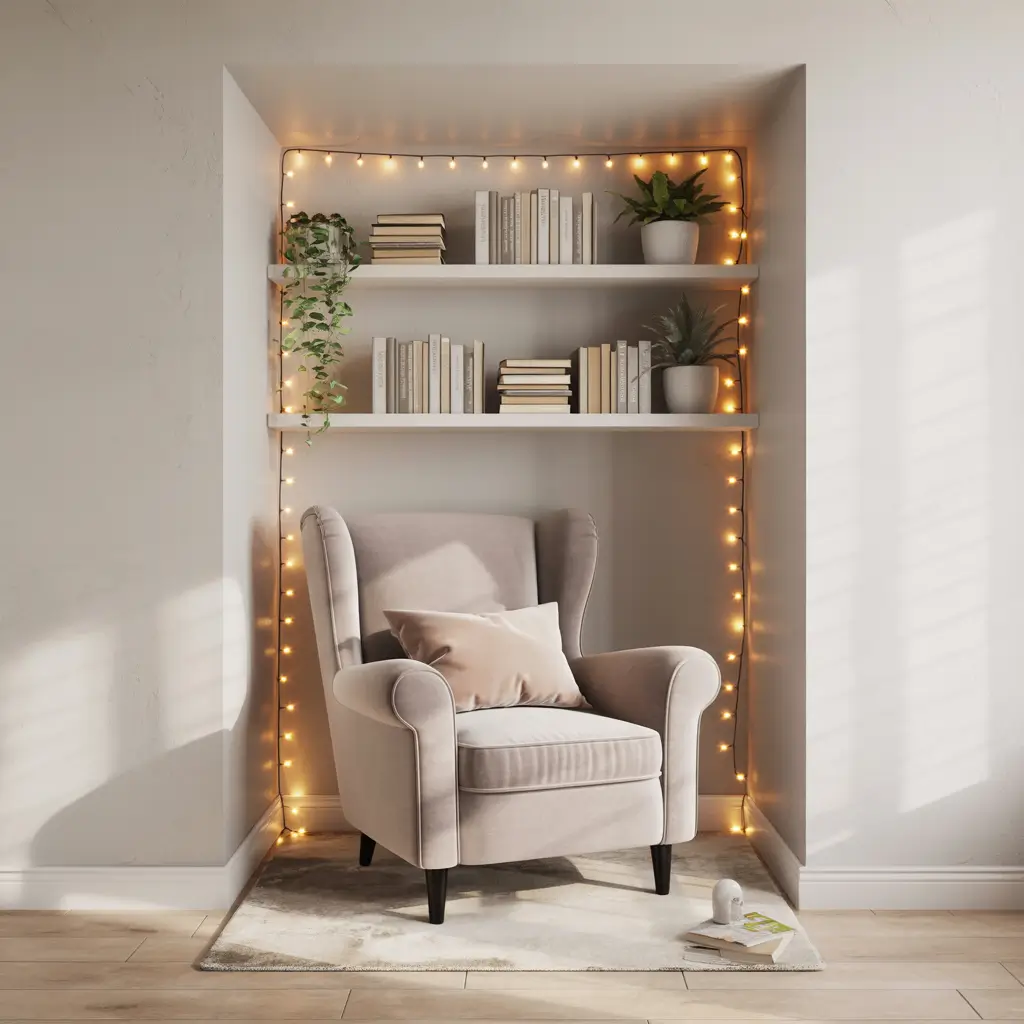
A reading nook tucked into a corner is one of the most rewarding interior design projects in domestic decorating, and the wall decor within it is what transforms it from a piece of furniture placed in a corner to a genuine destination within the room. The walls of the nook — both of them — become an intimate backdrop that is experienced close-up and at length, so they deserve more considered treatment than any other walls in the room.
Built-in or wall-mounted bookshelves on one or both walls of the nook are the most functional and visually rich approach. Filled with books, they create a sense of enclosure and intellectual warmth that no art print can replicate. For a simpler version, one wall with a floating shelf at armrest height, one small piece of art or a framed quote at eye level when seated, and a wall-mounted reading light that keeps the surface of the side table clear creates a perfectly complete nook without construction or specialist installation.
Atmosphere Essential: A wall-mounted or swing-arm reading light positioned at shoulder height when seated — approximately 100 to 110 centimetres from the floor for a standard seat height — provides ideal task lighting without the visual clutter of a floor lamp competing with the nook’s contained, intimate character.
6. Corner Wall Sconces
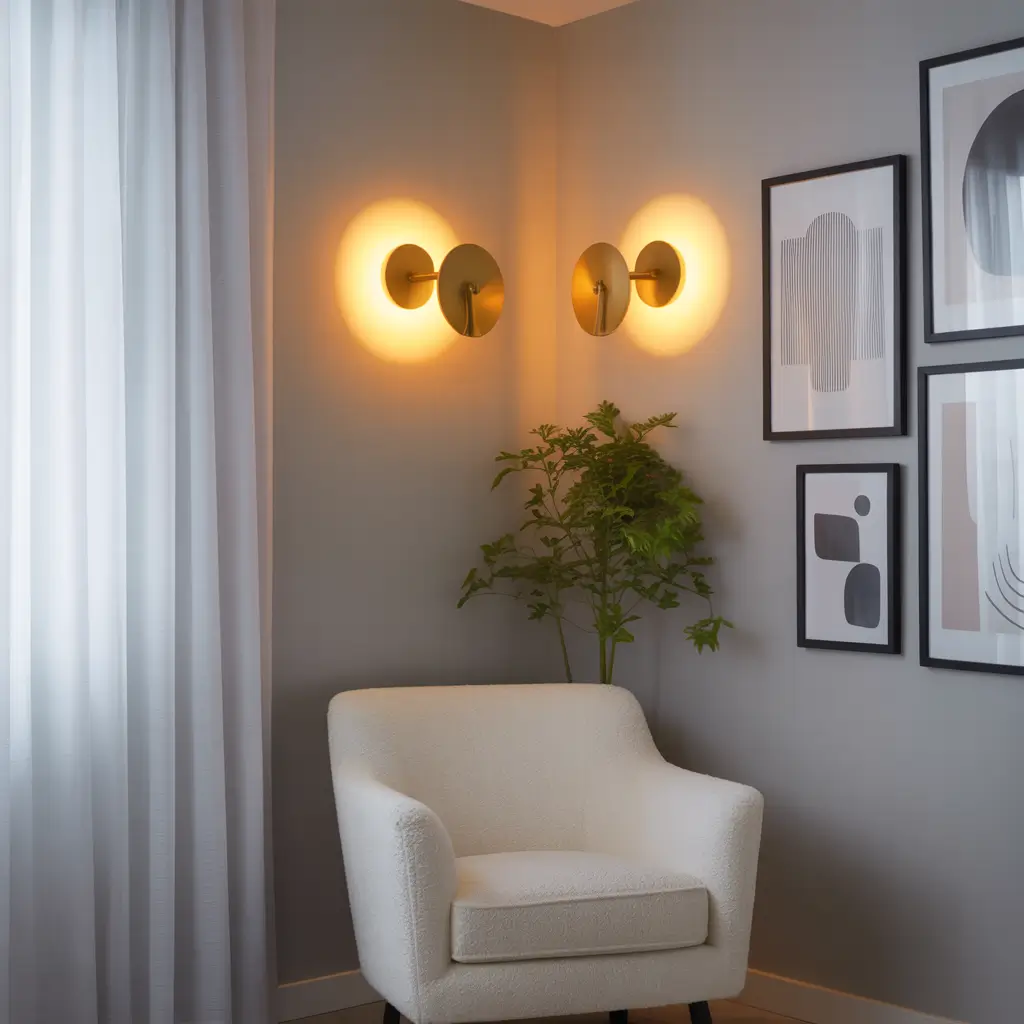
Sconces placed at the meeting point of two walls — one on each wall of the corner, angled inward — create a lighting effect that transforms the character of a corner more dramatically than almost any other single intervention. Light emanating from two directions simultaneously produces soft, even illumination with minimal harsh shadows, and the fittings themselves become decorative objects that give the corner sculptural presence even in daylight.
The style of sconce determines the aesthetic direction of the corner entirely. Industrial cage sconces in aged bronze suit spaces with exposed brick, raw wood, or dark paint colors. Slim brass arm sconces with white shades feel sophisticated and timeless in more formal living rooms and bedrooms. Ceramic wall lights in organic shapes suit contemporary and nature-inspired interiors. Rechargeable battery-operated sconces have become genuinely convincing alternatives to hardwired versions and allow placement without any electrical work.
Installation Height: Install corner sconces at 150 to 165 centimetres from the floor — approximately face height — for the most flattering and functional light distribution. Above this height, sconces create upward light that suits ambiance but not reading or task work.
7. Large-Scale Corner Art
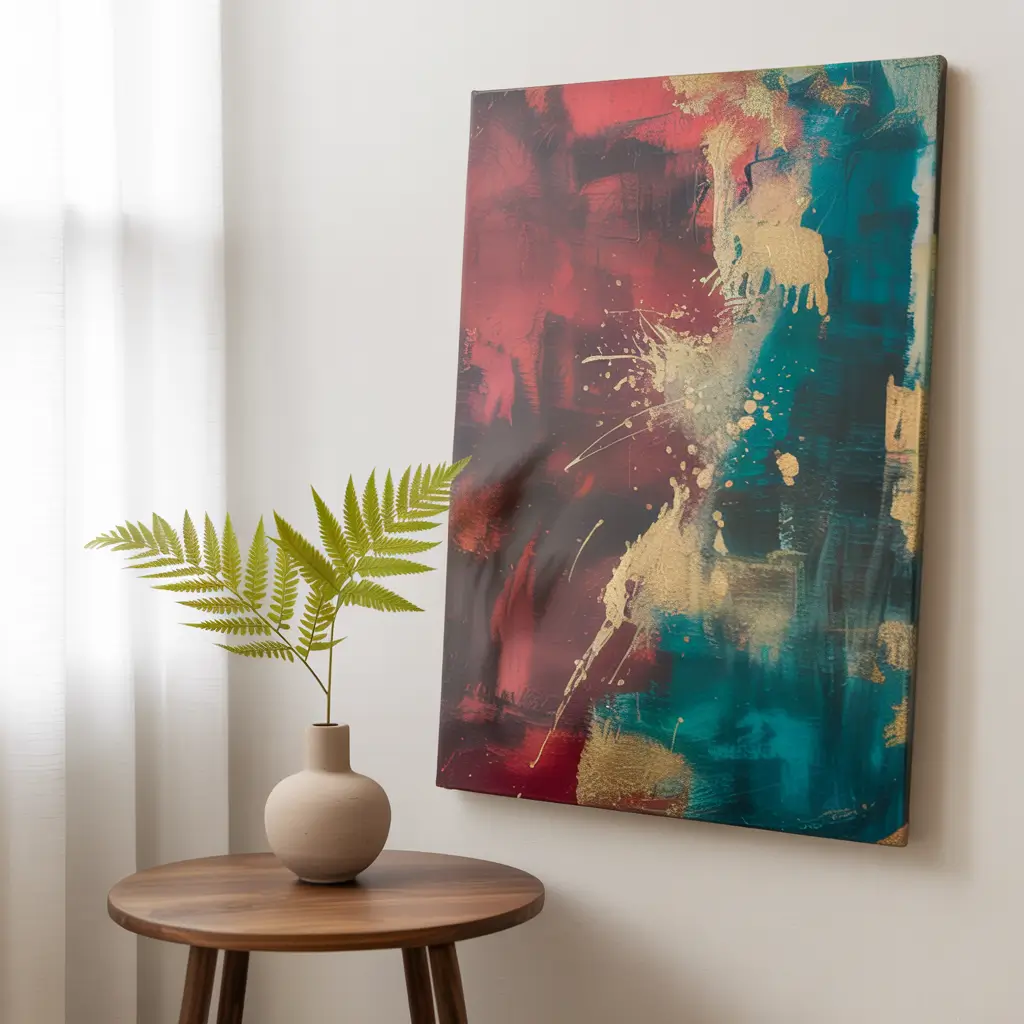
There are times when the most effective approach to a corner is not to divide the space between two walls but to treat one wall of the corner as the primary canvas and place a single significant piece of art on it, angled very slightly toward the room. A genuinely large piece of art in a corner — something that occupies from roughly 50 centimetres from the floor to near the ceiling — commands the space with a confidence that smaller pieces cannot achieve and makes the room feel genuinely collected and considered.
The art itself should have qualities that read well from multiple viewing angles, since corner art will be seen from more positions than flat-wall art. Abstract works, large-scale photography, and textile art all translate well to corner positions. Framed art on the dominant wall of the corner, leaned rather than hung if the scale makes hanging impractical, has a relaxed and confident quality that suggests someone who knows exactly what they are doing with their space.
Proportioning Guide: Art placed in a corner works best when it occupies between 55 and 70 percent of the wall’s width. This leaves the wall edges clear — important in a corner, where the walls are already close — while giving the piece enough presence to feel intentional rather than undersized.
8. Corner Macramé and Textile Installation
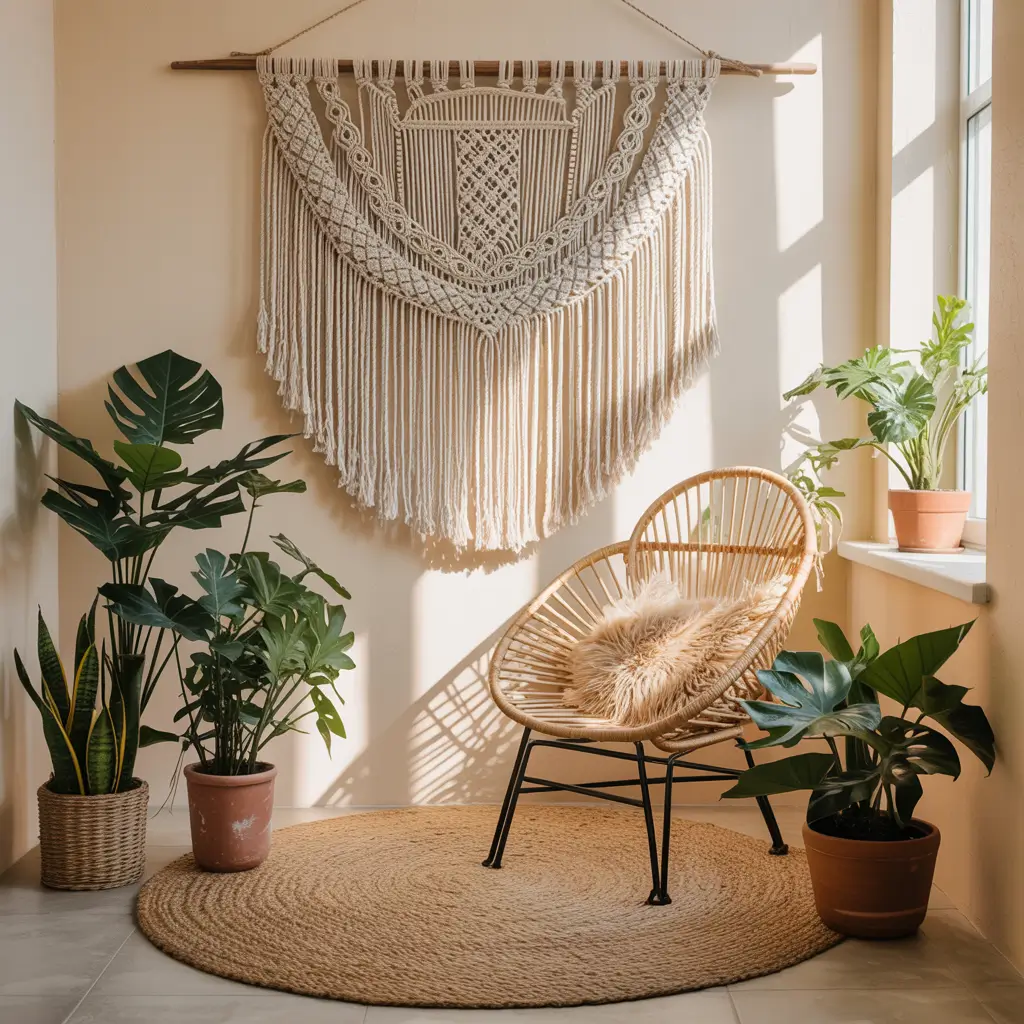
Macramé is particularly well-suited to corners because its organic, irregular quality suits the architectural character of the space better than geometric or formally framed pieces. A wide macramé hanging centered on one wall of the corner, or a custom piece designed to span from one wall to the other at the apex of the corner, creates a textile installation with genuine visual depth and textural richness.
Beyond macramé, other textile forms work beautifully in corners: a large woven wall hanging in natural fibers, a vintage textile or kilim hung flat, or a collection of woven baskets arranged across both walls in a loose, organic cluster. The natural materials — cotton, jute, wool, rattan — bring a warmth and softness to corners that painted or structural elements cannot match, and they absorb sound in a way that reduces the echo quality that corners sometimes amplify.
Scale Guidance: For a corner, macramé and textile pieces should be wider than you might initially think. A piece that covers at least 50 to 60 centimetres of wall width gives the corner the visual weight it needs to feel addressed rather than adorned.
9. Corner Wall-Mounted Desk
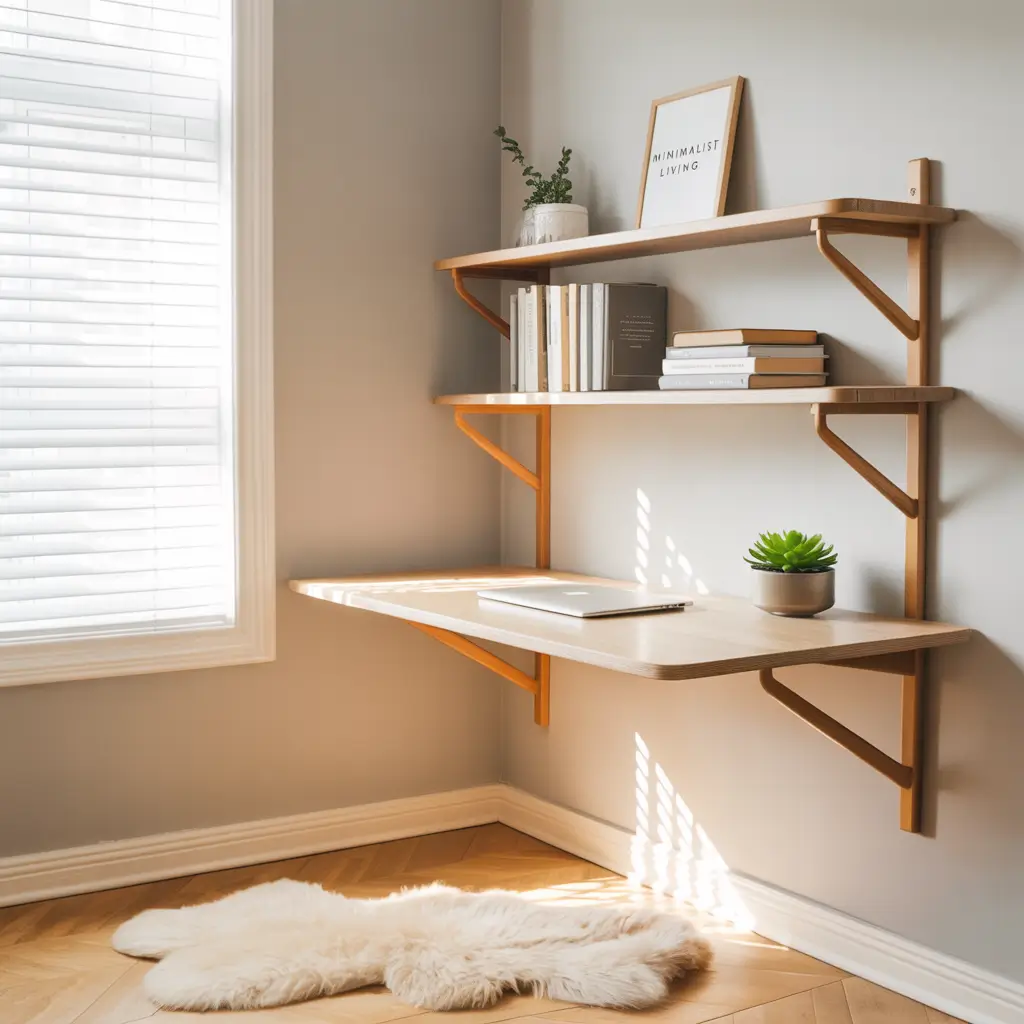
A wall-mounted corner desk solves two problems simultaneously: it creates a dedicated work or creative surface in what would otherwise be unused space, and it becomes a design element in itself. A well-chosen wall-mounted corner desk — in solid wood, powder-coated steel, or a combination of materials — looks architectural and purposeful in a way that freestanding furniture placed in a corner rarely does.
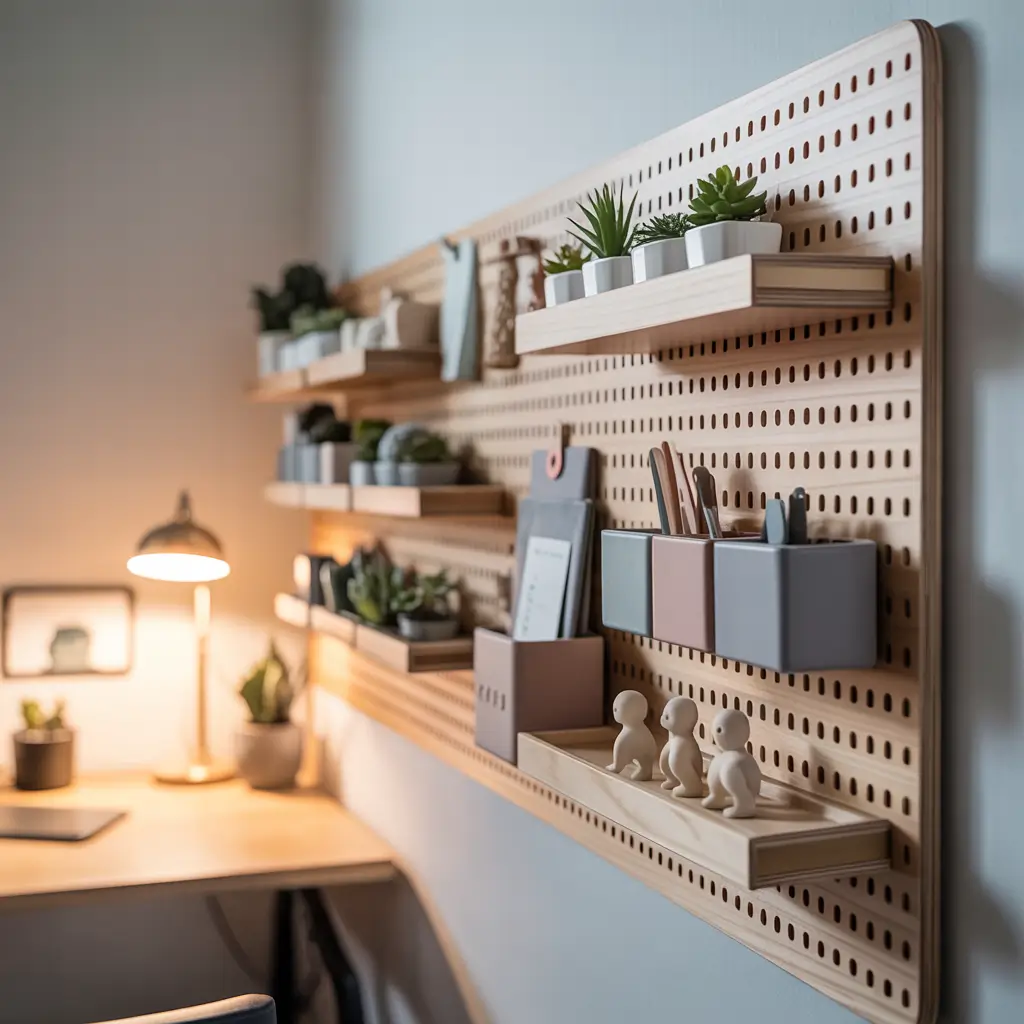
The wall above a corner desk is one of the most important and underutilized decorating opportunities in a home. A pegboard mounted on one or both walls above the desk surface transforms the corner into a complete workstation — tools, supplies, notes, and small decorative objects all visible, accessible, and organized. Floating shelves above the desk on the second wall provide additional storage while reinforcing the sense of the corner as a dedicated functional zone rather than a repurposed leftover space.
Ergonomic Standard: Mount a corner desk surface at 71 to 76 centimetres from the floor for comfortable seated work with standard chair heights. If you work standing, 100 to 110 centimetres provides a comfortable standing work surface for most adults.
10. Corner Accent Wallpaper
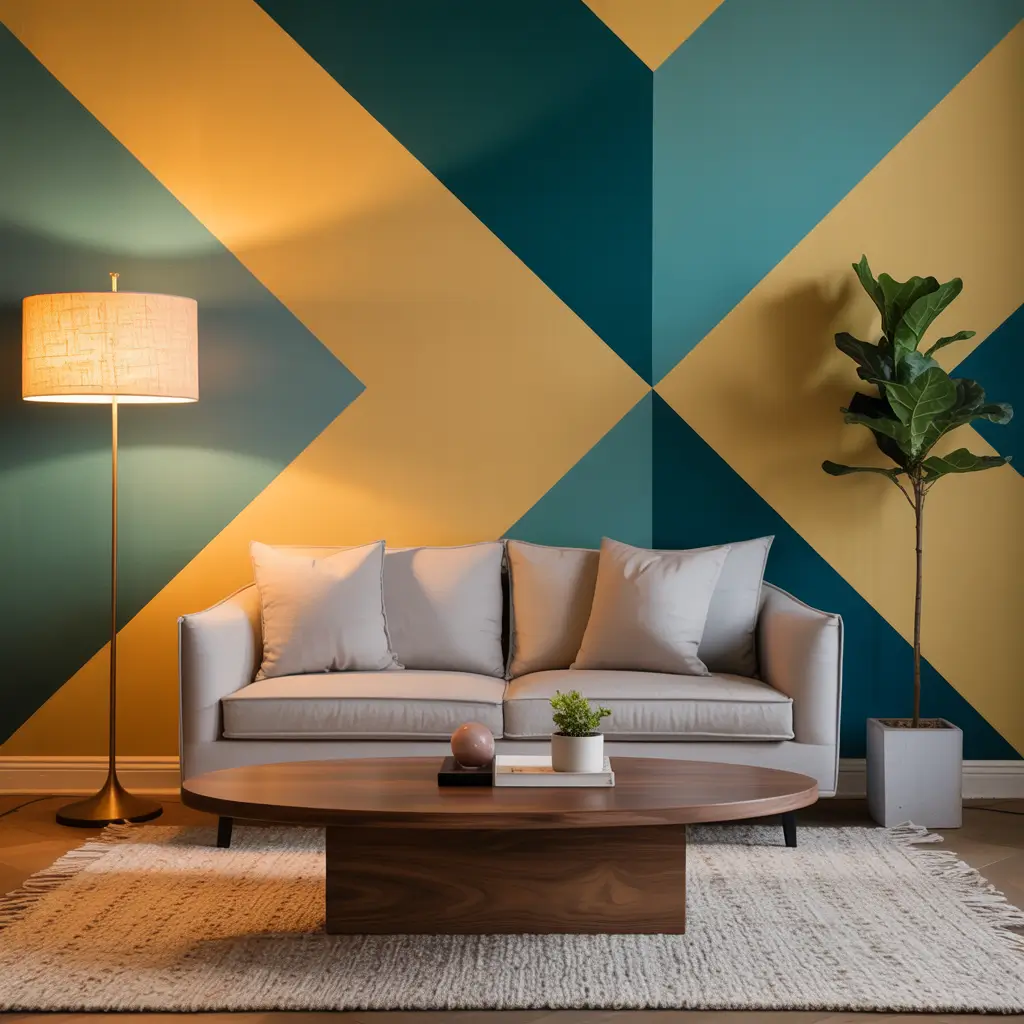
Applying wallpaper to the two walls that form a corner — and only those two walls — creates an accent feature that has the impact of a painted accent wall but with considerably more textural and pattern interest. The corner becomes a zone of pattern and color that grounds the room visually, and the fact that both walls of the corner are papered rather than just one gives the treatment a sense of intention and completeness.
Pattern selection for a corner wallpaper feature requires slightly different consideration than for a flat wall. Large-scale patterns work exceptionally well in corners because they wrap continuously around the angle, creating a coherent design that treats the corner as a three-dimensional object rather than two separate surfaces. Botanical, geometric, and abstract patterns all translate well. Striped patterns require careful alignment at the corner angle — vertical stripes need to meet cleanly at the corner seam, which requires precise installation.
Renter Alternative: Peel-and-stick wallpaper has improved dramatically in quality and now offers a genuinely convincing result on corner walls without permanent adhesive. Remove it cleanly when you move and reinstall in your next home. The range of patterns available rivals traditional wallpaper.
11. Corner Clock as Statement Feature
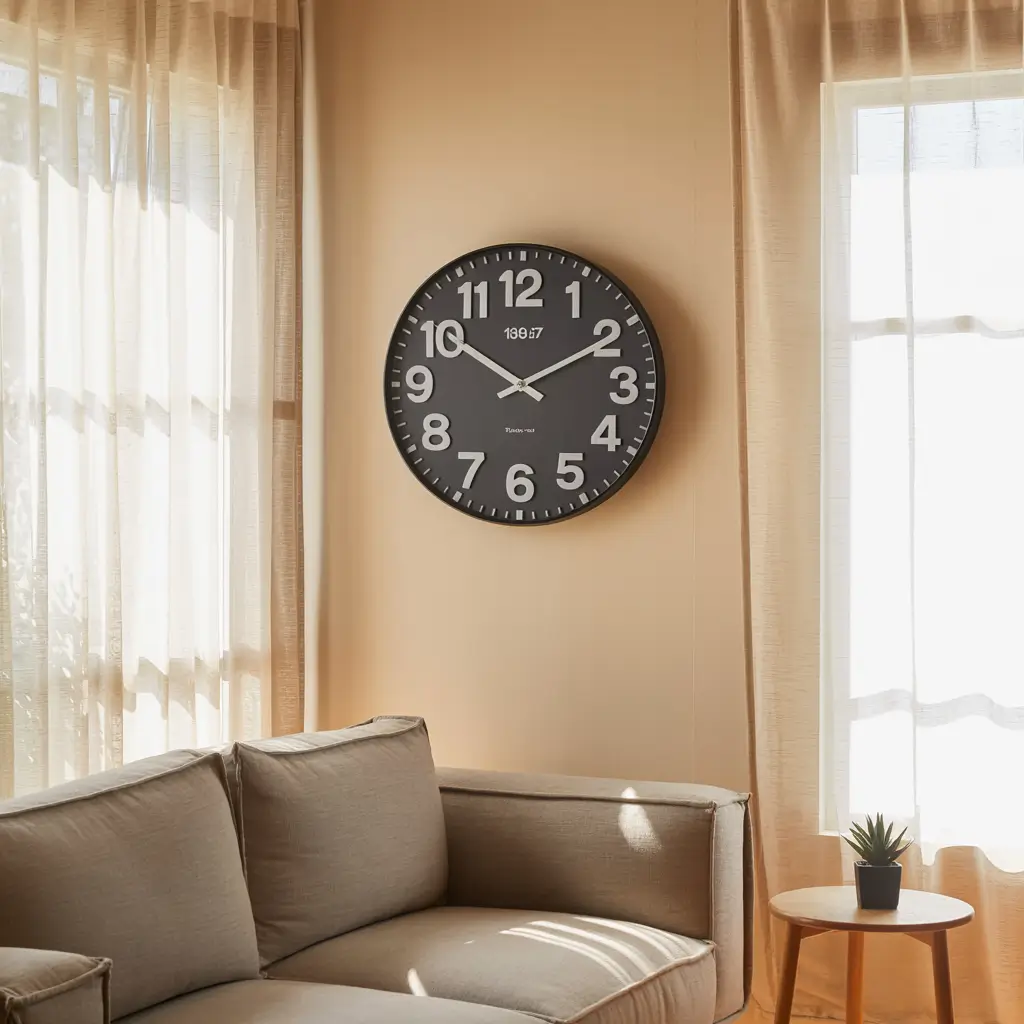
A large statement clock hung on one wall of a corner — or a clock that is sized and positioned to become the clear focal point of the space — brings a distinctive combination of sculptural presence, practical function, and design intentionality that few other single wall objects can match. The clock anchors the corner and gives it a clear center of gravity that makes the space feel resolved and deliberate.
The style of clock chosen should be genuinely significant — not a small clock that happens to be in the corner, but a piece large enough to command the wall it occupies. Oversized vintage-style clocks with exposed mechanics suit industrial and eclectic interiors. Large minimalist clock faces in white or black with slim hands work in contemporary spaces. Sunburst clocks in gold or brass introduce a mid-century quality that suits both traditional and transitional rooms. Size the clock so that it occupies at least 40 to 50 centimetres of wall height for genuine presence.
Surrounding Context: A large corner clock works best when the walls around it are kept relatively simple — a single small plant on a nearby shelf, one or two small framed pieces at a respectful distance, rather than a busy collection that competes for attention.
12. Ladder Shelf Display
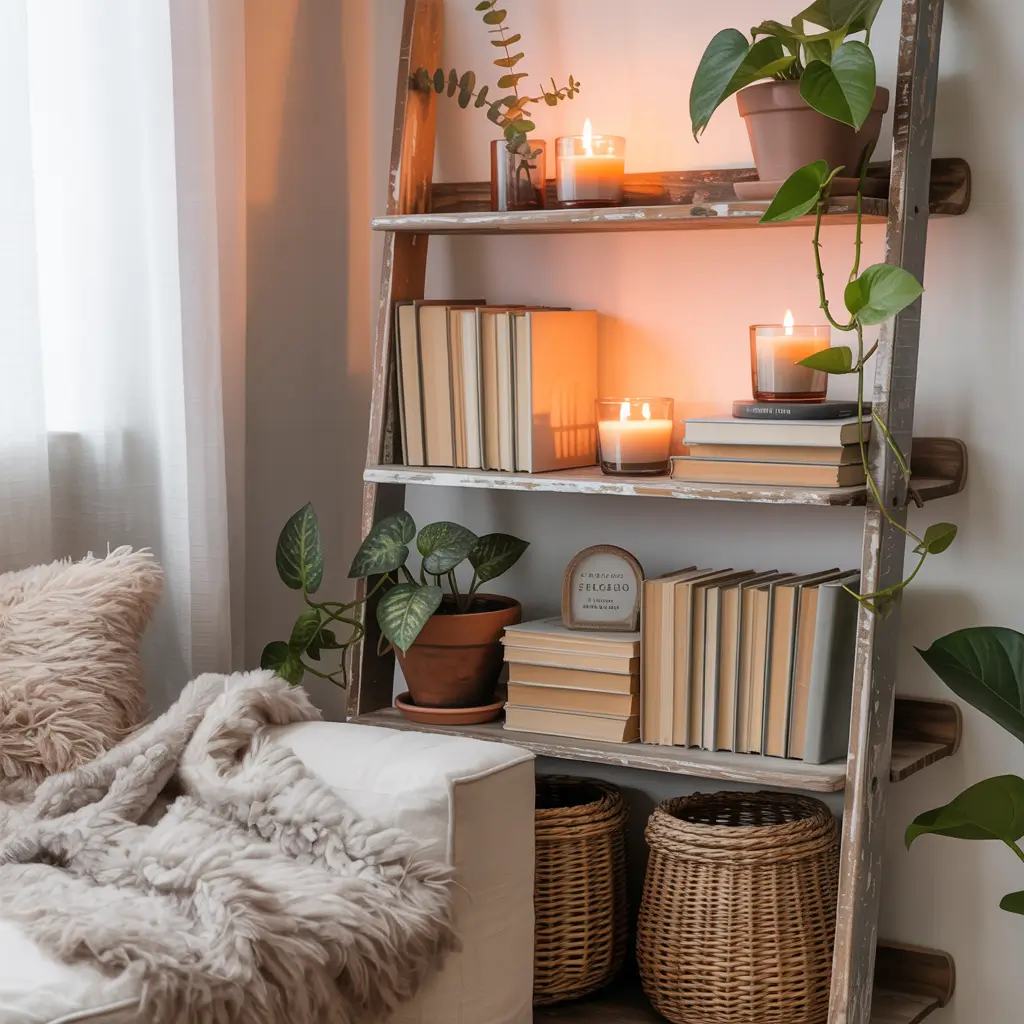
A leaning ladder shelf in a corner is a freestanding solution that doubles as wall decor — its rungs create horizontal display surfaces at multiple heights, and its lean against the corner wall integrates it with the architecture in a way that a shelf unit placed flat against a wall cannot achieve. The ladder’s diagonal introduces a dynamic line into the corner that adds energy and visual interest.
Styling a ladder shelf in a corner follows the same principles as styling floating shelves, but with an additional consideration: because the ladder is taller at the back and shorter at the front (due to its lean), the depth of available display surface changes at each level. Reserve the lower, deeper rungs for larger and heavier objects — books, baskets, trailing plants — and use the upper, shallower rungs for lighter and slimmer items. Vary the height of objects across each rung to avoid a flat, uniform silhouette.
Material Choice: Solid wood ladder shelves in oak, ash, or walnut age beautifully and develop character over time. Avoid very pale or very dark finishes that age poorly — mid-tone natural wood grains are the most forgiving and versatile.
13. Corner Tapestry Display
A tapestry draped across a corner — hung from a rod that spans from one wall to the other at the angle — creates a softening effect that transforms the architectural sharpness of the corner into something warm, textile, and enveloping. The fabric falls from the rod and fans gently outward, covering both walls of the corner in a single continuous piece that cannot be achieved by hanging on a flat wall.
This approach is particularly effective in bedrooms, where the enveloping quality of the tapestry-draped corner creates an intimacy that suits the character of the room. Large geometric, mandala, or abstract tapestries translate best to this format — their patterns wrap naturally around the corner angle without the misalignment issues that can affect striped or highly directional designs. Lightweight fabrics hold their drape most gracefully; very heavy tapestries can pull downward and lose their shape over the width of the corner.
Renter-Friendly Hanging: A tension rod fitted between the two walls at corner height — available in adjustable lengths from most homeware shops — allows a tapestry to be hung in a corner without a single wall fixing. Remove the rod and the tapestry leaves no trace.
14. Corner Pegboard Organizer
A pegboard fitted into a corner — either on one wall of the corner or on custom-built panels that form an angled surface across the corner itself — creates one of the most functional and adaptable storage and display systems available for any room. In a kitchen, it holds tools, utensils, and small appliances. In a home office or craft room, it manages supplies, notes, and equipment. In an entryway, it organizes the daily accumulation of keys, bags, mail, and outdoor equipment.
The aesthetic appeal of a corner pegboard depends entirely on the care taken with its styling. A pegboard painted in a rich, considered color — deep green, warm terracotta, dusty navy — immediately reads as a design choice rather than a storage solution. Mixing hooks with small shelves, magnetic strips, and hanging baskets creates visual variety. Incorporating a few genuinely decorative elements — a small plant, a framed print propped on a shelf peg, a beautiful ceramic mug among the utilitarian items — reinforces the sense that the pegboard is a curated display as much as an organizational tool.
Installation Essential: Pegboard must be mounted with spacers that hold it at least 15 millimetres away from the wall surface. Without this gap, hooks cannot be inserted from behind and the board’s full functionality is unavailable.
15. Corner Woven Basket Gallery
A collection of woven baskets mounted on the two walls of a corner creates a textural display that is simultaneously organic in feel, globally influenced in aesthetic, and remarkably affordable given its visual impact. The natural materials — rattan, seagrass, water hyacinth, bamboo, rush — introduce warmth and handcraft into the corner in a way that no manufactured decor can replicate.
The arrangement should feel loose and collected rather than symmetrically ordered. Distribute larger baskets across both walls rather than clustering them on one side, and vary the weaving patterns and profiles so that each basket reads as a distinct object rather than one element of a set. Allow the arrangement to grow over time — adding a basket when you find one that works — rather than purchasing a complete set at once. The sense of accumulated curation is exactly what makes this approach so appealing.
Sourcing Advice: Ethnic homeware shops, independent craft markets, online artisan platforms, and even well-stocked charity shops are the best sources for beautiful hand-woven baskets at reasonable prices. The variety available through these channels far exceeds what mainstream homeware retailers offer.
How to Choose the Right Corner Decor for Your Space
With twenty ideas on the table, the challenge shifts from finding inspiration to making a decision. A few practical questions will narrow the field quickly and point you toward the approach most likely to succeed in your specific corner and your specific home.
What Type of Corner Are You Working With?
Not all corners are equal, and different corner types suit different solutions. An interior corner — where two walls meet inside the room — is the most common type and the one most of these ideas address. An exterior corner — where two walls meet to form the outside angle of a protruding wall or chimney breast — requires a different approach, typically one that works primarily on one of the two visible faces rather than trying to span both. A ceiling-height corner in a tall room has very different proportional requirements from the same corner in a room with standard ceiling height.
What Is the Room Asking For?
The function of the room should heavily influence your corner decor choice. A living room corner benefits most from solutions that enhance atmosphere and visual interest — art, mirrors, plants, lighting, textile installations. A kitchen corner benefits from functional solutions with decorative quality — pegboards, shelving, chalkboards. A bedroom corner benefits from intimate, calming elements — a reading nook, a single piece of meaningful art, soft lighting, draped textiles. A home office corner benefits from organizational solutions that also look considered — pegboards, wall-mounted desks with well-styled shelving above them.
How Permanent Do You Want the Solution to Be?
Some corner decor solutions are effectively permanent — built-in bookcases, plastered wallpaper, hardwired sconces. Others are highly flexible and easily reversed — leaning ladder shelves, hanging tapestries, removable wallpaper, battery-operated lighting. If you rent, or if you value flexibility and the ability to refresh your decor regularly, lean toward the more reversible solutions. If you own your home and intend to stay, the permanent solutions offer the most seamless and resolved results.
What Is Your Realistic Budget?
Corner decor spans an enormous price range. A corner tapestry hung on a tension rod might cost under twenty pounds. A custom built-in corner bookcase could cost several thousand. Beautiful results are achievable at every point on that spectrum — the correlation between cost and quality of outcome is much weaker in interior decor than most people assume. A fifteen-pound basket gallery can look as good as a two-hundred-pound art commission if the selection and arrangement are thoughtful. Be honest about budget from the start and focus your energy on executing within it beautifully rather than planning a more expensive solution that never quite happens.
Practical Tips for Decorating Corners Successfully
Work With Both Walls, Not Just One
The single most important principle in corner decor is treating both walls as part of the same composition rather than decorating one and ignoring the other. Even when the primary visual element occupies only one wall — a large piece of art, a tall mirror, a statement clock — the adjacent wall should receive some complementary treatment: a small shelf at a coordinating height, one framed piece that echoes the colors or materials of the main element, or a subtle lighting addition that illuminates the primary wall from the side.
Establish a Visual Height Reference
Corner decor looks most resolved when it has a clear vertical structure — a consistent height reference that the eye can follow across both walls. This might be the line of a shelf that extends along both walls at the same height, the top edge of a gallery arrangement that maintains a consistent upper boundary, or the height at which lighting fixtures on both walls are installed. Without a shared vertical reference, the two walls of a corner can look like independent decorating decisions rather than a single composed feature.
Use Lighting to Define the Corner
Even where the primary corner decor is not lighting-based, adding some form of light source to the corner dramatically improves its presence and impact, particularly in evenings and winter months when rooms are primarily experienced under artificial light. A small floor lamp tucked into the lower corner, a pair of wall sconces at medium height, an LED strip mounted along the underside of a corner shelf, or a spotlight aimed at a piece of art all create the zone of warmth and focus that makes a corner feel like a destination rather than a dead end.
Consider the Corner from Every Seating Position in the Room
Before finalizing any corner decor decision, stand at every position from which that corner will be regularly viewed — seated on the sofa, at the dining table, standing in the kitchen — and assess what the corner looks like from each of those angles. A piece of art that is perfectly positioned when viewed from directly in front may be awkward when seen from an oblique angle. A shelf that looks great from across the room may feel cluttered when viewed from close to the corner. Corners are multi-directional in a way that flat walls are not, and your decor should account for that.
Frequently Asked Questions About Corner Wall Decor
How do I make an empty corner look good without spending much?
The most budget-friendly effective corner solutions are a leaning ladder shelf styled with objects you already own, a hanging plant in a macramé hanger on a single ceiling hook, a collection of framed prints arranged as a mini corner gallery using paper template planning before any nails are driven, or a single large mirror leaned against one wall of the corner. All of these can be achieved for under fifty pounds or dollars with thoughtful sourcing, and any of them will transform a blank corner more effectively than a more expensive but less considered approach.
Can I hang art in a corner, and how?
Yes, and the approach depends on which wall you want the art on and how close to the corner it sits. Art hung on one wall of a corner within about 30 centimetres of the corner angle needs to allow for the fact that the viewer will approach it from multiple angles. Use a standard picture hook on the wall, installed into a stud where possible, and consider whether the frame’s depth will bring it too far forward relative to the adjacent wall. For art that spans both walls at the corner, a specialist angled corner hanging bracket is available from most picture framing suppliers.
What is the best way to decorate a dark corner?
Dark corners — those that receive little natural light — benefit most from solutions that introduce light, reflectivity, or brightness. Mirrors are the most powerful tool: a layered mirror display on one or both walls of a dark corner bounces whatever light is available and creates apparent luminosity. Supplementary lighting — a floor lamp, wall sconces, or concealed LED strips — transforms a dark corner after daylight hours. Light-colored or metallic objects on shelves or in a gallery arrangement catch and reflect ambient light. Avoiding very dark or matte-finish decor prevents the corner from absorbing light and deepening the darkness.
How do I decorate a corner in a rented property?
Rented properties benefit from solutions that require minimal wall fixings and leave no permanent marks. Leaning ladder shelves, floor-standing plants, and tapestries hung on tension rods are the most completely non-invasive approaches. Adhesive wall strips rated for the weight of your pieces allow floating shelves, framed art, and mirrors to be hung without drilling. Peel-and-stick wallpaper creates a dramatic corner accent feature that removes cleanly. Battery-operated or rechargeable sconces and floor lamps provide lighting without any electrical work. With these tools, a rental corner can be just as beautifully decorated as any owned property.
How do I stop a corner from looking cluttered?
Clutter in a corner is almost always the result of too many objects at a similar scale with insufficient variation in height and insufficient negative space between them. The remedies are straightforward: reduce the total number of objects by at least a third, group the remaining objects into clear clusters of two or three with visible space between each cluster, introduce at least one tall element that draws the eye upward and prevents everything from sitting at the same horizontal level, and remove anything that does not contribute to the composition. A corner that feels intentionally edited always looks better than one that is fully packed.
Your Corners Have Been Waiting Long Enough
The corners of your home are not problems. They are not awkward leftovers of the architect’s geometry or difficult zones to be tolerated and minimized. They are opportunities — in many cases, the best opportunities in the room — for creating spaces that are genuinely distinctive, personally expressive, and visually memorable in a way that flat walls with predictable art rarely achieve.
Every idea in this guide is achievable without professional help, without a large budget, and without any particular design experience. What they all require is simply the decision to stop walking past that corner and start thinking about what it could become. Some of these ideas take an afternoon. Some take a weekend. Some grow over months as you add pieces and refine the arrangement. All of them are infinitely better than another year of the corner remaining empty and unaddressed.
Start with the corner that bothers you most — the one you notice every time you sit down, the one your eye keeps returning to without finding satisfaction. Pick the idea that resonates most strongly with both your taste and your practical situation. Begin. The rest of the process tends to be considerably more enjoyable than the decision to start, and the result — a corner that is actually good, that people comment on, that you are genuinely pleased to have in your home — is one of the most satisfying things that interior decorating can deliver.
1 thought on “15 Inspiring Corner Wall Decor Ideas to Brighten Your Room”