
You walk past it twenty times a day without really seeing it. That long, diagonal expanse of wall running alongside your staircase — awkward in shape, easy to ignore, and quietly crying out for some attention. If your staircase wall has been blank since you moved in, you are far from alone. It is one of the most overlooked decorative opportunities in any home.
Here is the thing though: the staircase wall is actually one of the most exciting spaces in your entire house to decorate. Its unique diagonal layout, generous vertical height, and the simple fact that everyone passes it multiple times daily make it a prime candidate for something genuinely beautiful. Get it right and it becomes the first thing guests notice when they walk through the door. Get it really right and it becomes the design element people ask about every single time they visit.
This guide covers 20 staircase wall decor ideas that actually work in real homes — not just in architectural digest spreads. Whether you are renting and need damage-free solutions, working with a narrow Victorian staircase, or decorating a sweeping open-plan entryway, there is something here for you. We will cover sizing, placement, style compatibility, and the small practical details that make the difference between a look that feels polished and one that feels like it never quite came together.
1. A Diagonal Gallery Wall of Family Photos
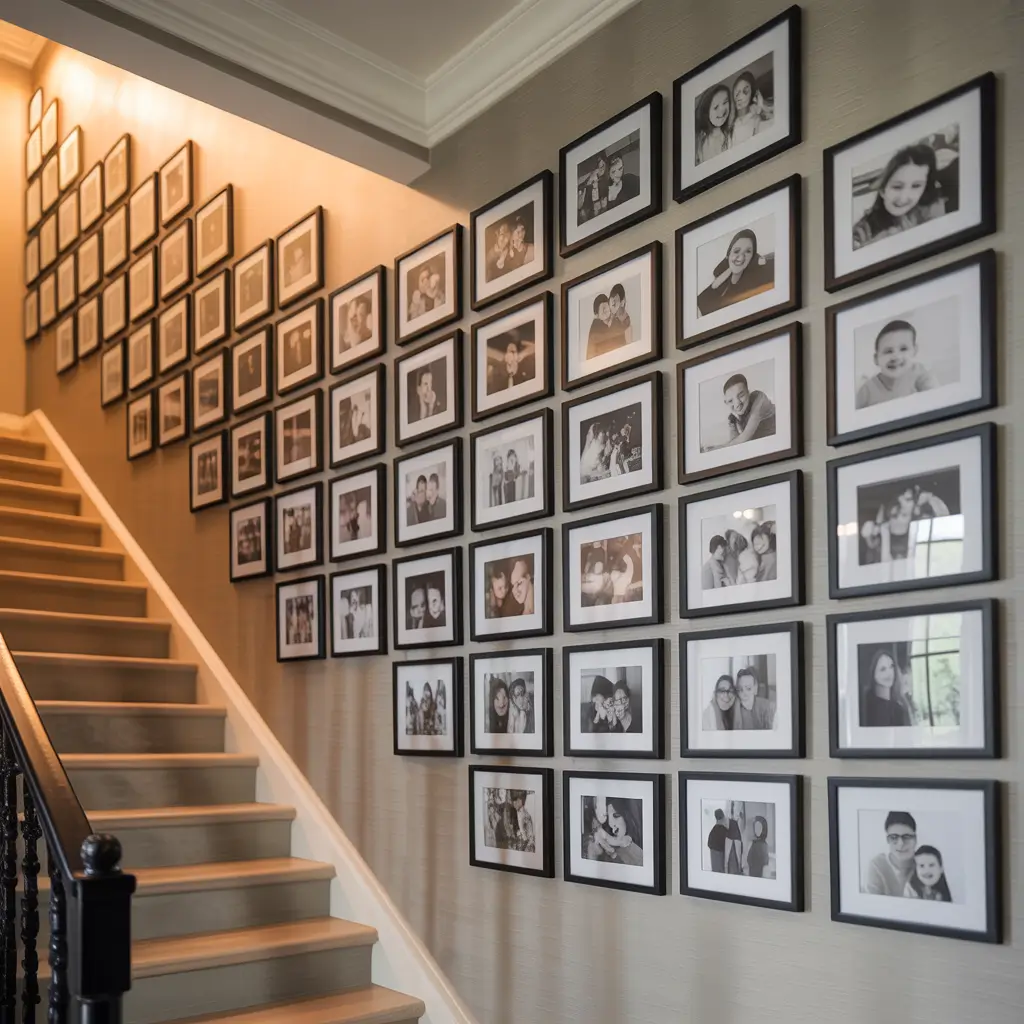
The gallery wall is the undisputed classic of staircase decorating, and when done properly, it is genuinely hard to beat. A collection of framed family photos ascending alongside the stairs creates a visual timeline of memories that is deeply personal and endlessly interesting to spend time with.
The secret to a gallery wall that looks deliberately designed rather than randomly accumulated is restraint and consistency. Choose one frame finish — all black, all natural wood, or all antique gold — and stick to it across every piece. This single decision creates cohesion that allows everything else to vary: frame sizes, image orientations, subjects, and even whether something is a photo, print, or small mirror.
How to Plan the Arrangement Before a Single Nail Goes In
1. Cut paper templates: Cut paper to the exact size of each frame and tape them to the wall first. Live with the arrangement for a day before committing.
2. Follow the stair angle: Mentally draw a line parallel to the staircase handrail. The centre of your arrangement should roughly follow this diagonal.
3. Vary sizes deliberately: Anchor the arrangement with one or two larger pieces and fill around them with smaller frames. Mix landscape and portrait orientations.
4. Leave consistent gaps: Two to three inches between every frame. Measure it. Your eye will thank you.
5. Include one non-photo element: A small mirror, a typographic print, or a simple wall clock introduces welcome variety without breaking the cohesion.
Pro Tip: Lay the entire arrangement on the floor before hanging anything on the wall. Photograph it from above. This gives you a reference image to work from and saves an enormous amount of wall patching.
2. A Single Oversized Statement Mirror
If a gallery wall is a conversation, a single oversized mirror is a proclamation. One large, beautifully framed mirror positioned at the mid-point of the staircase wall makes an immediate and powerful statement with no complexity, no arrangement stress, and no risk of things looking cluttered.
The key to pulling this off is truly committing to scale. A mirror that is too small for the wall will look tentative. For a standard staircase wall, a mirror 36 inches or larger in its longest dimension is the minimum for real presence. Larger is almost always better here — a 48-inch round mirror or a 36×48-inch arched mirror creates genuine drama.
Frame style speaks volumes. An ornate gilded frame brings warmth and old-world glamour. A clean matte black frame feels modern and editorial. A rattan-wrapped frame reads as organic and coastal. Distressed wood is perfectly farmhouse. The mirror itself is neutral — the frame is where you express the personality of the space.
Pro Tip: Position the mirror so it reflects something worth reflecting — a window, a light fitting, an interesting architectural feature. A mirror that reflects a blank opposing wall simply doubles the emptiness.
3. Floating Shelves With Curated Vignettes
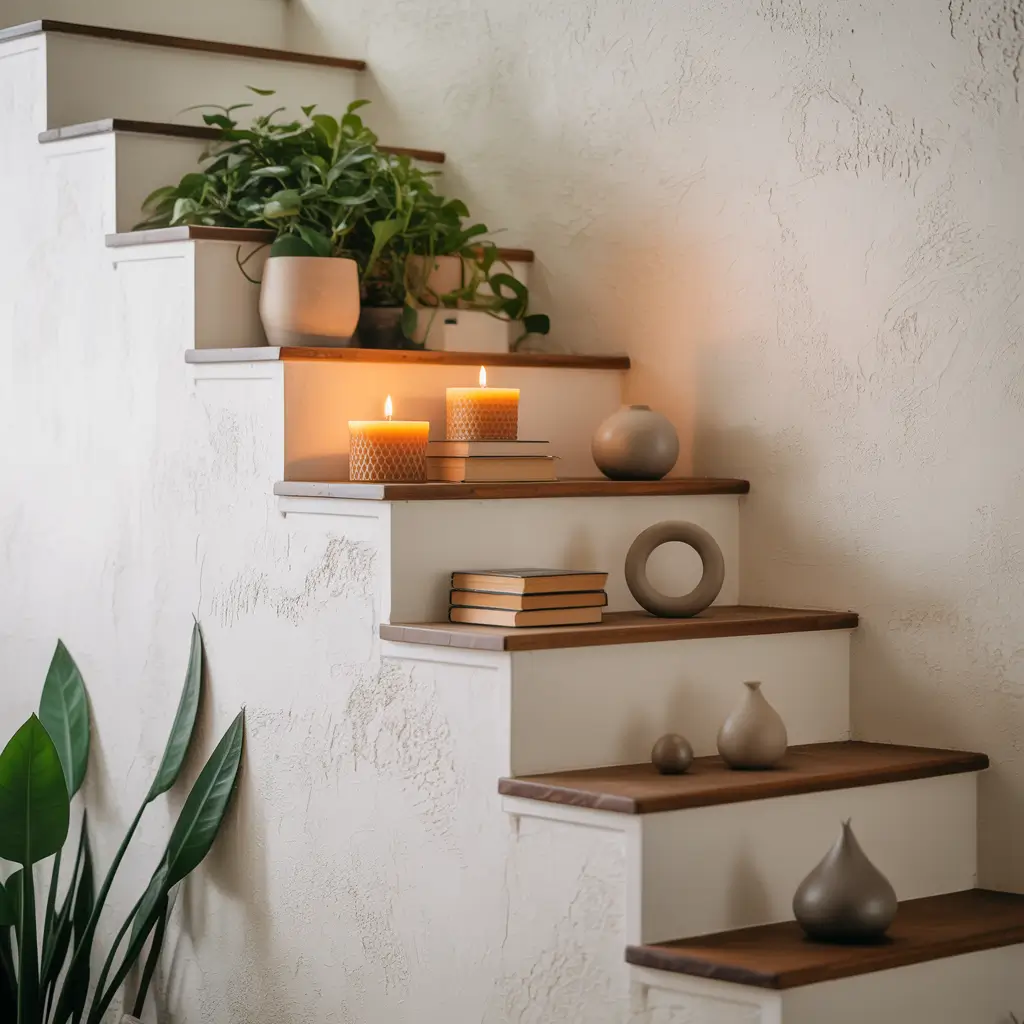
Floating shelves along the staircase wall are the answer when you want something that is both functional and beautiful, and something you can refresh without any new holes in the wall. A staggered arrangement of three to five shelves ascending with the stairs creates a dynamic, layered look that grows and evolves with you.
The magic of shelves is in the styling. Each shelf functions as a small stage — a carefully arranged vignette of objects that together tell a visual story. The most effective approach is the design rule of three: group objects in sets of three, vary the heights within each group, and leave some empty space so nothing feels crowded.
Objects That Work Beautifully on Staircase Shelves
1. Small potted plants or succulents: greenery adds life and natural colour without overwhelming small shelf spaces.
2. Framed photos or mini prints: a small framed piece on a shelf reads differently to one on the wall — more intimate, more layered.
3. Books displayed spine-out: choose books whose spine colours coordinate with your palette. Stack two or three horizontally as a base.
4. Sculptural objects or ceramics: a small hand-thrown pot, a stone paperweight, or a wooden sculpture adds texture and three-dimensionality.
5. Candles in holders: use battery-operated LED candles on shelves that are hard to reach for regular tending.
Pro Tip: Secure shelves into wall studs rather than just drywall anchors. Staircase vibration over time can work anchors loose. A well-secured shelf is safe; a falling shelf is both dangerous and demoralising.
4. Vertical Greenery and Living Plant Wall
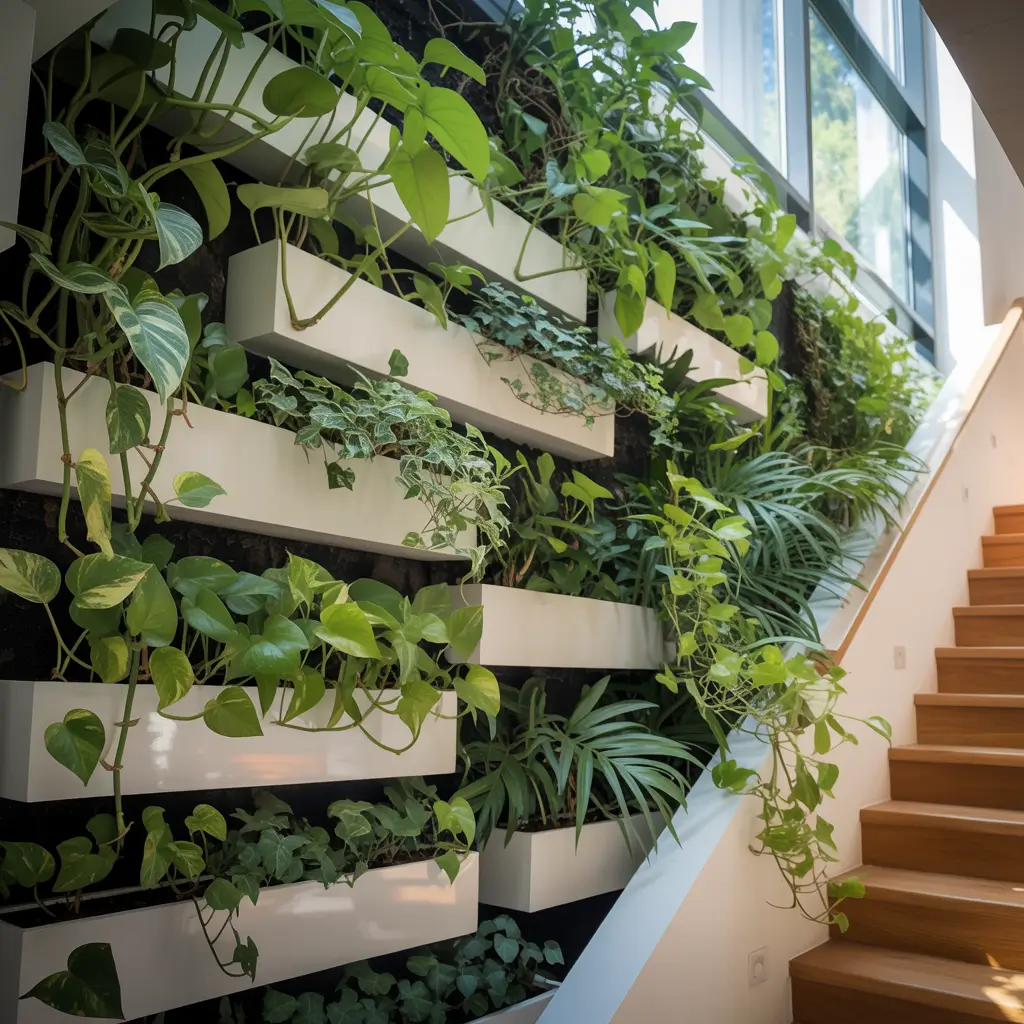
A living plant wall alongside the staircase is one of those ideas that sounds ambitious but is far more achievable than most people assume. You do not need a professional installation or an irrigation system to create a stunning green display — a collection of mounted individual planters, arranged in an ascending pattern, achieves the same visual effect with much greater simplicity.
The staircase is often a better environment for plants than people expect. Many of the plants that thrive in vertical wall arrangements — pothos, philodendrons, spider plants, and heartleaf vines — are perfectly happy in the indirect light that stairways typically receive. They are also fast growers, which means your display fills in and becomes lush relatively quickly.
For anyone who wants the look without the maintenance commitment, high-quality preserved moss panels have become genuinely beautiful and widely available. Real preserved moss stays green and textural for years without any watering, sunlight, or care — and it looks extraordinary on a staircase wall.
5. Abstract Canvas Art as a Focal Point
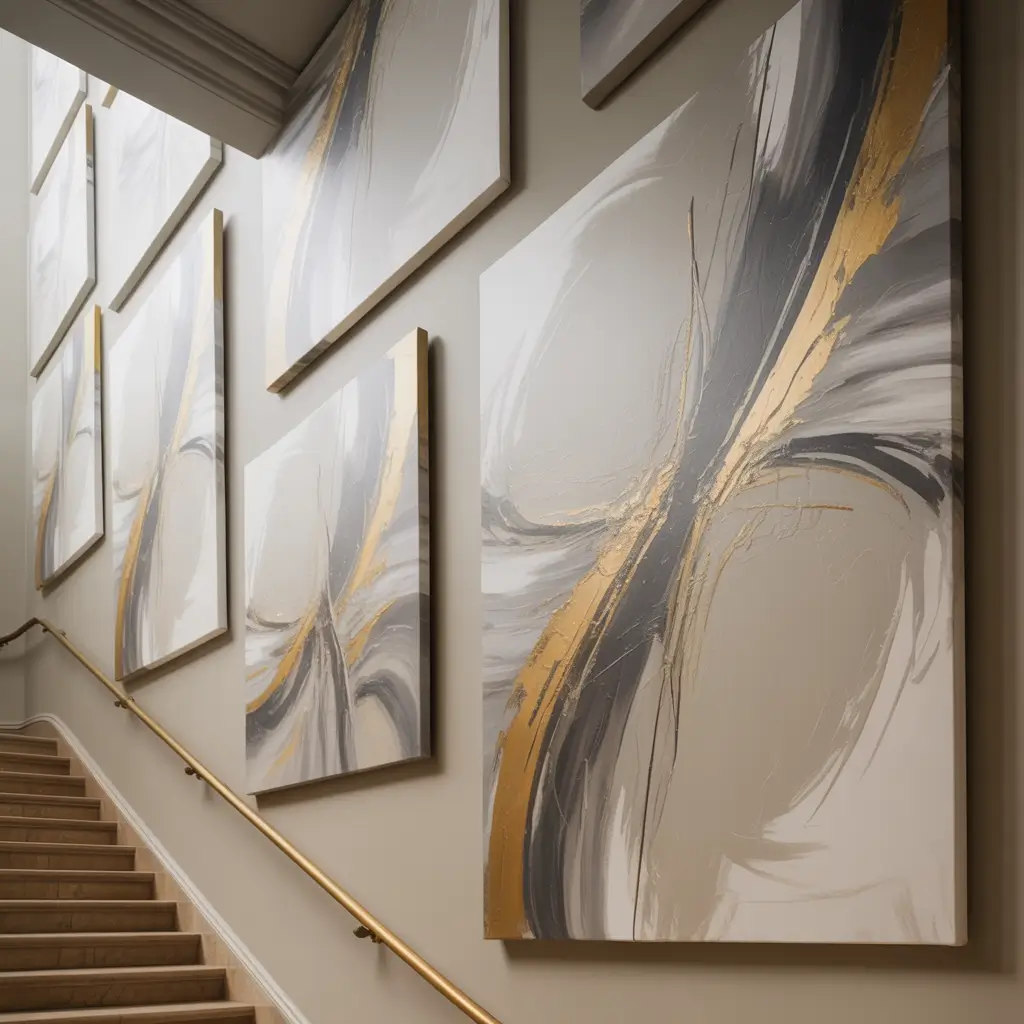
A single large abstract canvas positioned at the mid-height of the staircase wall creates an instant focal point that gives the whole staircase a sense of purpose and drama. Abstract art works especially well in this context because it does not require the viewer to stop and study it to be appreciated — its colour, energy, and composition communicate at a glance, even from movement.
Scale is everything. For a standard-width staircase, a canvas 30 to 40 inches wide has good presence. For wider or more open staircase walls — those found in open-plan homes or older properties with generous proportions — go larger. A 48 or even 60-inch canvas is not excessive in the right space.
When selecting the piece, consider the colour story of both floors connected by the staircase. A canvas that draws from tones present on both levels acts as a beautiful visual bridge — a deliberate design connection between the two floors of the home.
6. Architectural Molding and Panel Detailing
This is the designer’s favourite upgrade for staircase walls, and it is significantly more achievable as a DIY project than it looks. Adding picture-rail molding, wainscoting, or decorative panel detailing to the lower half of the staircase wall creates a sense of architectural richness and permanence that makes a home feel genuinely built with care.
The simplest version is a chair rail: a single horizontal molding strip running along the wall at handrail height, with the section below painted in a contrasting colour or tone. This divides the wall into two zones — a lower panel and upper wall — and creates instant visual structure without any art at all.
More elaborate versions incorporate geometric panel frames applied to the wall below the chair rail, creating a coffered or wainscoted effect. Primed MDF molding profiles are available at any hardware store and can be glued and pinned into place with basic tools. Once painted, the effect is indistinguishable from bespoke millwork, and it adds genuine perceived value to a property.
Pro Tip: Paint the molding the same colour as the wall for a subtle, tonal effect that adds texture without being loud. Or paint it slightly darker for crisp definition. Avoid high-gloss paint on molding unless the rest of the room carries the same finish.
7. Black and White Photography Gallery
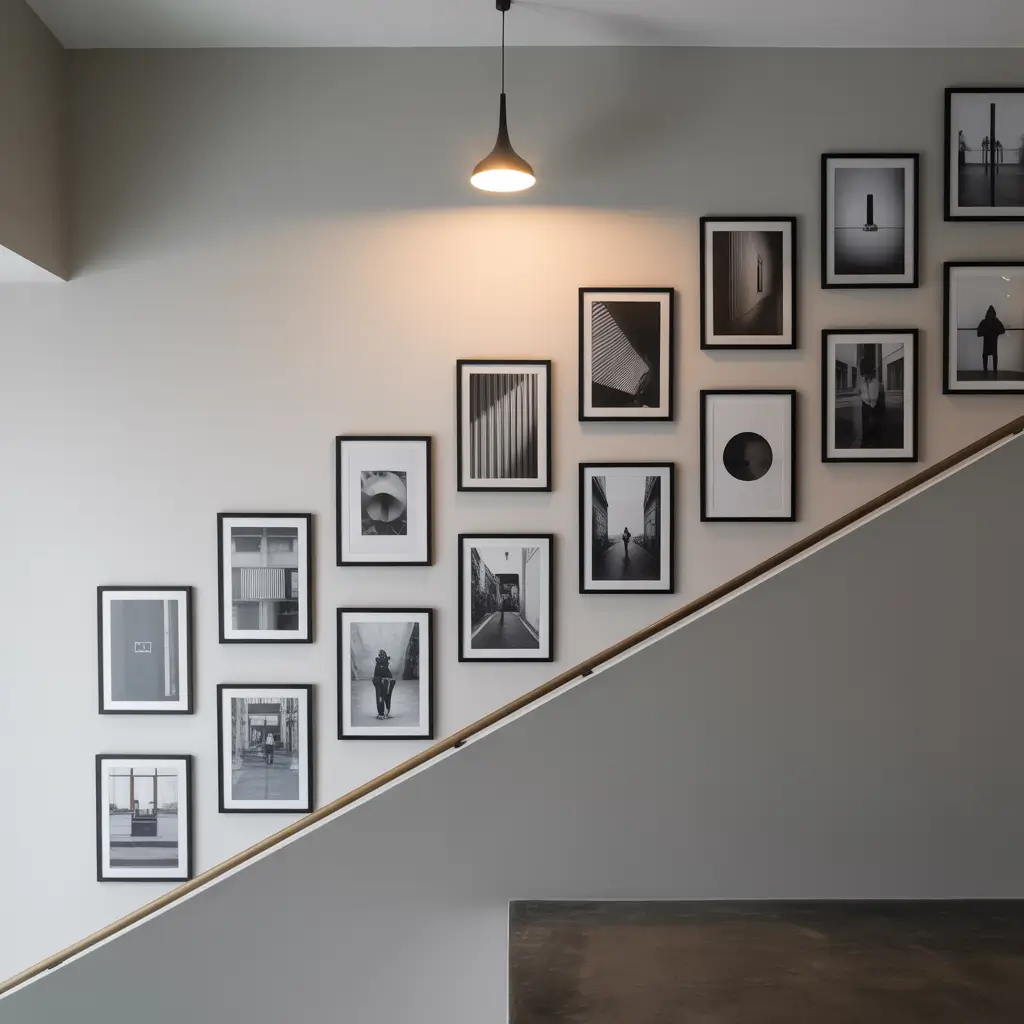
A monochromatic photography display is one of the most consistently elegant approaches to staircase wall decorating. Stripping away colour focuses the eye on composition, light, and subject — and the consistency of the black and white palette means a collection of very different images still reads as a cohesive whole.
The subject matter can be as personal or as broad as you like. Family portraits, travel landscapes, architectural studies, or even abstract macro photography — all of it works when converted to black and white and presented in matching frames. The frame colour is your choice: all-black frames feel modern and graphic; white or cream frames feel softer and more classic.
One powerful approach is to commission a series of family portraits shot specifically for the staircase wall. A professional photographer with an eye for composition can create images that work together as a deliberate series — varied in subject but unified in style and tone. The result is deeply personal and impossible to replicate from a shop.
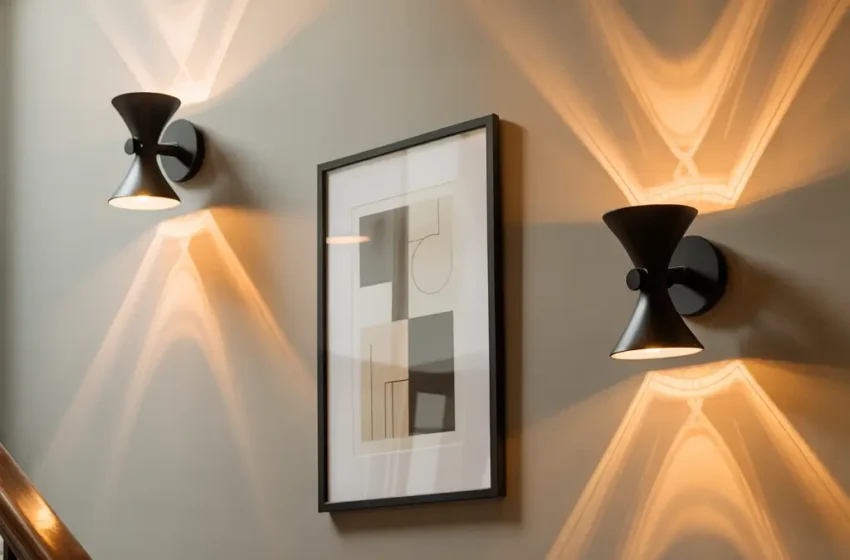
8. Wall Sconces as Decorative and Functional Elements
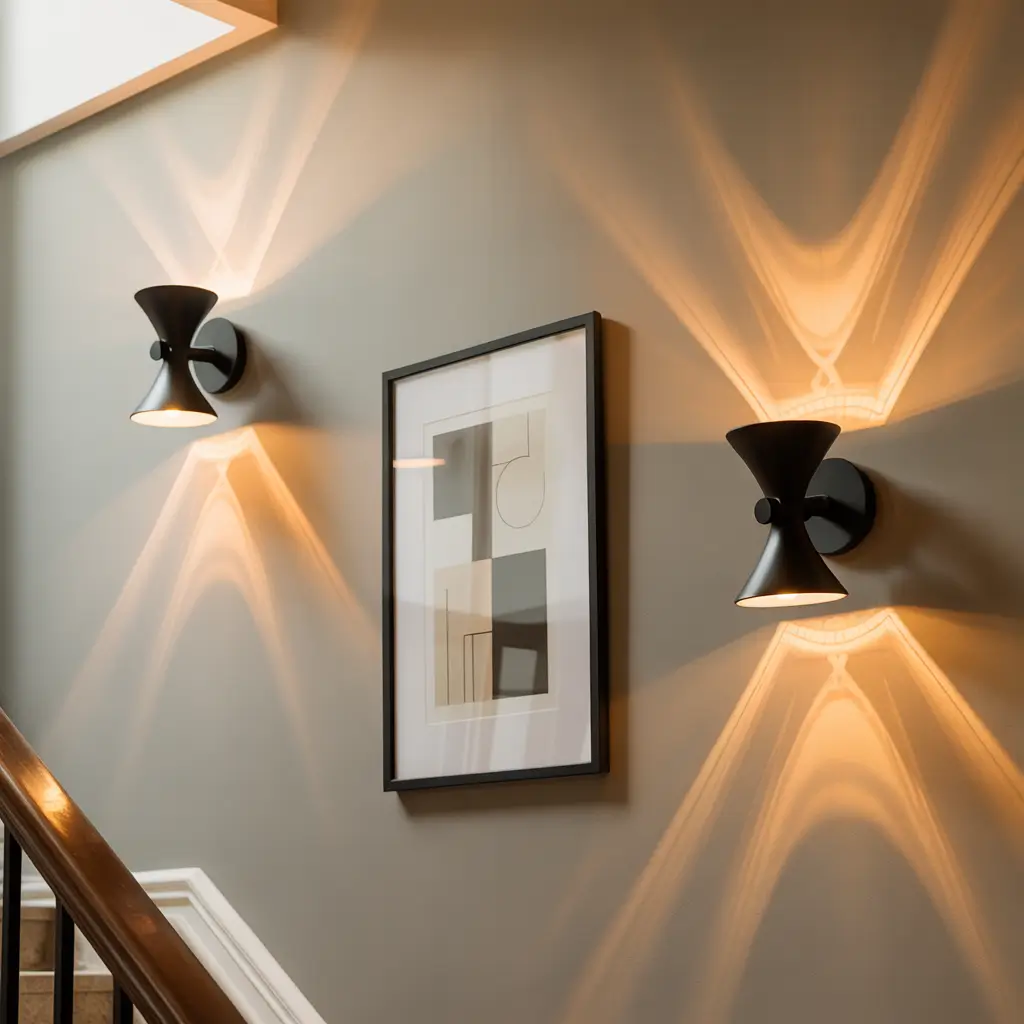
Lighting transforms staircases more dramatically than almost any other single change. A series of well-chosen wall sconces installed along the staircase wall does two things simultaneously: it makes the staircase safer to navigate at night, and it creates warm, layered illumination that turns the whole space into something atmospheric and beautiful.
Modern sconces are designed objects in their own right — geometric forms, mixed metals, hand-blown glass shades, articulating arms. A pair or series of sconces that work as a deliberate design statement adds visual interest to the wall even when they are switched off. The play of their light on the surrounding wall when illuminated adds another layer of dimension and warmth.
Sconce Placement for Staircases
1. Install at a consistent height above each stair tread: 60 to 66 inches is standard. This keeps them out of head-bumping range and at a useful illumination height.
2. Space them every 8 to 10 feet: for a longer staircase. Closer spacing risks the sconces competing with each other visually.
3. Use a dimmer: staircase lighting should be adjustable. Bright for active use, dim for nighttime navigation, off when not needed.
4. Match the finish to other hardware in the home: door handles, taps, light fixtures. Consistency in metal finishes creates a thread of visual cohesion throughout the whole house.
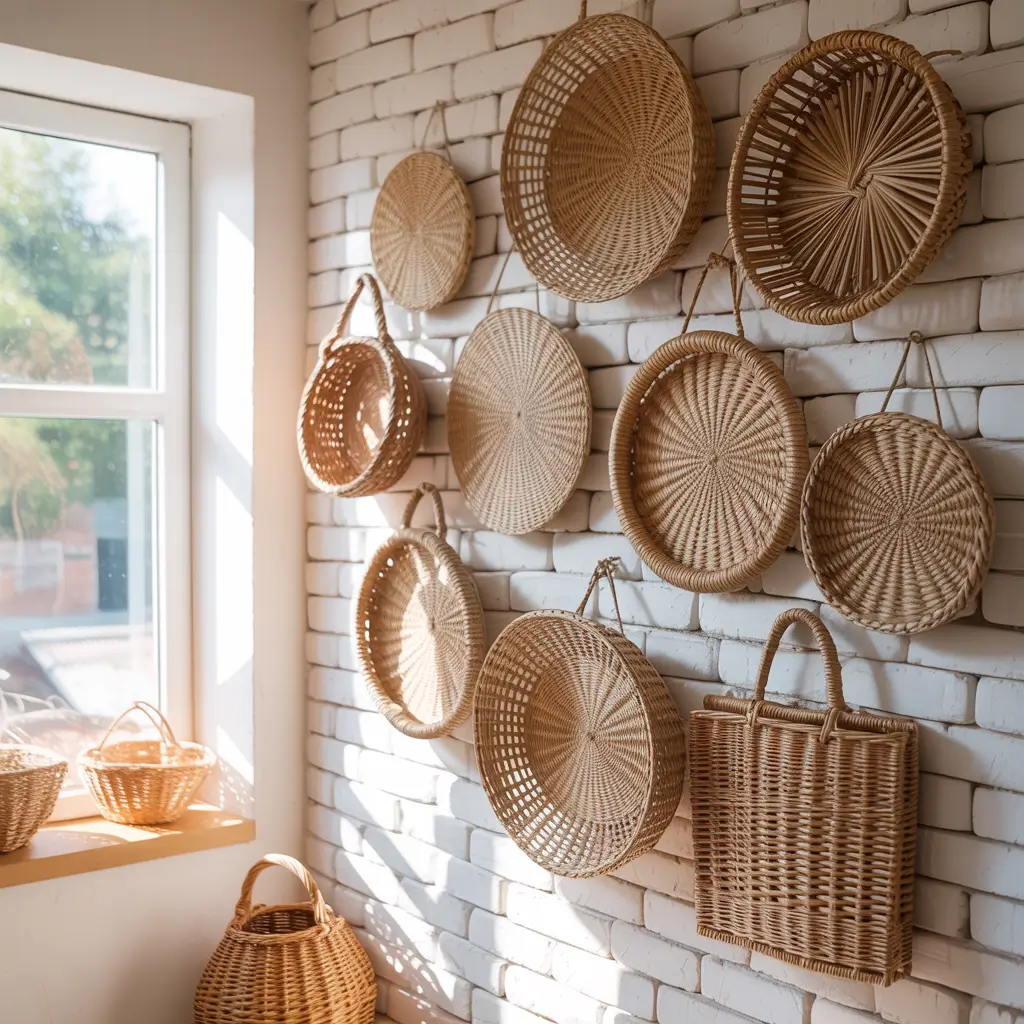
9. Reclaimed Wood and Rustic Panel Feature
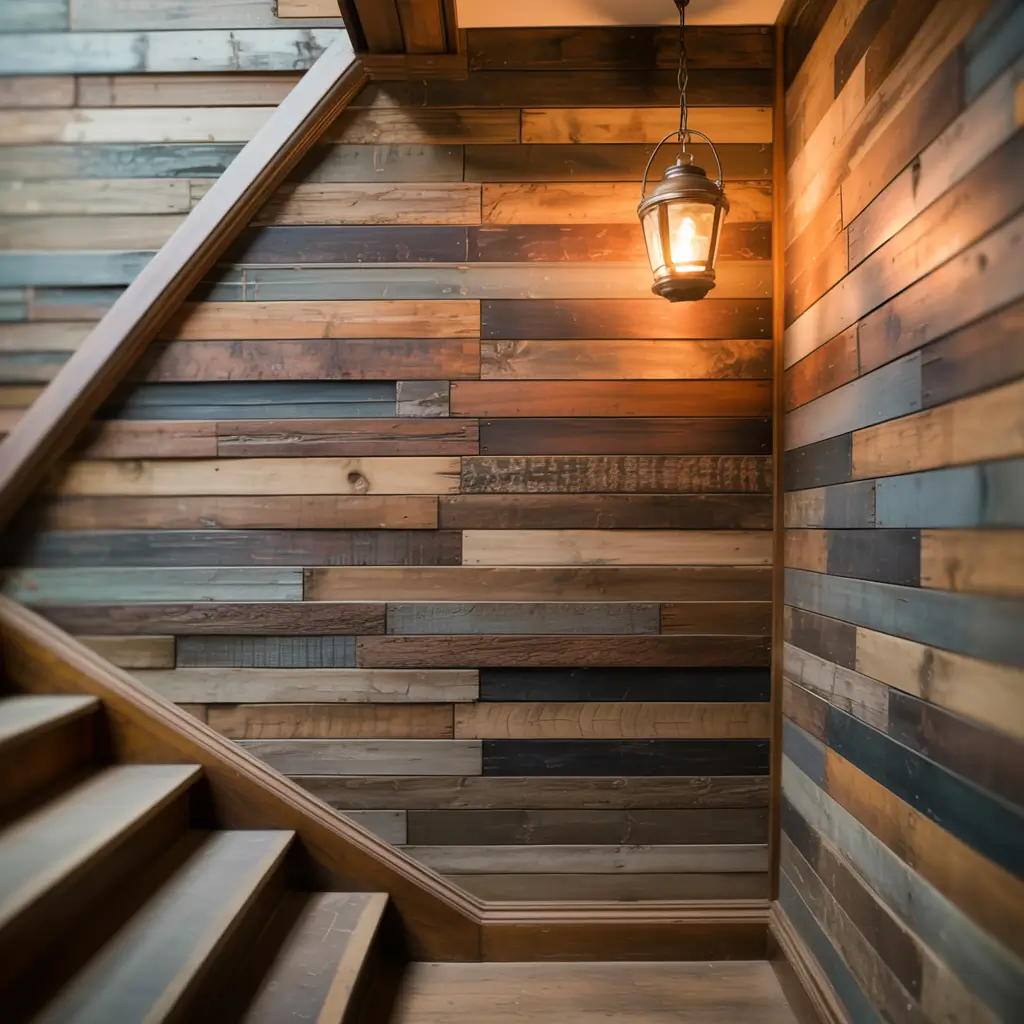
A section of reclaimed wood paneling on the staircase wall brings warmth, texture, and character that painted walls and framed prints simply cannot match. Wood introduces a natural, organic quality — the variation in grain, tone, and patina of reclaimed material means the result is genuinely unique and impossible to exactly replicate.
The most popular approach for staircases is horizontal shiplap or plank paneling applied to the lower third or half of the wall, with the upper section remaining painted. This creates a deliberate two-zone treatment that adds visual structure without requiring the entire wall to be covered. The junction between the two zones can be finished with a thin wooden ledge strip that provides a subtle landing for small decorative objects.
For those who love the aesthetic but not the price tag of genuine reclaimed wood, engineered wood panels designed to replicate barn board, weathered oak, or aged pine are widely available and convincingly realistic. The key is in the installation — horizontal orientation and slightly varied tones between planks create the authentic patchwork look.
10. A Botanical Print Collection
Botanical prints have an effortless ability to make a staircase wall feel both curated and calm. There is a timeless quality to detailed botanical illustration — part scientific, part artistic — that sits beautifully in traditional and contemporary interiors alike.
The approach that works best on staircase walls is a cohesive series: six, eight, or even ten prints of the same style and palette, uniformly framed, ascending alongside the stairs. Vintage-style botanical illustrations in warm sepia tones, crisp black-line drawings on cream backgrounds, or modern watercolour studies in soft greens and ochres all work beautifully.
The key to this look is genuine uniformity. Every frame the same finish, every mat the same width, every gap between frames the same measurement. This degree of consistency is what makes the whole arrangement read as a deliberate design decision rather than a casual collection of nature-themed art.
Pro Tip: You can assemble an entire botanical print collection for very little money. Vintage botanical illustration prints are widely available as high-quality digital downloads. Have them printed at a professional print shop on heavy matte paper and frame them yourself for a result that looks expensive without being so.
11. Typographic and Quote Art
Words have always had a place on walls, and the staircase is a particularly apt location for typographic art. Because people are in motion on the stairs, they tend to actually read what is there — unlike a dining room wall that eventually becomes invisible through familiarity. A meaningful phrase, a favourite line from a book, or a word that captures something true about your home and family will be noticed and appreciated daily.
The scale and presentation of typographic art matters enormously. A single large-format print — a beautifully typeset phrase at A1 or larger — makes more impact than multiple smaller typographic pieces competing with each other. Choose a font with personality: a refined serif for elegance, a bold sans-serif for modernity, or a handwritten style for warmth and intimacy.
Custom typography is now remarkably accessible and affordable through print-on-demand services. The ability to choose the exact words, font, size, and colour means you can create something genuinely tailored to your space rather than settling for what happens to be in stock at a home goods store.
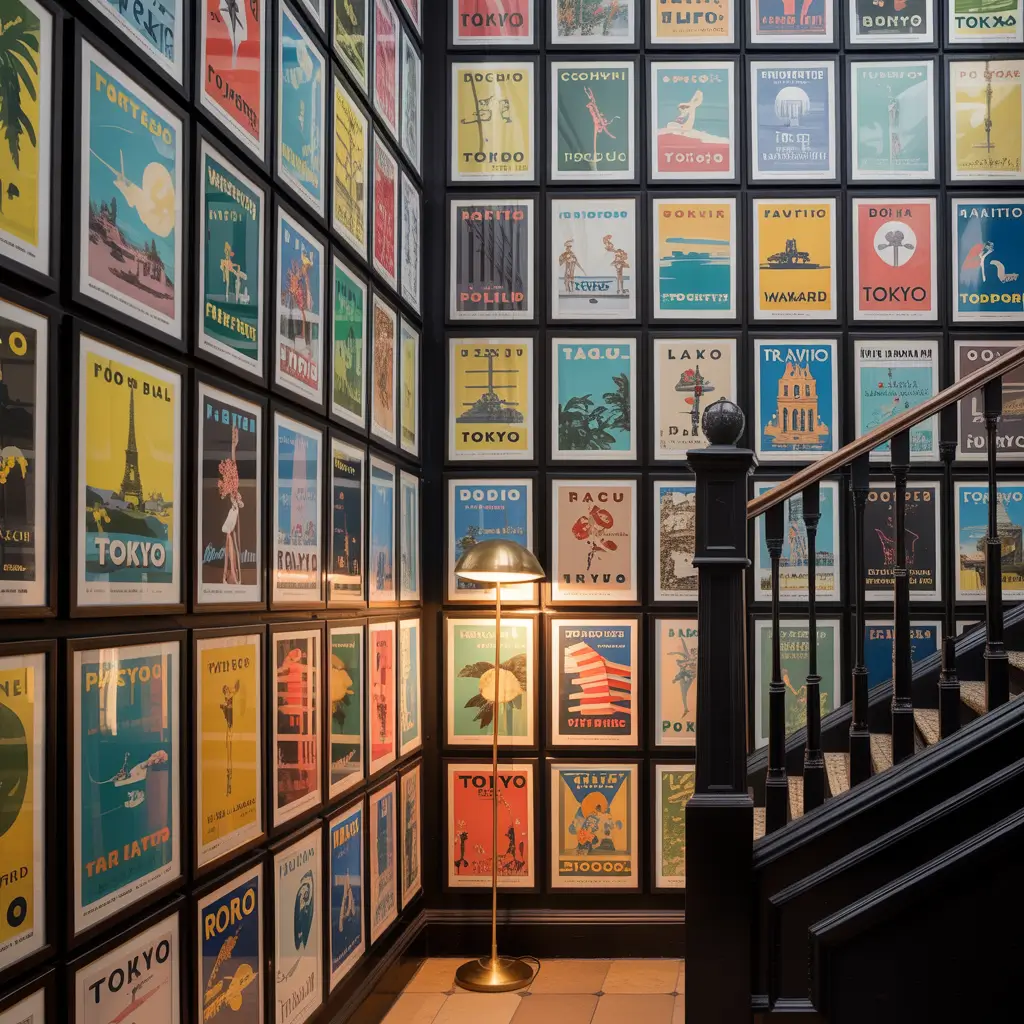
12. A World Map or Vintage Travel Art
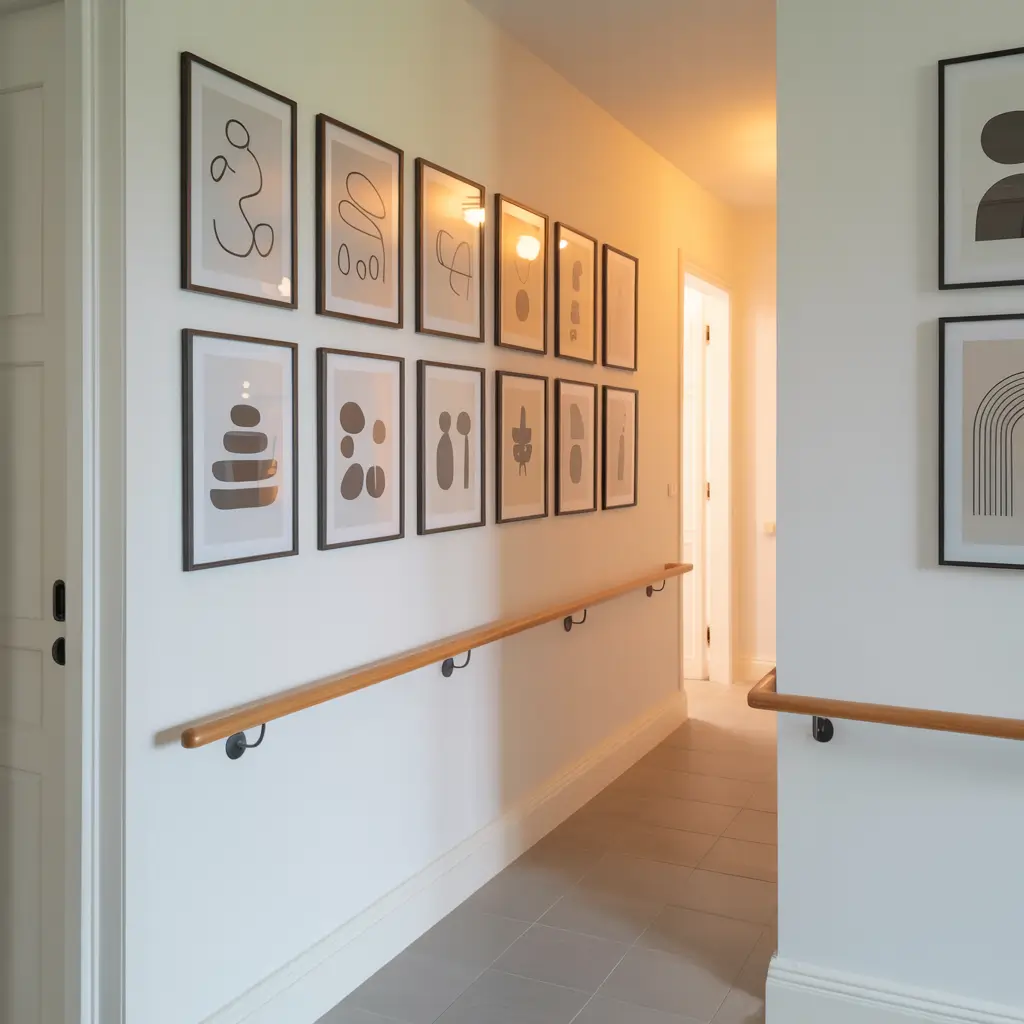
For homes that carry a spirit of curiosity and adventure, a large-format map above the staircase wall makes a statement that is both visually striking and personally meaningful. A vintage-style world map in aged sepia tones, or a bold graphic modern map in an unexpected colour palette, brings instant character and a sense of the wider world into the home.
Large-format map prints are available at significant sizes — 40, 50, even 60 inches wide — that make them genuinely commanding on a staircase wall. Framed or mounted on a simple wooden backing board, a map of this scale becomes a proper feature. Mark the places you have been with small pins or stars for a personalised layer of meaning that makes the piece uniquely yours.
The same principle applies to vintage travel posters, which bring nostalgic charm and a vivid colour palette. A curated selection of three to five travel posters in matching frames, spaced consistently and following the stair angle, creates a playful, warmly atmospheric staircase gallery with immediate personality.
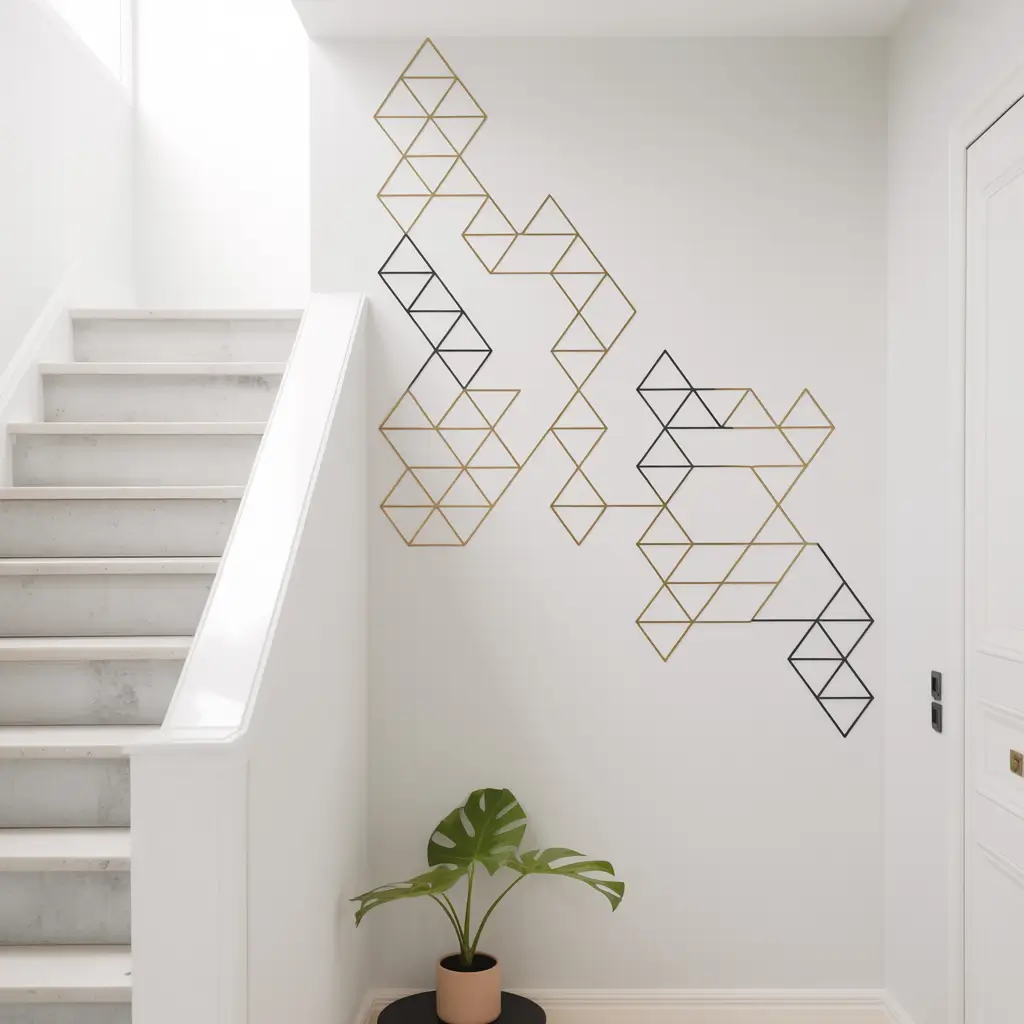
13. Geometric Pattern or Wallpaper Accent
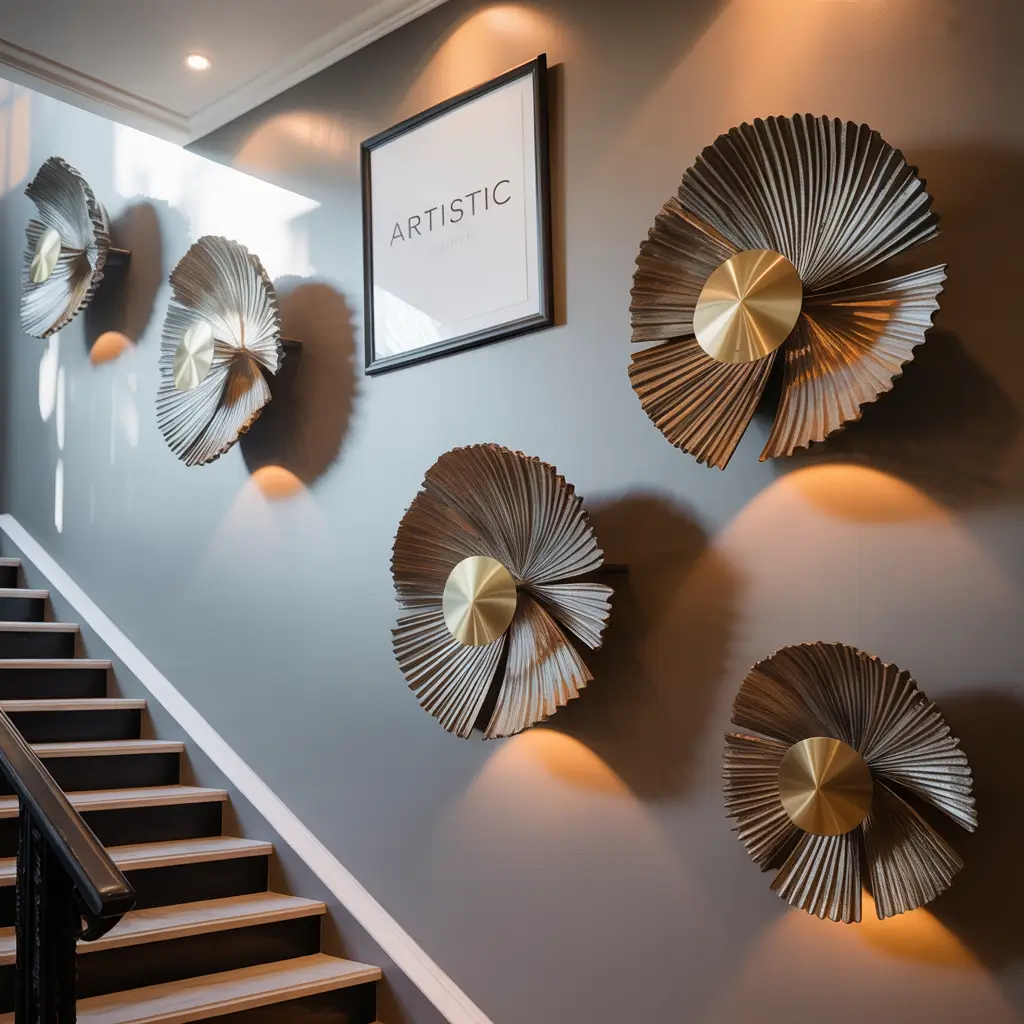
A bold geometric wallpaper applied to the staircase wall — or even just to the lower panel below a chair rail — brings pattern, rhythm, and strong visual energy to a space that flat paint can never match. The diagonal dynamic of the staircase plays particularly well with geometric patterns, which contain their own sense of movement and direction.
The range of geometric wallpapers available spans from subtle and sophisticated — fine herringbone, delicate diamond, understated houndstooth — to bold and graphic — oversized hexagons, strong chevron, high-contrast grid. The key is matching the scale of the pattern to the scale of the wall. Larger staircases can carry bolder patterns; narrower ones benefit from finer, more contained geometry.
For renters or anyone who wants reversibility, peel-and-stick geometric wallpaper has dramatically improved in quality and is now available in truly excellent designs that are virtually indistinguishable from paste wallpaper in photographs. Removal is clean and damage-free when done correctly.
Pro Tip: Before committing to a wallpaper, order a sample and tape it to the wall. Look at it at different times of day and under different lighting conditions. Wallpaper that looks perfect in a showroom can feel overwhelming in the confined height of a staircase.
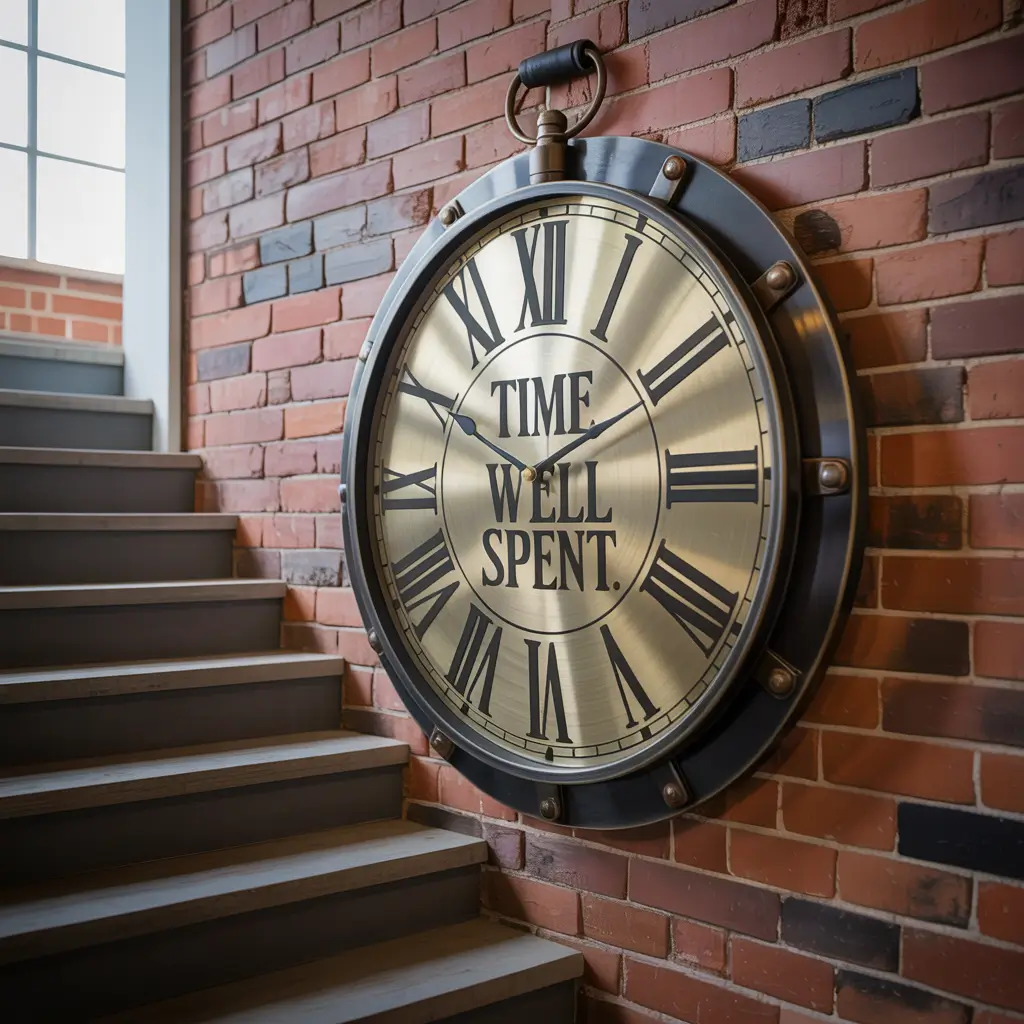
14. Decorative Wall Clocks as Art Objects
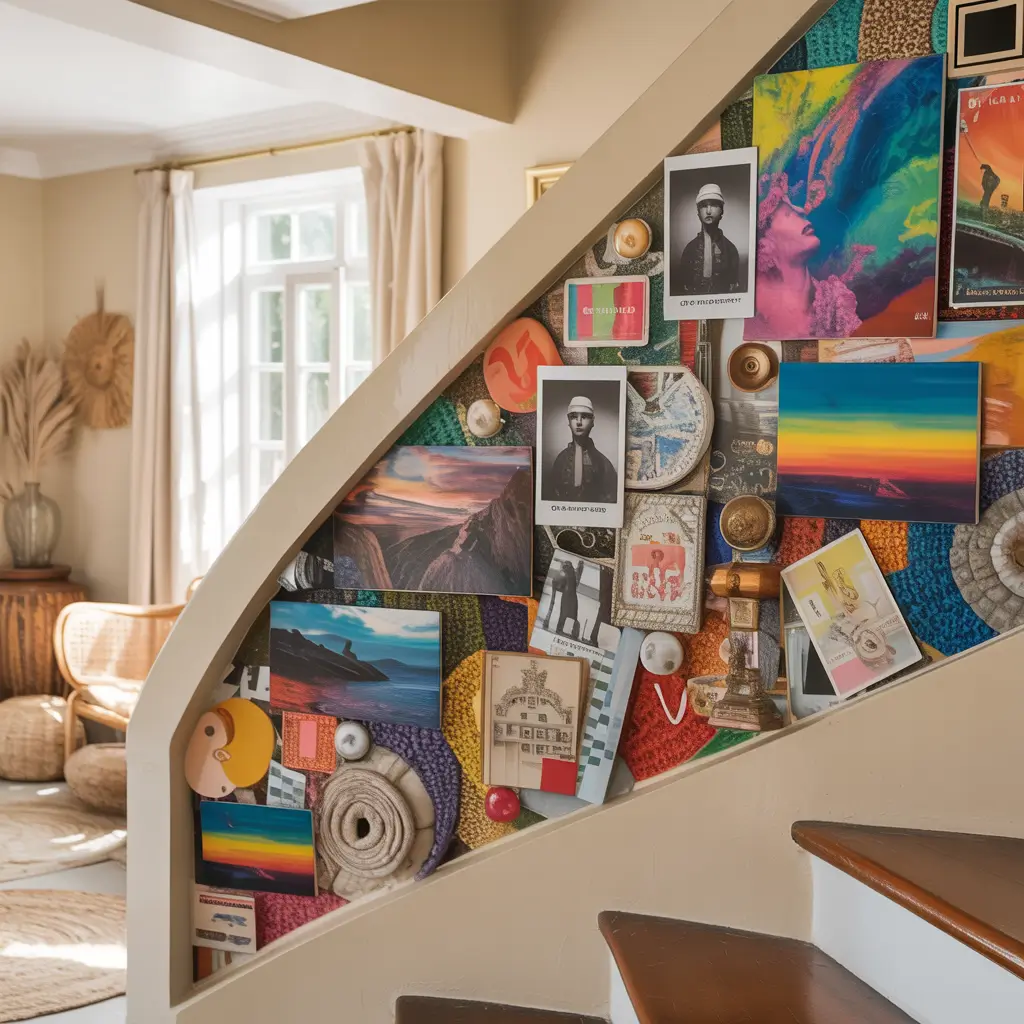
A decorative wall clock is one of those pieces that functions as both a practical object and a genuine design statement. On a staircase wall, where people are always in transit, a clock makes perfect sense — it is consulted and appreciated multiple times daily.
The key is choosing a clock that prioritises design as much as function. Oversized statement clocks — 24 inches or more in diameter — make powerful focal points on a staircase wall. Industrial metal clocks, minimalist Scandinavian wood designs, ornate vintage-inspired pieces, or graphic typographic clock faces can all become genuine art objects when chosen with care.
A single large clock works well as a standalone statement piece. Alternatively, a large clock as the anchor of a small gallery arrangement — surrounded by two or three complementary framed pieces — creates a structured, layered composition that is both practical and visually interesting.
15. Wainscoting With a Contrasting Paint Treatment
This is one of the most transformative things you can do to a staircase wall, and it requires no art, no shelves, and no accessories — just molding, paint, and a confident hand. Wainscoting applied to the lower half of the staircase wall, painted in a bold contrasting colour against a lighter upper section, creates an architectural richness that makes the whole staircase feel considered and designed.
Deep navy, forest green, charcoal, and rich terracotta are all colours that work beautifully in a wainscoted staircase context. The lower panel carries the bold colour; the upper wall sits in a lighter tone — white, cream, or a soft neutral — so the overall effect is dramatic but balanced. Crown the junction with a simple rail in a coordinating or contrasting tone.
The combination of physical texture from the molding and the visual contrast of two distinct colours creates layers of interest that change as light moves through the day. It is genuinely one of the highest-impact, lowest-cost decorating moves available for a staircase.
Styling Principles to Tie It All Together
Choosing the right idea is the first step. Executing it in a way that feels genuinely designed — not just decorated — requires applying a few consistent principles.
1. Commit to a colour palette: Whatever you display on the staircase wall should draw from a consistent set of colours. Not identical — varied shades, tones, and saturations are fine — but consistently related. Warm and cool tones mixed randomly create visual noise.
2. Use odd numbers: Three prints always look better than two or four. Five shelves better than six. The eye finds odd numbers more interesting and dynamic. Designers apply this principle obsessively.
3. Let it breathe: Overcrowded staircase walls look anxious. Give each element room. White space — the gap between and around things — is as much a part of the design as the objects themselves.
4. Think about night-time: How will the staircase wall look after dark? If the only lighting is an overhead fixture, consider adding a sconce or a small picture light. Art and display pieces that look great by day can disappear entirely at night without dedicated lighting.
5. Edit annually: Great staircase walls evolve. Set a reminder once a year to step back and assess. What has started to feel dated? What new piece would bring the arrangement forward? The best home decor is never entirely finished — it grows with you.
Frequently Asked Questions
How do you decorate a staircase wall without it looking cluttered?
The most reliable way to avoid visual clutter is to choose one dominant decorating approach and follow it with discipline. A gallery wall with consistent frames and measured spacing never feels cluttered. Floating shelves styled simply with the rule of three never feel overwhelming. Problems arise when multiple different approaches compete in the same space — art on the wall, plus shelves, plus plants, plus sconces, all at once. Pick a lead idea and let everything else support it quietly.
What is the best way to hang things on an angled staircase wall?
Use paper templates cut to the exact size of each frame or object. Tape them to the wall with low-tack tape before making any holes. Step back, look from both the top and bottom of the stairs, adjust as needed, then hang from the template positions. A laser level is enormously helpful for ensuring consistent heights across an arrangement that spans a diagonal.
How do you decorate a staircase wall in a rented home?
Peel-and-stick wallpaper, removable picture-hanging strips rated for the weight of your frames, floating ledge shelves installed into studs (which create just a few small screw holes, easily filled on departure), and freestanding elements like tall floor mirrors leaned against the wall — all of these allow significant decorating impact with minimal permanent wall modification.
What size art should I use on a staircase wall?
For a single statement piece on an average staircase, 24 to 40 inches wide is the effective range. Smaller pieces tend to disappear against the scale of a staircase wall. For gallery arrangements, a mix of sizes anchored by at least one or two larger pieces — 20 inches or more — creates the visual weight needed to fill the space appropriately.
Conclusion: Give Your Staircase the Attention It Has Always Deserved
The staircase wall has been the quiet underachiever of your home for long enough. It is a space with genuine design potential — tall, prominent, experienced daily by everyone in the household, and noticed immediately by every visitor who walks through the door. That is an extraordinary platform for making a design statement.
With 20 ideas ranging from the simply achievable to the genuinely transformative, this guide offers something for every home, every budget, and every level of decorating ambition. The first step is simply deciding to start — picking one idea that feels right, measuring the space, and committing to it.
The staircase wall you have been walking past without really seeing could become the most characterful, memorable space in your entire home. All it needs is a little deliberate attention. Your home deserves that. And honestly, so do you.
1 thought on “15 Inspiring Staircase Wall Decor Ideas for Cozy Living”