
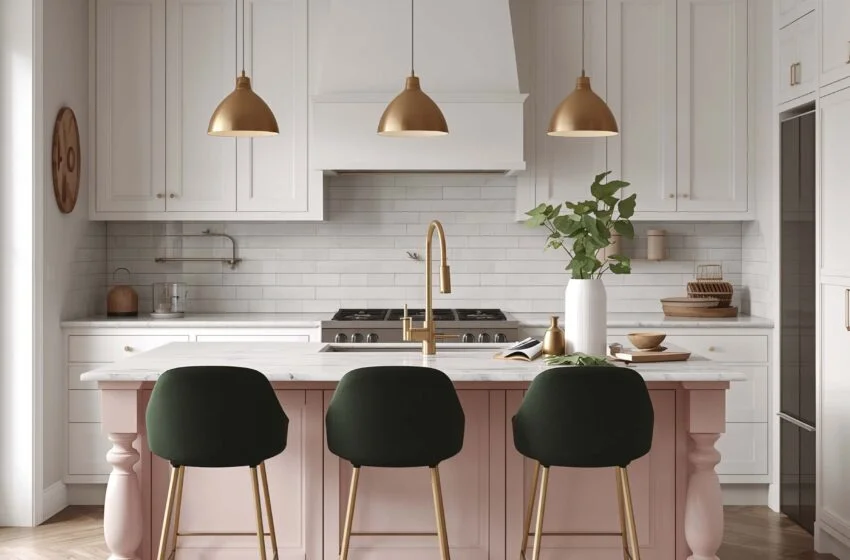
Pink and green together in a kitchen sounds like it should be a mistake. It’s the combination that makes people hesitate, double-check their instincts, and wonder if they’ve been talked into something too bold, too playful, or just too much. And then they see it done well — and everything changes.
Because here’s what nobody tells you until you actually experience a pink and green kitchen: it doesn’t feel like a risk. It feels like a revelation. The two colors have a natural relationship rooted in the world outside — flowers and leaves, petals and stems, blossoms and branches. Pink and green are what nature reaches for instinctively, and when you bring that combination into your kitchen, the room comes alive in a way that is genuinely hard to replicate with any other color pairing.
This is not a combination for the faint of heart, but it’s also not as challenging as it sounds. The key is understanding how different pinks and different greens interact — and there’s a surprisingly wide spectrum of moods available within this single pairing, from soft and romantic to bold and graphic, from country cottage warmth to urban contemporary confidence.
1. Blush Pink Cabinets with Sage Green Walls
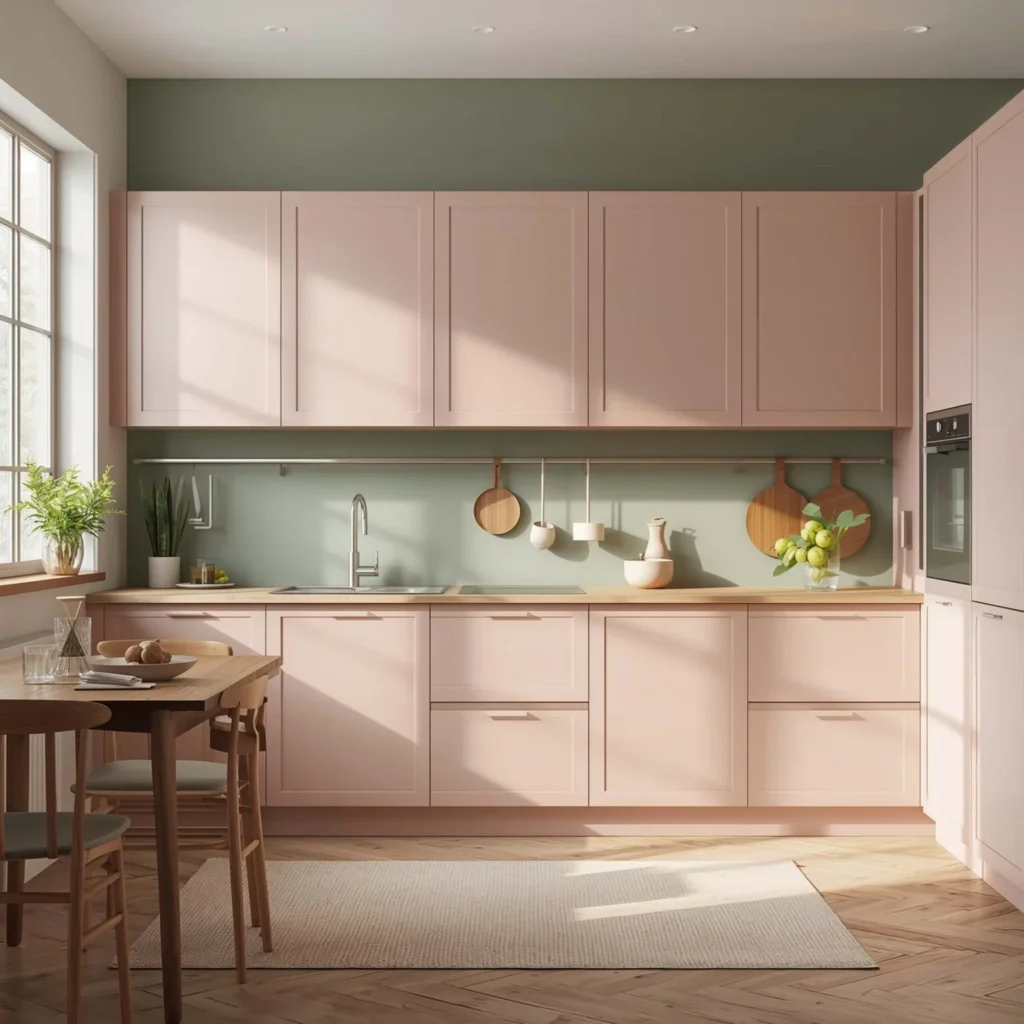
This is the softest, most romantic version of the pink and green kitchen, and it’s the one that converts the most skeptics. Blush pink — the dusty, slightly grayed-down pink that sits somewhere between cream and rose — paired with sage green walls creates a kitchen that feels like stepping into a beautiful garden at dusk. Everything about it is calm, considered, and deeply pleasing.
The reason this specific combination works so well is the shared quality of both colors: both blush and sage are muted, slightly complex shades that have more in common with neutrals than they do with primary colors. They don’t shout at each other; they have a conversation. Keep the countertops in white quartz or cream marble, add some natural wood accents, and the result is a kitchen that manages to feel both fresh and completely timeless.
2. Sage Green Island with Blush Pink Bar Stools
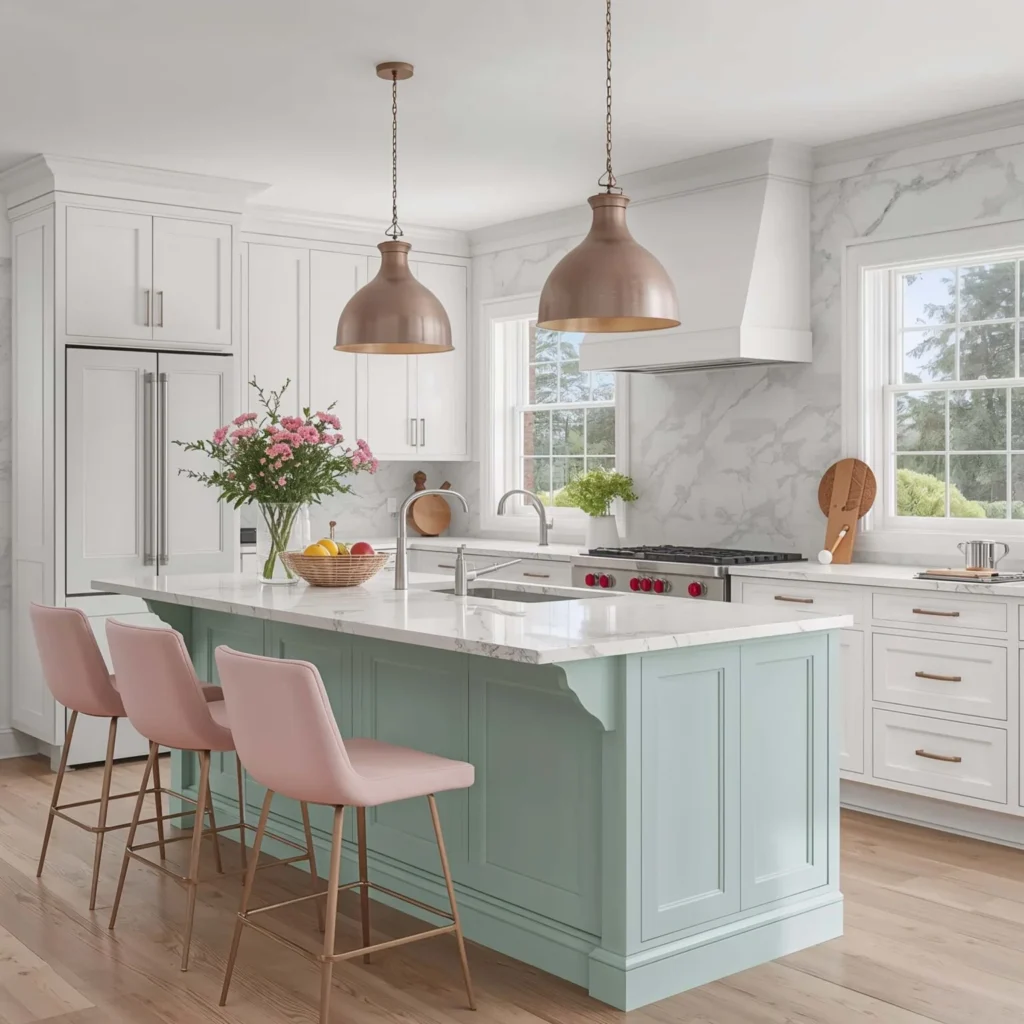
For those who want to introduce the pink and green combination without committing to painting any cabinets, the island-and-stool approach is the most elegant solution. A sage green kitchen island is a sophisticated design choice in its own right — warm, natural, and versatile. Add blush pink bar stools on the seating side, and the pairing reveals itself beautifully without overwhelming any part of the kitchen.
The beauty of this approach is its flexibility. Bar stools can be changed relatively easily if your tastes evolve, and the sage green island will work with many other accent colors if you ever decide to move away from pink. But most people who try this combination find they love it more over time rather than less, as the two colors continue to reveal new facets depending on the light and the season.
3. Deep Rose Pink Island Against Forest Green Perimeter Cabinets
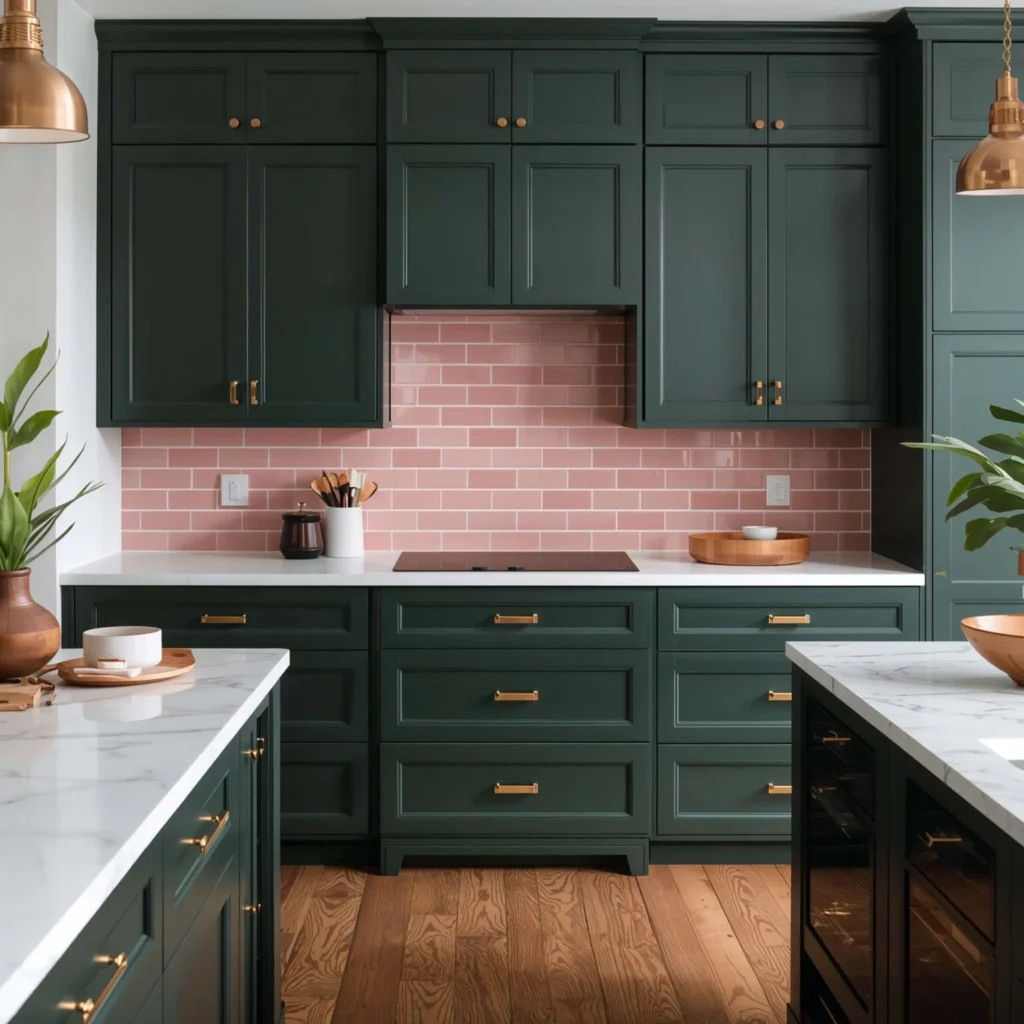
This is the bold, graphic, maximalist version of the pink and green kitchen, and it is absolutely spectacular when executed with confidence. Deep rose pink — richer and more saturated than blush, closer to the color of a full-blown garden rose — as an island color against forest green perimeter cabinets creates a kitchen with real theatrical presence. This is not a kitchen that whispers; it makes an announcement.
The key to making this work without it tipping into chaos is the careful management of every other element. Keep countertops in white marble or pale quartz. Keep walls white or very pale cream. Keep flooring in a warm neutral — natural wood or cream stone. The pink and green are doing all the expressive work, and everything else in the room needs to be quiet enough to let them do it.
4. Mint Green Cabinets with Pale Pink Subway Tile Backsplash
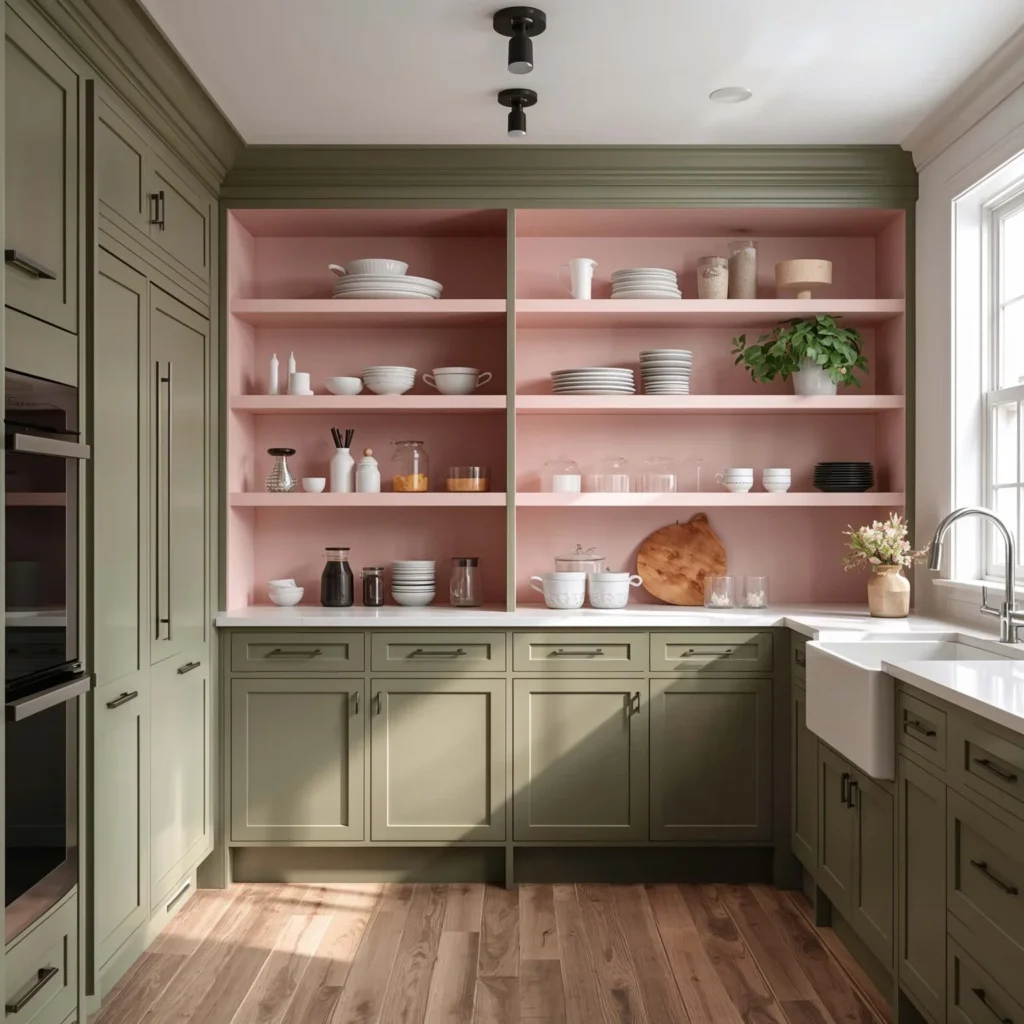
Mint green cabinets have a retro, slightly mid-century quality that sits beautifully with pale pink subway tiles. The combination feels playful and creative without being childish, and it has a nostalgic quality — like a beautifully restored 1950s diner kitchen — that is genuinely charming. Pale pink subway tiles with a slightly matte or satin glaze are the ideal choice; high-gloss tiles can make the combination feel too hard and candy-like.
This is a kitchen that suits open shelving, vintage-inspired accessories, and brass or copper fixtures. A KitchenAid mixer in a coordinating color on the countertop, a collection of colorful ceramics on the shelves, a small potted herb garden on the windowsill — all of these accents feel completely at home in this warm, creative kitchen.
5. Dusty Pink Shaker Cabinets with Olive Green Kitchen Island
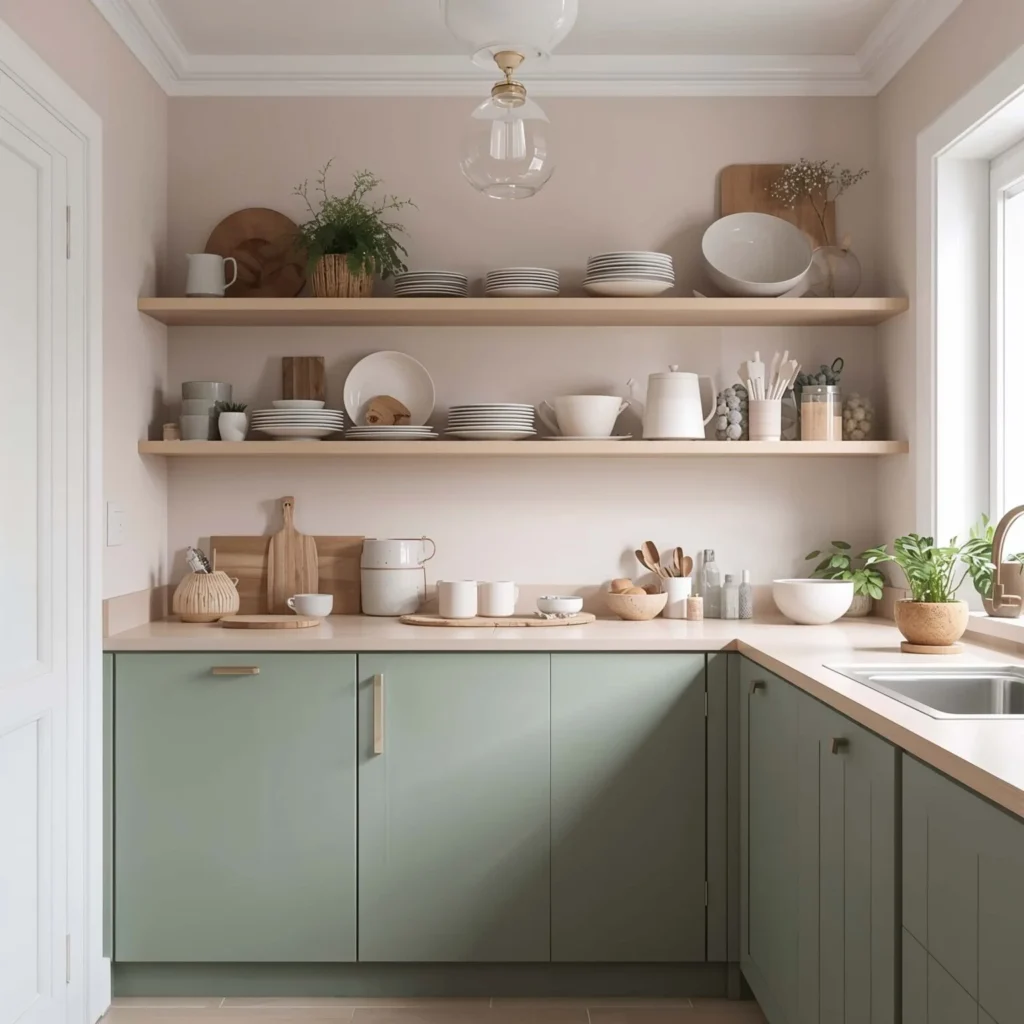
Dusty pink shaker cabinets and an olive green kitchen island is a combination with an earthy, organic quality that feels closer to the color palette of a Provence farmhouse than a trendy Pinterest kitchen — which is exactly what makes it so enduringly beautiful. Both dusty pink and olive are complex, slightly grayed-down colors that resist looking kitsch or overwrought, even when used together.
The shaker-style doors give the pink cabinets a structural quality that stops them from feeling too soft or sweet, while the olive island provides real visual weight and grounding. Use aged bronze hardware throughout, choose a stone or terracotta-tiled floor, and add some trailing plants, and this kitchen will look as beautiful in twenty years as it does on the day it’s installed.
6. Terracotta Pink Walls with Sage Green Cabinetry
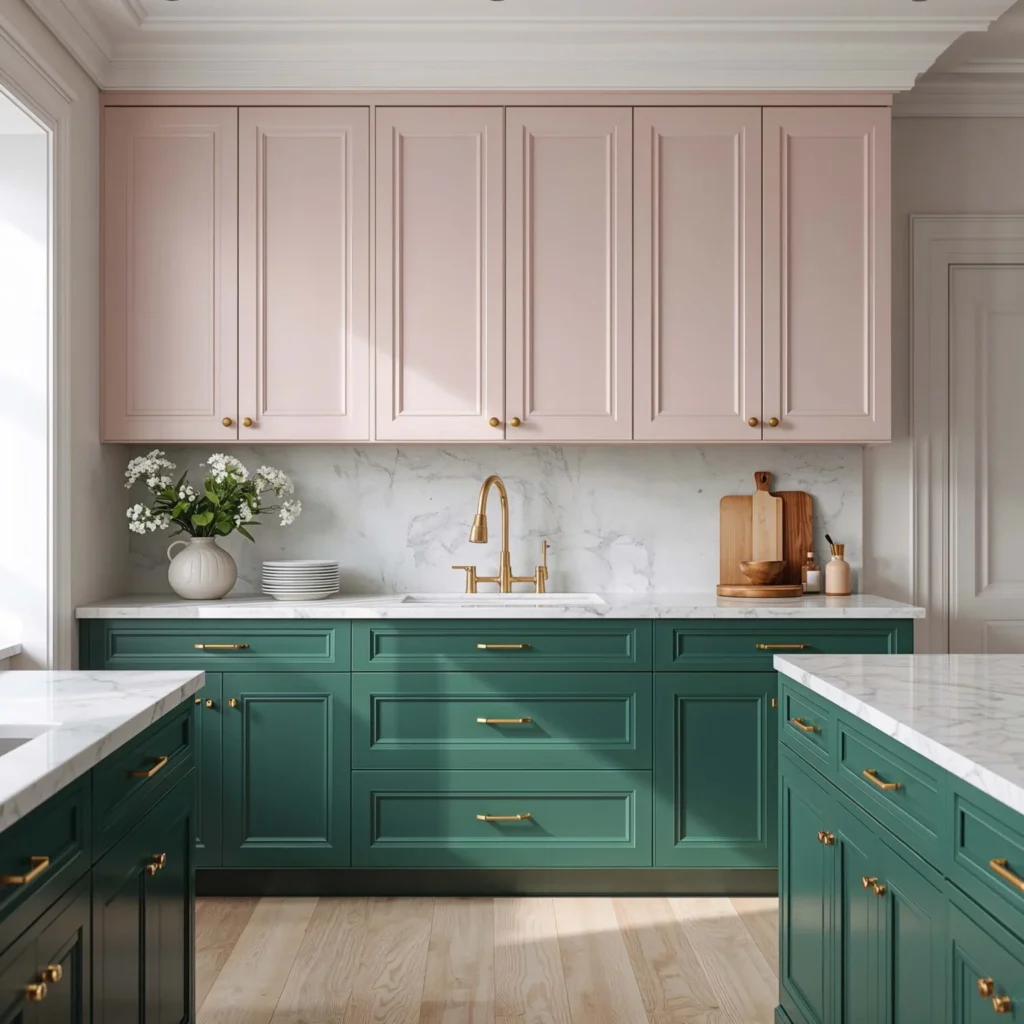
Terracotta pink — that warm, orange-adjacent pink that references fired clay and sun-baked earth — is a deeply satisfying color that brings immediate warmth to any room. Paired with sage green cabinetry, the combination takes on a distinctly Mediterranean character: rich, sun-drenched, and full of life. This is a kitchen that feels equally beautiful at breakfast and at a long, lingering dinner.
The key to this combination is making sure the terracotta pink doesn’t overwhelm the sage. Keep the pink to the walls (and perhaps the ceiling, if you’re feeling adventurous) and let the sage cabinetry provide the structural framework. Natural materials — terracotta floor tiles, wooden open shelving, linen dish towels — reinforce the earthy, organic theme beautifully.
7. Hot Pink Accent Wall Behind a Green Kitchen
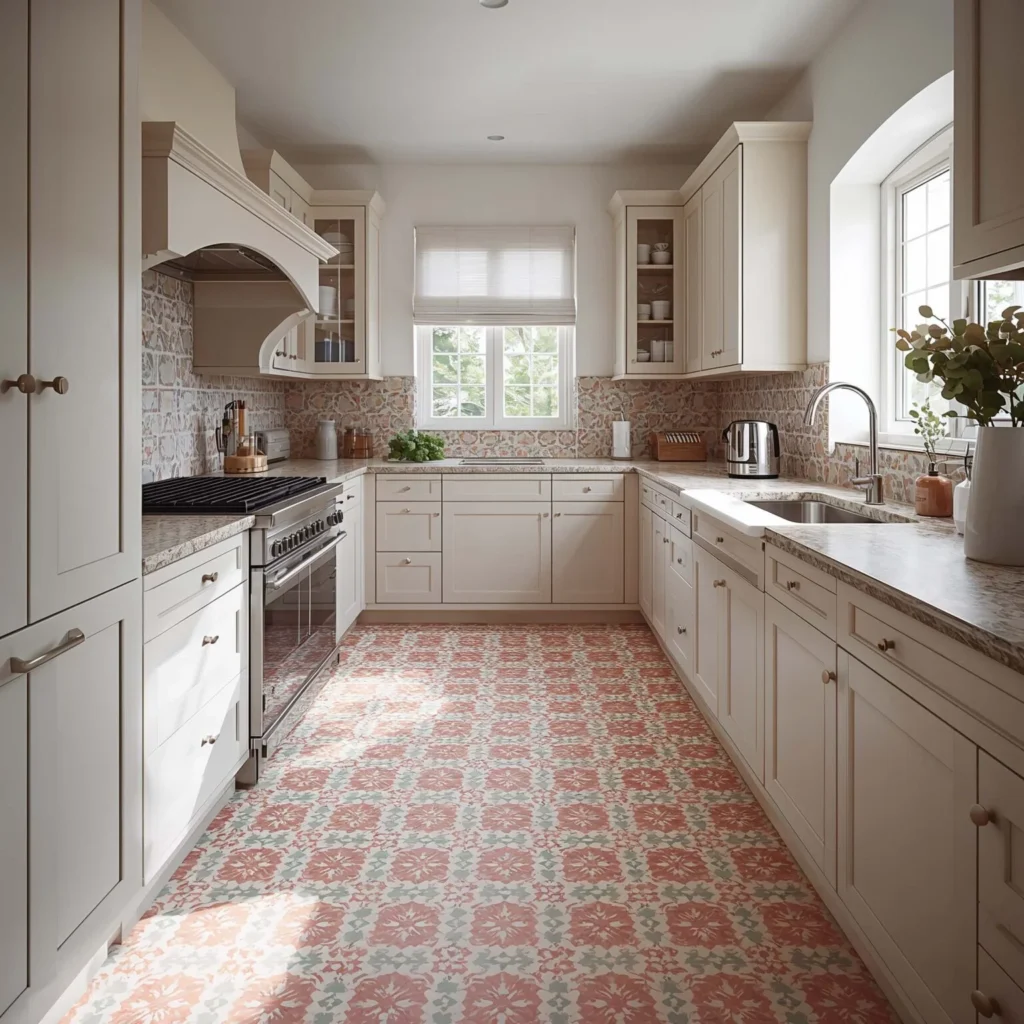
For those who want to bring genuine color courage into their kitchen without a major renovation, a hot pink accent wall behind an otherwise green kitchen is one of the most dramatically effective moves available. Hot pink — saturated, confident, unapologetically vibrant — behind sage or forest green cabinetry creates a kitchen with energy that stops people in their tracks.
This works best when the hot pink is confined to a single wall — ideally the one that faces you as you enter the kitchen, or the one behind the range. The green cabinetry acts as a sophisticated foil that stops the hot pink from reading as garish, while the pink gives the green depth and drama it wouldn’t have against a white or neutral wall. Use brass pendants and white countertops to complete the look.
8. Pink and Green Kitchen with Botanical Print Wallpaper
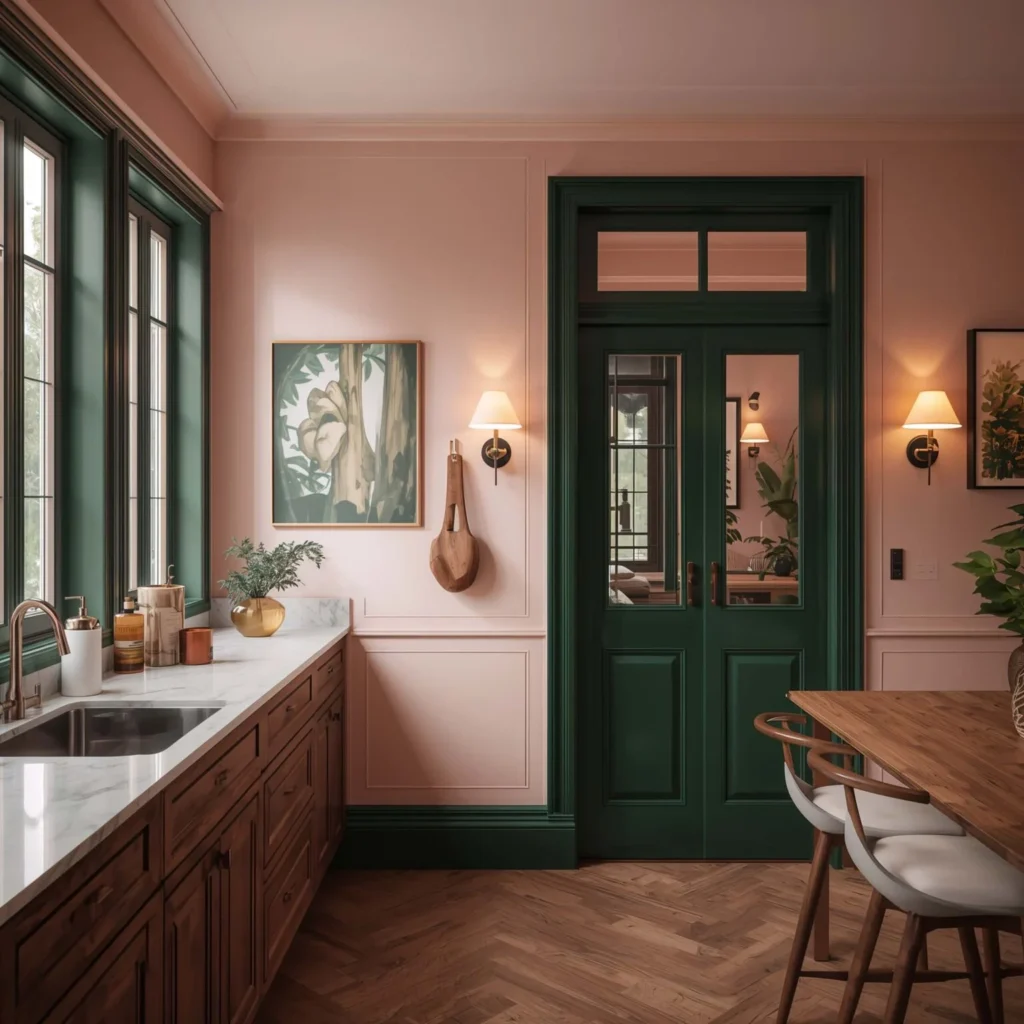
Botanical print wallpaper — densely illustrated with plants, flowers, and foliage in pinks and greens — is one of the most effective ways to introduce the pink and green combination without making any permanent decisions about cabinet paint colors. A single wall of beautifully illustrated botanical wallpaper above a run of white or natural wood cabinetry creates a kitchen that feels artistic, warm, and completely individual.
Choose a wallpaper that includes the specific shades of pink and green you love, then pull those colors through the rest of the kitchen in smaller doses: a pink blind, a green ceramic collection on open shelves, a pink-handled knife block. The wallpaper becomes the anchor of the whole scheme and makes the rest of the design choices almost effortlessly easy.
9. Pale Pink Kitchen with Green Glass Pendant Lights
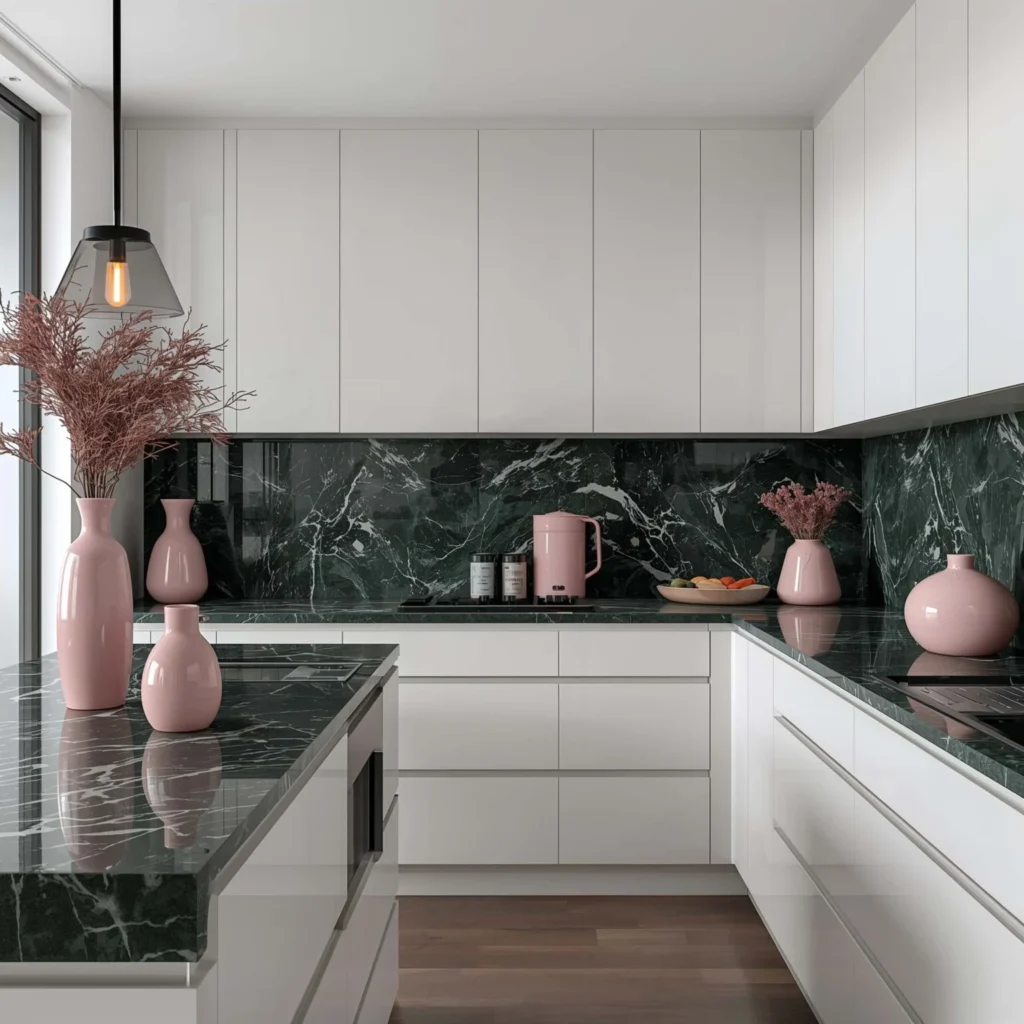
Sometimes the most effective introduction of a second color in a kitchen comes from above rather than from the surfaces. A pale pink kitchen — blush or dusty rose cabinets with white countertops and pale walls — given green glass pendant lights over the island creates a kitchen where the color story unfolds gradually and with great elegance.
Green glass pendants — whether in a deep bottle green, a warm olive-tinted green, or a pale mint — cast beautiful colored light when lit in the evening, creating a dining and entertaining atmosphere that is genuinely magical. During the day, the green of the glass provides a botanical accent note above the soft pink, completing the pink and green story without any additional effort.
10. Emerald Green Lower Cabinets with Soft Pink Upper Cabinets
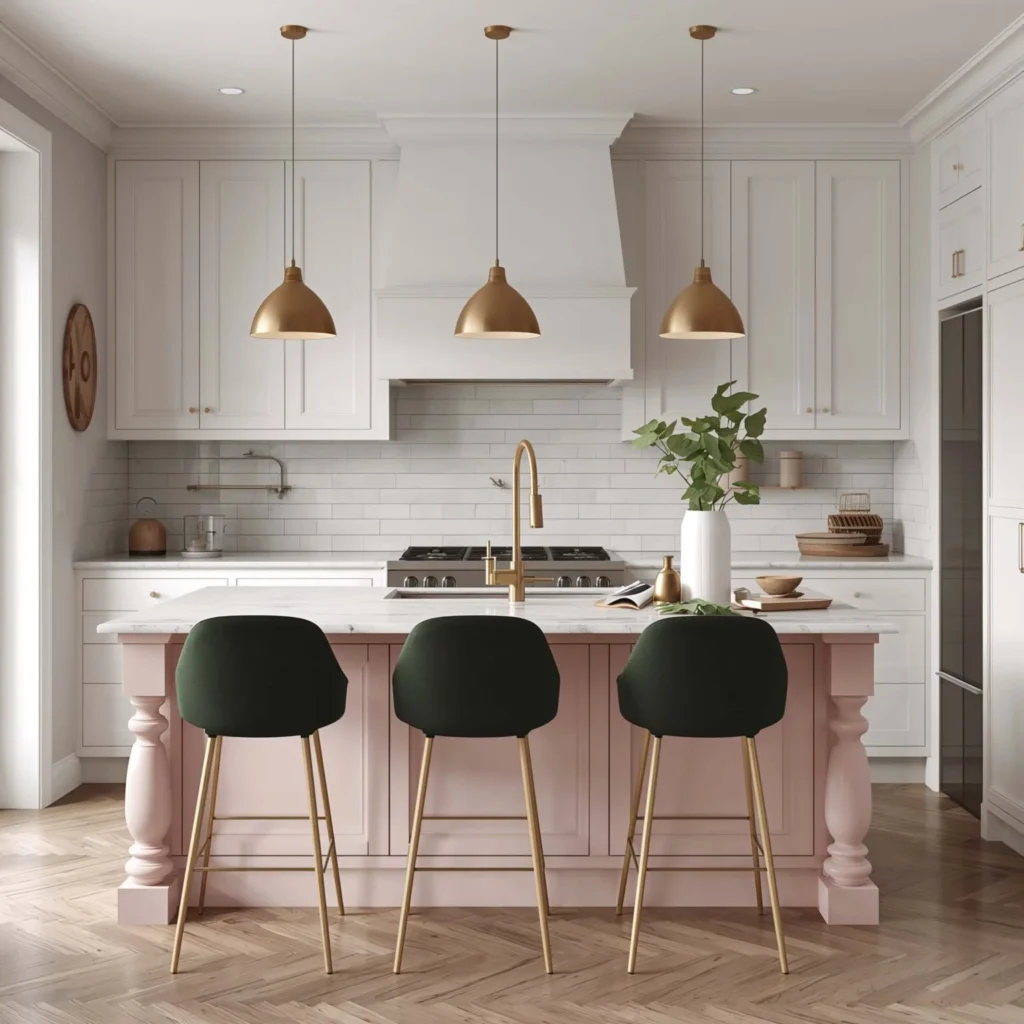
Two-tone kitchens give you the opportunity to use two bold colors in the same space while maintaining balance — because each color occupies its own zone and neither overwhelms the other. Emerald green on lower cabinets and soft pink on upper cabinets is a version of this approach that manages to be simultaneously bold and surprisingly harmonious.
The logic of the arrangement is sound: darker colors naturally belong below, where they anchor the room visually; lighter, softer colors above keep the upper portion of the kitchen feeling open and airy. Emerald green is a rich, jewel-toned choice for the lowers, while soft pink above provides warmth and feminine charm. Use polished gold hardware throughout to tie the two tones together with a consistent metallic thread.
11. Sage Green Cabinets with Pink Quartzite Countertops
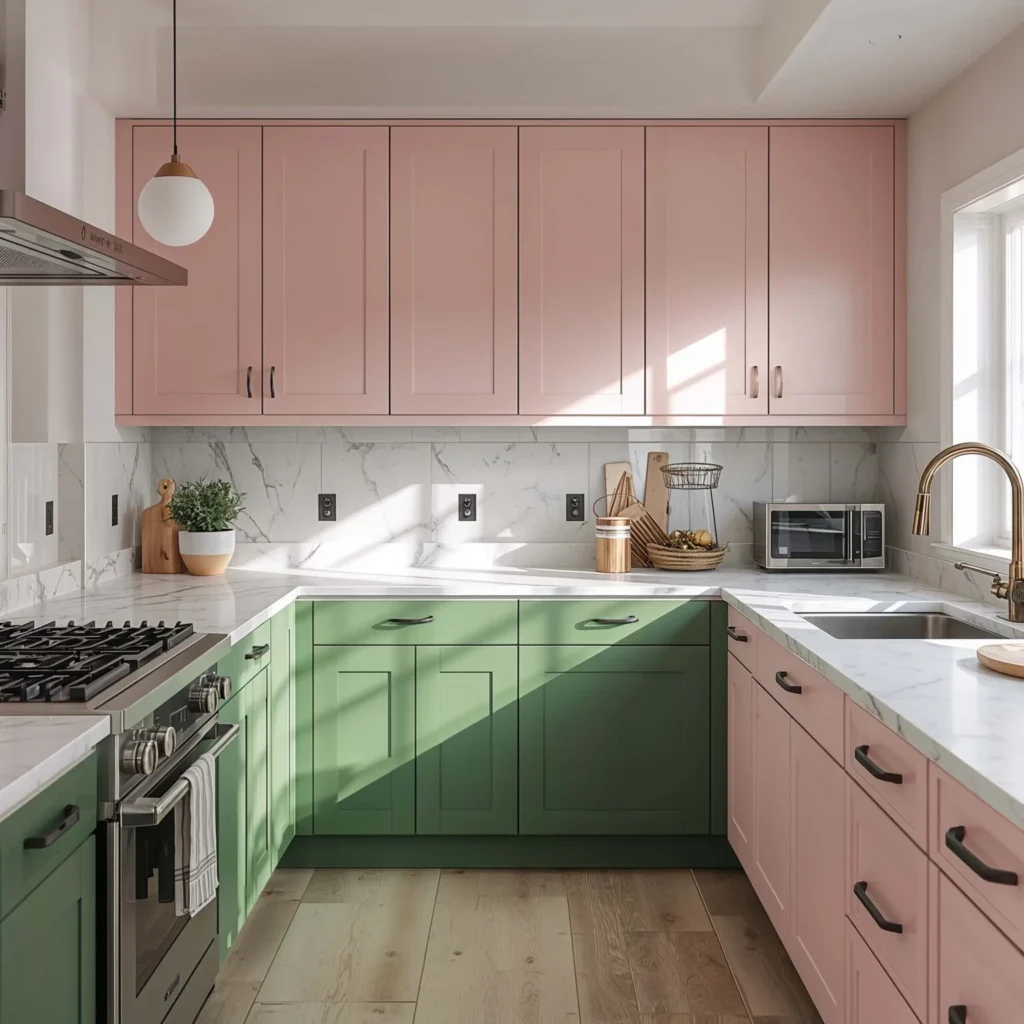
Pink quartzite — a naturally occurring stone with warm pink and cream tones shot through with movement and variation — is one of the most beautiful and unexpected countertop materials available. Against sage green cabinetry, it creates a pink and green pairing that feels completely natural rather than designed, because it is: the pink comes from the earth, not from a paint pot.
The advantage of pink quartzite over pink-painted surfaces is permanence and uniqueness. Every slab is different, and the combination of natural stone and painted cabinetry has a material richness that feels genuinely luxurious. This is a kitchen for someone who wants the pink and green combination to feel sophisticated rather than playful — and it achieves that effortlessly.
12. Pink Zellige Tile Backsplash with Dark Green Cabinets
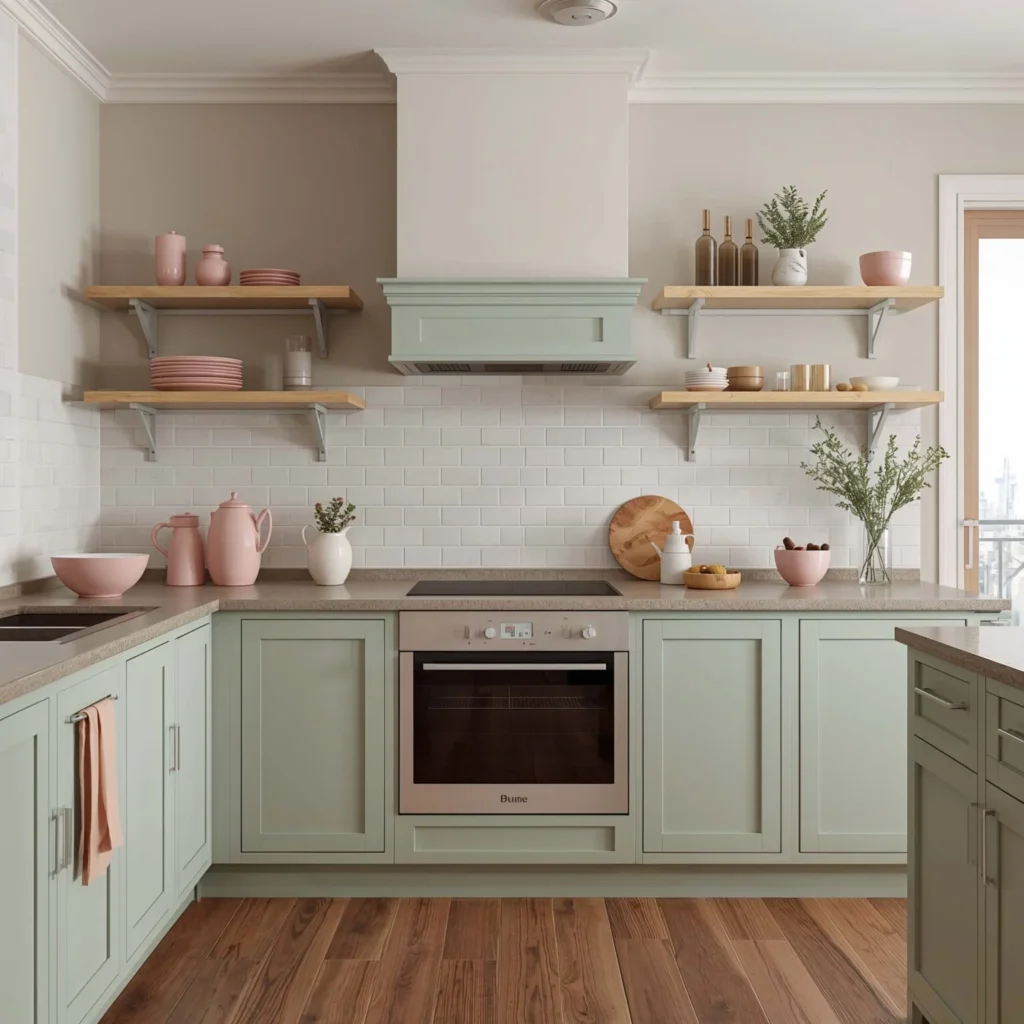
Zellige tiles — with their hand-glazed surface, tonal variation, and slight irregularity — are among the most beautiful tile options for a kitchen backsplash. In a warm, dusty pink shade behind dark green (forest green or hunter green) cabinetry, they create a backsplash that seems to glow with depth and warmth. The artisanal quality of zellige means no two tiles catch the light in exactly the same way, giving the surface an almost living quality.
The dark green cabinets provide the weight and structure that allow the pink zellige to be fully expressive without the combination tipping into sweet or saccharine. Pair with aged brass fixtures, a stone or concrete countertop, and some trailing plants on open shelves, and this kitchen will look like something from the pages of a high-end design magazine.
13. Olive Green Open Shelving with Pink Ceramic Display
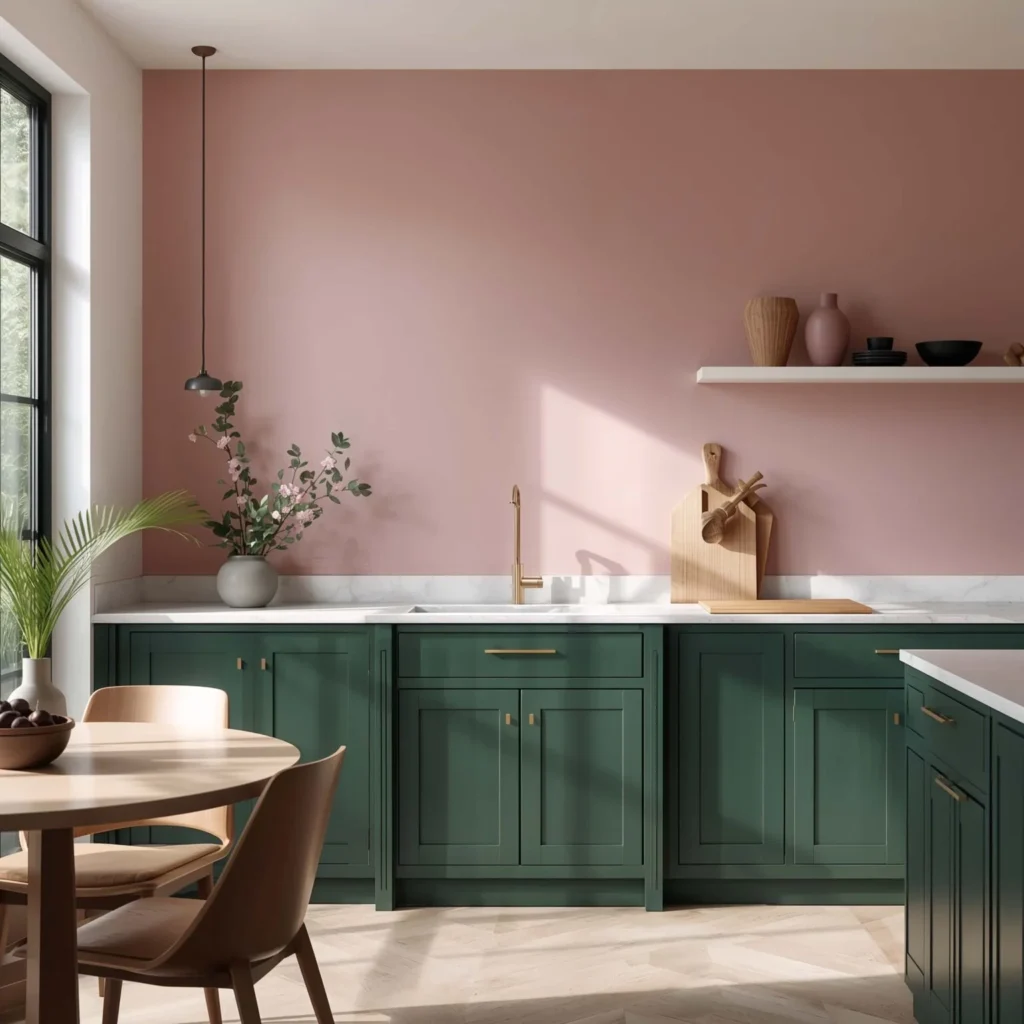
Open shelving in a dark olive green, styled with a curated collection of pink ceramics, creates a pink and green moment that is more about display and styling than structural design — and that makes it one of the most accessible and affordable ways to bring this color combination into your kitchen. The olive green of the shelves frames the pink ceramics beautifully, making them pop without any additional effort.
This is a combination that evolves over time as you add pieces: a pink handmade bowl from a ceramics market, a rose-tinted glass carafe, a pink-glazed mug from a trip abroad. The kitchen becomes a display of things you love rather than a showroom, and that personal quality is something no amount of money or professional design can fully replicate.
14. Dusty Rose Kitchen with Green Herb Garden Window
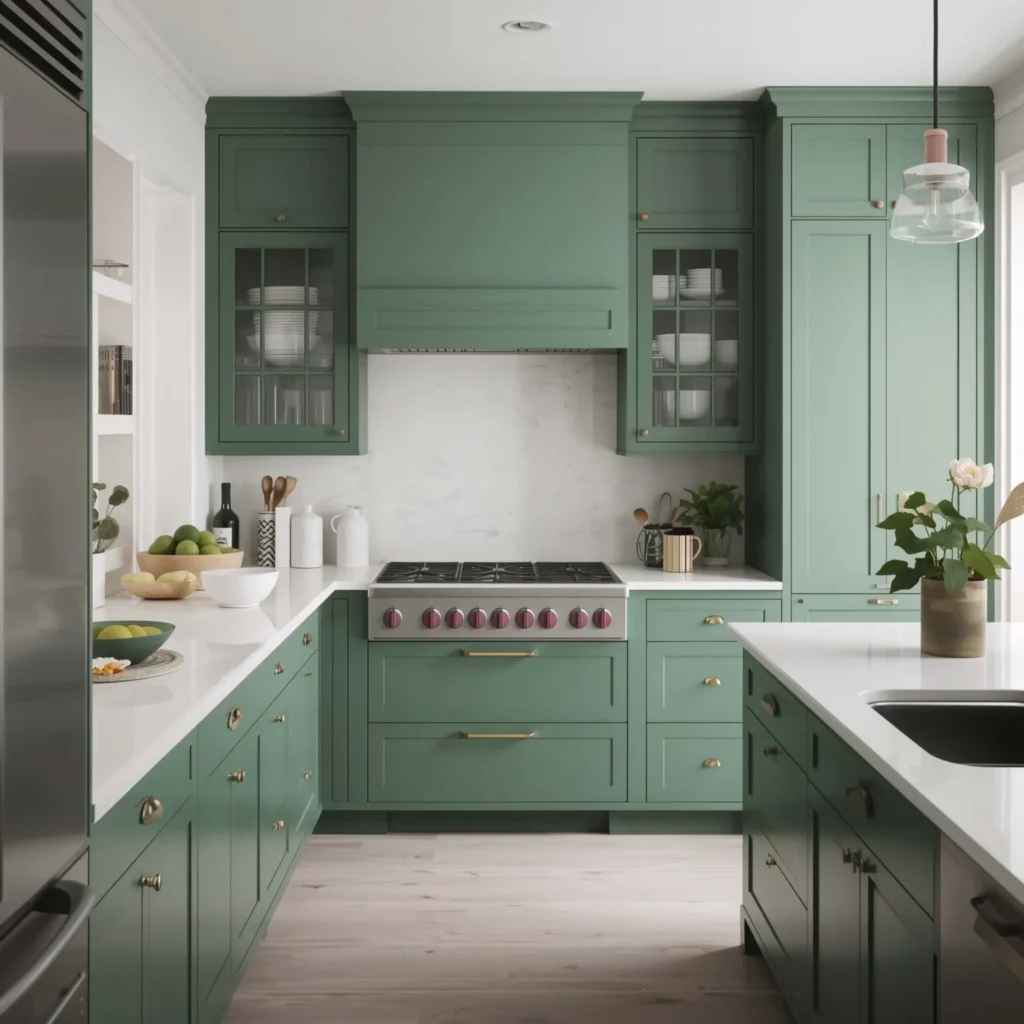
A dusty rose kitchen — cabinets, walls, or a combination of both — with a kitchen window turned into a thriving green herb garden is one of the most naturally beautiful pink and green combinations available. The blush warmth of the dusty rose creates a soft backdrop that makes the vivid green of growing herbs look even more lively and vibrant.
This is also one of the most functional versions of the pink and green kitchen: the herbs aren’t just decorative, they’re actually useful, and tending to them adds a small but genuine daily pleasure to the kitchen routine. Terracotta pots on a white windowsill against dusty rose walls, with the garden or street visible beyond — this is a kitchen scene that feels deeply domestic and beautiful.
15. Blush Pink Kitchen with Trailing Green Plants Throughout
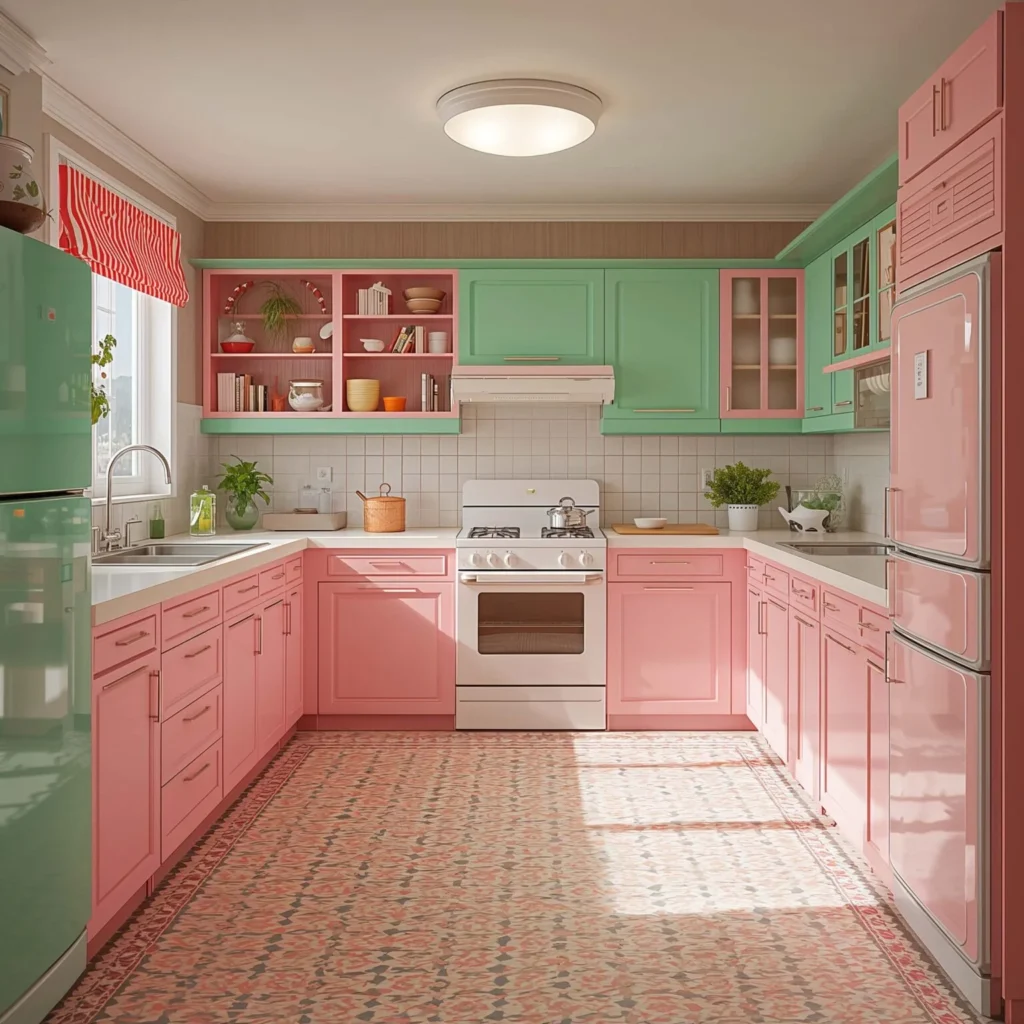
Sometimes the green in a pink and green kitchen doesn’t need to come from paint at all. A blush pink kitchen — soft cabinets, warm plaster walls, or even just blush-toned accessories throughout — filled with trailing green plants creates a combination that feels alive, lush, and completely organic in its beauty.
Pothos and heartleaf philodendrons trailing from high shelves, a large monstera in the corner, a string of pearls cascading from a high cabinet top — when plants are used generously in a pink kitchen, the green they provide is more vibrant and varied than any paint could achieve. This is a kitchen for people who love the natural world and want their home to reflect that love unambiguously.
How to Choose the Right Shades of Pink and Green for Your Kitchen
The difference between a pink and green kitchen that looks extraordinary and one that looks off is almost entirely about shade selection. Here’s a framework that will help you get it right:
- Identify your dominant color first. In most successful pink and green kitchens, one color leads and the other supports. Decide whether you want pink as the main event (with green as an accent) or green as the primary color (with pink providing warmth and contrast). This decision will guide everything else.
- Match the intensity of both colors. Muted, complex pinks work best with muted, complex greens (sage, olive, dusty eucalyptus). Bold, saturated pinks work best with bold, saturated greens (emerald, forest green, jungle green). Mixing a very bold pink with a very muted green (or vice versa) creates imbalance that is difficult to resolve.
- Check the undertones. Pink with warm undertones (orange, yellow) pairs most naturally with warm greens (olive, sage with yellow undertones). Pink with cool undertones (blue, purple) pairs better with cool greens (mint, sage with gray undertones, forest green). When undertones clash, even beautiful individual shades can look wrong together.
- Consider your light. Both pink and green can shift dramatically under different lighting conditions. Pink tends to read differently under warm incandescent light versus cool daylight. Test your chosen shades on large swatches in your actual kitchen at multiple times of day before committing.
- Use the 60/30/10 rule. Sixty percent of the kitchen in a neutral (white, cream, natural wood, stone), thirty percent in your dominant color (say, sage green), and ten percent in your accent color (blush pink) is a reliable proportion that prevents the combination from feeling overwhelming while still delivering the full impact of the pairing.
Materials That Work Beautifully with Pink and Green Kitchens
The material choices around your pink and green color scheme will either reinforce its character or undermine it. Here are the pairings that consistently produce the best results:
- White marble or quartz: The most reliable countertop choice for any pink and green combination. Keeps the overall palette fresh and prevents the two colors from fighting each other. Works with every shade of both pink and green.
- Rose marble or pink quartzite: The most beautiful and sophisticated countertop option when you want the pink to come through in a natural, organic way. Pairs especially well with sage, forest, or olive green cabinetry.
- Natural wood (oak, walnut, pine): Brings warmth and organic texture that bridges pink and green beautifully. Particularly effective as open shelving, bar stools, or an island countertop when the surrounding cabinetry is painted.
- Terracotta tile: Works beautifully with earthy versions of both colors — dusty rose, olive green, terracotta pink, sage green. Creates a Mediterranean or farmhouse aesthetic that feels warm and completely coherent.
- Rattan and wicker: Natural woven textures sit comfortably between both colors, adding tactility and artisanal character. Use for cabinet fronts, pendant shades, bar stools, or accessories.
- Zellige and handmade ceramic tile: Their tonal variation and handmade quality complement the organic associations of both pink and green. Use for backsplashes or decorative feature walls.
- Brass and gold metal: The warmest metal finish, and the most flattering to both pink and green. Brass hardware, brass faucets, and brass pendant lights all bring the pink and green combination to its fullest and most elegant expression.
Hardware and Fixture Choices for a Pink and Green Kitchen
Hardware is the detail that completes the pink and green story and defines its character. Here are the best options:
- Polished or brushed brass: The most universally flattering choice for pink and green kitchens. Brass has warmth that neither color provides on its own, and it ties them together with a golden thread that feels luxurious and complete.
- Rose gold or copper: A softer, more feminine alternative to brass that sits particularly well with pinks that have warm undertones. Copper especially has a natural affinity with both the earth tones of olive green and the warmth of dusty rose.
- Aged bronze: Works beautifully in farmhouse and traditional-influenced pink and green kitchens. Its dark, organic warmth suits earthy color combinations — terracotta pink, olive green, dusty rose with sage.
- Matte black: For those who want their pink and green kitchen to feel contemporary and graphic rather than soft and botanical. Matte black introduces sharpness and prevents the combination from reading as too sweet. Best with mid-tone greens and stronger pinks.
- Polished nickel or silver: Works best with cooler versions of both pink and green — dusty pink with mint green, pale rose with eucalyptus. Creates a clean, crisp effect that suits Scandinavian and contemporary kitchen styles.
Achieving the Pink and Green Kitchen Look on Any Budget
Low Budget: Accessories, Plants, and a Painted Accent
You don’t need to repaint a single cabinet to bring the pink and green combination into your kitchen. Start with plants — trailing green plants on high shelves, a pot of herbs on the windowsill — and introduce pink through accessories: a blush ceramic mixing bowl, pink dish towels, a dusty rose blind at the window. If you want to go one step further, paint a single wall in your chosen shade of green or pink. This level of change is weekend-achievable, fully reversible, and can be remarkably effective in establishing the pink and green character of the kitchen.
Mid Budget: Island Paint, Tile Backsplash, and New Hardware
At a mid-range budget, you have enough to make structural design decisions that create real impact. Paint the kitchen island in your chosen green (or pink), install a new backsplash tile in the complementary color, and replace all hardware with brass or copper. These three changes — even without touching the main cabinetry — can transform the overall character of a kitchen entirely. Add some rattan pendants above the island and a few large plants, and the kitchen will feel completely transformed.
Full Budget: Bespoke Cabinetry, Premium Stone, and Custom Details
A fully bespoke pink and green kitchen — custom cabinetry in precisely chosen shades of both colors, premium natural stone countertops in white marble or rose quartzite, solid brass hardware, zellige tile backsplash, and every detail specified with intention — is one of the most beautiful rooms a home can contain. At this budget level, the goal is not just to introduce two colors but to create a complete, cohesive design statement where every element earns its place and everything works together in perfect harmony. Done well, this is a kitchen that people genuinely find it difficult to leave.
Final Thoughts: The Case for a Pink and Green Kitchen
Pink and green is not the easiest kitchen color combination to choose. It requires a degree of design confidence that not everyone starts out with. It requires careful thought about specific shades, undertones, and proportions. And it requires a willingness to do something genuinely distinctive rather than defaulting to the safe choices that everyone else is making.
But the reward for that effort is a kitchen that is unlike any other — one that has genuine warmth, genuine character, and a sense of joy that no neutral palette can replicate. A kitchen you actually want to spend time in. A kitchen that makes cooking feel like pleasure rather than obligation. A kitchen that guests remember and comment on and feel genuinely happy to be inside.
The two colors at the heart of this combination are the colors of the natural world at its most abundant and beautiful. Pink and green together say: this is a home that celebrates life. And that is an extraordinarily good thing to say about the room where you begin and end every day.
So choose your shades carefully, test them thoroughly, start as boldly or as gently as feels right for you — and trust that this combination, once you live with it, will reward your courage in ways you didn’t fully anticipate. Your pink and green kitchen is going to be beautiful.
Frequently Asked Questions About Pink and Green Kitchens
Is pink and green too bold a combination for a kitchen?
Not at all — provided you choose the right shades and proportions. Muted, complex pinks (blush, dusty rose, terracotta pink) paired with earthy greens (sage, olive, dusty eucalyptus) create a combination that is sophisticated rather than bold. The key is avoiding very saturated shades of both colors simultaneously. When one color is strong, the other should be softer. Following this rule, pink and green is one of the most beautiful and liveable kitchen color combinations available.
What is the best shade of pink for a green kitchen?
Blush (a soft, grayed-down pink with neutral undertones) is the most versatile and universally flattering pink for a green kitchen — it works with sage, forest green, olive, and mint. Dusty rose (slightly warmer and more saturated than blush) is wonderful with sage and olive. Terracotta pink suits earthy greens and creates a distinctly Mediterranean character. Avoid very bright or cool-toned pinks unless you want a maximalist, graphic effect.
What shade of green works best with pink?
Sage green is the most popular and most forgiving green partner for pink in any shade. It has enough depth to provide contrast without being so dark that it overwhelms softer pinks. Olive green works beautifully with terracotta and dusty rose for an earthy, complex pairing. Forest and emerald green suit stronger, more saturated pinks. Mint green is best with very pale pinks for a light, retro-fresh combination.
What hardware should I use in a pink and green kitchen?
Brass is the single best hardware choice for the vast majority of pink and green kitchens — its warmth ties both colors together and adds a note of luxury that neither color can provide alone. Copper or rose gold is a beautiful alternative that leans into the warmth of pink specifically. Aged bronze suits farmhouse and traditional pink and green kitchens. Matte black adds contemporary sharpness for those who want the combination to feel more graphic and modern.
Will a pink and green kitchen look dated quickly?
When built around muted, complex shades of both colors rather than very saturated or primary-adjacent tones, a pink and green kitchen has remarkable longevity. Blush, sage, dusty rose, and olive are all colors with deep roots in design history — they’ve been used in traditional interiors for centuries and will continue to be used for centuries more. The combination may feel particularly of-the-moment right now, but its core shades are genuinely timeless.
Can pink and green work in a small kitchen?
Yes — in fact, soft versions of this combination can make a small kitchen feel larger and more alive. Use lighter, softer shades on the larger surfaces (pale sage or mint on cabinets, blush on walls) and reserve stronger colors for smaller accents. Good lighting is essential in any small kitchen with color, so ensure both natural and artificial light sources are working well. Avoid using dark shades of both colors simultaneously in a compact space.