
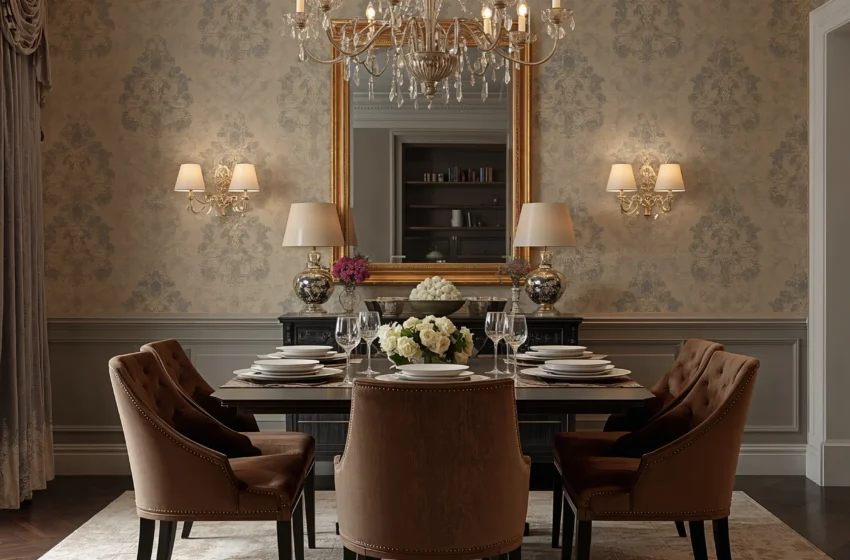
For years, wallpaper had a reputation problem. It was the relic people peeled off walls when they moved into a new house — dusty, dated, and firmly associated with your grandparents’ sitting room. But something changed. Wallpaper is back, and it’s better than it has ever been — bolder in design, easier to install, and available at every price point imaginable.
Nowhere in the home does wallpaper make a bigger impact than the dining room. Think about what this room is for: gathering people together, sharing meals, celebrating occasions, and having the kinds of conversations that stretch long past dessert. A well-chosen wallpaper sets the scene for all of that. It tells guests something about who you are before you’ve even poured the wine.
This guide covers 20 of the best dining room wallpaper ideas — ranging from bold and dramatic to quiet and textural. For each one, you’ll find not just inspiration but practical advice on how to make it work in a real home. Whether you’re redecorating a formal dining room, a casual eat-in kitchen, or a small apartment nook, there’s something here for you.
1. Large-Scale Botanical Prints
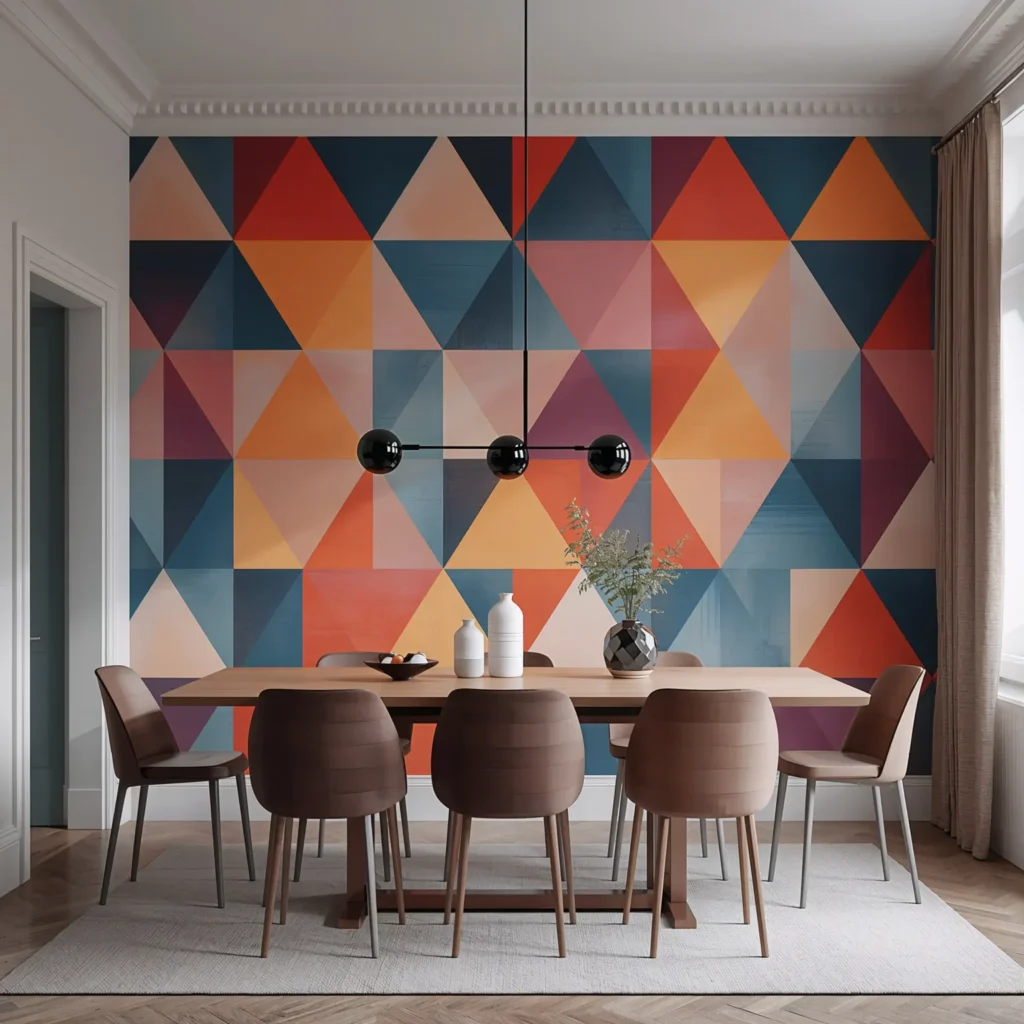
Oversized botanical wallpaper — think vast tropical leaves, illustrated ferns, or magnolia branches — has become one of the defining looks of contemporary dining rooms. The scale is the whole point: when leaves are large enough that you can only see two or three per wall panel, the effect shifts from pattern to near-mural. It’s lush, atmospheric, and completely immersive.
The trick is pairing this kind of drama with restraint elsewhere. Natural linen dining chairs, a simple wooden table, and minimal tableware let the wallpaper breathe. If everything competes, nothing wins.
💡 Designer Tip: Dark-background botanical wallpapers (deep green, navy, forest floor black) work particularly well in dining rooms that lack natural light, because they make the room feel intentionally moody rather than simply dim.
2. Classic Toile de Jouy
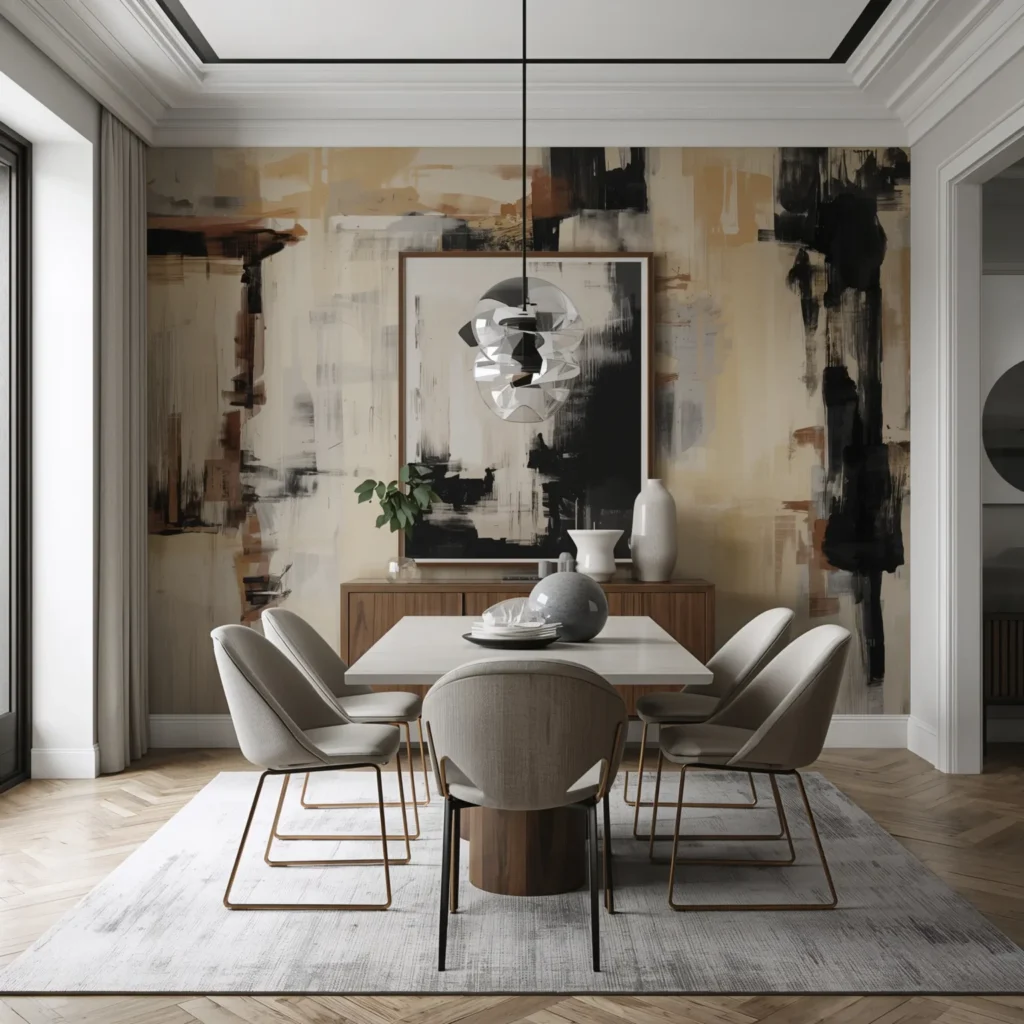
Toile is one of those patterns that rewards close inspection — intricate pastoral or narrative scenes rendered in a single colour on a cream or white background. It sounds fussy, but done well, it creates a dining room with genuine personality and wit. Contemporary toile has moved well beyond its French country origins: you can now find toile featuring urban scenes, wildlife, abstract interpretations, and playful modern takes on the traditional format.
Toile works brilliantly in rooms that also feature natural wood, simple ceramics, and unfussy window treatments. The pattern provides enough visual richness that you don’t need much else.
3. Textured Grasscloth
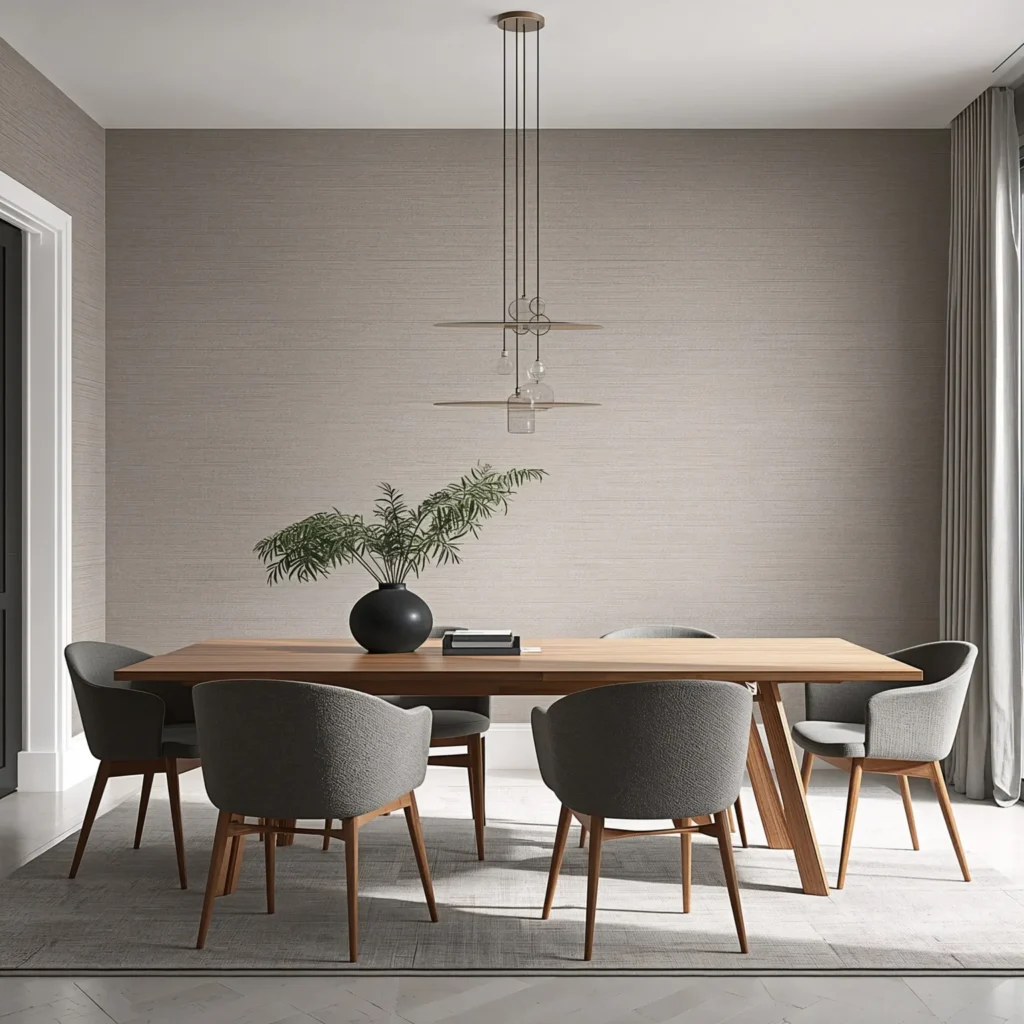
Grasscloth is not technically patterned — its appeal is entirely textural. Made from woven natural fibres (seagrass, jute, sisal, or bamboo), it brings an organic warmth to the dining room that no painted surface can replicate. The weave catches light subtly throughout the day, and the slight variations in tone between panels add to the handcrafted character rather than detracting from it.
The practical caveats are real: grasscloth doesn’t wipe clean easily, seams are visible (embrace them as part of the look), and it requires careful installation. But for those who want a sophisticated, quiet backdrop for dining — something that adds texture rather than pattern — grasscloth is unmatched.
💡 Designer Tip: In dining rooms where spills are a genuine concern, use grasscloth on a single feature wall rather than all four. You get the textural benefit where it matters most — typically the wall behind a buffet or the main focal wall — while keeping the other walls in a wipeable paint or vinyl wallpaper.
4. Bold Geometric Patterns
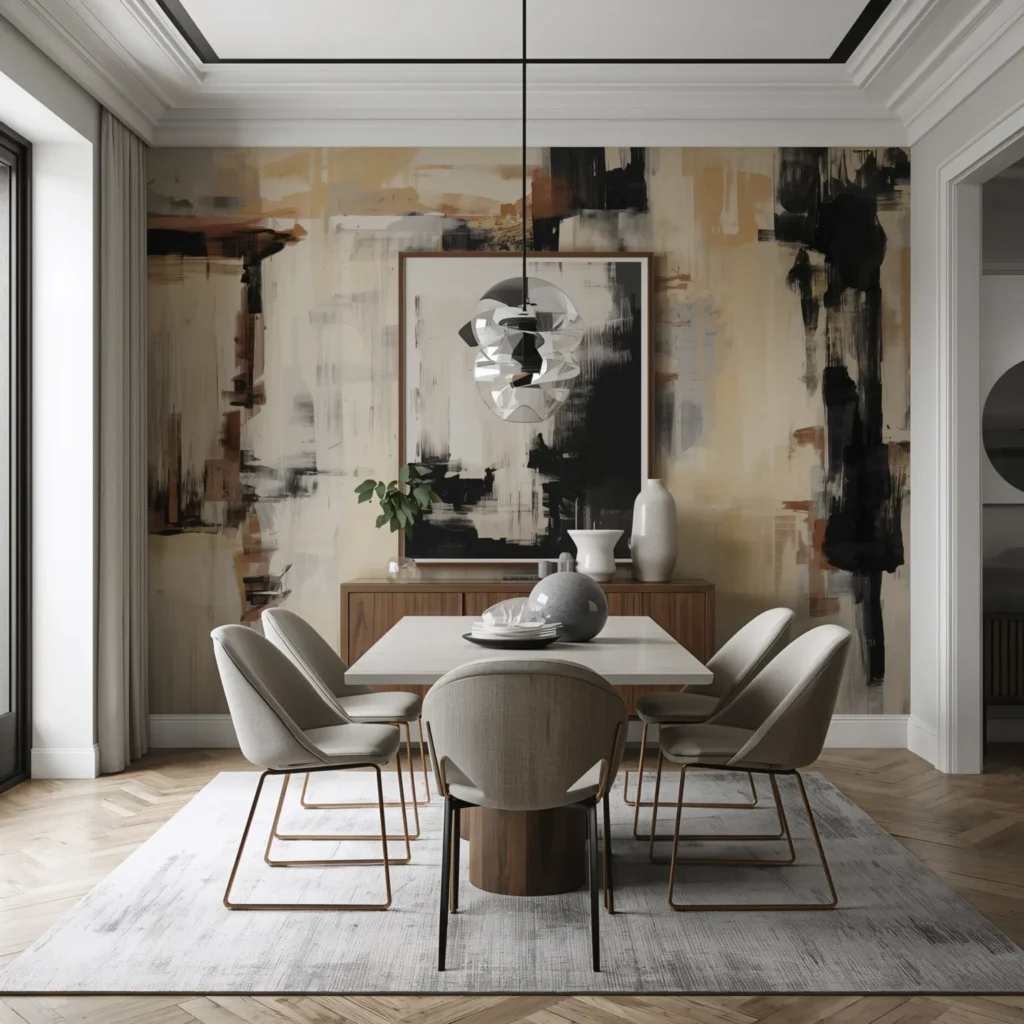
Geometric wallpaper makes a dining room look immediately considered and confident. The key is scale: large geometric patterns in smaller rooms, more intricate designs in larger ones. A well-chosen geometric — hexagons in dusty terracotta, interlocking diamonds in navy and cream, or a modernist grid in black on white — acts as architecture on the wall, giving the room structure and energy.
Tone-on-tone geometrics (where pattern and background are close in colour but different in finish — matte vs. sheen, for instance) are a subtler option that adds interest without drama. These work beautifully in neutral dining rooms where you want sophistication without a statement.
5. Romantic Floral Prints
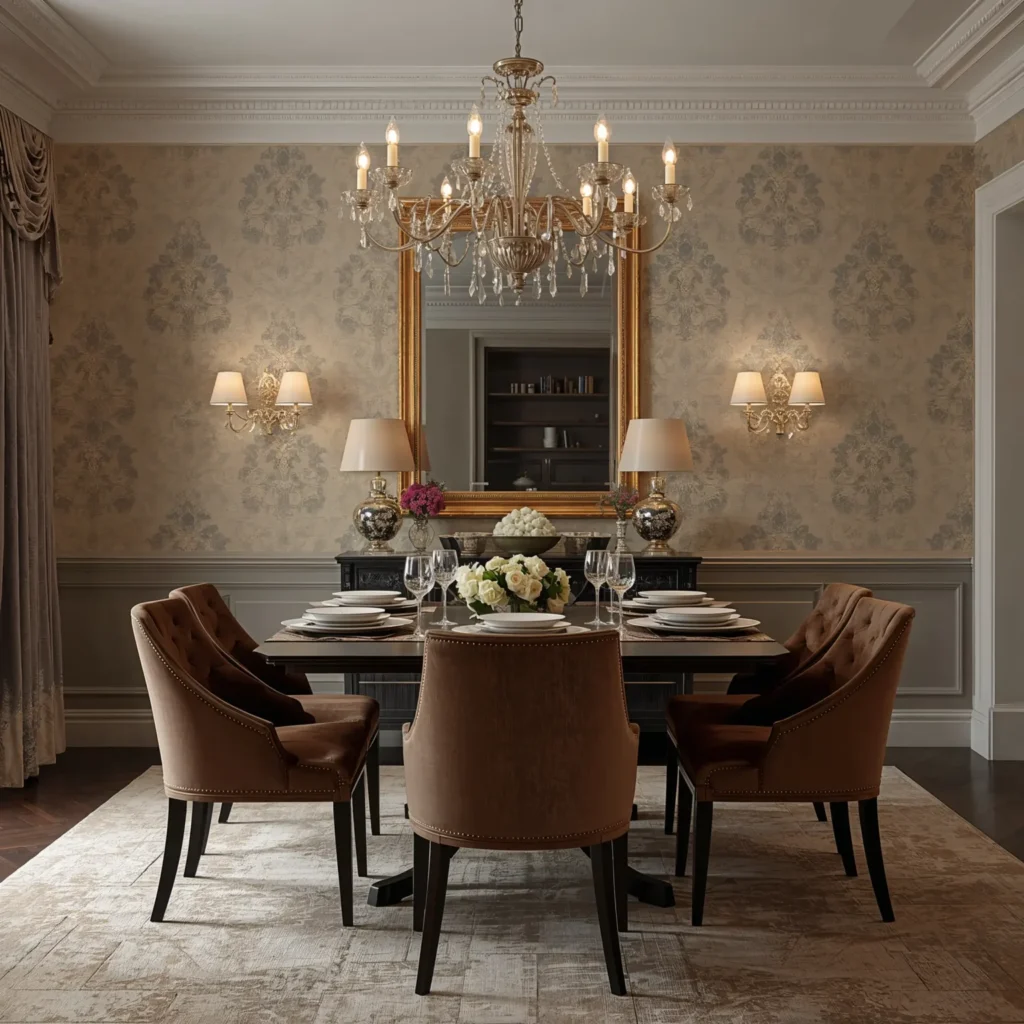
The revival of floral wallpaper in recent years has been decisive — but the florals that work now are nothing like the ones you remember. Today’s florals are oversized, loosely painted, and often placed on dark or unexpected backgrounds. A cream wall with small scattered rosebuds reads as dated; a deep burgundy wall with enormous watercolour peonies reads as dramatic and assured.
Florals work especially well in dining rooms because they bring a sense of occasion without formality. They’re celebratory without being pompous. Pair with simple glassware, candles, and linen napkins for a dinner party look that feels effortlessly put together.
💡 Designer Tip: To keep a bold floral from feeling claustrophobic, use it on one wall only — typically the wall your guests face when seated. This gives them something beautiful to look at while keeping the room from feeling wallpapered-in.
6. Warm Metallic Wallpapers
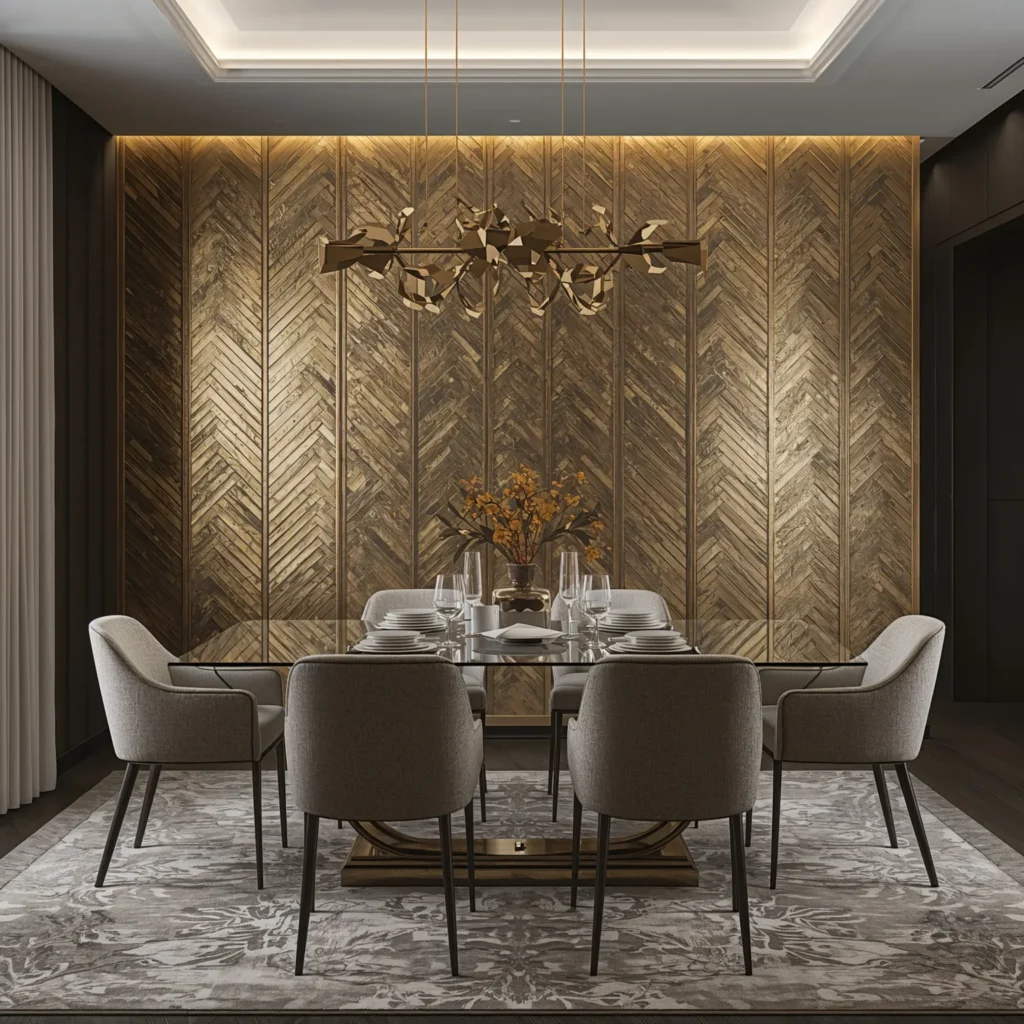
Metallic wallpaper transforms throughout the day in a way that no other finish does. In daylight it reads as textural and sophisticated; by candlelight it becomes genuinely luminous. The warmest finishes — copper, brushed gold, antique brass — are the most flattering for dining rooms, because they complement skin tones and make food look appetising under evening light.
Geometric metallic patterns tend to age better than abstract ones, and using a metallic wallpaper on a single accent wall (rather than all four) keeps the effect special rather than overwhelming. Pair with matte surfaces — linen, stone, unfinished wood — so the metallic remains the clear star.
7. Scenic Mural Wallpaper
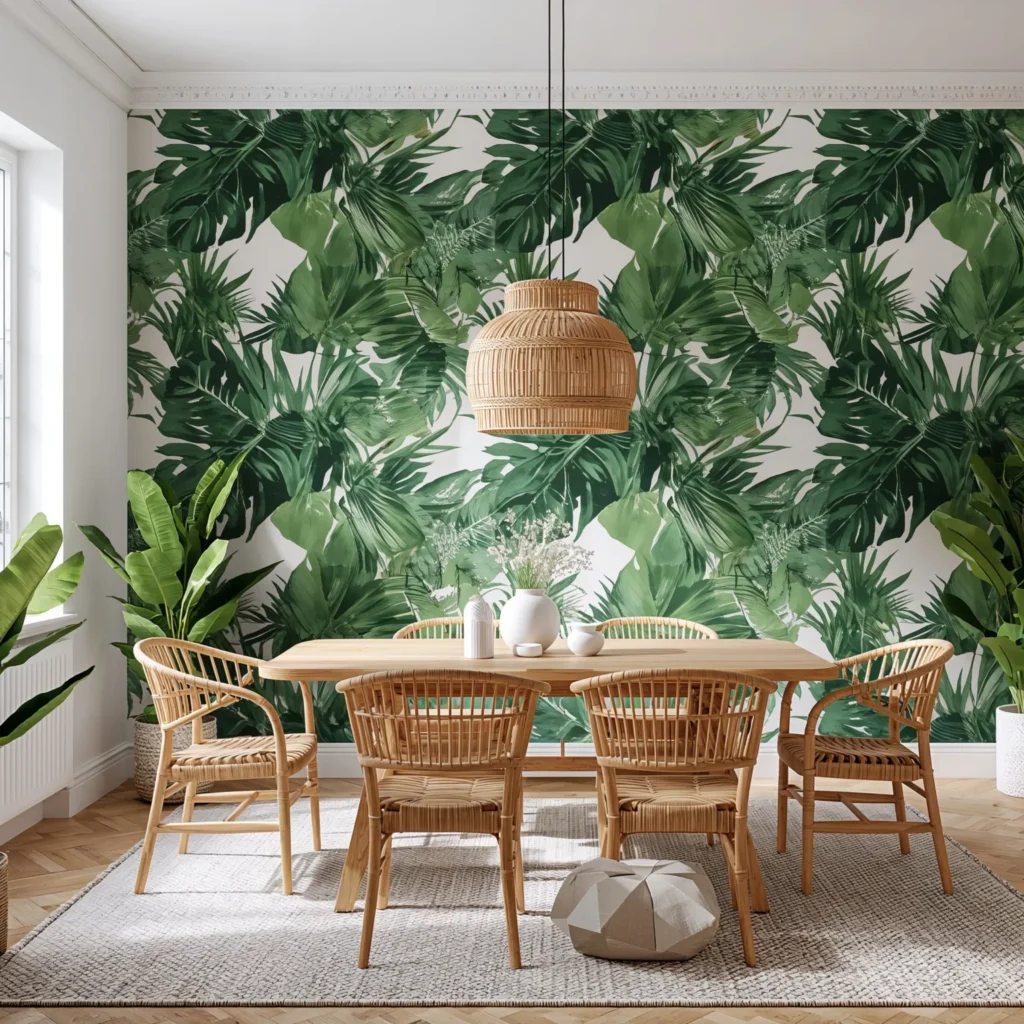
Mural wallpaper — a single image or scene that spans an entire wall — is the most committed of all wallpaper choices, and often the most rewarding. A well-chosen mural transforms the dining room into something genuinely transportive: a misty forest, an architectural cityscape, an abstract landscape, a classical trompe l’oeil. Guests stop talking and start looking. That pause is exactly what a great dining room should create.
Modern mural wallpapers are printed digitally and can be customised to almost any size. They’re typically installed in panels that line up seamlessly — though the process requires careful measuring and, ideally, a professional installer.
💡 Designer Tip: Choose a mural for the wall you see upon entering the room, rather than the wall behind you when seated. This creates the best first impression and means guests are looking at it across the table throughout the meal.
8. Vintage Damask
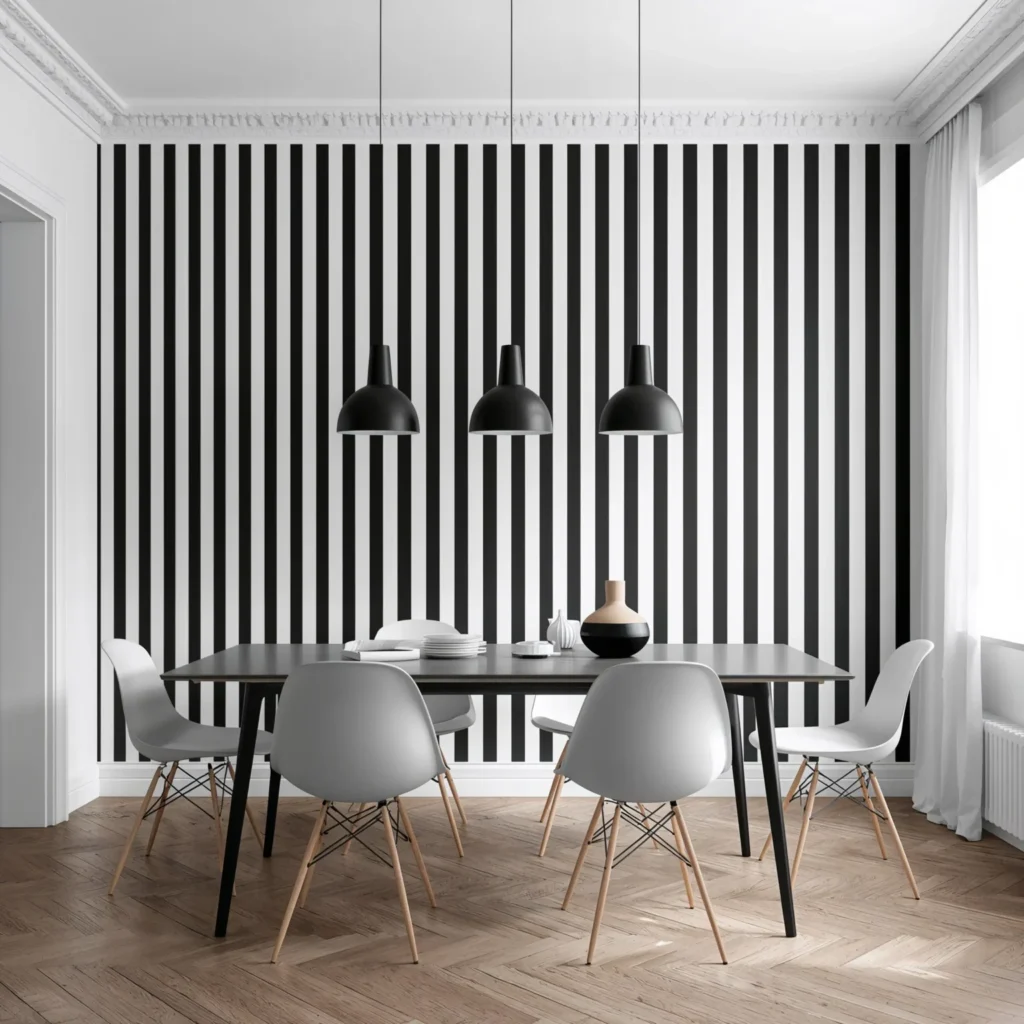
Damask — that ornate, symmetrical woven pattern traditionally found on fabric — translates beautifully to wallpaper, and modern interpretations have shed the stuffiness of older versions. Look for damask in unexpected scales (very large or very small), unusual colourways (charcoal on slate, blush on ivory, forest green on black), or rendered in a slightly faded, antique finish. Any of these moves the pattern from ‘formal dining room’ to ‘considered and stylish’.
Damask pairs well with upholstered dining chairs, natural linen window treatments, and brass or antique hardware. It suits dining rooms that want to feel a little more special, a little more dressed up, without going full Victorian.
9. Hand-Drawn Illustrative Patterns
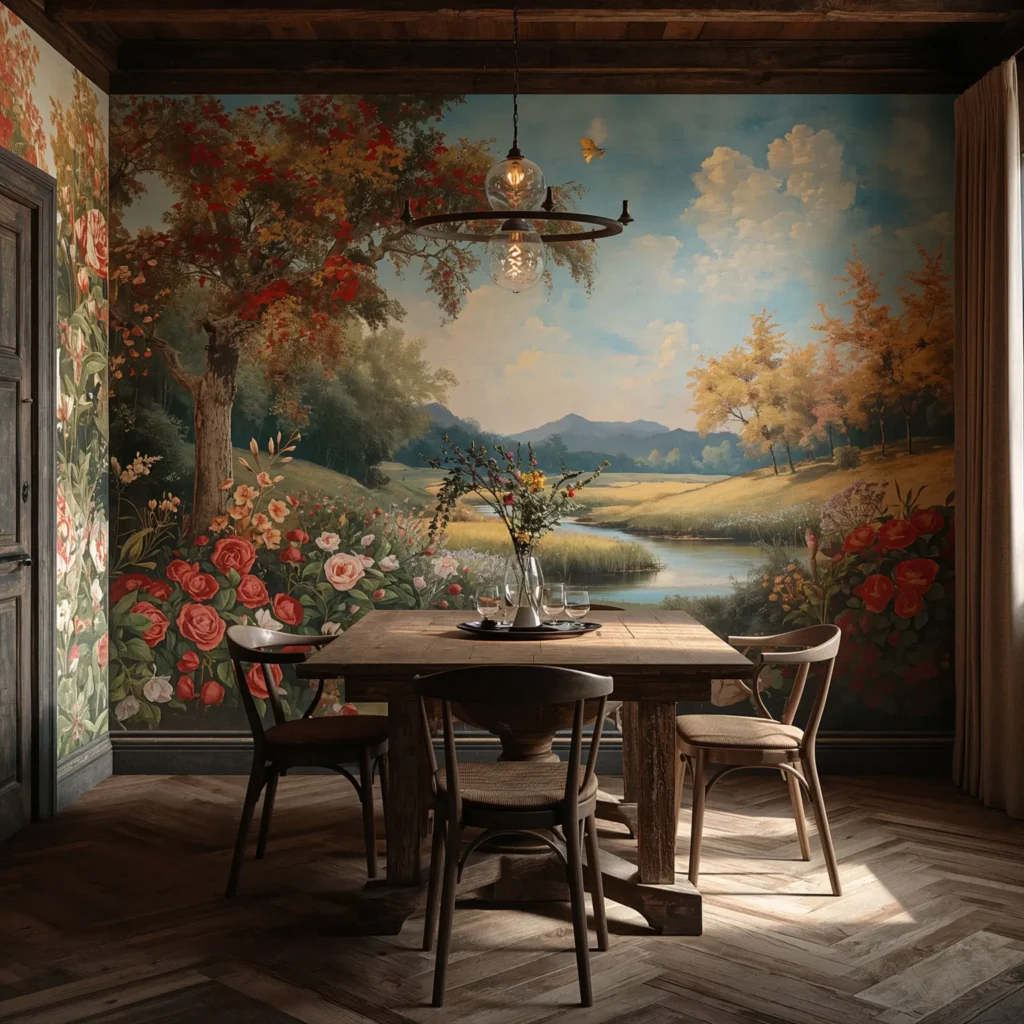
One of the most distinctive wallpaper trends of recent years is the rise of illustrative, hand-drawn patterns: wonky lines, visible brush marks, charming imperfection — all the visual evidence that a person made this rather than a machine. These patterns bring immediate warmth and personality to a dining room. They’re the wallpaper equivalent of choosing artisan ceramics over factory tableware.
Illustrative wallpapers often feature nature motifs (birds, plants, animals) or abstract forms that suggest movement and life. They’re particularly effective in family dining rooms where the goal is warmth and conviviality rather than sleek perfection.
10. Dark Moody Backgrounds with Pattern
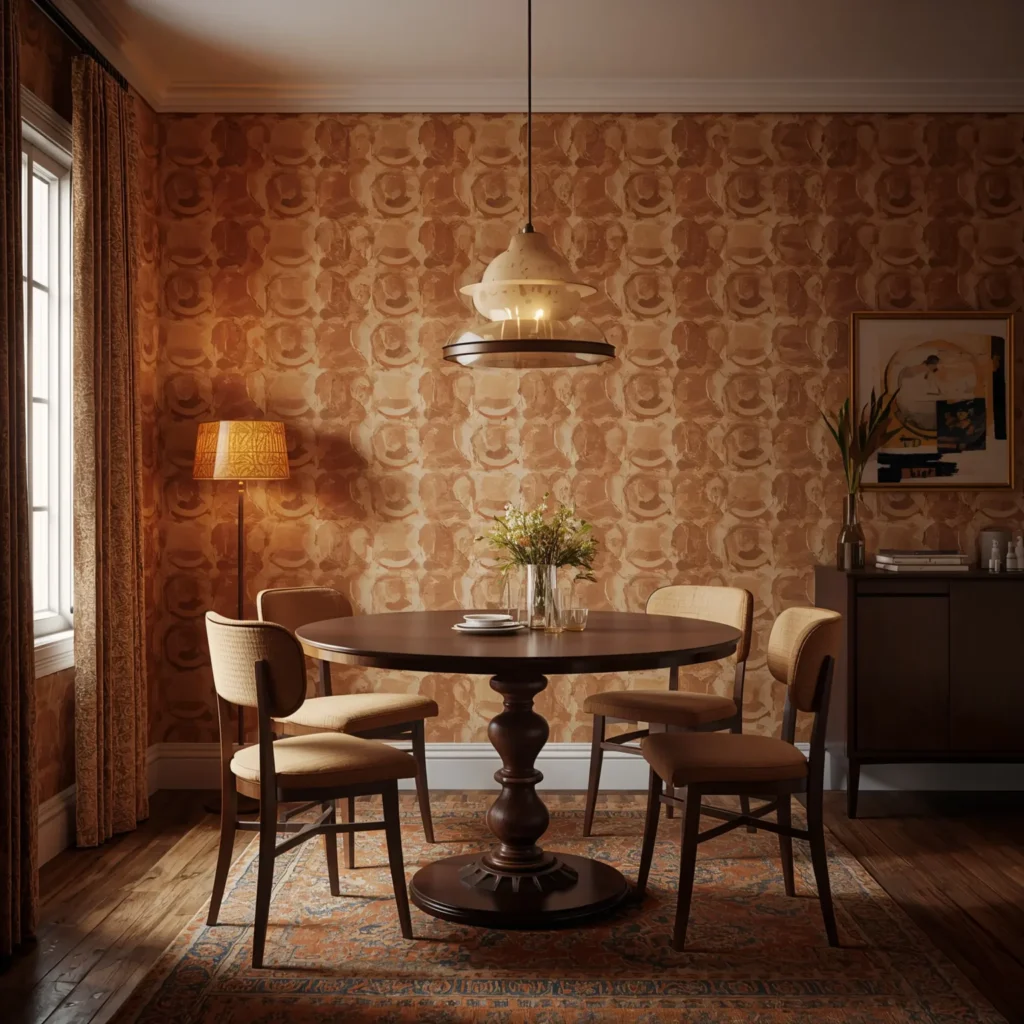
There is a particular kind of magic that happens when a dining room goes dark. Deep charcoal, forest green, inky navy, or near-black backgrounds with overlaid pattern create an atmosphere of intimacy that lighter rooms simply cannot achieve. By candlelight, a dining room with a dark patterned wallpaper feels like the best kind of restaurant — the kind where you lower your voice and linger over the menu.
The practical concern — that dark walls will make the room feel small or claustrophobic — is largely unfounded when the wallpaper has enough pattern and light catches it well. Good lighting design (warm, layered, dimmable) is the essential companion to any dark wallpaper choice.
💡 Designer Tip: If you’re nervous about going fully dark, try it on one wall first — especially the wall at the head of the table or behind a sideboard. If you love it, extend it. If you don’t, you’ve only committed one wall.
11. Scandinavian Minimalist Prints
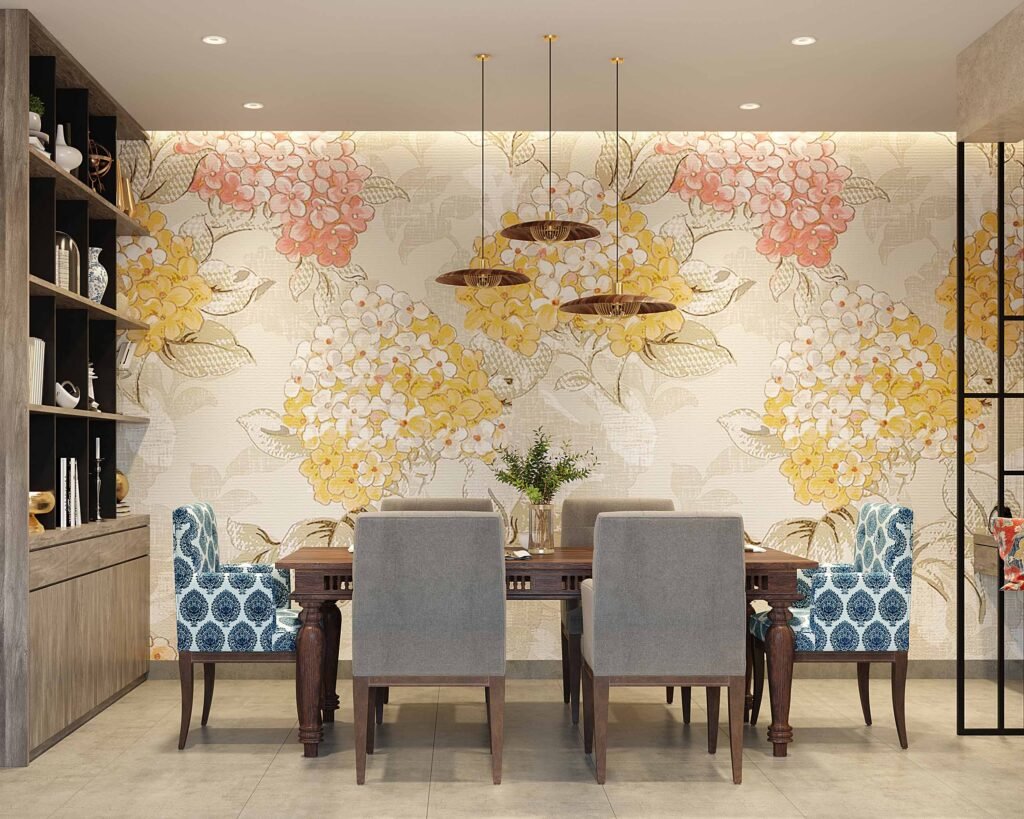
Not every dining room needs drama. Scandinavian-inspired wallpapers — subtle organic forms, restrained colour palettes, the sense of pattern held at a quiet frequency — offer sophistication through understatement. These designs add visual interest without ever shouting. The best versions have a hand-drawn quality, a slight irregularity that keeps them feeling warm rather than clinical.
Scandi wallpapers work especially well in dining rooms that already have good natural light, pale wood furniture, and simple tableware. They bring just enough character to make the room feel designed without overwhelming the calm, unhurried atmosphere these spaces aim for.
12. Retro 1970s Geometric Prints
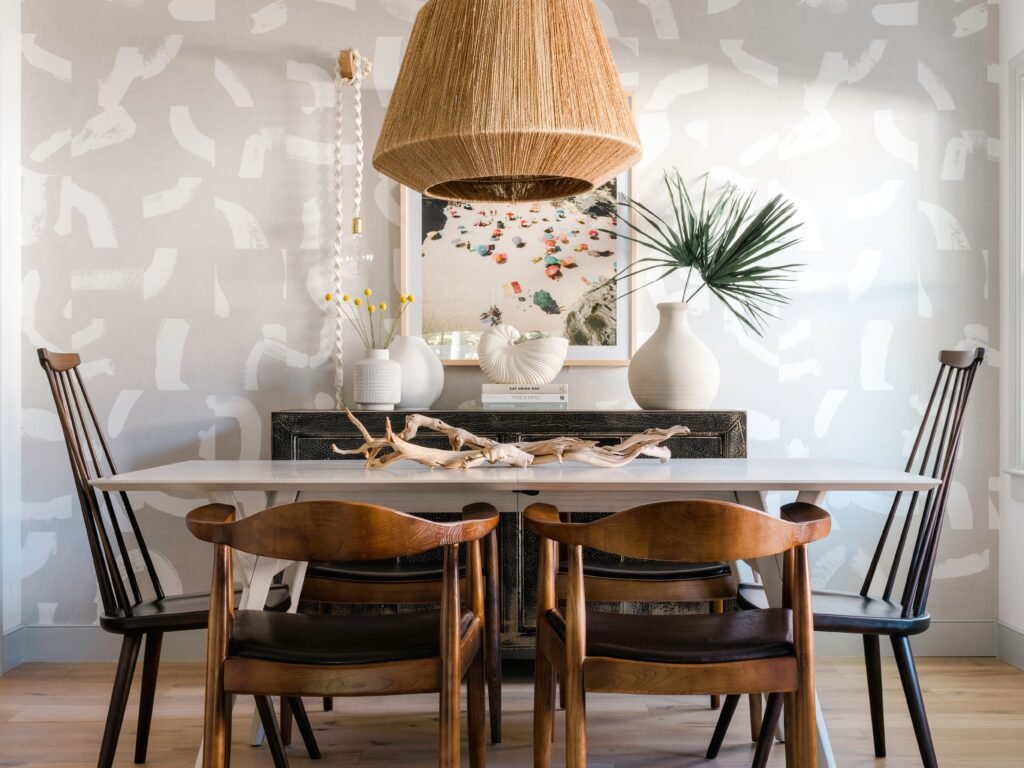
The 1970s design revival has been building for several years and shows no sign of stopping. The best retro wallpapers borrow the colour confidence and pattern boldness of the era while updating the palette — burnt orange becomes terracotta, avocado becomes sage, mustard becomes ochre. The shapes (overlapping circles, bold curves, abstracted florals, optical repeats) translate beautifully to contemporary dining rooms when the colours are dialled back just slightly from the originals.
Pair with teak or walnut furniture, woven textiles, and pendant lights with visible Edison bulbs for a look that nods to the period without becoming a costume. The goal is atmosphere, not theme park.
13. Chinoiserie
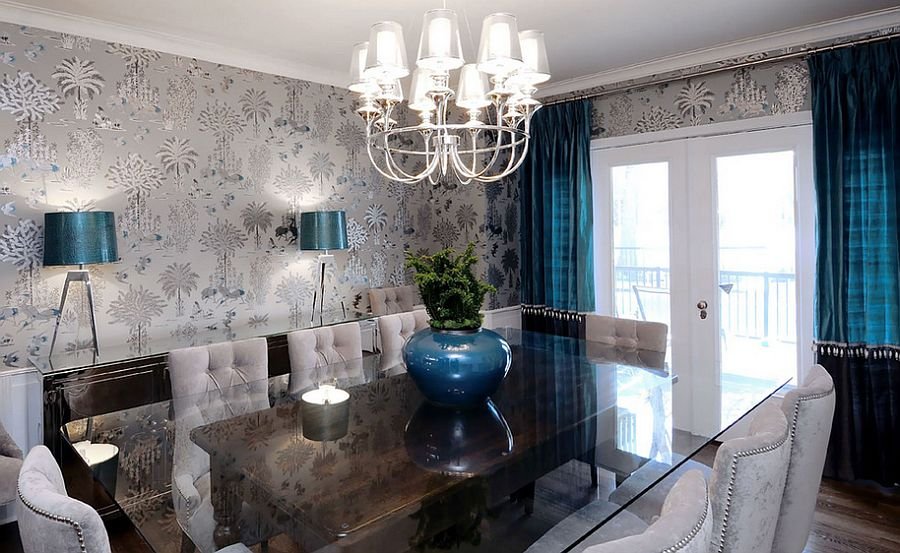
Chinoiserie — the Western interpretation of East Asian aesthetic motifs — has been a presence in high-end interiors for three centuries, and it shows up in dining rooms more than anywhere else. The classic version features pagodas, exotic birds, flowering branches, and dreamlike landscapes on pale blue or green grounds. Contemporary versions have loosened the composition and updated the palette while keeping the essential character: detailed, layered, storied.
Chinoiserie wallpaper works best in dining rooms that can carry a degree of formality — rooms with decent ceiling height, a proper table and chairs rather than an eat-in kitchen setup, and enough space that the wallpaper doesn’t crowd in on you. It’s a commitment, but it’s also one of the great dining room looks.
💡 Designer Tip: Original hand-painted chinoiserie wallpaper is extraordinary but extremely expensive. High-quality printed reproductions from specialist wallpaper houses come close to the effect at a fraction of the cost — and are easier to install and replace.
14. Wood-Grain and Panelling Effect Wallpaper
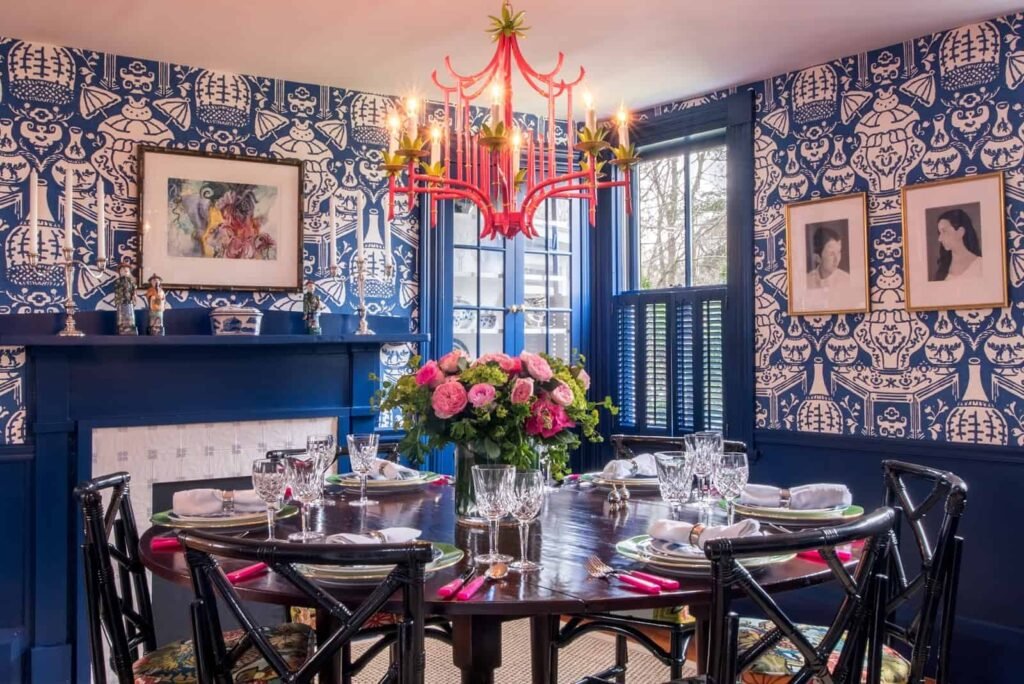
Wallpaper that convincingly replicates wood — whether as planks, panels, parquet, or abstract grain — has become genuinely good. A well-printed wood-effect wallpaper adds the warmth and texture of timber panelling without the cost, weight, or permanence. It’s particularly effective in dining rooms where you want to create a defined feature wall behind a sideboard or along the length of a banquette.
The best results come from using wood-effect wallpaper alongside real wood furniture and genuine textile softness — so the artificial element doesn’t feel lonely. When it’s surrounded by the real thing, the eye accepts it as part of a coherent whole.
15. Marble and Stone Effect Wallpaper
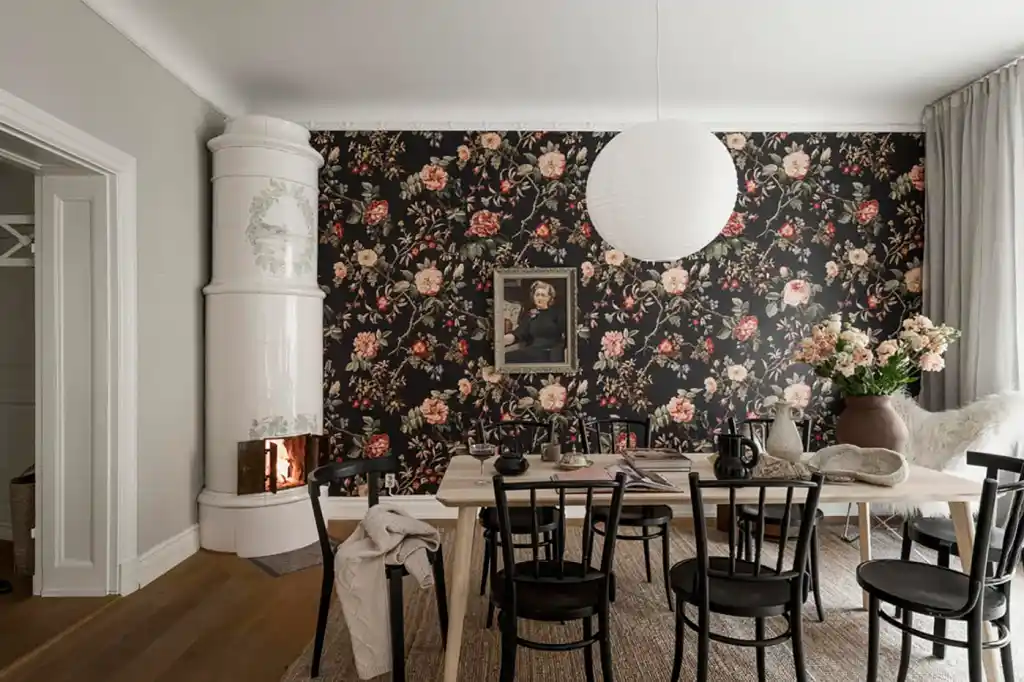
The appetite for marble in interiors shows no sign of diminishing — and wallpaper is a genuinely effective way to achieve the look. A well-chosen marble-effect wallpaper on one dining room wall creates the impression of an architectural material without the enormous cost and permanence of the real thing. Book-matched marble prints (where the pattern mirrors itself symmetrically, as real marble slabs are often installed) look the most convincing.
Beyond classic white Carrara, marble wallpapers now come in Nero Marquina black, green cipollino, pink Portuguese rose — any of these can anchor a dining room in a way that feels genuinely luxurious rather than merely aspirational.
How to Choose the Right Wallpaper for Your Dining Room
Twenty ideas is both inspiring and potentially overwhelming. Here’s a framework for narrowing it down:
Consider How the Room Is Used
A formal dining room used primarily for dinner parties can carry bolder, more dramatic choices — dark backgrounds, complex patterns, mural wallpapers — because you only live with it in the context of occasion. A daily family eating space benefits from something warmer, more relaxed, and easier to maintain.
Think About the Room’s Proportions
Pattern scale should respond to room scale. Small rooms benefit from large-scale patterns (counterintuitive but true — large patterns read as intentional, while small patterns in small spaces look busy). Tall rooms can handle horizontal elements; low rooms benefit from vertical emphasis.
Decide: All Four Walls or One Feature Wall
There’s no universal right answer here. Wallpapering all four walls creates an immersive, cocoon-like atmosphere that works brilliantly for intimate dining rooms. A single feature wall — usually the one behind a sideboard or at the head of the table — is the easier commitment and allows the pattern to anchor the room without overwhelming it.
Consider Your Existing Furniture and Flooring
The most common mistake is choosing a wallpaper in isolation. Your wallpaper needs to live alongside your table, chairs, flooring, window treatments, and lighting. If your furniture is dark wood and leather, a pale botanical wallpaper will feel elegant; a dark tropical wallpaper may feel oppressive. If your chairs are upholstered in pattern, your wallpaper probably needs to be quiet.
💡 Designer Tip: Take physical samples of your largest furniture fabrics and flooring to the wallpaper showroom, or request samples from online retailers. Photograph them together in your actual dining room light before making a final decision.
Wallpaper Practicalities: What You Need to Know Before You Buy
Types of Wallpaper
1. Vinyl-coated: The most practical choice for dining rooms. Washable, durable, and moisture-resistant. Slightly less premium in appearance than paper alternatives.
2. Pure paper: More delicate and not washable, but often more beautiful in finish and colour depth. Better suited to formal dining rooms with lower risk of splashes.
3. Non-woven: A synthetic blend that is dimensionally stable, easy to hang, and relatively forgiving for amateur installers. Widely available and practical.
4. Natural fibre (grasscloth, sisal, jute): Textural and luxurious, but requires professional installation and careful maintenance. Not suitable where spills are likely.
5. Peel-and-stick: Removable, renter-friendly, and easy to install, but less convincing up close. A practical option for temporary transformations or rental properties.
How Much Do You Need
Measure your wall height and the total width of all walls you plan to paper. Always add 10-15% extra for pattern matching and trimming. Complex patterns with large repeats waste more paper than simple or non-directional designs — check the pattern repeat stated on the roll and factor this into your calculation. When in doubt, buy an extra roll; dye lots can vary between batches.
Professional Installation vs. DIY
Non-woven and peel-and-stick wallpapers are reasonable DIY projects for careful, patient people with some experience. Natural fibre wallpapers, mural wallpapers, and anything in a challenging room (angled walls, many doors and windows, very high ceilings) are almost always worth professional installation. A bad installation of a beautiful wallpaper is a painful outcome.
Frequently Asked Questions
Is wallpaper a good idea in a dining room?
Absolutely, and often a better idea than paint. Wallpaper adds depth, texture, and personality that flat paint simply cannot achieve. Modern wallpapers are more durable than their predecessors, and many are fully washable — making them practical for rooms where food and drink are in use.
Should I wallpaper all four walls or just one?
Both approaches work well, but they create different effects. All four walls create an immersive, designed atmosphere — ideal for intimate or formal dining rooms. A single feature wall is a lower commitment and easier starting point, and it’s particularly effective behind a sideboard, buffet, or at the head of the table.
What wallpaper is best for a small dining room?
Counter-intuitively, large-scale patterns often work better in small dining rooms than small-scale ones, because they read as confident and intentional rather than busy. Dark backgrounds with pattern can also make a small room feel cosy and intimate rather than cramped. Ombre wallpapers with a lighter top and darker bottom can create the illusion of greater ceiling height.
How do I remove wallpaper when I want to change it?
Non-woven wallpapers are typically dry-strippable — they peel away cleanly in sheets. Older paper-hung wallpapers require soaking and scraping, which is more labour-intensive. Peel-and-stick wallpapers come away without leaving residue. If ease of future removal matters to you, choose non-woven or peel-and-stick from the start.
How do I make a wallpapered dining room feel larger?
Use vertical stripes, ombre graduating to light at the top, or a single feature wall rather than all four. Keep furniture legs visible (avoid skirted chairs that block sightlines to the floor). Use mirrors on adjacent walls to reflect both light and the wallpaper pattern. And ensure your lighting is warm and layered rather than a single overhead source.
Final Thoughts
Choosing a dining room wallpaper is one of those decisions that sounds high-stakes but is, in practice, eminently reversible. Wallpaper comes off. You can change it. The bigger risk is staying too safe and ending up with a room that never quite does what you hoped it would
The dining room deserves your ambition. It’s the room where people gather for the most significant meals of their lives — birthdays, anniversaries, holidays, the kinds of Sunday dinners that become memories. A beautiful wallpaper doesn’t just decorate the space; it becomes part of the atmosphere of those occasions.
Start with samples. Live with them in real light. Trust your instincts over trend forecasts. And when you find the wallpaper that stops you in your tracks — the one where you think ‘that’s exactly it, I can’t explain why but that’s the one’ — go with it. Those instincts are usually right.
✦ ✦ ✦
1 thought on “15 Gorgeous Dining Room Wallpaper Ideas and Stylish Inspiration”