
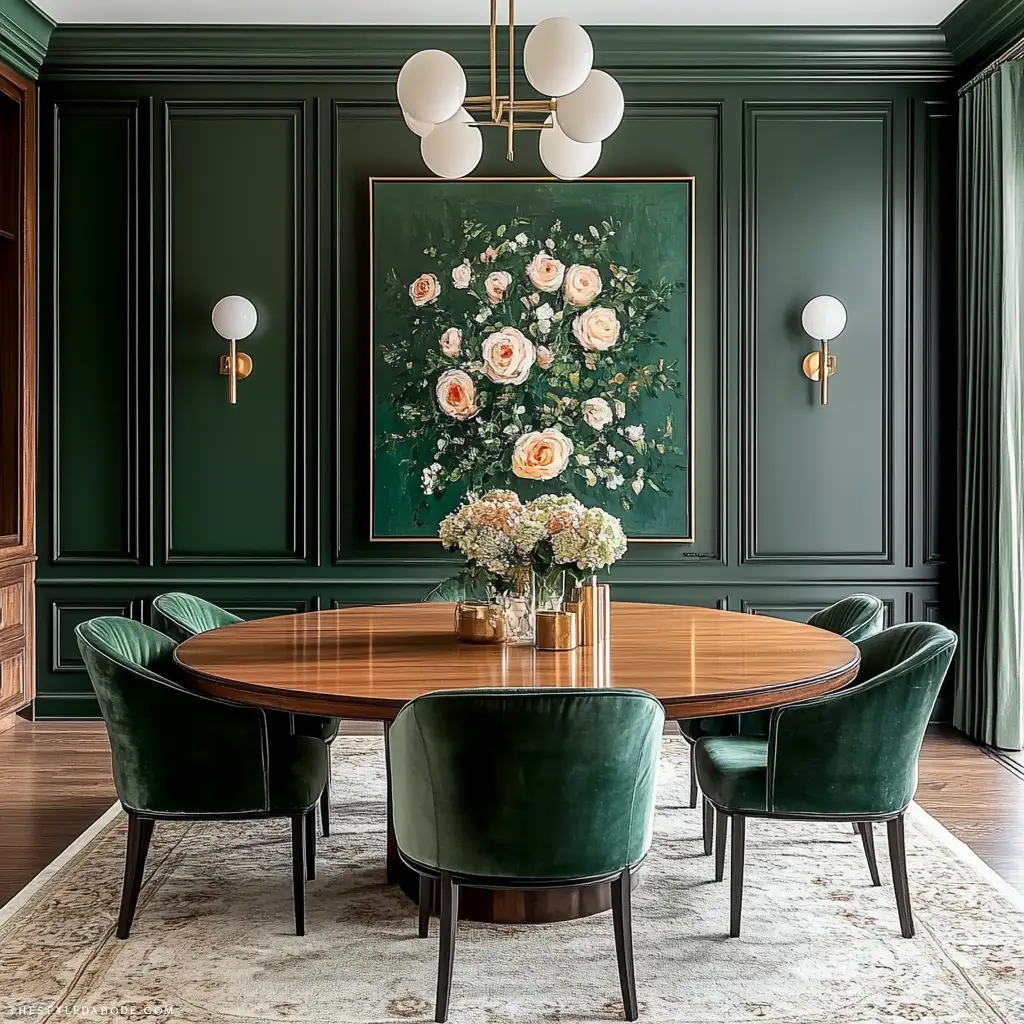
Green is having its biggest moment in interior design right now, and nowhere does it look more at home than in a dining room. Whether you’re drawn to the calm of sage, the drama of forest green, or the glamour of deep emerald, there is a shade of green that will make your dining space feel like a completely different room — and a much better one.
Think about it: green is the colour of nature, of growth, of things that nourish us. There is a reason so many of our most beloved natural spaces are dominated by green. Bringing that energy into the room where you gather to eat, talk, celebrate, and connect just makes intuitive sense.
But knowing you want a green dining room and knowing how to pull it off are two very different things. Too much green in the wrong shade can feel oppressive. Too little and it barely registers. The right balance, though, creates a room that feels alive, welcoming, and utterly distinctive.
1. Sage Green Accent Wall: The Gateway Green
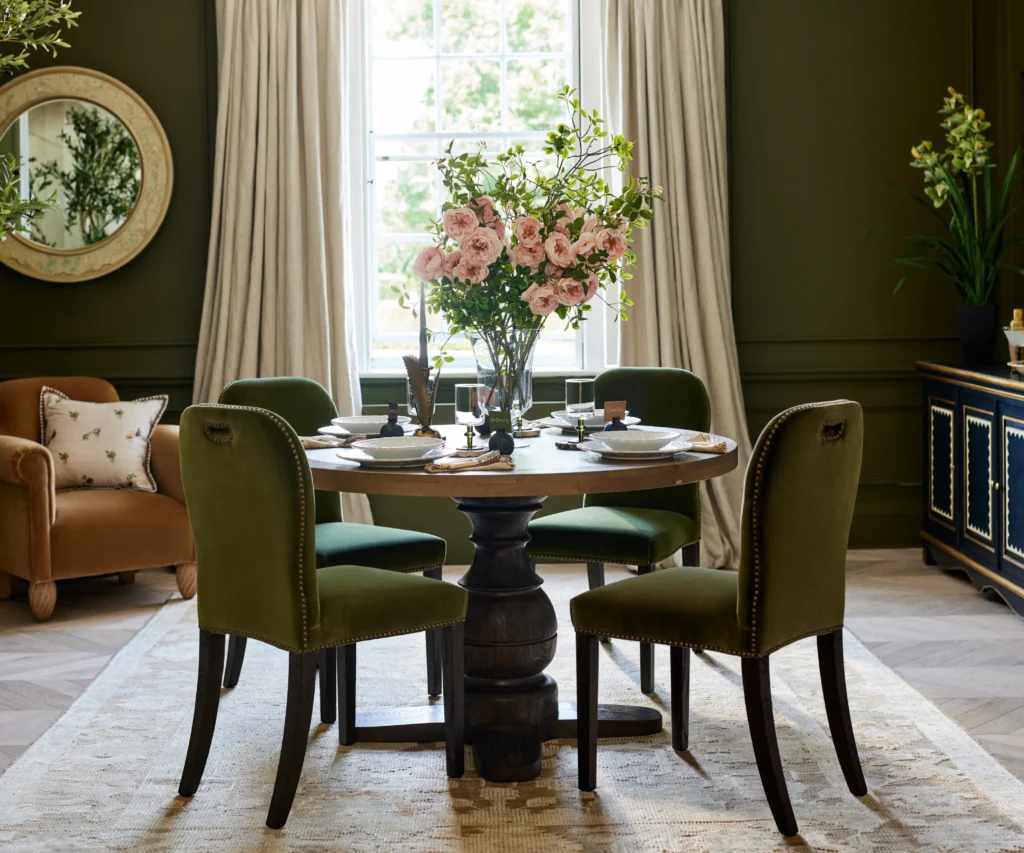
If you are new to green in interiors, sage green is where you start. It is the gentlest, most universally flattering member of the green family — warm enough to feel cosy, muted enough to work alongside almost any existing furniture or flooring you already own.
A single sage green accent wall (typically the wall behind a sideboard or the one most visible from the entrance) creates immediate impact without committing the entire room. It photographs beautifully in every light condition, from bright midday sunshine to flickering candlelight at a dinner party, which is why it shows up constantly on interior design feeds and inspiration boards.
The colour works particularly well when paired with warm white or cream on the remaining walls, natural wood furniture, linen or cotton textiles, and metallic accents in brass or aged gold. That combination has become something of a modern classic for good reason — it is genuinely hard to get wrong.
Quick Design Tips for a Sage Green Accent Wall:
- Choose a wall with natural light — sage green glows warmly in sunlight and shifts beautifully in the evening.
- Keep the other three walls in a warm white or off-white so the sage reads as intentional, not accidental.
- Bring in natural textures: a jute rug, linen curtains, or a rattan pendant to complement the earthy quality of sage.
- Brass or unlacquered gold hardware on furniture and light fixtures adds warmth that lifts the whole palette.
- Do not be afraid to hang art directly on the sage wall — deeper greens and warm terracotta tones look spectacular against it.
2. Deep Forest Green Walls: Go All In
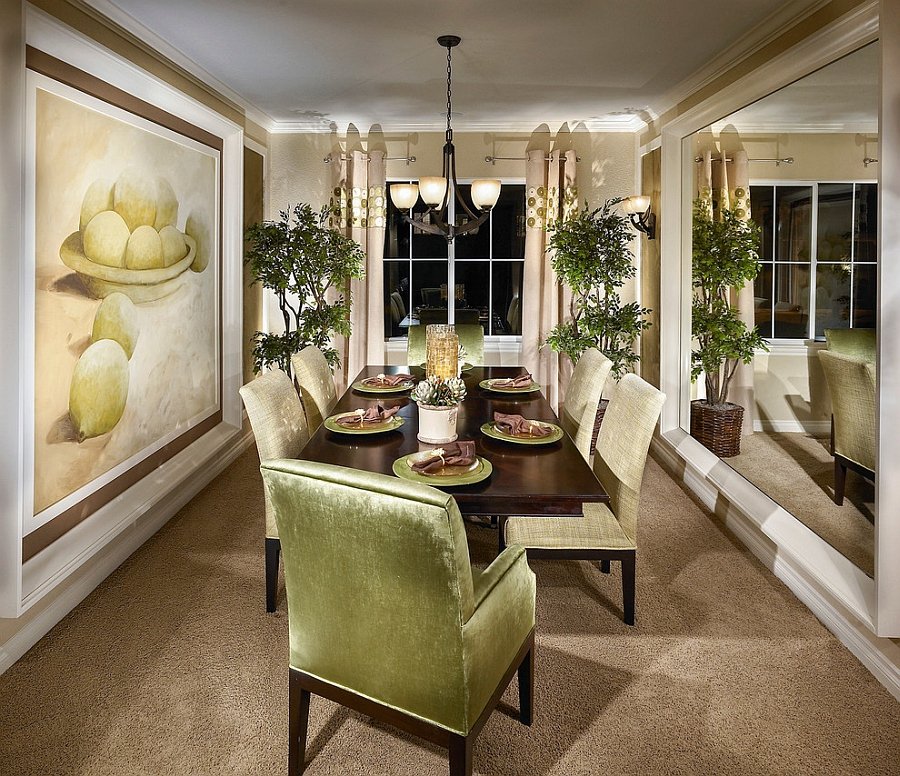
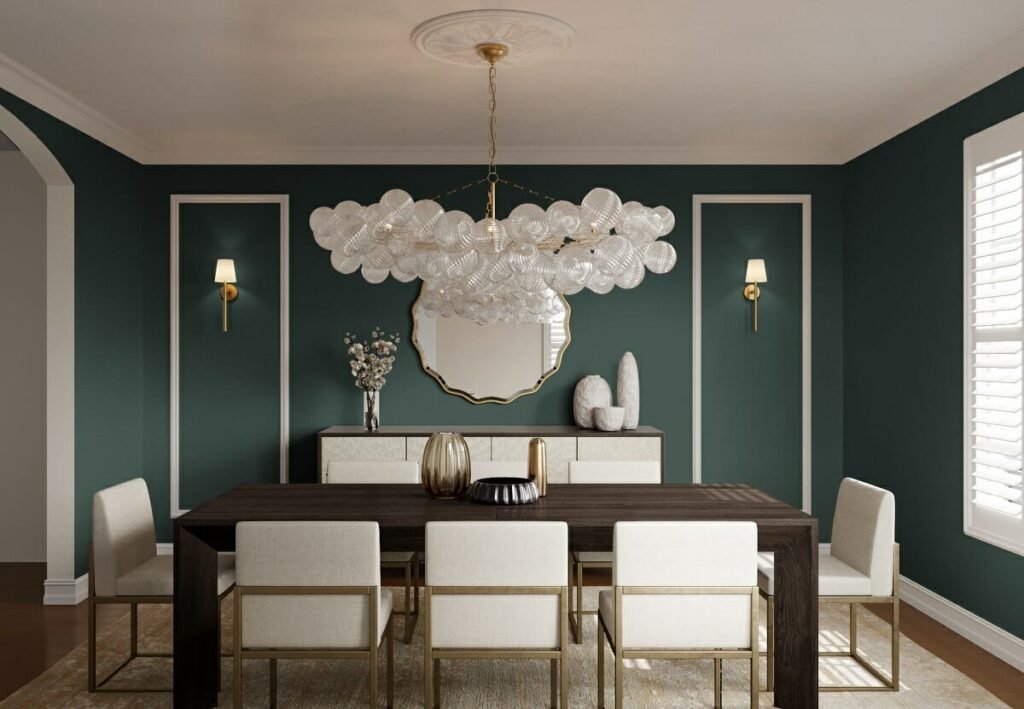
For those with a bit more design confidence, deep forest green walls are one of the most dramatic and rewarding choices you can make in a dining room. We are talking about that rich, enveloping shade that makes you feel as though you are dining in the middle of a dense, beautiful wood — a sensation that is far more pleasant in practice than it might sound on paper.
The reason dark green walls work so well in dining rooms specifically is that the dining room is a space meant for heightened experiences: special meals, important conversations, memorable gatherings. A dramatic colour palette enhances that sense of occasion in a way that beige or light grey simply cannot.
Dark walls require careful lighting to avoid feeling oppressive. The non-negotiables are a statement chandelier or pendant, wall sconces for layered warmth, and plenty of candles on the table. Mirrors are also invaluable: they bounce light around the room and create a sense of depth that keeps dark walls from closing in.
Pro Insight: When painting walls in a deep forest green, consider extending the colour onto the ceiling as well. A fully enveloped room feels immersive and intentional rather than half-committed. Use the same colour with a slightly different sheen — matte on walls, eggshell on ceiling — for subtle depth.
3. Emerald Green Velvet Dining Chairs: Maximum Impact, Minimum Commitment
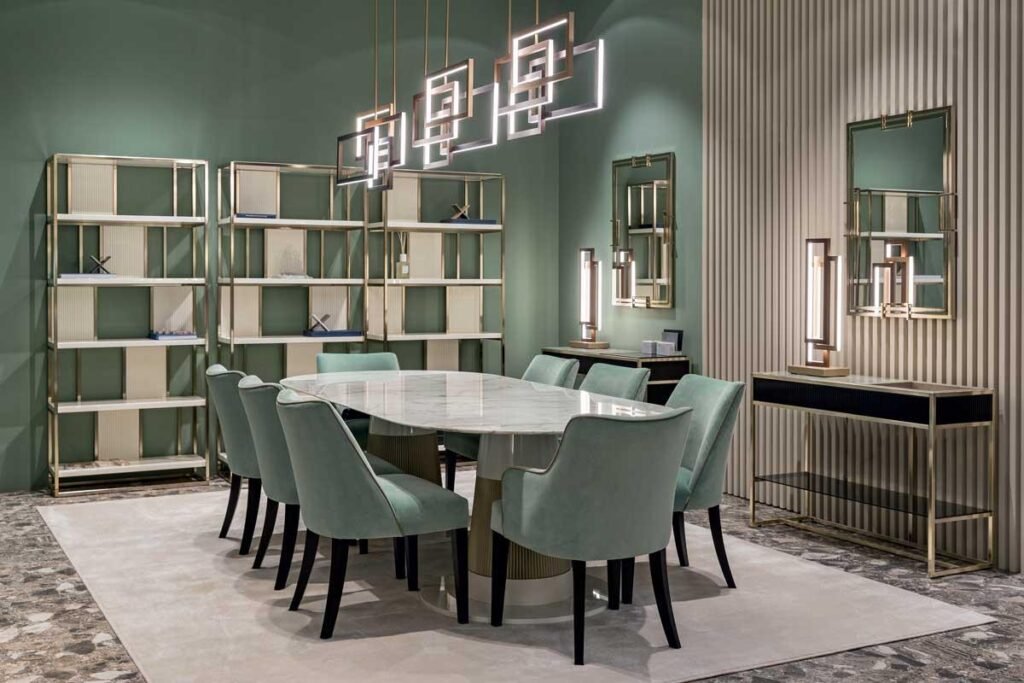
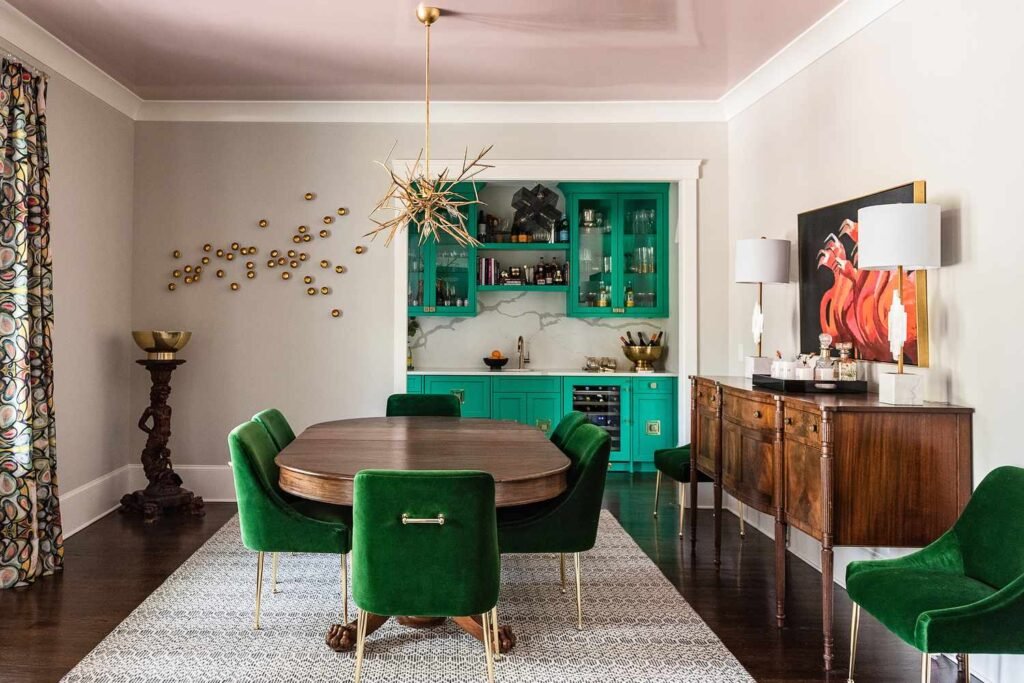
If you love the idea of green but are not ready to paint a single wall, emerald green velvet dining chairs are your answer. They are genuinely the single highest-impact, lowest-commitment green upgrade you can make to a dining room.
Emerald velvet chairs work against almost any backdrop — white walls, grey walls, wood panelling, even other colours — because emerald is such a self-assured shade that it does not need the room to match. It brings its own confidence, and that energy elevates everything around it.
From a practical standpoint, velvet is more durable than its appearance suggests, particularly performance velvets designed for upholstery. They resist pilling, clean relatively easily, and maintain their lustre for years with basic care. The rich, light-catching quality of velvet also means your dining chairs look spectacular in photographs — a consideration that matters increasingly to modern homeowners.
How to Style Emerald Velvet Dining Chairs:
- Pair with a natural wood or white lacquered dining table for maximum contrast.
- Choose chair frames in black, antique brass, or walnut for different aesthetic directions.
- Mix in one or two accent chairs in a coordinating colour (deep teal or forest green) for an eclectic, collected look.
- Keep your table setting relatively simple — let the chairs do the talking.
- Add copper or gold candle holders on the table to warm up the cool richness of emerald.
4. Sage Green Lower Cabinets or Sideboard: Grounded Elegance
Not everyone has a dedicated dining room with four paintable walls. If your dining space opens into a kitchen or living area, painting cabinetry or a freestanding sideboard in sage green is a beautifully contained way to bring the colour into your dining zone.
Sage green lower kitchen cabinets, paired with white or cream uppers, have become one of the most beloved kitchen design trends of recent years. When that sage green bleeds into an adjacent dining area through a matching sideboard or drinks cabinet, the result is a cohesive, considered feel that makes an open-plan space read as intentionally designed.
Chalk paint and specialist furniture paints have made it easier than ever to update existing pieces without replacing them. A dated sideboard painted in a beautifully mixed sage green and fitted with new brass handles can look like a bespoke piece of designer furniture. It is one of the best-value transformations in interior design.
5. Green Botanical Wallpaper: Nature Comes Indoors
Botanical wallpaper — large leaf patterns, tropical prints, painterly garden scenes — is one of the defining interior design trends of the past five years, and it shows absolutely no sign of slowing down. In a dining room, a feature wall of bold botanical wallpaper transforms the space into something that feels genuinely alive.
The best botanical wallpapers for dining rooms are those with significant white or cream backgrounds, allowing the green botanical elements to breathe and preventing the wall from feeling visually overwhelming. Designs that include other colours alongside the green — soft corals, warm yellows, deep blues — also integrate more easily with varied furniture styles.
If wallpapering all four walls feels too bold, the wall behind a sideboard or the wall visible from the dining table is the natural feature wall. Frame it properly by extending the wallpaper right up to the ceiling and down to the skirting, and it will look deliberately architectural rather than tentative.
Style Tip: Coordinate your botanical wallpaper with real plants on the dining table or sideboard. A large statement plant — a fig tree, a monstera, an olive tree — bridges the gap between the wallpaper pattern and the real world beautifully.
6. Olive Green Dining Room: Warm, Earthy, Timeless
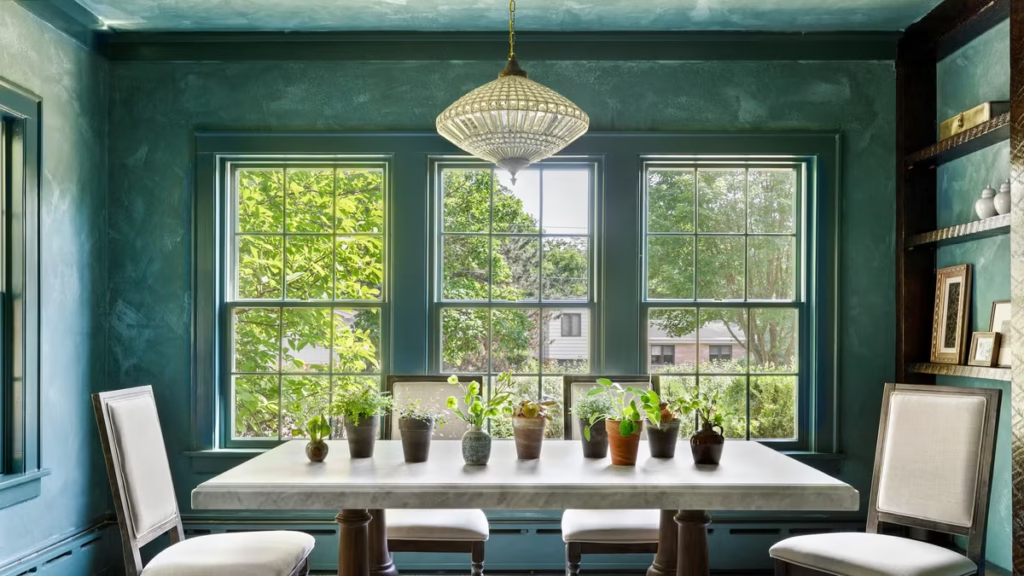
Olive green occupies a unique and underappreciated corner of the green spectrum. It is warmer and more muted than forest green, more complex than sage, and carries a distinctly Mediterranean, sun-dried quality that makes a dining room feel effortlessly warm and inviting.
Olive green works particularly well in dining rooms with natural wood flooring, terracotta accessories, woven textiles, and ceramic tableware. It has an inherently rustic, earthy quality that pairs beautifully with the kinds of textures and materials that suggest honest craftsmanship and a love of natural things.
In terms of undertone, olive greens lean yellow-brown rather than blue, which means they behave very differently from cooler greens. They warm up north-facing rooms, complement timber tones that bluer greens can clash with, and create a deeply cosy atmosphere in the evening that is perfect for long, relaxed dinners.
Colours That Pair Beautifully with Olive Green:
- Warm cream and off-white for a clean, sunlit contrast.
- Terracotta and burnt orange for a rich Mediterranean palette.
- Natural tan leather for understated sophistication.
- Aged brass and antique bronze for metallic warmth.
- Deep burgundy wine tones for an autumnal, harvest-table feeling.
7. Green and White: A Fresh, Classic Combination
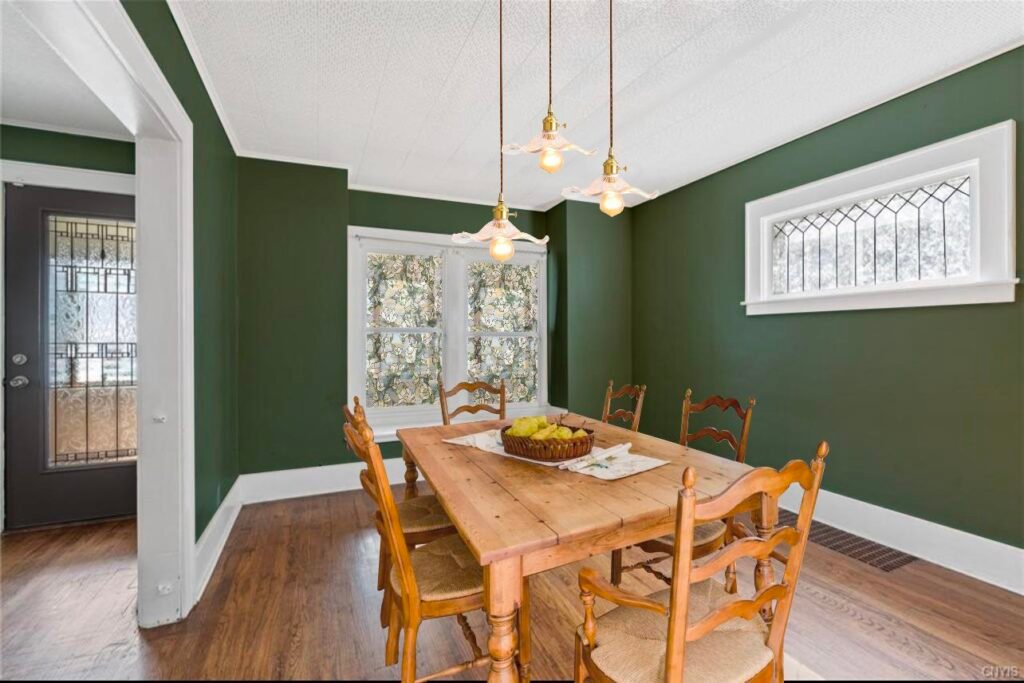
Green and white is one of the most enduringly successful colour combinations in interior design, and a dining room is one of its best natural habitats. The freshness and clarity of white gives green room to breathe, while the green adds the warmth, personality, and visual interest that an all-white room tends to lack.
There are many ways to approach this combination. Mint green walls with white trim and furniture creates a light, Scandinavian freshness. Deep hunter green walls with brilliant white architectural details — cornicing, skirting, door frames — creates a crisp, high-contrast elegance. Sage green lower panelling with white painted upper walls creates a two-tone effect that is currently extremely popular in dining room design.
White table linens are your best friend in a green dining room regardless of which shade you choose. They provide a clean visual reset in the centre of the room and make any food placed on them look absolutely appetising.
8. Dark Green Ceiling: The Bold Move That Always Pays Off
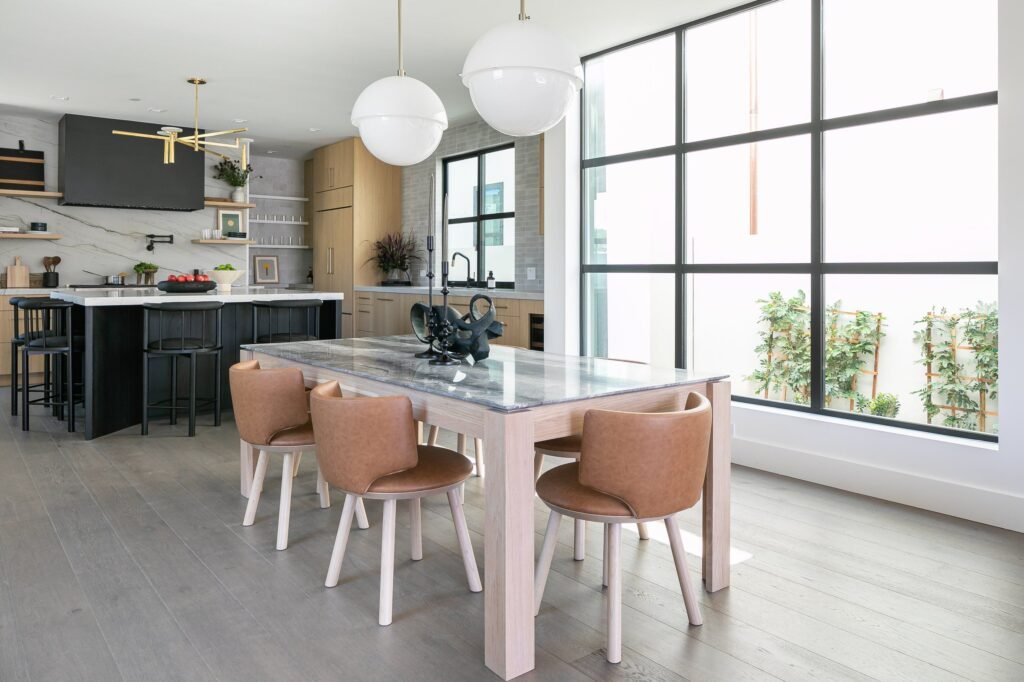
Painting a ceiling in a deep, rich green is one of those design decisions that sounds frightening in theory and looks absolutely stunning in practice. The ceiling is often referred to as the “fifth wall” by designers, and in a dining room — where the chandelier already draws the eye upward — it is particularly powerful territory for colour.
A dark green ceiling creates an intimate, canopy-like effect that makes seated diners feel enveloped and cocooned in the most flattering way. Combined with a beautiful chandelier, it creates a sense of drama that elevates even the most ordinary weeknight dinner into something that feels slightly special.
If painting the full ceiling feels too committed as a first step, try a coffered ceiling where only the recessed panels are painted in deep green, with the beams or frames left in white or cream. The effect is almost as dramatic and considerably less irreversible if you change your mind.
Design Insight: In a room with a dark green ceiling, keep your walls lighter — warm white, pale cream, or a very light sage — so the ceiling reads as an intentional crown rather than a space that has simply lost the light.
9. Green Velvet Curtains: Drama by the Yard
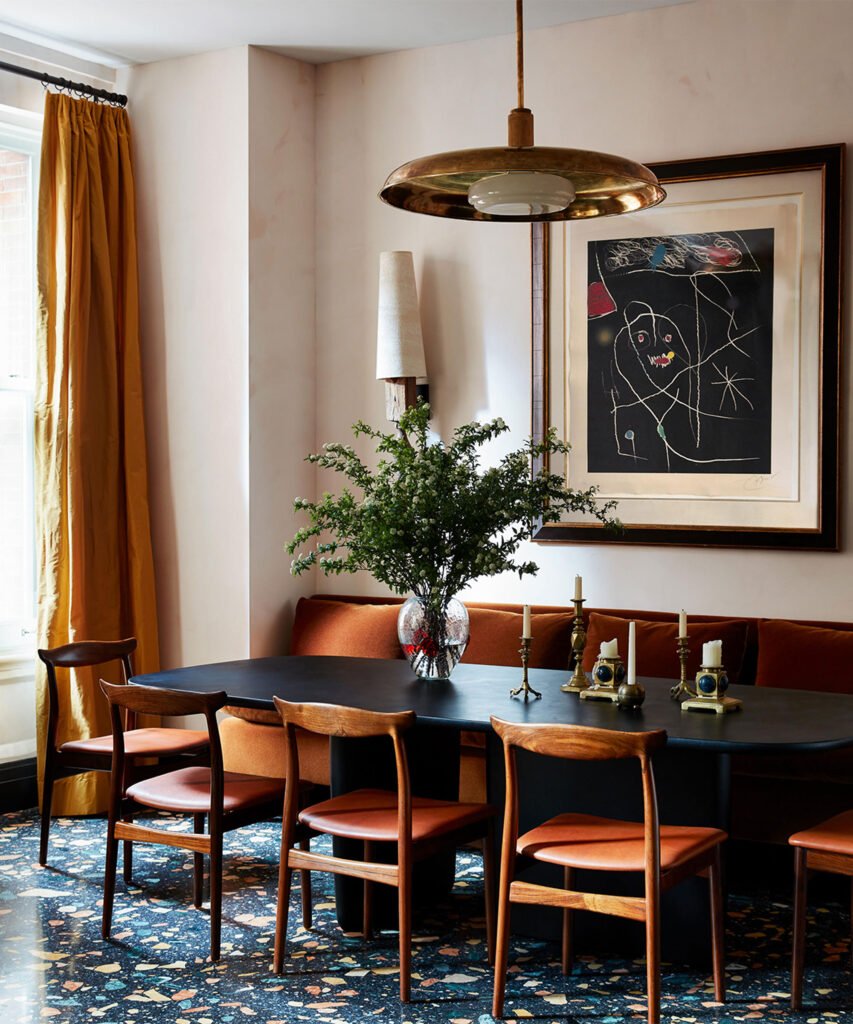
In the dining room specifically, curtains often get treated as an afterthought — a purely functional element chosen to match the walls and be quietly forgotten. That is a missed opportunity. Floor-to-ceiling curtains in deep green velvet are one of the most transformative and underutilised tools in dining room design.
Full-length velvet curtains add softness, texture, and acoustic absorption to a room that might otherwise feel hard and echoey. They also create an extraordinary sense of height when hung above the window frame and allowed to pool very slightly on the floor. In a green-themed dining room, matching or complementary velvet curtains tie the palette together in a way that feels considered and complete.
For a slightly less committed approach, linen curtains in a soft sage or olive tone offer a lighter, more casual version of the same effect. They move beautifully in a breeze, diffuse light in a flattering way, and bring that distinctive green-earthy quality without the full weight of velvet.
10. Forest Green Panelling and Wainscoting
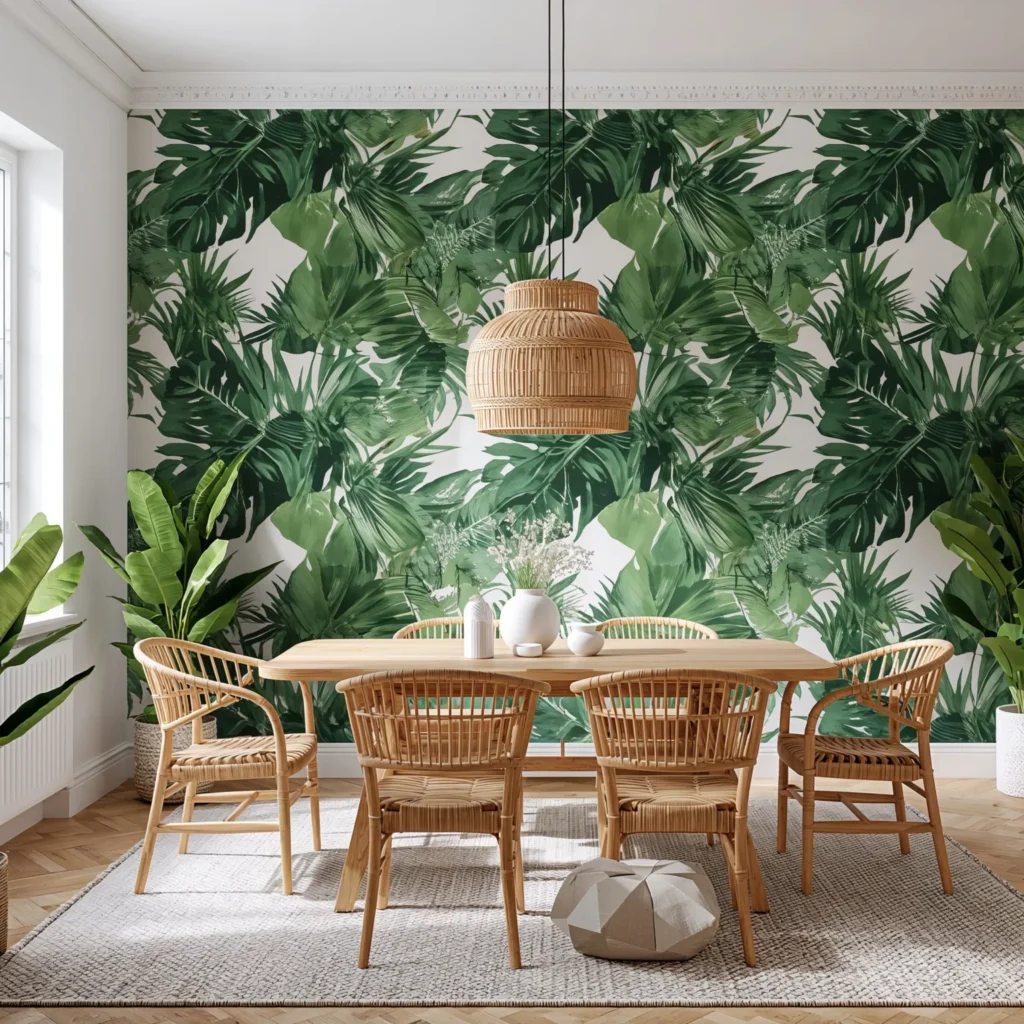
Architectural wall panelling in deep forest green is one of the most popular and effective dining room upgrades of recent years. Wainscoting, board and batten, or raised panel designs painted in a rich forest green add depth, formality, and a level of craftsmanship to a dining room that paint alone cannot replicate.
The typical approach is to carry the green panelling up to approximately chair-rail height (36 to 42 inches from the floor), then transition to a lighter wall colour — often white, cream, or pale grey — above. This keeps the room from feeling too heavy while still delivering significant visual impact and an undeniably elegant architectural quality.
In a more adventurous scheme, panelling can extend all the way to the ceiling for a fully enveloped effect. This works best in rooms with good natural light, high ceilings, and carefully planned layered lighting to prevent the space from feeling too enclosed.
Finishing Details That Elevate Green Panelling:
- Install a painted timber chair rail between the green panels and the upper wall colour.
- Choose a semi-gloss or satin finish on the panelling for a subtle sheen that catches light.
- Add wall-mounted brass or antique-finish sconces at intervals along the panelled wall.
- Hang framed art or a mirror within the panelled section to create visual points of interest.
11. Sage Green and Natural Wood: The Perfect Partnership
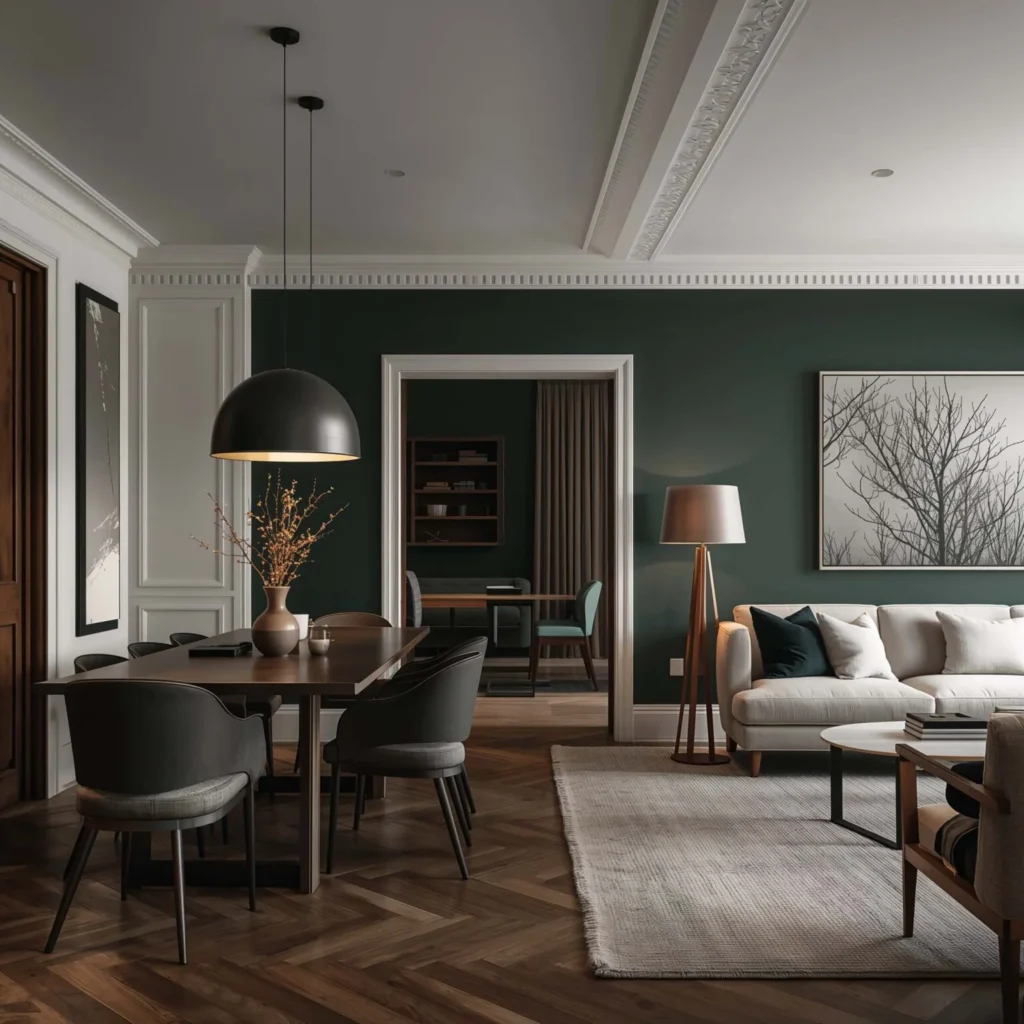
If there is a more naturally harmonious combination in interior design than sage green and warm wood tones, it has not yet been discovered. The two share an organic, nature-derived quality that makes them feel as though they were always meant to be together — and in dining rooms, where warmth and approachability matter enormously, this pairing is hard to beat.
A sage green painted room with a warm oak or walnut dining table, matching or coordinated timber-framed chairs, and natural wood flooring creates a cohesive, grounded palette that feels simultaneously fresh and deeply comfortable. Add linen upholstery on the chairs, a simple pendant light in natural materials, and a few carefully chosen plants, and the result is a room that feels genuinely nourishing to spend time in.
Styling Tip: In a sage green and wood dining room, keep your decorative objects in natural materials — ceramic, stone, glass, unfinished metal. Avoid anything too polished or synthetic, as it will jar with the organic warmth of the palette.
12. Green Dining Room with Maximalist Accessories
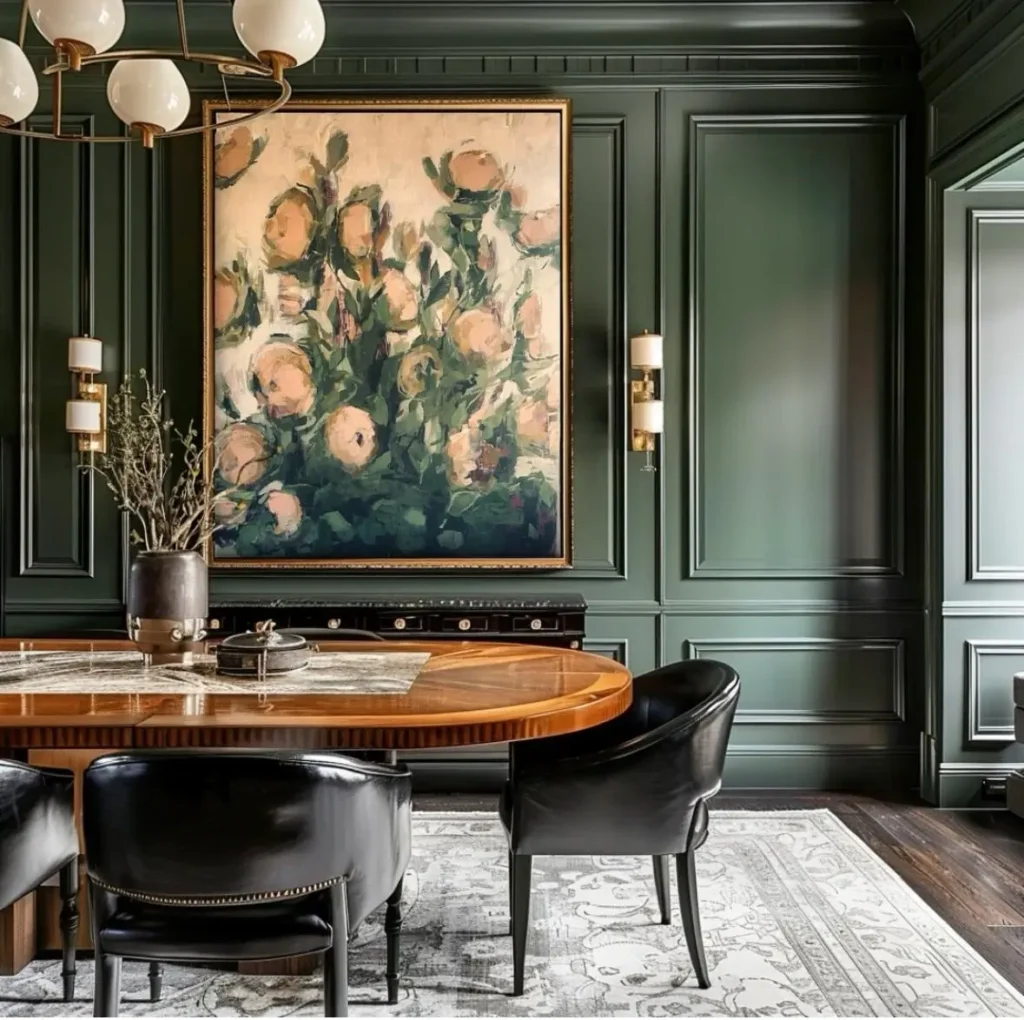
Green is one of the best backdrop colours for bold, maximalist styling precisely because it is rooted in nature and therefore inherently cohesive. A deep green wall can absorb and unify an extraordinary quantity of pattern, colour, and texture without the room feeling chaotic.
In practice, maximalist green dining rooms layer pattern on pattern, mix vintage and contemporary pieces, and treat every surface as an opportunity for decoration. A gallery wall of eclectic art, shelves displaying colourful ceramics, a richly patterned rug underfoot, botanical cushions on dining chairs, candles and plants and flowers in every available corner — this approach creates a room that feels deeply personal and genuinely alive.
The key to making maximalism work rather than just looking messy is to maintain a clear colour thread running through everything. In a green dining room, that thread is obviously green — but the green should appear at different intensities and in different materials across the room, creating variety within cohesion.
13. Mint Green for a Light and Airy Dining Space
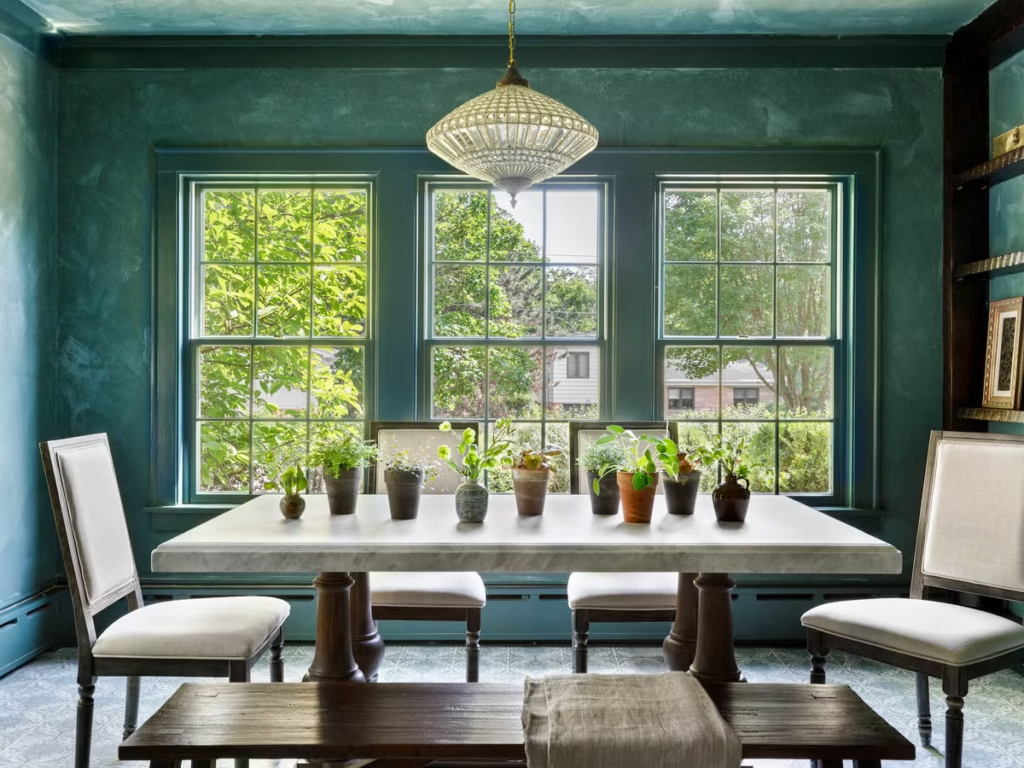
Not every green dining room needs to be dramatic or moody. For smaller dining spaces, rooms with limited natural light, or homeowners who prefer a lighter, more energetic palette, mint green offers a fresh, cheerful alternative to the deeper shades.
Mint is cool, clean, and quietly joyful. It has a retro quality that makes it a natural fit for mid-century modern furniture styles, and a light, minty freshness that works beautifully in coastal or Scandinavian-inspired interiors. In a dining room, it creates a space that feels bright and optimistic — perfect for morning brunches and family lunches as well as more formal evening dinners.
The challenge with mint is avoiding the institutional associations it can carry if used carelessly. The solution is to keep everything around it warm: warm white trim, wood-toned furniture, soft textile accents, and warm-toned light bulbs. The warmth neutralises any clinical quality and lets the genuine freshness and charm of mint come through.
14. Green and Gold: A Timeless Luxury Pairing
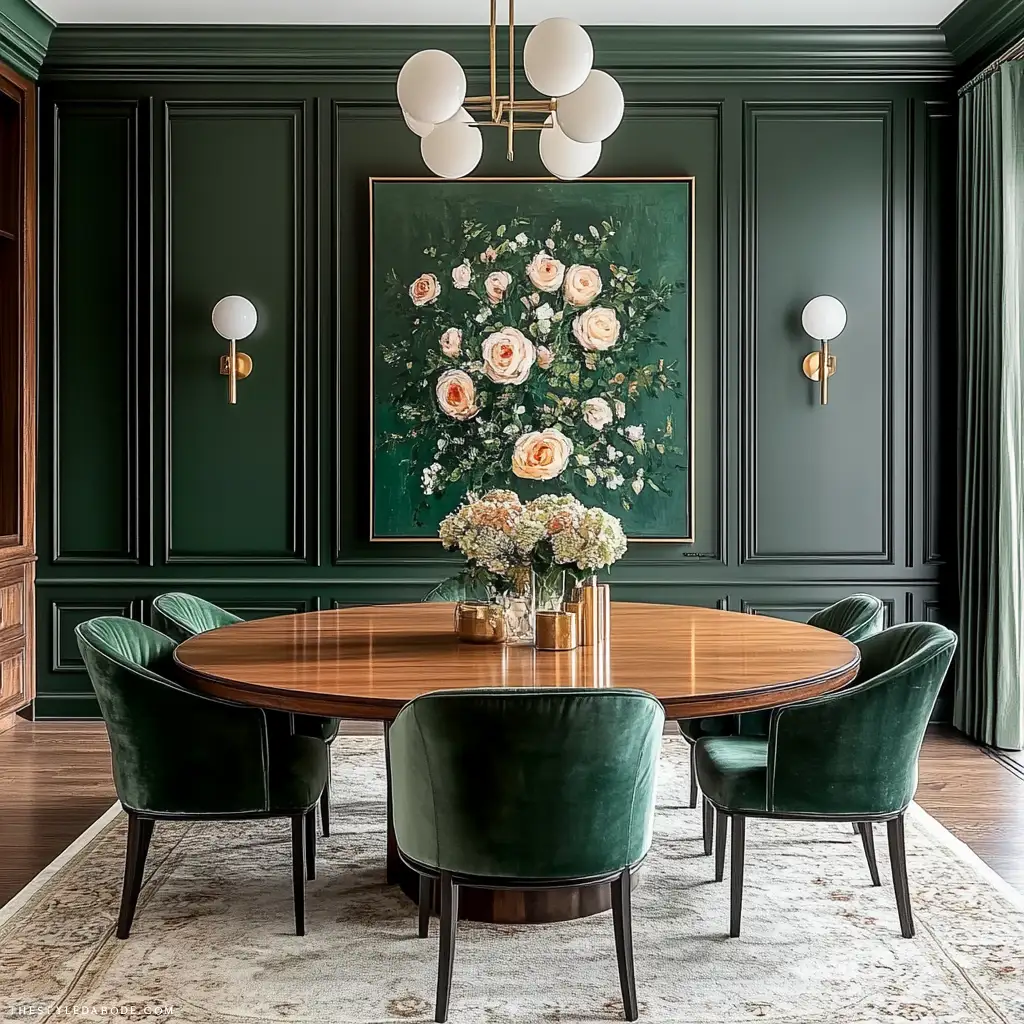
Green and gold have been used together in luxury interiors for centuries, and they remain one of the most reliably beautiful and impactful colour combinations in the design toolkit. The richness of gold brings out the depth in any shade of green, from the warmth of olive to the cool glamour of emerald, while green gives gold something distinctive to work against.
In a dining room, the green and gold combination translates naturally through wall colour paired with brass or gold light fixtures, gold-framed mirrors, and gold tableware or decorative accessories. Emerald green walls with an antique brass chandelier and gold-rimmed glasses on the table is a combination so consistently beautiful that it almost feels unfair to other colour pairings.
For a more contemporary take on the green and gold theme, opt for geometric brass pendant lights rather than traditional chandeliers, and introduce gold through brushed (rather than polished) metallic surfaces. This keeps the palette feeling current rather than overly ornate.
Green and Gold Dining Room Essentials:
- A statement brass or antique gold chandelier above the table.
- Green walls, panelling, or velvet chairs as the primary colour vehicle.
- Gold-rimmed glasses and serving dishes for a cohesive table setting.
- A large gilt-framed mirror on the main wall for reflected warmth and light.
- Candles in gold or amber holders for evening atmosphere.
15. Dark Green and Brass: Industrial Elegance
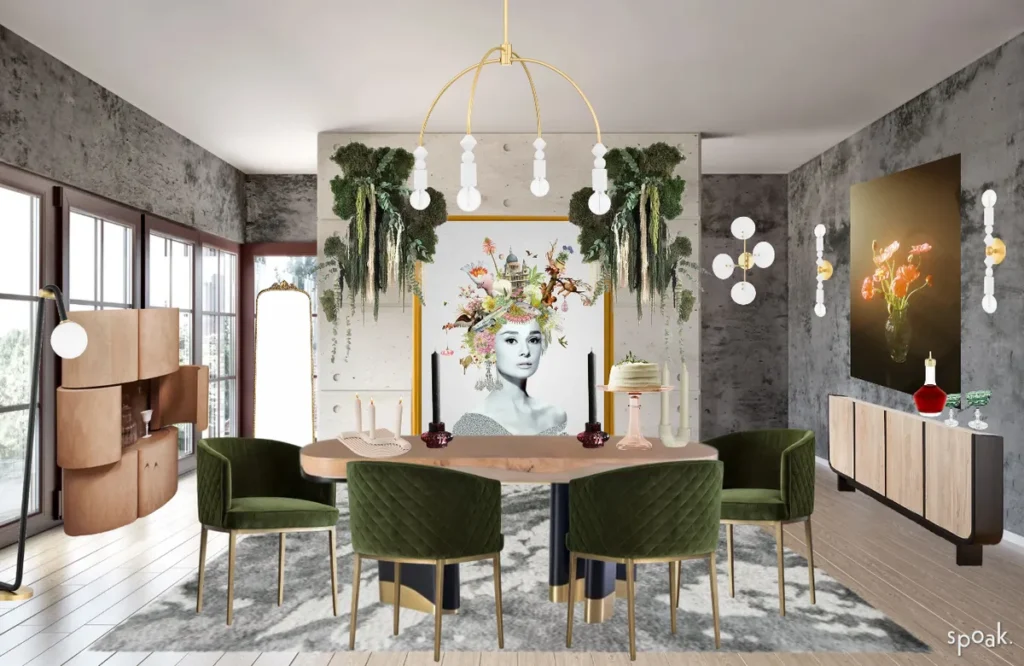
The combination of dark forest or hunter green with raw or polished brass has a slightly industrial, loft-like quality that feels distinctly contemporary. It is popular in restaurant design for good reason: it photographs brilliantly, ages beautifully, and creates an atmosphere that feels both stylish and genuinely comfortable.
In a residential dining room, this palette works best with sleek, simple furniture — a clean-lined dining table in dark wood or black metal, streamlined chairs in leather or dark fabric — offset by the warmth of brass in pendant lights, wall sconces, door handles, and decorative accessories. The combination avoids the sweetness that green can sometimes tip into, landing instead in sophisticated, slightly masculine territory.
Common Green Dining Room Mistakes (And How to Avoid Them)
With all the excitement of choosing a gorgeous shade of green, it is easy to overlook the practical pitfalls that can undermine even the most beautifully planned dining room. Here are the five most common green dining room mistakes and how to sidestep them.
- Choosing a paint colour from a chip without testing it on the wall. Colours shift dramatically depending on your room’s light quality, orientation, and existing furnishings. Always paint large sample swatches and live with them for at least 48 hours across different lighting conditions before committing.
- Going too matchy-matchy with green. A dining room where the walls, chairs, curtains, plants, and accessories are all the exact same shade of green looks flat and unresolved. Vary your greens in shade, undertone, and material for a palette with genuine depth.
- Neglecting warm lighting. As discussed, the wrong bulb temperature can make green walls look cold and unappealing. Warm-white bulbs are non-negotiable in a green dining room.
- Underestimating how much light the room needs. Dark greens absorb light by nature. If your dining room relies on a single overhead fixture, adding wall sconces, candles, and mirrors is essential before committing to a deep green palette.
- Forgetting the floor. A beautiful green dining room can be undermined by a rug in a competing or clashing colour. In a green dining room, rugs in warm neutrals (cream, warm grey, natural sisal), soft terracottas, or deeper complementary tones work best.
Conclusion: Your Green Dining Room Starts With One Decision
Green is one of the most versatile, beautiful, and emotionally resonant colours you can introduce into a dining room. It connects the space to the natural world, creates an atmosphere that encourages relaxation and conversation, and looks genuinely stunning across an extraordinary range of design styles and budgets.
The 20 ideas in this guide cover everything from the gentle confidence of a single sage green accent wall to the full commitment of an immersive forest green dining experience. None of them are beyond the reach of a homeowner willing to invest a bit of time, thought, and care into creating a space that feels genuinely their own.
The most important thing to remember is this: there is no wrong way to bring green into your dining room, as long as you are intentional about the choices you make and willing to test before you commit. Start with the shade that excites you most, get a sample on the wall, and see what it tells you. The room will guide you from there.
1 thought on “15 Chic Green Dining Room Ideas for Modern Homes”