
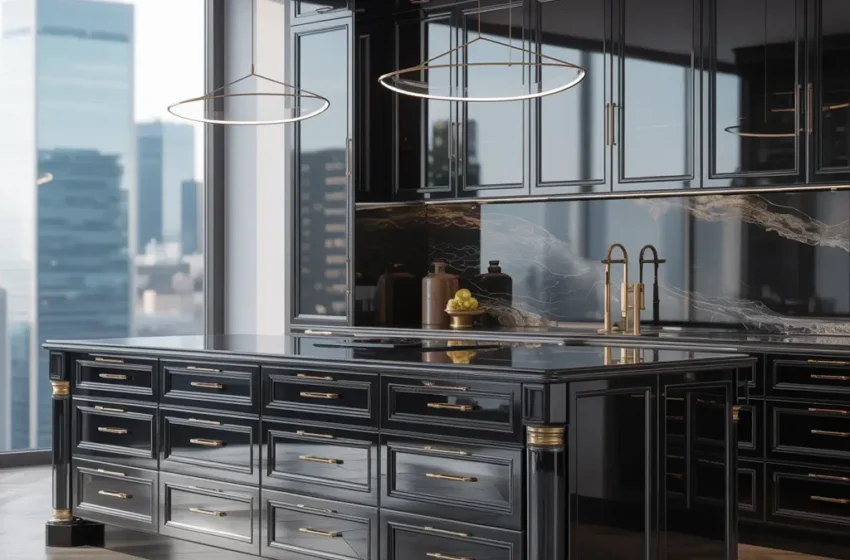
Let us address the elephant in the room right away: yes, your kitchen can be black. No, it will not feel like a dungeon. No, it will not make your space smaller. And no, you will not regret it — as long as you approach it with a plan.
Black kitchens have moved well beyond the category of bold design statement. In 2025 and beyond, they are a mainstream, sophisticated, and surprisingly practical choice for homeowners who want a kitchen that feels dramatic, curated, and genuinely unlike everyone else’s.
The hesitation around black kitchens usually comes from a few common fears: it will feel too dark, too hard to keep clean, too trendy, or too risky for resale. This article is going to tackle every single one of those fears head-on — because each of them, when examined closely, turns out to be either wrong or easily managed.
What you will find on the following pages is a comprehensive guide to 20 different black kitchen ideas, covering every style from modern farmhouse to sleek minimalist, every budget from smart DIY to full luxury renovation, and every kitchen size from a tiny galley apartment to a sprawling open-plan dream. You will also find practical tips on lighting, hardware, countertops, and the specific design decisions that separate a black kitchen that looks spectacular from one that just looks gloomy.
Whether you are fully committed or just black-curious, this guide will give you everything you need to make the decision with confidence.
1. Matte Black Kitchen Cabinets — The Bold Choice That Pays Off
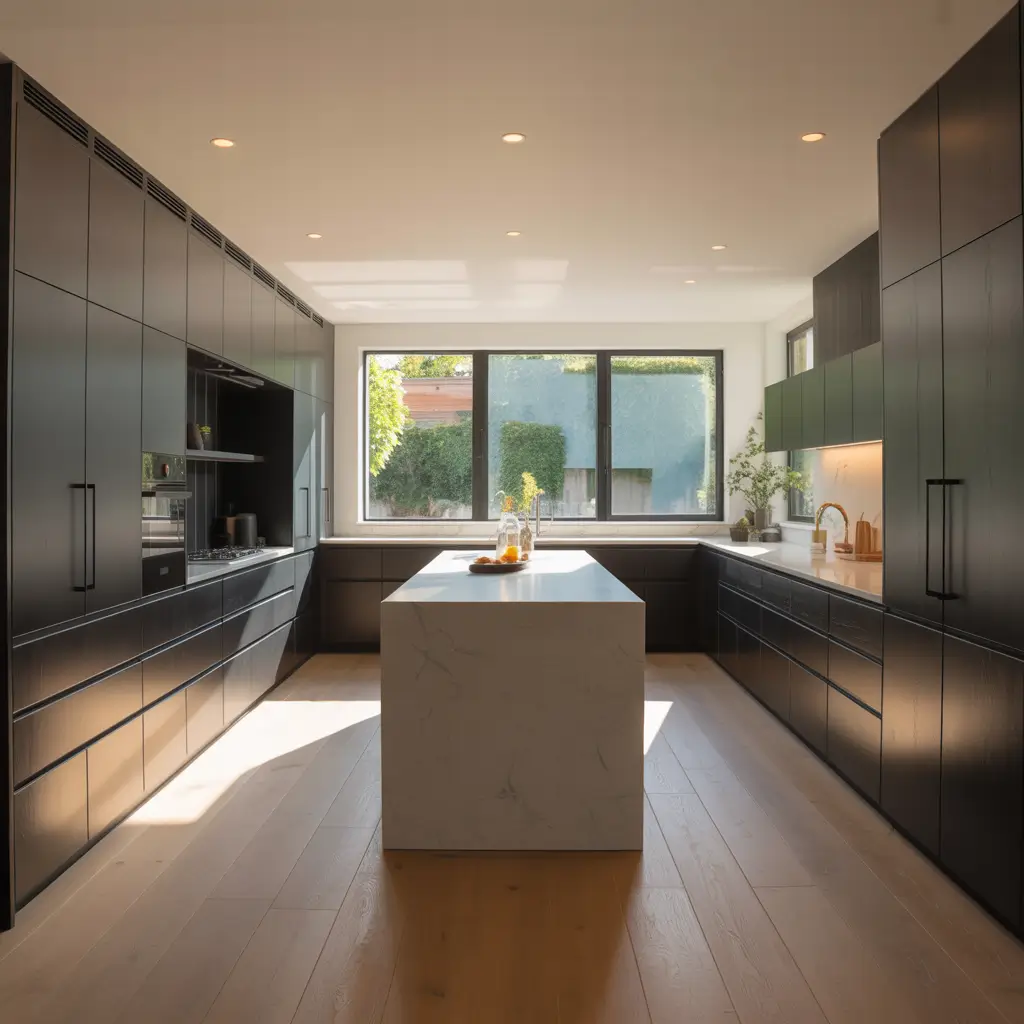
Why Matte Finish Is the Superior Choice for Black Kitchens
Of all the finishes available for black kitchen cabinets, matte is the one that delivers the most sophisticated result with the least amount of daily frustration. Matte black absorbs light rather than reflecting it, which creates a deep, velvety appearance that looks genuinely luxurious — more so, many designers argue, than any gloss or semi-gloss finish.
The practical benefits are just as compelling. Matte surfaces do not show fingerprints, water spots, or smudges the way glossy finishes do. In a kitchen — where hands are constantly touching cabinet doors — this matters enormously.
What You Need to Pull Off Matte Black Cabinets
- Commit fully to a true flat or matte finish — avoid satin or eggshell, which look unintentionally dull rather than beautifully matte.
- Pair with a contrasting countertop: white marble, light quartz, or warm butcher block all work beautifully.
- Install under-cabinet LED lighting — this is non-negotiable and single-handedly prevents the dark cave effect.
- Choose minimal hardware in brushed nickel, brushed gold, or no hardware at all for a handleless look.
- Introduce one warm natural element — a wood shelf, a rattan pendant, a plant — to keep the space from feeling cold.
One important lighting note: matte black cabinets absorb ambient light, so your kitchen will require more intentional lighting design than a white kitchen would. Plan for layered lighting from the start — ceiling recessed lights, under-cabinet strips, and pendant lights over any island or peninsula.
2. Black and Gold Kitchen — Five-Star Luxury Without the Five-Star Price Tag
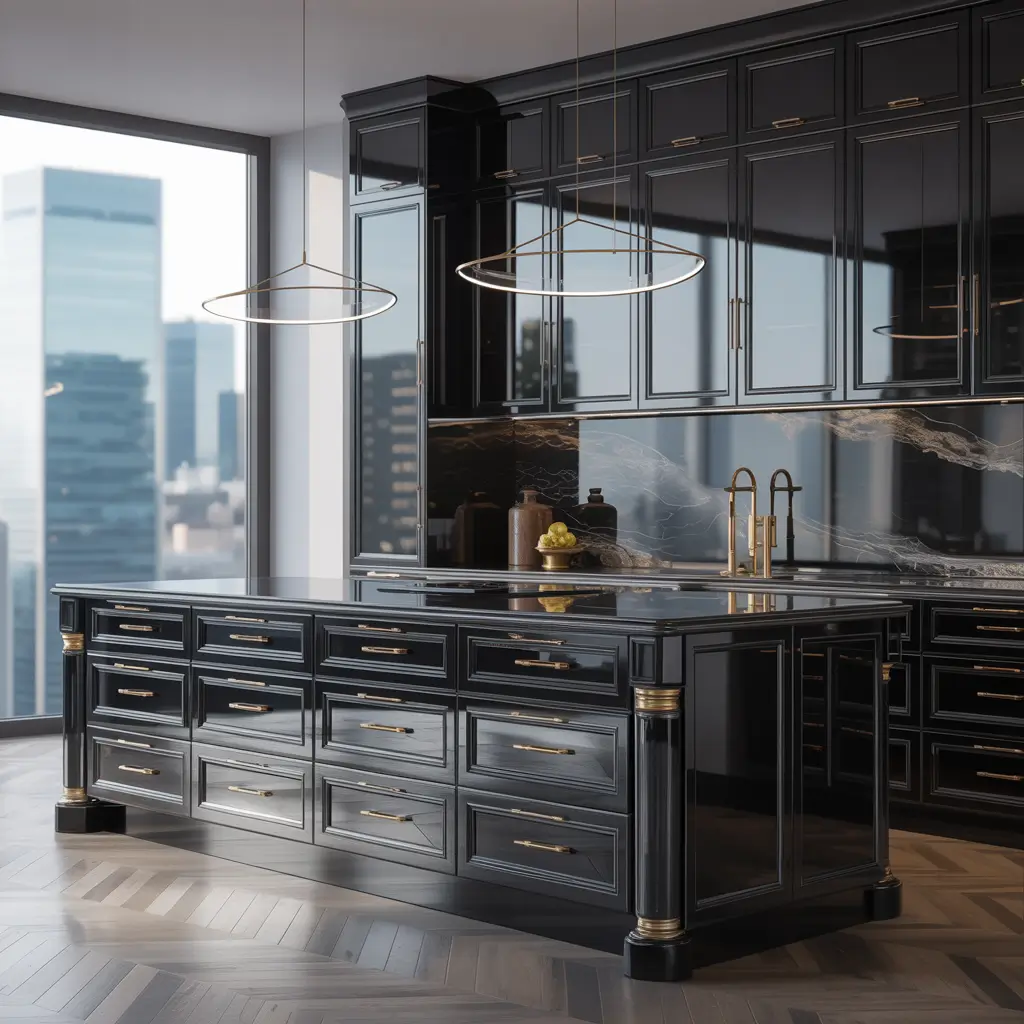
The Combination That Makes Any Kitchen Feel Like a Hotel Suite
There are design pairings that simply work, and black with gold is one of the most reliably stunning of them all. Black provides the dramatic, grounding base. Gold adds warmth, glamour, and a flash of light that prevents the space from feeling heavy. Together, they create something that registers immediately as luxurious.
The best news: you do not need to spend a fortune to achieve this look. The most impactful and cost-effective way to introduce black and gold is to install black cabinets and then upgrade every piece of hardware — pulls, knobs, hinges — to brushed brass or champagne bronze. That single change, done well, will make the kitchen look like it belongs in a design magazine.
Key Elements of a Black and Gold Kitchen
- Black lower cabinets with gold bar pulls — the simplest version of the look and almost always stunning.
- A gold or brushed brass faucet as a focal point above the sink.
- Gold pendant lights over the island — one of the highest-impact upgrades per dollar spent.
- Marble countertop or backsplash with warm gold or beige veining to tie the metals together.
- Stainless steel appliances work alongside gold — you do not need to match every metal exactly.
Choosing the Right Gold Finish
- Brushed brass — subtle, warm, and the most versatile gold tone for black kitchens.
- Champagne bronze — slightly more muted and organic; works beautifully in transitional kitchens.
- Polished brass — bold and highly reflective; best in spaces where you want maximum drama.
- Antique gold — develops patina over time; perfect for vintage-inspired black kitchens.
A reliable design rule: unlacquered brass develops natural patina and ages beautifully alongside a black kitchen. Lacquered brass stays bright and shiny. Choose based on whether you want a timeless-feeling space or a pristinely finished one.
3. Black Kitchen in a Small Space — Why Dark Can Actually Open a Room Up
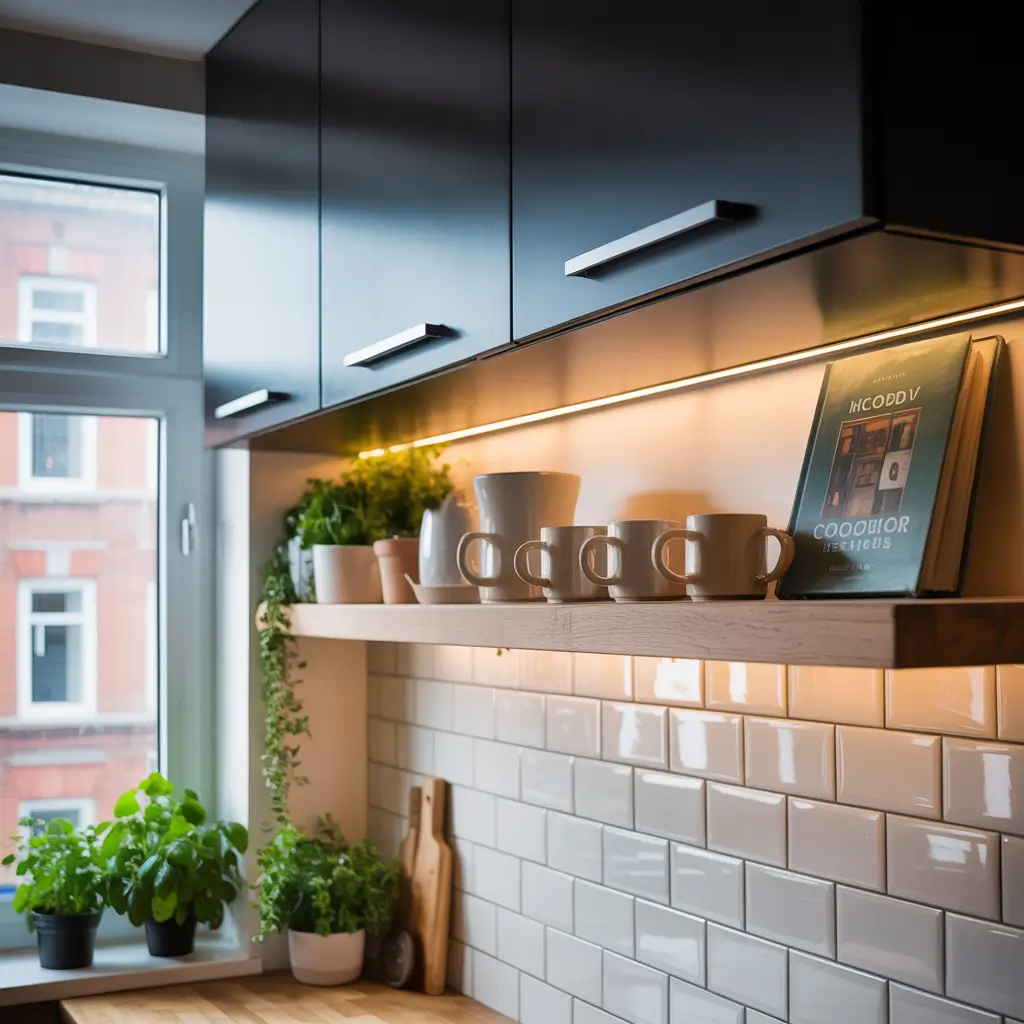
Counterintuitive but True: Black Can Make Small Kitchens Feel Bigger
The instinct when working with a small kitchen is to make everything as light as possible. And while light walls and pale countertops certainly help, the all-white-everything approach in a small kitchen often results in a space that feels flat, bland, and frankly not that interesting to cook in.
A carefully applied black element in a small kitchen creates depth and dimension that the eye reads as more space, not less. This works especially well when black is used on the lower cabinets only, with white uppers and pale walls maintaining the light and airiness overhead.
The 60-30-10 Rule for Small Black Kitchens
- 60 percent light surfaces — white or pale gray walls, light countertops, light backsplash.
- 30 percent black — lower cabinets or a single island; the visual anchor of the space.
- 10 percent accent — hardware, a plant, a rug, or a small decorative element.
Additional Strategies for Small Black Kitchens
- Keep upper cabinets white or replace some with open shelving to maintain visual lightness overhead.
- Use a reflective or glossy backsplash to bounce light around the room.
- Maximize natural light — keep window treatments minimal or remove them entirely.
- Choose light-colored flooring — pale wood, light stone, or white tile.
- Consider glass-front cabinet doors on the black uppers if you use them — transparency prevents heaviness.
4. Industrial Black Kitchen — Raw, Urban, and Completely Unforgettable
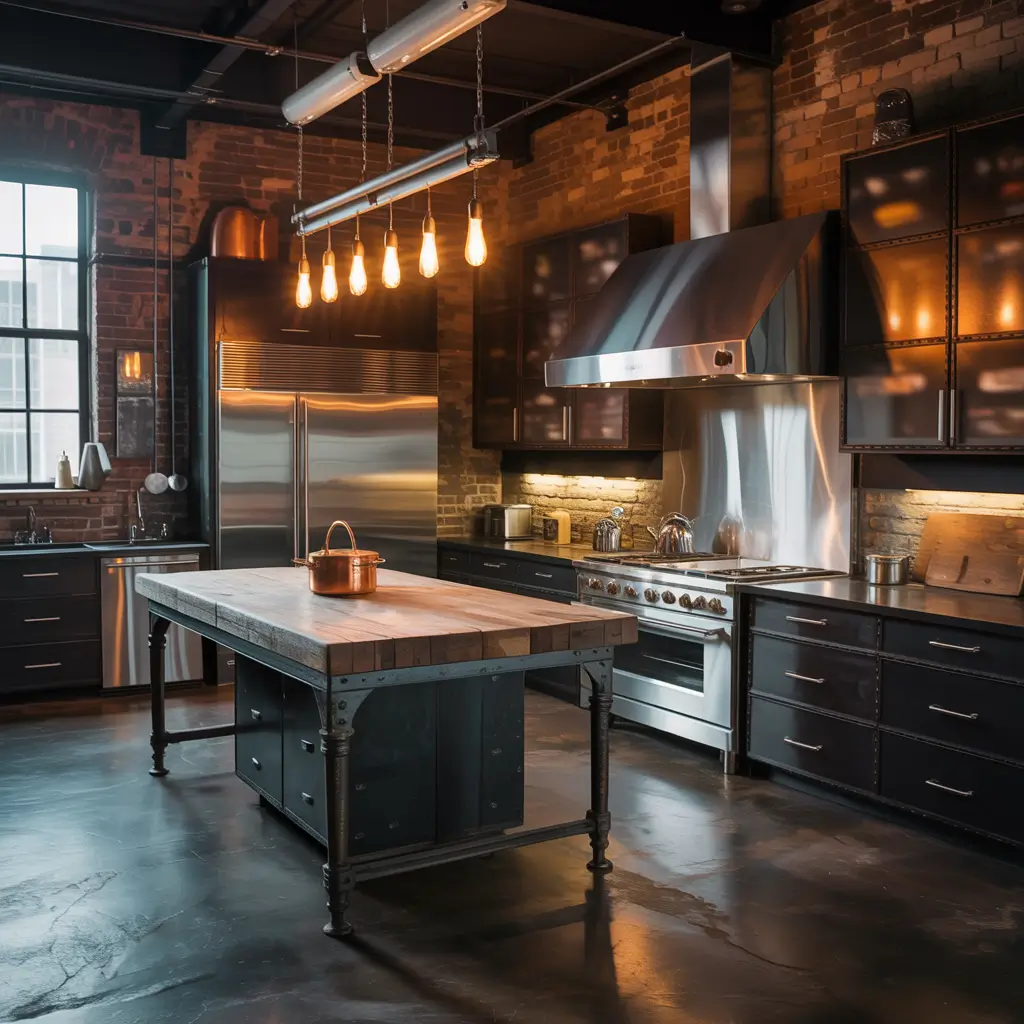
The Loft-Style Kitchen That Works in Any Home
Industrial design is built on the beauty of raw, honest materials — exposed metal, concrete, unfinished wood, visible hardware. Black ties all of these elements together beautifully, and the result is a kitchen that feels urban and confident regardless of where it actually lives.
The appeal of industrial black kitchen design is that it actively embraces imperfection. Scratches, variations in finish, visible seams — in industrial style, these are not flaws. They are character. This makes it one of the most forgiving styles to live with on a daily basis.
Essential Industrial Black Kitchen Elements
- Black steel open shelving in place of upper cabinets — the single most identifiable industrial element.
- Concrete countertops — either cast in place or as a concrete-look quartz alternative.
- Exposed pipes, brick, or concrete walls — real architectural details or well-executed faux finishes.
- Edison bulb pendant lights on black metal fixtures over the island.
- Black metal window frames or interior windows between kitchen and adjacent rooms.
- Stainless steel appliances — the professional look reinforces the industrial aesthetic.
One of the great advantages of industrial style is that it translates well to rental kitchens and spaces where structural changes are not possible. Black open shelving brackets, black hardware swaps, and a few industrial-style light fixtures can dramatically shift the atmosphere of even a modest rental kitchen without a single nail hole that matters.
5. Scandinavian Black and Wood Kitchen — Where Minimalism Meets Warmth
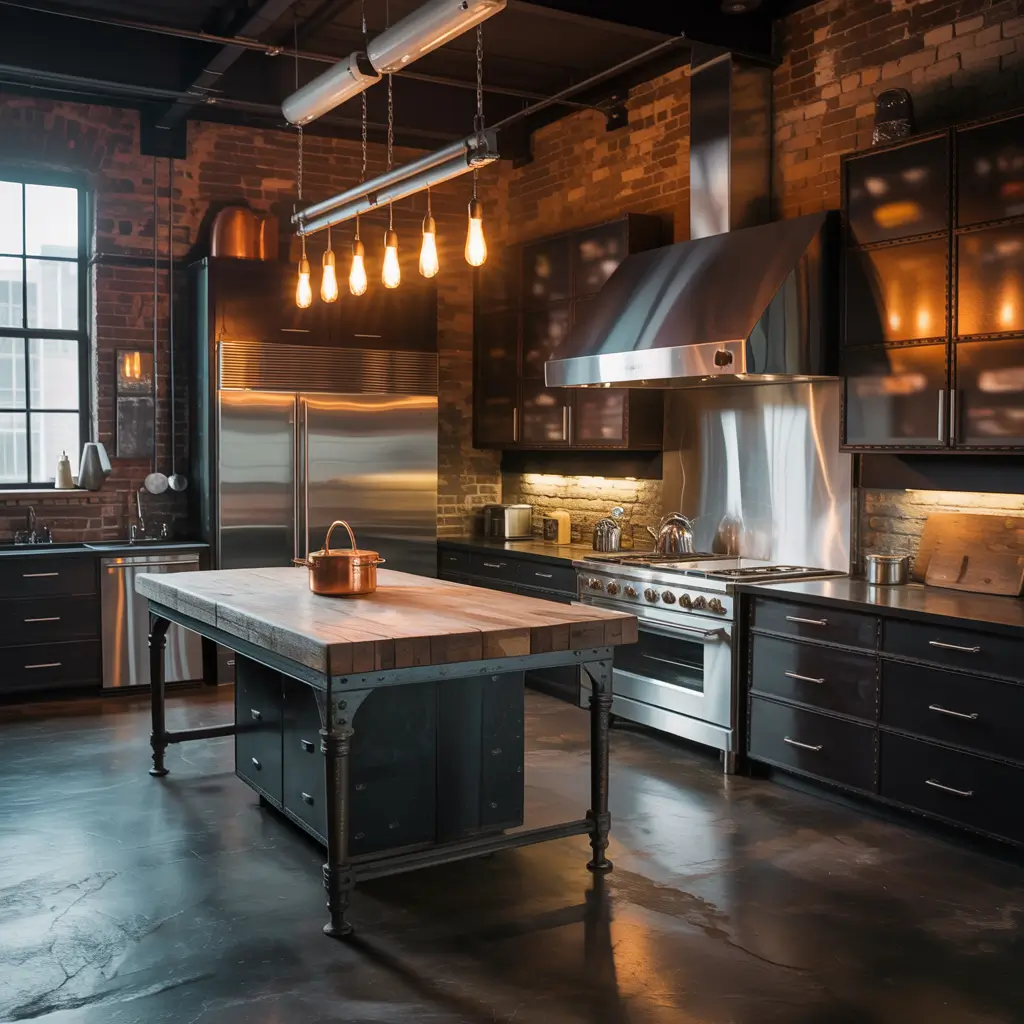
The Nordic Approach to Black That Feels Cozy, Not Cold
Scandinavian design is built on a paradox: it is minimal and restrained, yet somehow it always feels warm and inviting. Adding black to the typical Scandi palette deepens the sophistication considerably while maintaining that characteristic sense of calm.
The key in Scandinavian black kitchen design is the role of natural wood. Light oak, pine, or birch brings warmth that balances the coolness of black, and the contrast between the two materials is visually compelling in a way that is both modern and deeply natural.
Building a Scandi Black Kitchen
- Black cabinetry — either all black or black lowers with white or natural wood uppers.
- Light wood countertops, open shelving, or an island top in natural wood finish.
- White walls and pale backsplash to maintain the signature Scandinavian brightness.
- Light wood flooring — wide-plank pale oak is the most classic choice.
- Minimal hardware — simple bar pulls in brushed nickel or black, or handleless cabinet design.
- Plants — Scandinavians treat greenery as a fundamental design element, not an afterthought.
Scandi design philosophy says that every object in a space should be either beautiful, functional, or both. Apply this to your black kitchen and resist the urge to fill counter space with things that do not earn their place. The restraint is what makes the whole look work.
6. Black Marble Kitchen — When Natural Stone Takes the Lead
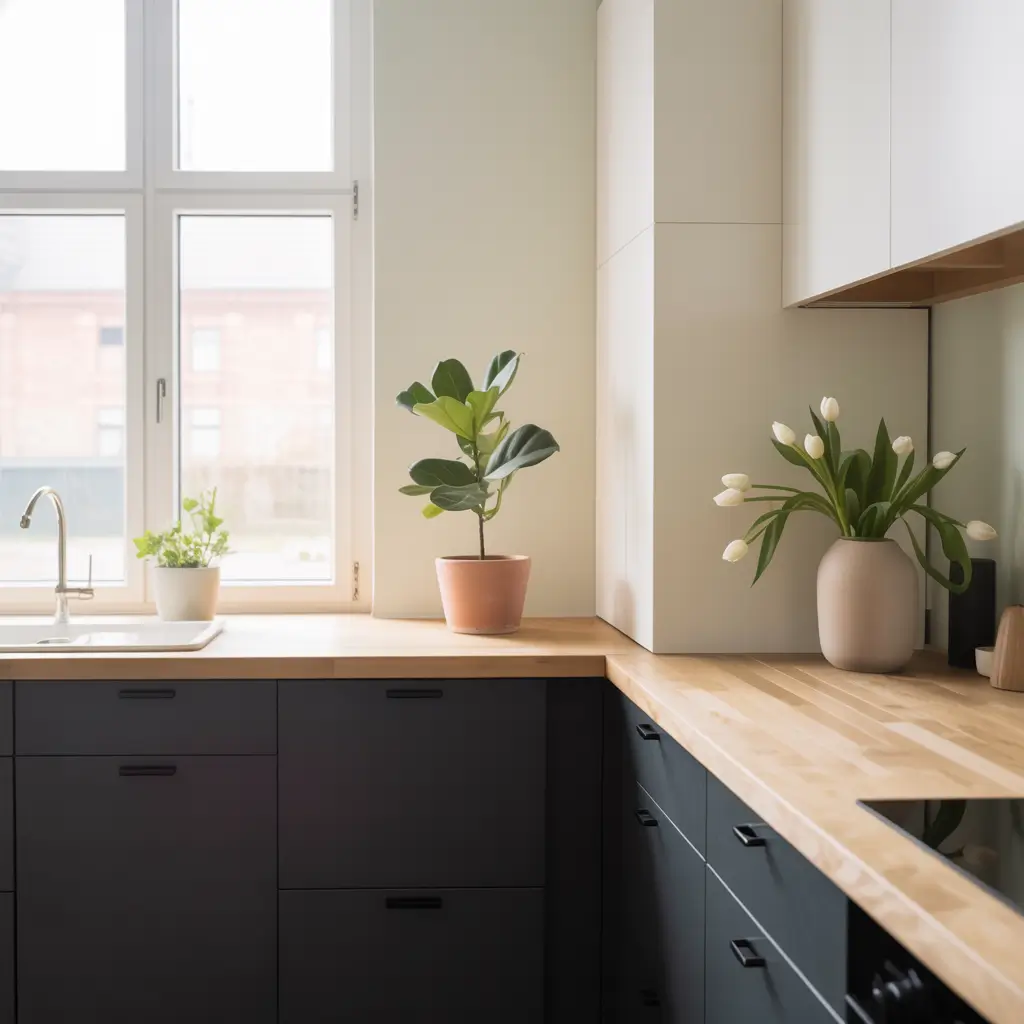
The Material That Elevates Black From Trendy to Truly Timeless
Black marble is not a single material — it is a category of dramatic, naturally occurring stones that range from deep charcoal with white veining to near-pure jet black with almost invisible patterning. Each variety brings something different to a kitchen, and all of them elevate the space considerably.
The reason black marble works so well in kitchens is that the natural veining adds movement and visual complexity to a color that could otherwise feel flat or heavy. A solid black cabinet is dramatic. A black marble countertop or backsplash is art.
Black Marble Options for Kitchen Design
- Nero Marquina — jet black with bright white veining; the most graphic and dramatic option.
- Black Forest marble — dark green-black with white and gray veining; rich and sophisticated.
- Portoro marble — deep black with striking gold and white veining; the ultimate luxury pairing.
- Absolute black granite — pure near-black with minimal veining; sleek and modern.
Where to Use Black Marble in Your Kitchen
- Backsplash — the most affordable entry point and one of the most visible surfaces in the kitchen.
- Kitchen island top — a statement surface that becomes the focal point of the whole room.
- Full countertops — the biggest investment but the most dramatic transformation.
- Flooring — large format black marble tiles create an extraordinarily sophisticated kitchen floor.
Black marble is a natural stone and requires sealing to protect against staining. Seal it at installation and reseal once a year. The maintenance is genuinely minimal and well worth the visual payoff.
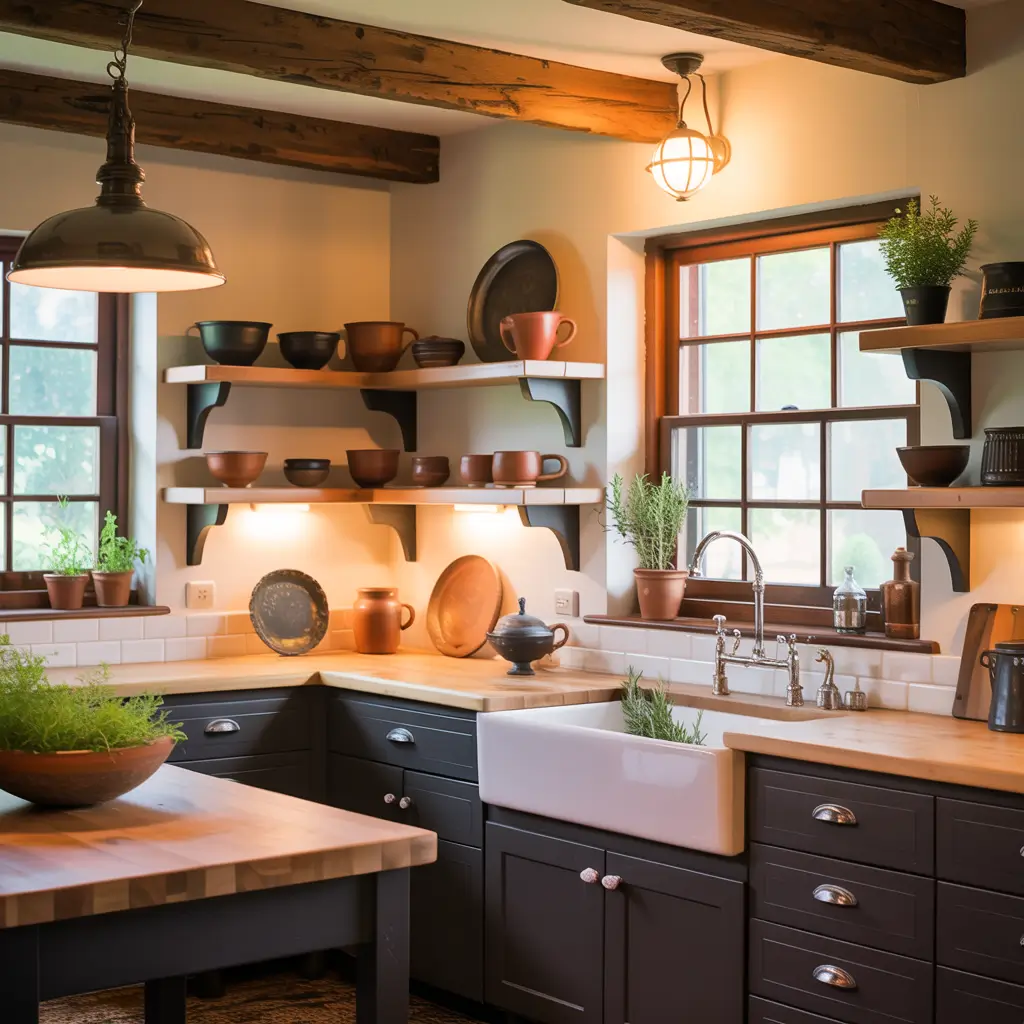
7. Farmhouse Black Kitchen — Rustic Charm with a Sophisticated Edge
Proving That Farmhouse Style Does Not Have to Mean All-White Everything
The farmhouse kitchen aesthetic has been dominated by white shiplap, cream cabinets, and light wood for years. And while that look is genuinely beautiful, there is a compelling and underexplored alternative: the farmhouse kitchen done in black.
Black farmhouse kitchens take all the cozy, character-filled elements of country kitchen design — apron-front sinks, open shelving, vintage hardware, butcher block — and ground them in a darker, moodier palette that feels far more sophisticated than the typical light farmhouse look.
Elements of a Black Farmhouse Kitchen
- Black shaker-style cabinets — the recessed panel profile is inherently traditional and farmhouse-appropriate.
- A white fireclay or porcelain apron-front sink — the contrast with black cabinets is visually striking.
- Butcher block island top or countertop section — warm wood tone breaks up the black beautifully.
- Vintage-style brass or copper faucets with cross handles.
- Open shelving beside the range or window for displaying white dishware or fresh herbs.
- Woven light fixtures in rattan or rope — texture that reinforces the farmhouse character.
One thing that separates a beautiful black farmhouse kitchen from one that just looks painted: the quality and character of the secondary elements. The sink, the hardware, the light fixtures — these details do the storytelling. Invest in them thoughtfully.
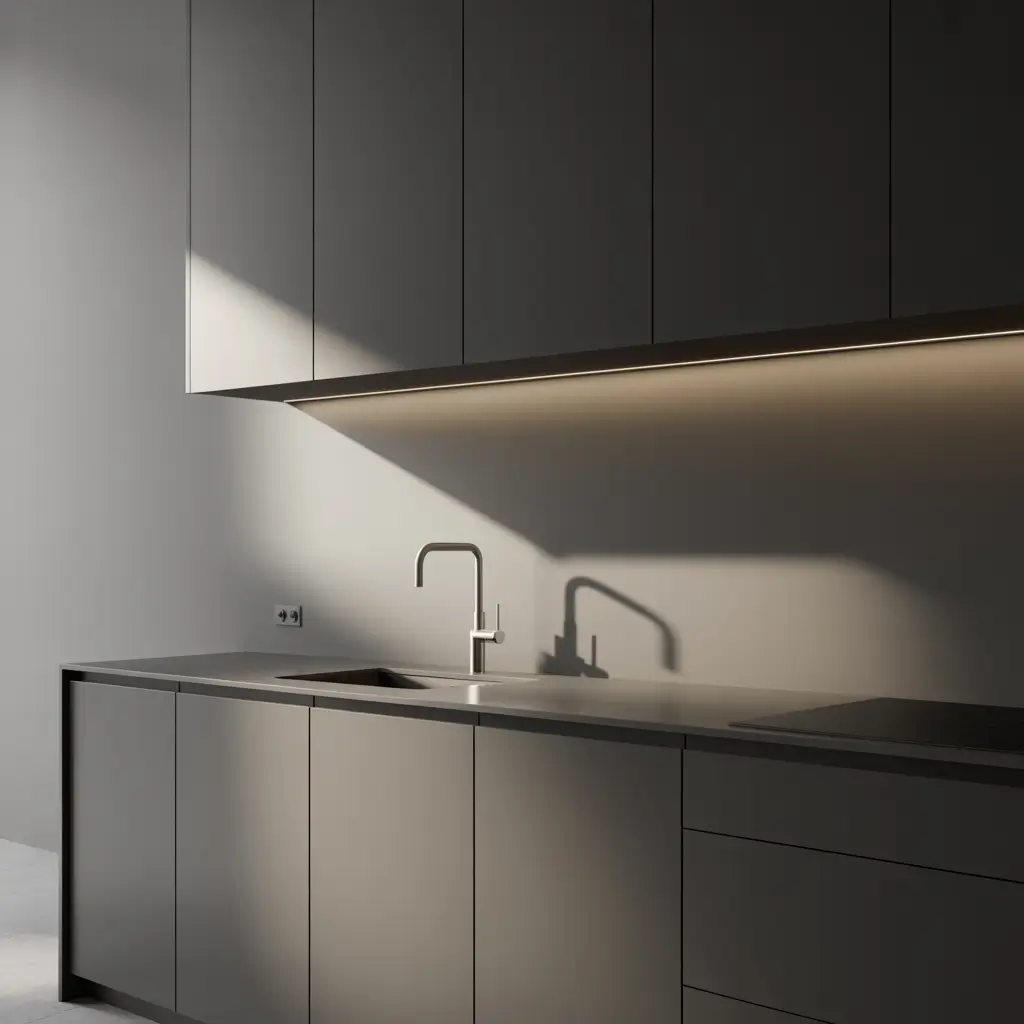
8. All-Black Minimalist Kitchen — For Those Who Want to Make a Statement
The Boldest Move in Kitchen Design, Done Right
The all-black kitchen is not for everyone, and it is not trying to be. It is a design choice that requires confidence, commitment, and a genuine understanding of how to work with texture and light to prevent the space from feeling oppressive. But when it is executed well, it is one of the most breathtaking interiors possible.
The secret to a successful all-black kitchen is variation in texture and finish across surfaces. Matte black cabinets, glossy black backsplash, honed black countertops, and brushed black hardware all read as different visual elements even though they share the same color. The eye distinguishes between them, and the space feels layered rather than monotonous.
How to Execute an All-Black Kitchen Successfully
- Use at least three different finishes — matte, semi-gloss, and honed or textured.
- Choose handleless or integrated-handle cabinets to maintain the clean, uninterrupted black surface.
- Install generous lighting at multiple levels — ceiling, under-cabinet, and inside any glass-front cabinets.
- Include integrated appliances where possible to avoid visual interruption.
- Add one contrasting element — a single white plant pot, a natural wood cutting board, a bright herb plant — to give the eye a place to land.
All-black kitchens do not need to feel unwelcoming or stark. The right lighting plan, combined with textural variety and one well-chosen contrast element, will create a space that feels dramatic but completely livable.
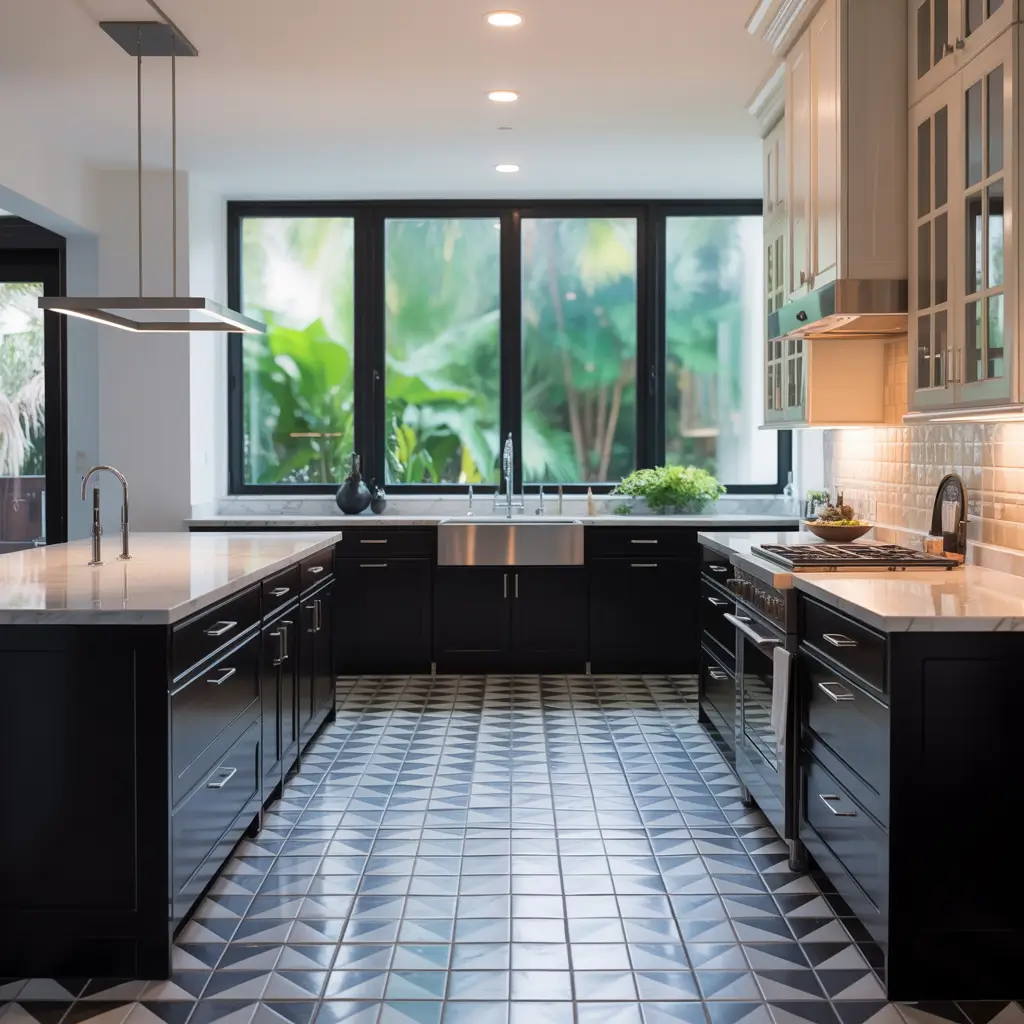
9. Black and White Kitchen — The Timeless Contrast That Never Fails
Why Opposing Colors Create the Most Enduring Kitchen Design
The black and white kitchen is one of those design combinations that transcends trend entirely. It has been beautiful in kitchens across every decade of the 20th and 21st centuries, and it will continue to be beautiful for every decade to come. The reason is simple: high contrast is visually compelling, and black and white is the highest contrast available.
What makes the black and white kitchen interesting to design is the enormous variety of ways to apply the combination. The ratio, the distribution, the finish, and the pattern choices all create dramatically different results within the same two-color palette.
Black and White Ratio Strategies
- Black island, white perimeter cabinets — the most popular and balanced approach.
- Black lower cabinets, white uppers — classic two-tone that keeps the space bright overhead.
- White cabinets with black countertops and black hardware — sophisticated restraint.
- Black cabinets with white marble countertop and white backsplash — drama at the base, lightness above.
- Checkerboard tile floor — vintage, graphic, and one of the most timeless pattern choices in kitchen design.
What to Avoid in Black and White Kitchens
- Equal 50-50 ratios of black and white — this tends to feel chaotic rather than balanced.
- Too many competing patterns — if you have a patterned floor, keep the backsplash solid.
- Mixing too many different finishes of black — choose one or two and be consistent.
Black and white kitchens also photograph exceptionally well, which is worth mentioning if you are planning to sell your home at some point. They appear crisp, intentional, and high-end in listing photos — a real practical advantage on top of the aesthetic one.
10. Cozy Black Kitchen with Warm Lighting — Moody and Inviting
How the Right Light Transforms Black From Cold to Cozy
The single most common mistake made in black kitchen design is underestimating the role of lighting. A black kitchen with insufficient or poorly chosen lighting will absolutely feel like a cave. A black kitchen with a thoughtful, layered lighting plan will feel sophisticated, cozy, and genuinely inviting — possibly more so than any other kitchen you have ever spent time in.
The color temperature of your bulbs matters as much as the quantity of light. Warm white bulbs in the 2700K to 3000K range transform black surfaces from stark to sultry. Cool white bulbs (4000K and above) make black kitchens feel clinical and harsh.
A Layered Lighting Plan for Black Kitchens
- Under-cabinet LED strips — illuminate countertops and create a warm glow along the cabinet base.
- Pendant lights over the island — choose fixtures with warm metallic finishes like brass, copper, or aged bronze.
- Recessed ceiling lights on a dimmer — general illumination that you can dial down for atmosphere.
- A statement chandelier or semi-flush ceiling fixture in the main kitchen area.
- In-cabinet lighting for glass-front cabinets — adds depth and visual interest.
Bulb and Dimmer Guidance
- Use 2700K to 3000K bulbs throughout — this is the warm white range that works with black.
- Install dimmers on every circuit where possible — the ability to adjust light levels changes everything.
- Choose warm metallic shades for pendant lights — amber glass, brass, copper, or bronze.
- Avoid cool or daylight bulbs (5000K and above) entirely in a black kitchen context.
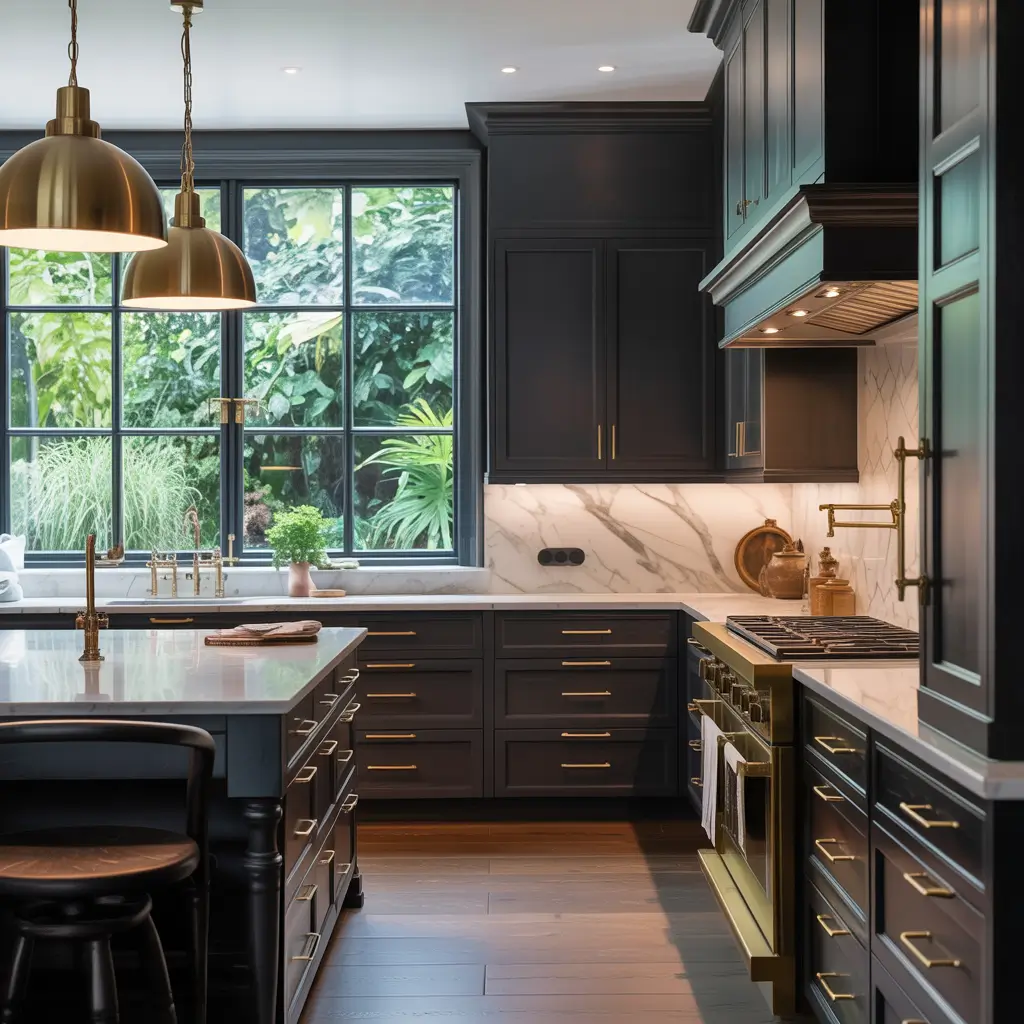
11. Black Kitchen with Brass Fixtures — Vintage Warmth, Modern Impact
The Hardware Choice That Brings Character to Every Black Kitchen
Brass and black is a pairing with genuine historical roots — kitchens and working spaces of the early 20th century regularly featured dark cabinetry alongside brass or bronze hardware. Today, this combination reads as both nostalgic and distinctly current, which is exactly the kind of timeless quality that makes a kitchen feel like it will look good for decades rather than just a few years.
The particular appeal of brass in a black kitchen is the warmth it introduces. Black can veer toward cool and austere; brass counteracts this immediately with its yellow-orange warmth, creating a combination that is dramatic but never unfriendly.
Where to Incorporate Brass in a Black Kitchen
- Cabinet hardware — pulls, knobs, and cup pulls in brushed or antique brass.
- Kitchen faucet — a brass or unlacquered brass faucet is one of the most impactful single upgrades.
- Pendant light fixtures — brass or aged brass lamp fixtures over the island or sink.
- Pot filler above the range if applicable — visible and functional hardware in a warm finish.
- Range hood trim or strap details in brass or a coordinating warm metal.
A note on lacquered versus unlacquered brass: unlacquered brass will develop a natural patina over time, gradually deepening in color and character. Many homeowners specifically prefer this quality in a black kitchen because the patina reinforces the sense of a space that has aged gracefully. Lacquered brass stays bright and consistent. Both are good choices — the decision comes down to personal preference.
12. Moody Black Kitchen with Open Shelving — Where Function Meets Drama
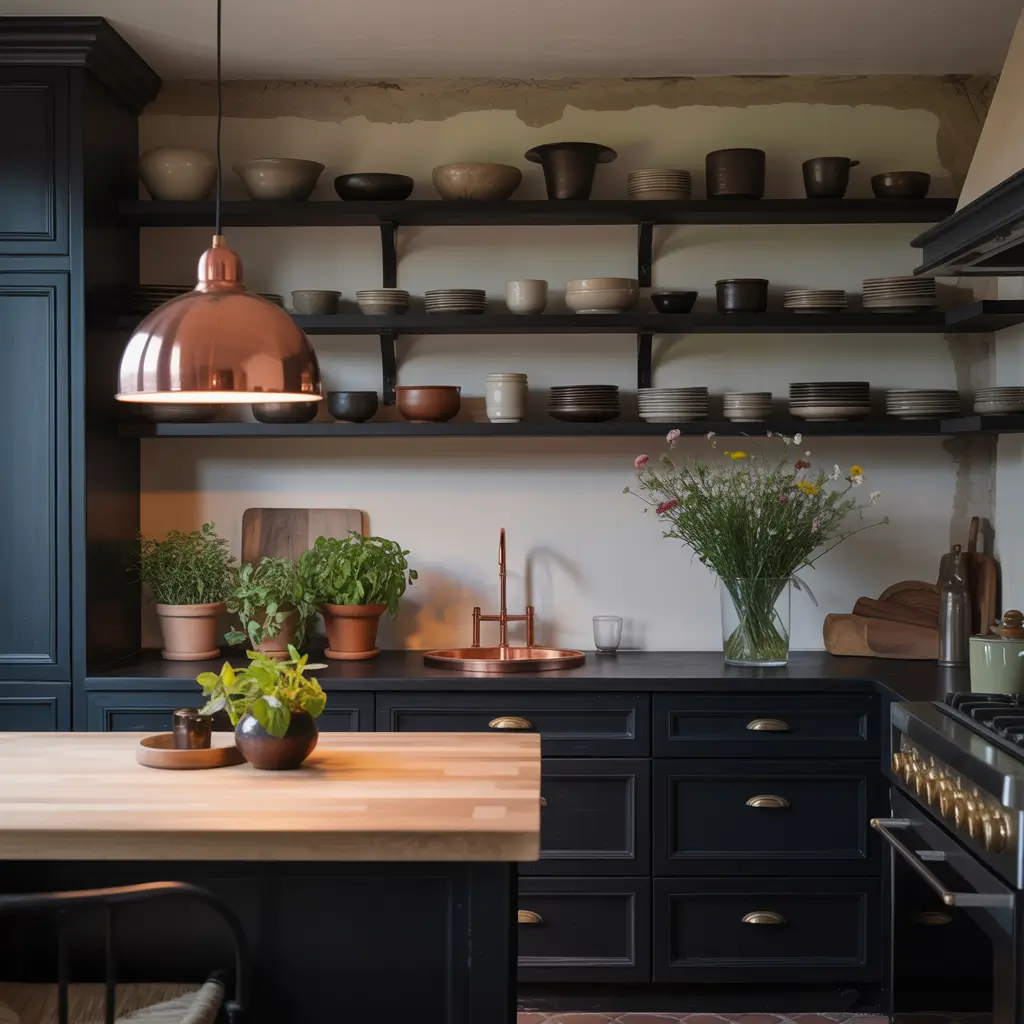
Open Shelves in a Dark Kitchen: Beautiful and Surprisingly Practical
There is a particular aesthetic quality to open shelving against a dark wall or within a black kitchen that is difficult to achieve any other way. When you remove the doors from upper cabinets — or simply never install them — the kitchen immediately feels more open, more personal, and more interesting to look at. In a black kitchen, this effect is amplified considerably.
Open shelving in a black kitchen works because the dark background makes everything displayed on the shelves look intentional and curated — even a stack of everyday white plates or a row of matching spice jars becomes a design element.
How to Style Open Shelves in a Black Kitchen
- Keep a tight color palette — white, cream, natural wood tones, and one accent color work best.
- Choose matching or coordinating dishware — the visual consistency against black is especially striking.
- Mix functional and decorative elements — a beautiful olive oil bottle can be as valid as a decorative object.
- Group items in odd numbers and leave breathing room between groupings.
- Use the shelves closest to eye level for your most visually appealing items.
Shelf Material Options for Black Kitchens
- Natural wood — warm, organic, and the most popular choice; creates beautiful contrast against black.
- Black steel — ultra-industrial and graphic; disappears into the wall for a floating effect.
- Marble or stone shelves — luxurious and unexpected; works especially well in upscale black kitchens.
- White painted wood — bright and clean; adds contrast without the warmth of natural wood.
13. Black Concrete and Stone Kitchen — Raw, Organic, and Completely Unique
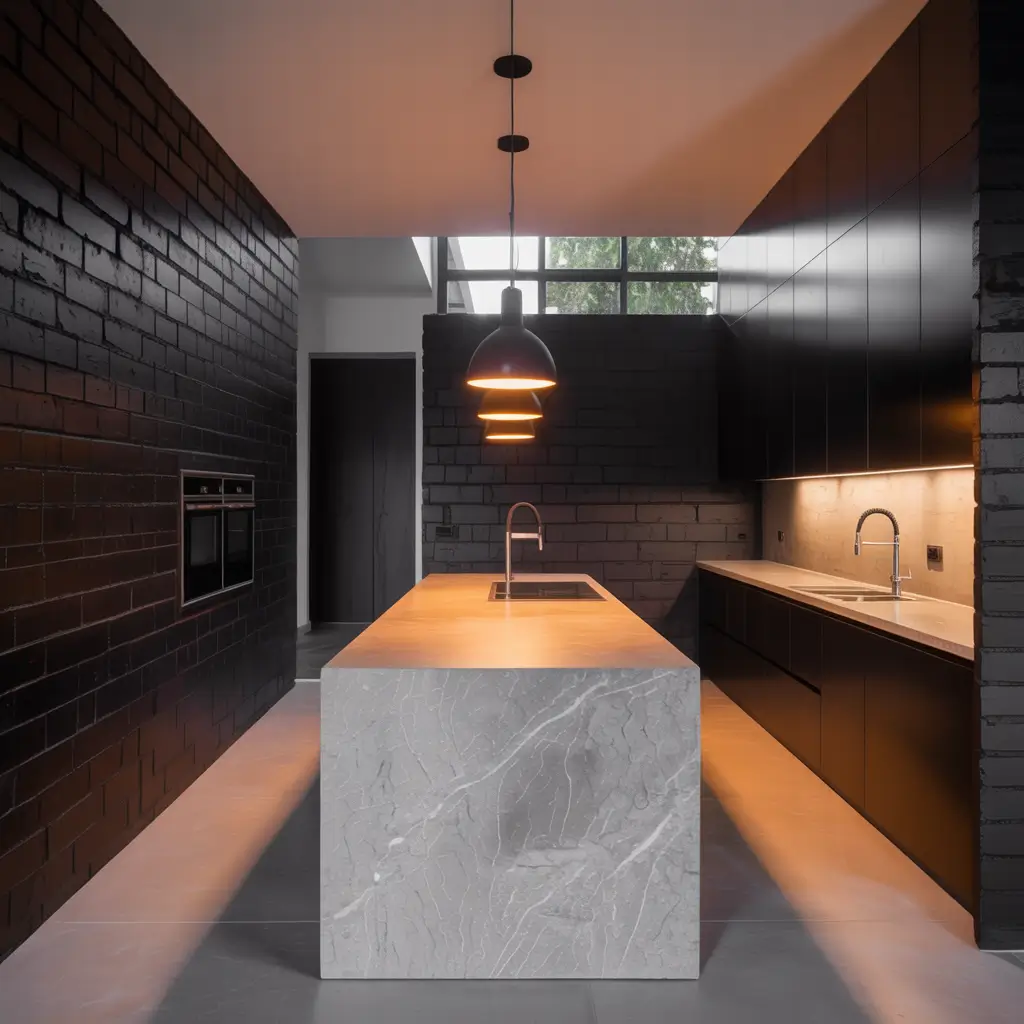
The Earthy Alternative to Polished Black Kitchen Design
Not every black kitchen needs to be sleek and polished. There is a compelling category of black kitchen design that leans into the natural, rough, and organic qualities of raw materials — concrete, stone, textured tile, and unfinished metal — to create something that feels primal and sophisticated at the same time.
The beauty of a concrete and stone kitchen is that no two are ever identical. The natural variation in stone and the handmade quality of concrete work means your kitchen will be genuinely one of a kind. This is a quality that manufactured surfaces simply cannot replicate.
Raw Materials for a Black Concrete and Stone Kitchen
- Black or charcoal concrete countertops — custom cast or poured in place for a fully unique surface.
- Slate tile backsplash — natural cleft surface with beautiful variation in dark gray and black tones.
- Lava stone countertops — volcanic rock with an enameled surface; used in professional kitchens for centuries.
- Black limestone flooring — cool underfoot in summer, beautifully textured visually.
- Rough-faced stone accent wall — a statement surface that anchors the entire kitchen.
The maintenance requirements for natural stone and concrete are real but not onerous. Seal all porous surfaces at installation and maintain annually. Use trivets under hot pots, cutting boards under knives, and clean spills promptly. Treated properly, these materials last for generations.
14. Vintage-Inspired Black Kitchen — Retro Character with Modern Comfort
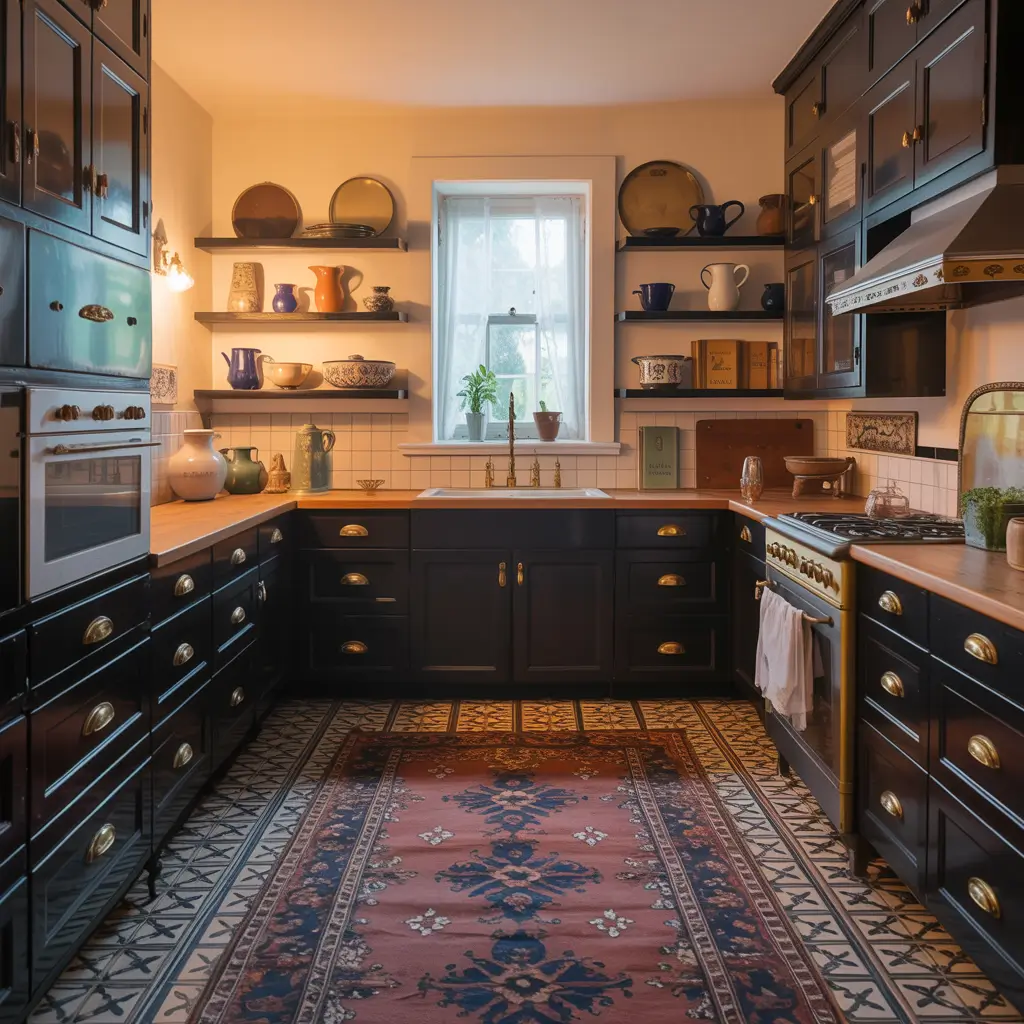
Drawing Inspiration From the Past to Create Something Timeless
Vintage kitchen design is having a major resurgence, and black is one of the most authentic vintage kitchen colors that exists. Early and mid-20th century kitchens frequently featured dark cabinetry alongside chrome, glass, and tile details that still look remarkable today.
A vintage-inspired black kitchen takes these historical cues and reinterprets them for a contemporary home — all the character and warmth of a period kitchen, with the convenience of modern appliances and storage systems.
Vintage Black Kitchen Elements That Work Today
- Chrome hardware — pulls, knobs, and appliance handles in polished chrome have an inherently vintage quality.
- Checkerboard or hexagon tile flooring — one of the most historically accurate and visually compelling vintage floor choices.
- Glass-front upper cabinets with ribbed or seeded glass — a beautiful period detail.
- Vintage-style range with cast iron grates in black enamel — functional and a design anchor.
- Open shelving with vintage pottery, enamelware, and glass storage jars.
- A butler’s pantry-style layout with black painted built-in shelving and a separate prep sink.
Sourcing genuinely vintage pieces from estate sales, architectural salvage dealers, and antique markets will add an authenticity that new vintage-style pieces cannot fully replicate. Look particularly for vintage light fixtures, original hardware, and period-appropriate tile — these are the elements that most convincingly sell the vintage character of a black kitchen.
15. Glossy Black Kitchen — High Shine, High Drama
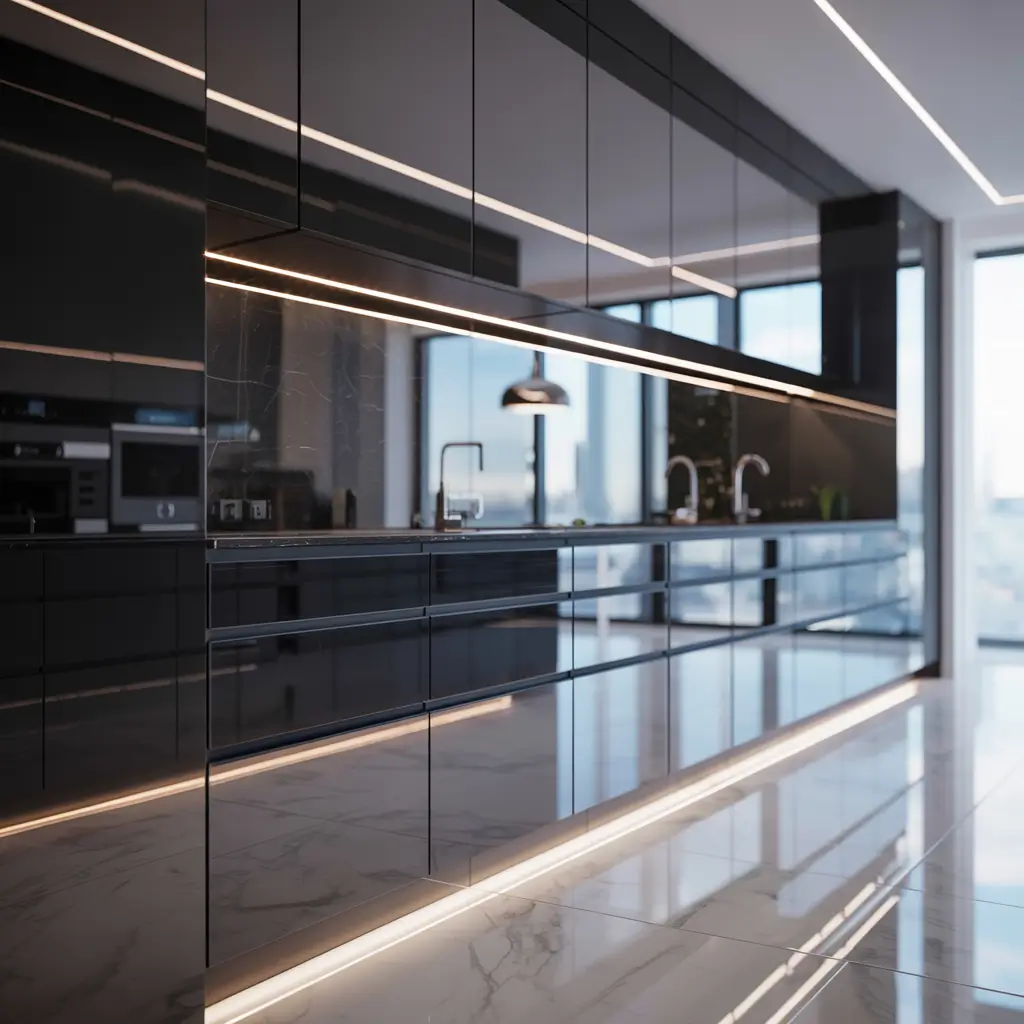
The Mirror-Effect Finish That Makes Bold Kitchens Even Bolder
High-gloss black kitchens are not for the faint-hearted, but they are undeniably spectacular. Where matte black absorbs light and creates depth, gloss black reflects it — every light source in the room bounces off the cabinet surfaces, creating a dynamic, almost liquid quality that makes the kitchen feel alive.
The practical trade-off with gloss black is maintenance: every fingerprint, water spot, and dust particle will be visible on the surface. Many homeowners find this acceptable given the visual payoff. The cleaning itself is simple — a microfiber cloth and mild cleaner — but it does need to happen regularly.
Where Glossy Black Works Best
- Modern or contemporary kitchens where the reflective quality reinforces the sleek aesthetic.
- Kitchens with strong architectural features like large windows or interesting ceiling details — the gloss will reflect them.
- Small kitchens where the reflective surface creates a visual sense of more space.
- Kitchens designed for entertaining where the dramatic, photogenic quality of high gloss is a feature.
Combining Gloss With Other Finishes
- Gloss black cabinets with matte black countertops — stunning tonal contrast within the same color family.
- Gloss black cabinets with polished white marble — the classic luxury combination.
- Gloss black island with matte black perimeter cabinets — lets the island stand out as the centrepiece.
Bonus: Practical Guide to Living with a Black Kitchen Every Day
What Nobody Tells You Before You Go Dark
Design inspiration is wonderful, but a black kitchen is something you will live with every day — and there are some practical realities worth knowing before you commit.
Cleaning Black Kitchens: The Real Story
The good news: black kitchens hide food debris, grease splatter, and general cooking mess far better than white kitchens do. You will not see every crumb or pasta splash the instant it lands.
The nuance: the specific finish of your black cabinets determines what you will see. Matte black hides fingerprints and water spots well. Gloss black shows them clearly. Semi-gloss falls in between. This is one of the strongest practical arguments for matte black in a busy family kitchen.
Cleaning Products and Methods for Black Kitchens
- Use a damp microfiber cloth for daily wiping — the most effective and safest tool for any black cabinet finish.
- For grease, use a diluted mild dish soap solution — effective and will not damage any painted or lacquered surface.
- For glass-front cabinets, use a standard glass cleaner.
- Avoid abrasive sponges, steel wool, or harsh chemical cleaners on any painted surface.
- For wood surfaces in a black kitchen, use a wood-appropriate cleaner or conditioner seasonally.
Lighting Investment Guidance
- Budget at minimum 15 to 20 percent more for lighting in a black kitchen than you would in a white kitchen.
- Install dimmers on every circuit — the ability to adjust light levels is essential in a black kitchen.
- Choose 2700K to 3000K bulbs throughout for warmth — never go above 3500K in a dark kitchen.
- Under-cabinet lighting is non-negotiable — it is the single most impactful lighting investment.
Resale Considerations
The honest answer about black kitchens and resale is nuanced. An all-black kitchen will appeal strongly to some buyers and less so to others. However, a well-designed, high-quality black kitchen — particularly a two-tone design or one with natural wood accents — tends to read as intentional and sophisticated rather than niche or limiting. The quality of materials and execution matters far more than the color choice itself.
Conclusion: Why a Black Kitchen Might Be the Best Design Decision You Ever Make
After walking through 20 different ways to design, style, and live with a black kitchen, the most important conclusion to draw is this: black is not a risky kitchen color. With the right approach, it is actually one of the most reliable and rewarding choices available.
Black is the color that makes every other element in your kitchen look better. It makes gold hardware look more luxurious. It makes marble countertops look more dramatic. It makes natural wood look warmer. It makes colorful accents look more vivid. It makes your lighting fixtures look more intentional.
It also delivers on the practical side in ways that surprise most homeowners. Matte black hides cooking mess better than white. Black countertops hide stains that would show on lighter surfaces. Dark kitchens feel more comfortable to cook in during evening hours when ambient light is lower. There are genuine day-to-day advantages to a dark kitchen that nobody talks about until after they have made the switch.
The single most important advice this article can offer is straightforward: if a black kitchen appeals to you, trust that instinct and plan it properly. Get the lighting right. Choose materials with intention. Pick a style — whether that is farmhouse, Scandi, industrial, minimalist, or something entirely your own — and commit to it. And then enjoy a kitchen that is genuinely unlike the majority of kitchens out there.
Because the best kitchen is not the safest one. The best kitchen is the one that makes you feel something every single time you walk into it. And a well-designed black kitchen does exactly that.
Frequently Asked Questions About Black Kitchens
Are black kitchens a passing trend or a lasting design choice?
Black kitchens are genuinely timeless. Dark kitchen design has appeared in homes across centuries, and the current popularity of black kitchens is driven by an increased appreciation for sophisticated, dramatic design rather than a short-term trend cycle. A well-designed black kitchen will look as relevant in fifteen years as it does today.
Will a black kitchen make my home harder to sell?
A poorly executed black kitchen may create hesitation with some buyers. A well-designed, high-quality black kitchen — especially one with natural wood accents, quality materials, and good lighting — is more likely to be perceived as a premium feature than a liability. The quality of execution matters more than the color.
How do I prevent a black kitchen from feeling dark and oppressive?
Three elements prevent the cave effect: sufficient layered lighting using warm-toned bulbs, contrasting lighter surfaces on countertops and backsplash, and at least one warm natural material (usually wood) to break up the darkness. Address all three and a black kitchen will feel dramatic and inviting rather than heavy.
What is the easiest way to introduce black into my existing kitchen?
The simplest and most impactful entry point is hardware. Replacing existing cabinet pulls and knobs with matte black hardware costs relatively little and can dramatically shift the kitchen’s character. The next step is painting a single element — an island or lower cabinets only — to test the look before committing to the full kitchen.
Which black kitchen style is best for a small kitchen?
The two-tone approach — black lower cabinets with white upper cabinets and a light backsplash — is the most reliably successful style for a small kitchen. It gives you the drama and sophistication of black at the base while maintaining light and visual openness in the upper half of the room where the eye naturally travels first.
What countertop goes best with black kitchen cabinets?
White or light gray marble or quartz creates the most classic and visually striking contrast with black cabinets. Natural wood butcher block adds warmth and is especially effective in farmhouse and Scandi styles. Concrete countertops reinforce industrial and minimalist aesthetics. The best choice depends on your overall style direction and practical requirements.
1 thought on “15 Elegant Black Kitchen Ideas for Bold Interiors”